
When people ask me what it was like to work in coffee during the early 90s, I often tell them it was like living in a world of black and white that was just beginning to discover color. At that time, we were firmly in the grip of the “Second Wave.” Coffee had moved out of the home and into the social sphere thanks to the massive expansion of chains like Starbucks. It was a revolution of lattes, flavored syrups, and dark, oily roasts. But for those of us behind the counter, something felt missing. We were selling an experience, but the bean itself was still a mystery.
The shift to what we now call the “Third Wave” didn’t happen overnight. It was a slow, deliberate movement that prioritized the bean’s origin over the barista’s syrup pump. As someone who has spent three decades witnessing this evolution, I’ve seen the industry transform from a commodity-driven business into a culinary art form. This shift changed everything—from how we source our Kenyan Slingshots: That Unforgettable Tomato Acidity Explained to the microscopic ways we analyze a cup’s clarity.
From Commodity to Character: The Core of the Third Wave
The defining characteristic of the Third Wave is treating coffee as an artisanal foodstuff, much like wine or craft chocolate. In the Second Wave, coffee was a delivery vehicle for caffeine and milk. In the Third Wave, the coffee is the protagonist.
I remember the first time I tasted a light-roast Ethiopian Yirgacheffe in the late 90s. It didn’t taste like “coffee” in the traditional sense. It tasted like bergamot, jasmine, and lemon tea. That was the “lightbulb moment” for many of us. We realized that if we stopped burning the beans to a crisp, we could actually taste the soil, the altitude, and the farmer’s hard work. This led to a radical change in roasting philosophy: moving away from the “roast flavor” and toward the “origin flavor.”
This transition required us to relearn our craft. We had to understand that Volcanic Soils and High Altitudes: Why Central America Rules the World weren’t just marketing terms; they were the biological blueprints for flavor. For the first time, baristas started talking about “terroir” with the same reverence as French winemakers.
The Barista as a Scientist and Storyteller
In the old days, being a barista was a transient job—something you did while waiting for a “real” career. The Third Wave turned the barista into a professional. Suddenly, we were expected to know the elevation of the farm, the processing method used, and the exact roast date of the batch.
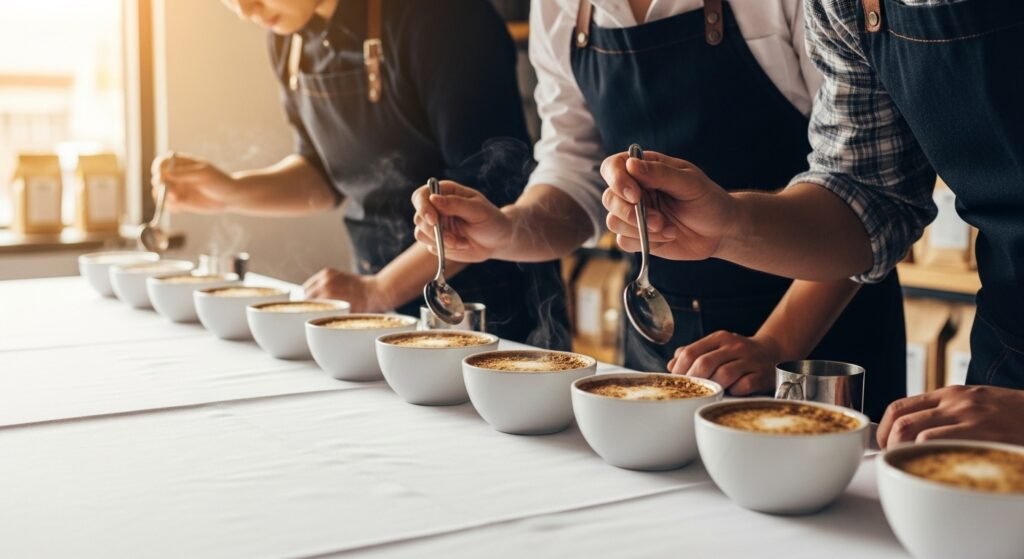
I’ve watched as the tools of our trade evolved from simple scoops to high-precision scales and refractometers. We stopped guessing and started measuring. But beyond the science, the Third Wave gave us the role of the storyteller. When I serve a cup today, I’m not just handing over a beverage; I’m presenting the final stage of a journey that began thousands of miles away.
However, this obsession with precision can sometimes lead to a loss of perspective. I’ve seen young baristas get so caught up in the numbers that they forget the human element. This is why I always emphasize that you must How to Develop a Professional Palate: A 30-Year Guide—science is the foundation, but your senses must be the ultimate judge. A perfect extraction on a screen doesn’t always translate to a soul-stirring experience in the cup.
The Impact on Global Trade and Ethics
One of the most significant, yet least discussed, aspects of the Third Wave is how it changed the economics of coffee. By focusing on quality, we created a market for “Specialty Coffee”—beans that score 80 points or higher on a 100-point scale. This allowed farmers to break away from the “C-market” (the commodity price index) and negotiate prices based on the quality of their harvest.
Direct Trade became the gold standard. In my 30 years, I’ve had the privilege of visiting farms where the relationship between the roaster and the producer is a true partnership. We started paying premiums for better harvesting practices and experimental processing. This isn’t just about better taste; it’s about sustainability. When a farmer knows that a higher-quality crop will yield a significantly higher price, they have the resources to invest in their land and their community.
The Third Wave made us realize that every sip has a political and social dimension. We moved from “Fair Trade” as a mere label to a deeper understanding of the Direct Trade: The Stories of the Farmers I’ve Met. We began to see the faces of the people who made our morning ritual possible.
The Aesthetic of the Third Wave: Minimalism and Transparency
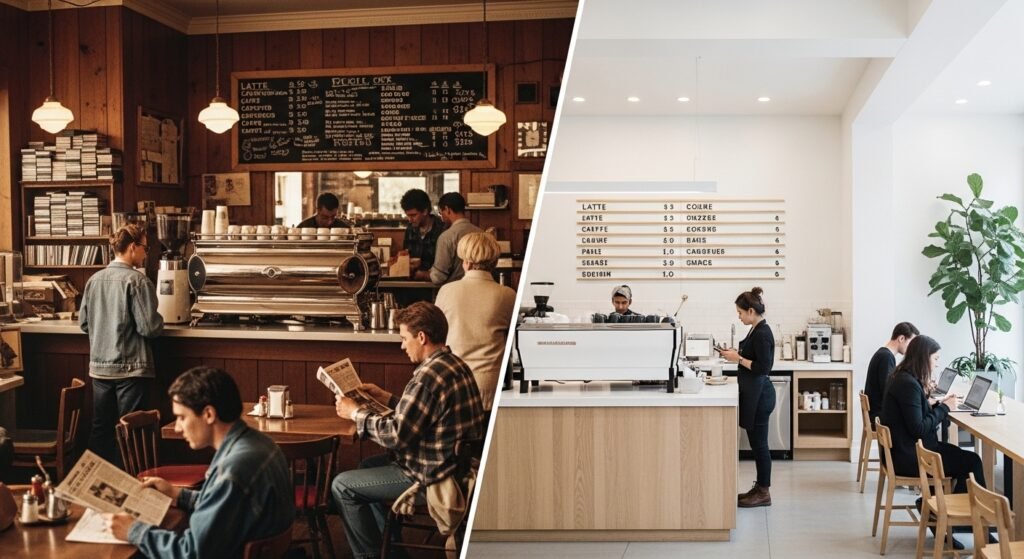
The shift was also visual. The Second Wave was cozy, often dark, and filled with overstuffed armchairs—think of the “Central Perk” vibe from Friends. The Third Wave brought in minimalism. White walls, light wood, and laboratory-style equipment became the norm.
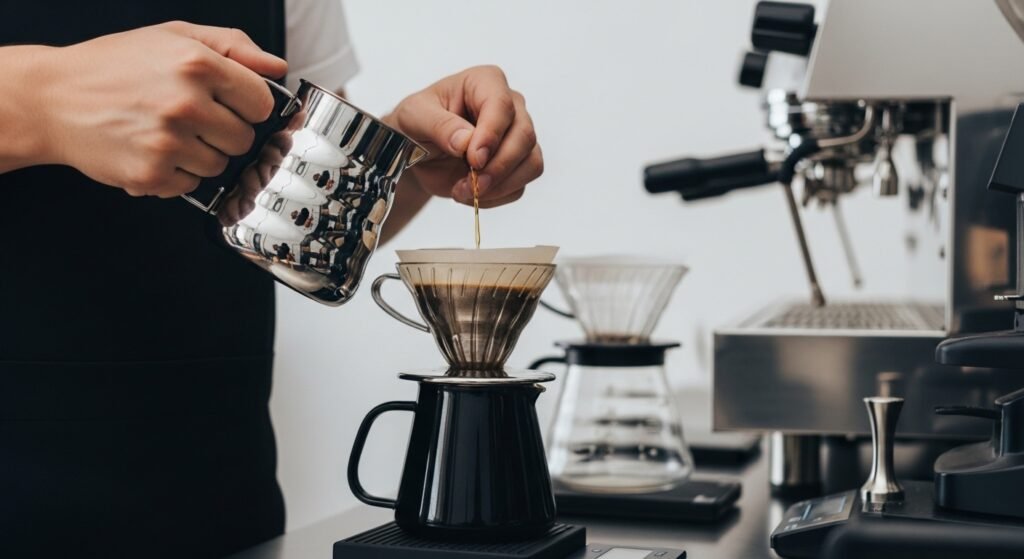
This aesthetic choice was intentional: it represented transparency. The “Slow Bar” emerged, where customers could watch every second of a V60 pour or a Siphon brew. It removed the barrier between the maker and the consumer. It invited the customer to ask questions, to smell the dry grounds, and to participate in the sensory journey.
But as a veteran, I’ve also seen the “pretentiousness trap” of the Third Wave. In our quest for perfection, some shops became intimidating and unwelcoming. I believe the future—what some call the Fourth Wave—must marry the incredible quality of the Third Wave with the warmth and hospitality of the Second. After all, coffee is, at its heart, a social lubricant.
Looking Back to Look Forward
Witnessing the specialty shift has been the greatest privilege of my career. We have unlocked flavors that our predecessors couldn’t have imagined. We have turned a simple bean into a global phenomenon of craft and culture.
But as we move forward, we must remember that the “Third Wave” isn’t a destination; it’s a mindset. It’s the constant pursuit of doing better—better for the farmer, better for the planet, and better for the person sitting across the counter from you.
After 30 years, my passion for this “shift” hasn’t dimmed. Every time I see a customer’s face light up when they taste the berry notes in a natural-process Ethiopian for the first time, I am reminded why we did all of this. We didn’t just change the coffee; we changed how the world values it. And that is a history worth being a part of.

Brown Christopher is 47 years old and has been passionate about coffee since he was 15. For more than three decades, he has explored coffee culture, brewing methods, and the flavors behind every cup. Through this blog, he shares simple tips and knowledge to help beginners better understand and enjoy coffee in their daily lives. ☕