
If you look at the packaging of any premium specialty coffee, you will likely see a number followed by the letters “MASL”—Meters Above Sea Level. To the casual observer, this might seem like a minor detail, perhaps a bit of marketing jargon to justify a higher price point. However, in the world of professional coffee production, altitude is everything. It is the invisible architect of the bean, dictating its shape, its density, and its potential for sweetness.
The relationship between elevation and quality is a fundamental law of coffee agriculture. While coffee can grow in low-lying coastal areas, the results are often described as “rubbery,” “earthy,” or “flat.” But as you move up the slopes of the Andes, the rift valleys of Africa, or the volcanic peaks of Central America, the coffee undergoes a radical transformation. Understanding this change requires a dive into botany, meteorology, and the Science of Aftertaste.
The “Stress” Factor: Why Slow Growth is Good
The primary reason high-altitude coffee tastes better is, paradoxically, because life is harder for the plant. At elevations above 1,200 meters, the air is thinner, the oxygen levels are lower, and the temperatures are significantly cooler, especially at night.
In a warm, low-altitude environment, coffee cherries ripen quickly. The plant focuses on reproduction, pushing out fruit as fast as possible. In contrast, at high altitudes, the cold nights cause the plant’s metabolism to slow down. This extended maturation period—sometimes lasting several months longer than at sea level—is the “secret sauce” of quality.
During this slow ripening process, the coffee bean (which is actually the seed of the fruit) has more time to absorb nutrients and develop complex organic acids. This is why Kenyan Coffees, grown on the slopes of Mount Kenya, possess such vibrant acidity. The plant is literally working harder and longer to produce each individual bean.
The Physical Transformation: Hard Bean (HB) vs. Strictly Hard Bean (SHB)
In the industry, we often classify coffee by its hardness. High-altitude beans are physically denser than their low-altitude counterparts. In Central America, you will often see the term “Strictly Hard Bean” (SHB) used for coffees grown above 1,350 meters.
-
Strictly Hard Bean (SHB): These beans are smaller, with a tightly closed “fissure” or “S-line” in the center. Because they are so dense, they can withstand higher temperatures during the roasting process. This allows the roaster to develop more sugars without burning the exterior of the bean.
-
Soft Bean: Coffee grown at lower altitudes is more porous. These beans are larger and “spongy.” When roasted, they tend to lose their flavor quickly and can easily become ashy or scorched.
When you are Calibrating Your Espresso, you will notice that high-altitude beans require a much more precise Grinder Setting. Their density provides more resistance to water, which is why they produce such a rich, syrupy crema.
The Chemistry of Flavor: Acidity and Sugar
Altitude doesn’t just change the physical structure; it changes the chemical composition. Studies have shown that coffee grown at high altitudes contains higher concentrations of:
-
Chlorogenic Acid: While too much can be bitter, the right amount contributes to the “brightness” we love.
-
Sucrose: The slower maturation leads to a higher sugar content.
-
Phosphoric and Malic Acids: These are the acids that give coffee its “sparkle”—the apple-like crispness or the effervescent quality of a Modern Carajillo.
When you Host a Coffee Cupping at Home, try to find a Brazilian coffee grown at 800 meters and an Ethiopian coffee grown at 2,000 meters. The difference in clarity is staggering. The low-altitude coffee will likely taste like roasted nuts and chocolate—simple and comforting. The high-altitude coffee will taste like a complex bouquet of fruits and flowers.
Volcanic Soils and Drainage
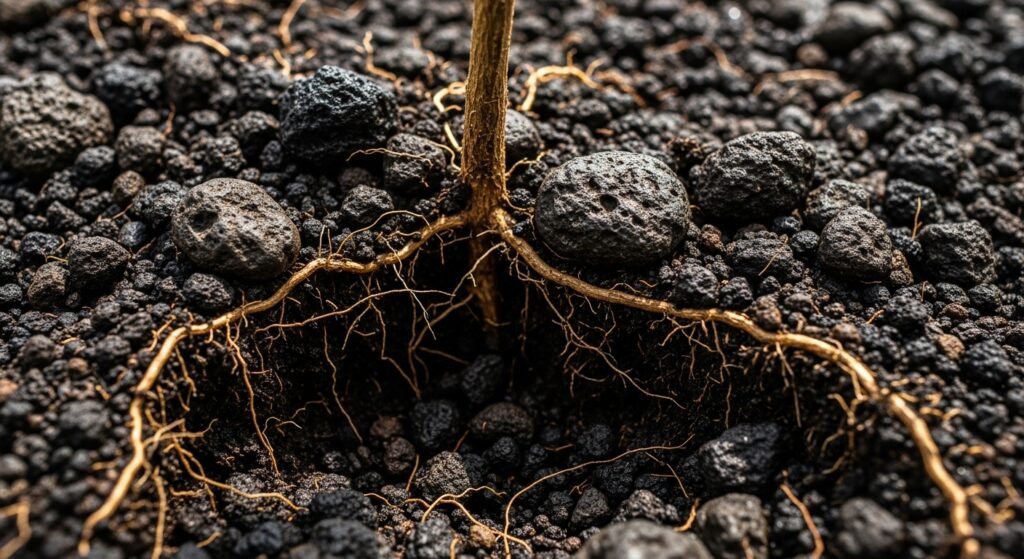
Altitude rarely works alone. Most of the world’s highest coffee farms are located on the “Ring of Fire” or near dormant volcanoes. Volcanic Soils are incredibly rich in minerals like potassium and nitrogen, which are essential for a healthy coffee tree.
Furthermore, mountain slopes provide natural drainage. Coffee trees hate having “wet feet”; they need soil that allows water to pass through quickly. This combination of rich minerals, thin air, and perfect drainage is what makes regions like Antigua in Guatemala or Boquete in Panama world-famous. It also explains why Water Quality is so important during the brewing process—you want to respect the purity of the minerals that the plant spent months absorbing.

The Challenges of High-Altitude Farming
If high altitude produces better coffee, why don’t we grow all coffee at the top of mountains? The answer is simple: it is incredibly difficult and expensive.
-
Logistics: Many of these farms are inaccessible by modern machinery. Harvesting must be done entirely by hand on steep, dangerous inclines.
-
Yield: Slow growth means lower yields. A farmer at high altitude might produce only half as much coffee as a farmer in the lowlands, but they have to charge double just to break even.
-
Climate Change: As the planet warms, the “ideal” temperature zone for coffee is moving higher and higher up the mountains. Eventually, there will be no more mountain left to climb.
This is why specialty coffee is more than just a drink; it is a premium agricultural product that requires immense labor. When you use your AeroPress or Siphon to brew a high-altitude lot, you are honoring that labor.
Sensory Evolution: From Hot to Cold
As we have discussed in the article on Why Coffee Tastes Different When it Cools, high-altitude coffees are the ones that “bloom” as they drop in temperature. Because of their high sugar content and complex acids, they don’t become bitter as they cool; they become sweeter.
This makes them the perfect candidates for Cold Brew. A low-altitude coffee in a cold brew might taste like “cold, old coffee.” A high-altitude Ethiopian in a cold brew will taste like a floral, sparkling peach tea.
Conclusion: Looking Upward
The next time you are shopping for beans, take a moment to look for the altitude. While it isn’t the only factor—processing, roasting, and Equipment Maintenance all play their part—it is the foundation of quality.
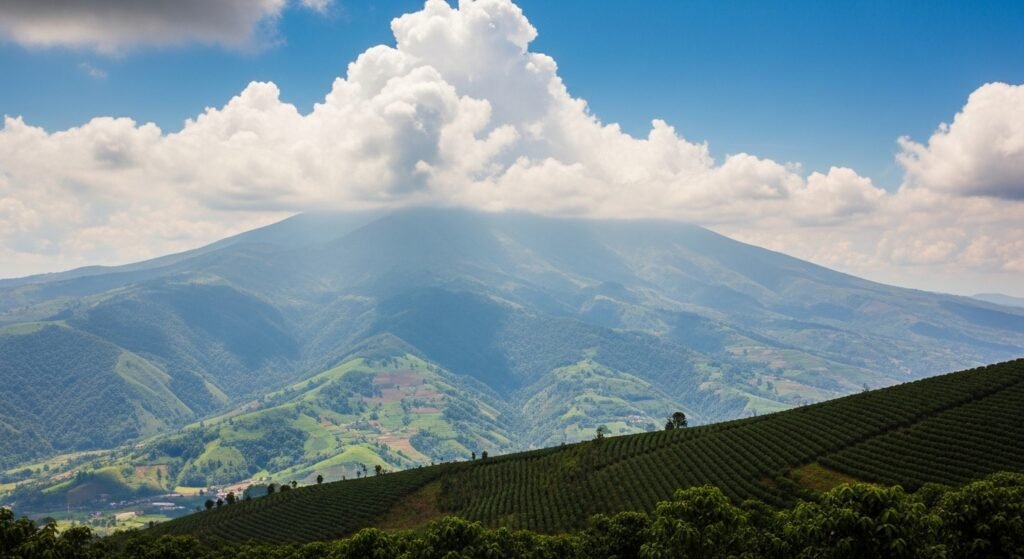
High altitude gives coffee its character. It provides the “spine” of acidity and the “flesh” of sweetness. It is a reminder that the most beautiful things in nature often come from the most challenging environments. Whether you are drinking a bright African profile or a balanced Central American, remember that those flavors were forged in the thin, cold air of the peaks.
The mountain doesn’t just grow coffee; it sculpts it. And as brewers, our only job is to stay out of the way and let that mountain air speak for itself in the cup.

Brown Christopher is 47 years old and has been passionate about coffee since he was 15. For more than three decades, he has explored coffee culture, brewing methods, and the flavors behind every cup. Through this blog, he shares simple tips and knowledge to help beginners better understand and enjoy coffee in their daily lives. ☕