
The transition from someone who simply “drinks coffee” to someone who “tastes coffee” is one of the most rewarding journeys in the culinary world. Often, beginners feel intimidated by the complex vocabulary of professional tasters. When a Q-Grader mentions notes of “bergamot,” “toasted almond,” or “stone fruit,” it can feel like they are speaking a different language or, worse, making it up entirely. However, the ability to deconstruct flavor is not a mystical gift; it is a mechanical skill that can be trained, refined, and mastered with patience.
Developing a professional palate is about building a mental library of sensory experiences. It’s about learning to isolate the different components of a sip—acidity, sweetness, bitterness, and body—and understanding how they interact. Whether you are brewing a High-Altitude lot or experimenting with a Siphon , your ability to perceive the nuances dictates how much you will enjoy the experience.
The Biological Foundation: Taste vs. Aroma
To train your palate, you must first understand the biology of flavor. Most of what we describe as “taste” is actually “aroma.” Your tongue is limited; it can only perceive five basic tastes: sweet, sour, salty, bitter, and umami. The thousands of nuances we find in coffee—the blueberry in an Ethiopian Natural or the chocolate in a Brazilian bean—are actually scents detected by your olfactory system through the back of your throat (retronasal olfaction).

Exercise 1: The Blindfold Test
A great way to start is by eating common fruits or spices with your eyes closed and your nose pinched. Without your sense of smell, an apple and an onion can taste remarkably similar because your tongue only picks up the crunch and the sugar/acid balance. When you release your nose, the “flavor” floods in. This exercise teaches you to look for the “nose” of the coffee separately from the “mouthfeel.”
Calibrating the Basics: Acidity and Sweetness
In specialty coffee, we don’t look for “bitterness” as a primary goal; we look for a balance between acidity and sweetness.
-
Acidity: Think of this as the “brightness” or “sparkle” of the coffee. It should feel like the zing of a lemon or the crispness of a green apple. If the acidity is too high, the coffee is sour; if it’s too low, the coffee is “flat.” This is particularly evident in Kenyan profiles, which are famous for their vibrant, wine-like acidity.
-
Sweetness: This is the hardest part for beginners to find because coffee sweetness isn’t like white sugar. It’s more like the sweetness of a roasted carrot or a piece of dark chocolate. It provides the “roundness” that balances the acidity.
The Vocabulary of Texture: Body and Mouthfeel
Beyond the flavor, a professional palate focuses on the physical sensation of the liquid. This is what we call “Body” or “Mouthfeel.”
-
Light Body: Feels like water or tea. Common in Chemex brews.
-
Medium Body: Feels like whole milk or fruit juice.
-
Heavy Body: Feels like cream or syrup. This is the hallmark of a well-executed espresso or a French Press.
Learning to describe texture is a vital step. Does the coffee feel “silky,” “buttery,” or “astringent” (drying)? Astringency is often a sign of over-extraction or poor Water Quality , and recognizing it helps you adjust your brewing technique.
Building Your Sensory Library
How do you learn to identify “jasmine” if you don’t know what jasmine smells like? The best tasters are those who are constantly “calibrating” their senses in daily life.
-
Smell Everything: When you go to the grocery store, smell the different types of citrus. Note the difference between a lemon, a lime, and a grapefruit.
-
Eat Intentionally: Pay attention to the aftertaste of everything you eat. How long does the flavor of a piece of chocolate stay on your tongue?
-
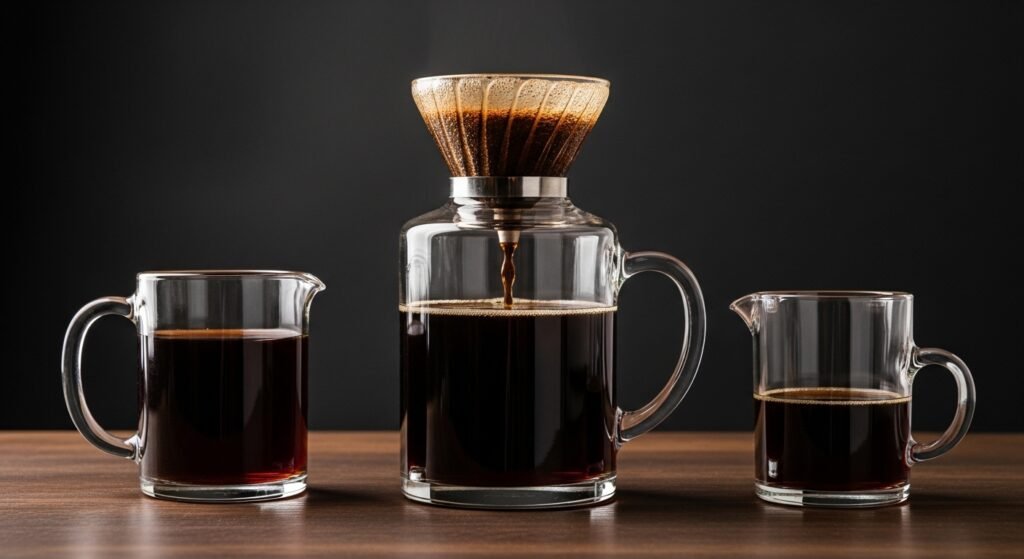
The “Triangulation” Method: Brew three cups of coffee. Two should be the exact same bean, and one should be different. Try to identify the “odd one out” based only on taste. This forces your brain to look for subtle differences in intensity and profile.
The Influence of Temperature
One of the most important lessons in sensory perception is that coffee changes as it cools. When coffee is very hot (above $70^{\circ}C$), our taste buds are slightly numbed by the heat, and we mostly perceive the “roast” flavors. As the liquid drops to $50^{\circ}C$ and $40^{\circ}C$, the organic acids and sugars become much more apparent.
A professional taster will never give a final score to a coffee based on the first hot sip. They wait for it to reach room temperature to see if the Science of Aftertaste remains clean and sweet. If a coffee becomes bitter as it cools, it’s a sign of low-quality beans or poor processing.
The Role of Environment
To truly focus on flavor, you need a neutral environment. Professional cupping rooms are usually white, scent-free, and quiet. At home, avoid tasting coffee right after brushing your teeth or eating spicy food. The goal is to have a “clean palate.” Drinking a small glass of sparkling water between different coffees can help reset your taste buds and clear any residual oils.
Conclusion: The Journey Never Ends
Developing a professional palate is not about being a snob; it’s about increasing your capacity for pleasure. The more you can “see” in a cup, the more you appreciate the incredible effort that goes into High-Altitude farming and precision roasting.
Don’t be discouraged if you can’t find the “peach notes” on your first try. Start by identifying the broad categories—is it fruity or nutty? Is it light or heavy? Over time, those broad categories will sharpen into specific memories. One day, you’ll take a sip of an Ethiopian bean and, without thinking, your brain will flash to the memory of a fresh Earl Grey tea. That is the moment your palate has arrived.
The best part? Once you train your palate for coffee, you’ll find that you enjoy food, wine, and even chocolate on a much deeper level. It’s a holistic upgrade to your sensory life.

Brown Christopher is 47 years old and has been passionate about coffee since he was 15. For more than three decades, he has explored coffee culture, brewing methods, and the flavors behind every cup. Through this blog, he shares simple tips and knowledge to help beginners better understand and enjoy coffee in their daily lives. ☕