
When you buy a bag of specialty coffee, you aren’t just buying beans; you are buying a volatile collection of aromatic compounds, organic acids, and delicate oils. From the moment the cooling tray of the roaster stops spinning, a countdown begins. Coffee is, by its very nature, a perishable product. Unlike wine, which often benefits from years of oxidation, coffee is much closer to fresh-baked bread. It has a “peak,” and once that peak passes, the flavors that make specialty coffee worth the price begin to vanish into thin air.
The struggle to keep coffee fresh is a battle against the elements. Most people treat their coffee like a pantry staple—dry pasta or flour—leaving it in its original bag on a sunny kitchen counter. This is a mistake that leads to “flat” mornings and wasted potential. Understanding Why Some Cheap Coffees Surprise You and Some Expensive Ones Disappoint often comes down to how the beans were handled before they even reached your brewer. If they sat in a hot warehouse or a sunny mailbox, the “expensive” beans might already be dead on arrival.
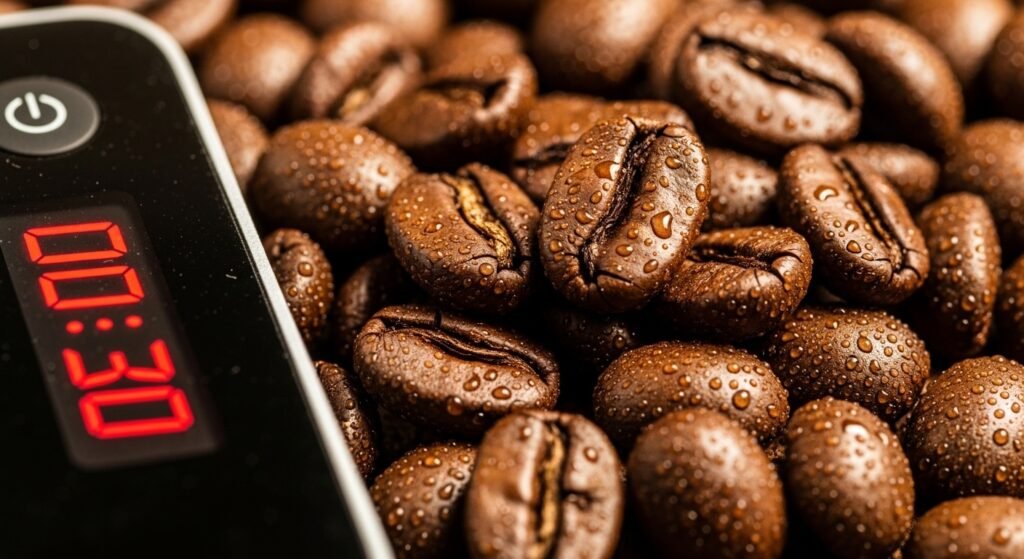
The Four Horsemen of Coffee Decay
To preserve your coffee, you must protect it from four primary enemies: Light, Heat, Moisture, and Oxygen. These “Four Horsemen” work in tandem to strip the bean of its molecular integrity.
1. Oxygen: The Silent Thief
Oxidation is the single greatest enemy of freshness. When oxygen interacts with the oils inside the bean, they turn rancid. Think of an old bag of walnuts that tastes like cardboard; that is exactly what happens to coffee. The delicate floral notes of a High-Altitude Ethiopian lot are the first to go, followed by the sweetness, leaving behind only the bitter, roasted structure.
2. Light: The UV Degradation
Light, especially sunlight, triggers “photo-oxidation.” It provides the energy needed to break down organic molecules. This is why you should never store coffee in clear glass jars, regardless of how beautiful they look on your shelf.
3. Moisture: The Flavor Solvent
Humidity causes the porous structure of the bean to absorb water from the air. This not only speeds up oxidation but can also lead to mold or a “musty” aroma. If you live in a humid climate, Water Quality and Environmental Moisture become critical factors in your storage strategy.
4. Heat: The Kinetic Accelerator
As shown in the physics of extraction, heat speeds up the movement of molecules. In a warm kitchen, the volatile aromatics inside the bean move faster and escape into the air more quickly. This is why professional roasters emphasize climate-controlled storage.
The Degassing Period: Why “Too Fresh” is a Problem
There is a common myth that coffee should be consumed the day it is roasted. In reality, coffee needs to “rest.” During the roasting process, carbon dioxide ($CO_{2}$) is trapped inside the bean. For the first few days after roasting, the bean is literally screaming with gas.
If you brew coffee that is only 24 hours old, the escaping gas will repel the water, preventing a full extraction. The result is a cup that tastes metallic and “fizzy.” This is why Calibrating Your Espresso for Freshly Roasted Beans is so difficult; the gas causes the puck to expand and creates unpredictable flow rates. For most medium roasts, the “sweet spot” starts around day 7 and lasts until day 21.
To Freeze or Not to Freeze? The Great Debate
For decades, the specialty coffee community looked down on freezing beans. The fear was that the moisture from the freezer would ruin the cell structure. However, recent scientific studies have flipped this narrative. Freezing coffee is actually the best way to stop the clock—if done correctly.
When you freeze coffee, you drastically reduce the kinetic energy of the aromatic molecules. This preserves the “sparkle” of the acidity for months. However, you must follow the “Single Opening Rule.” You should never take a bag out of the freezer, scoop some beans, and put it back. The condensation that forms on the cold beans as they hit the warm air will ruin them instantly.
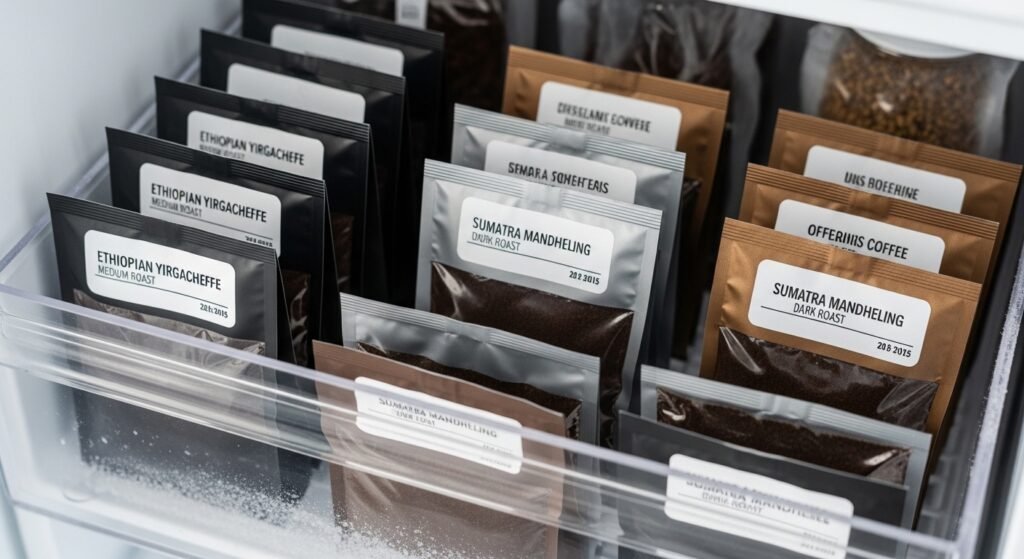
For the best results, you should portion your beans into small, vacuum-sealed bags of 20g or 25g. This allows you to pull out exactly what you need for a Single Pour-Over or Siphon Session without exposing the rest of the stash to the elements.
The Role of Packaging: The One-Way Valve
Have you ever noticed the small plastic circle on coffee bags? That is a one-way degassing valve. It allows the $CO_{2}$ to escape without letting oxygen in. Without this valve, the bag would eventually explode from the internal pressure.
When buying coffee, always look for high-barrier packaging—bags that are thick, opaque, and have a high-quality valve. If the bag feels flimsy or transparent, How to Host a Coffee Cupping at Home becomes a disappointing exercise because the beans will have lost their “origin character” before you even open the seal.
The Whole Bean Advantage: Why Pre-Ground is Dead
Grinding coffee increases its surface area by thousands of percent. Instead of one bean with a small exterior surface, you have thousands of tiny particles exposed to the air.
Pre-ground coffee loses about 60% of its aromatics within 15 minutes of grinding. This is the single most important reason why we always say you should Invest in the Grinder Before Any Other Accessory . Even the most expensive storage canister cannot save pre-ground coffee from the rapid onset of staling.
[IMAGEM3 – Uma comparação visual: um grão de café inteiro ao lado de um monte de pó de café, com setas ilustrando como o oxigênio ataca as partículas menores muito mais rápido.]
Modern Solutions: Vacuum Canisters
If you don’t want to deal with the logistics of freezing, vacuum canisters like the Fellow Atmos or the Airscape are the next best thing. These devices allow you to manually pump the air out of the container, creating a low-oxygen environment.
This is particularly effective for those who switch between different coffees. By reducing the oxygen concentration, you can extend the “peak flavor” of your beans from two weeks to nearly a month. This extra time is crucial when you are trying to Develop a Professional Palate and Compare Origin Notes across several different bags at once.
Conclusion: Respecting the Lifecycle
Coffee is a miracle of agriculture and chemistry. From the High Altitudes of Kenya to the precision of the roast, thousands of people have worked to ensure those beans have the potential for greatness. To let those beans go stale on a sunny counter is a disservice to that labor.
By controlling the “Four Horsemen,” you are ensuring that your daily ritual remains a high-definition experience. You don’t need a laboratory to keep your coffee fresh; you just need a dark, cool, and airtight space. Treat your beans like the fresh, organic product they are, and they will reward you with a cup that is vibrant, sweet, and full of life.

Brown Christopher is 47 years old and has been passionate about coffee since he was 15. For more than three decades, he has explored coffee culture, brewing methods, and the flavors behind every cup. Through this blog, he shares simple tips and knowledge to help beginners better understand and enjoy coffee in their daily lives. ☕