
In the history of beverages, some pairings are so natural they feel inevitable. The combination of the deep, roasted bitterness of coffee with the complex sweetness of spirits is one such alliance. While the Espresso Martini dominated the late 20th century, a new contender has risen to take its place in the world’s most sophisticated bars: the Modern Carajillo. Originally a simple Spanish tradition of mixing coffee with brandy or rum, the contemporary version—specifically the “Carajillo de Shake”—has transformed into a creamy, citrus-forward masterpiece that relies heavily on the quality of the brew.
The secret to a perfect Carajillo isn’t just the liqueur; it is the structural integrity of the coffee used. To achieve that signature frothy head and balanced flavor, one must Understand the Role of High-Altitude Density and How It Resists Water Under Pressure . Without a high-quality, freshly extracted espresso, the drink loses its “spine” and becomes an overly sweet, one-dimensional mixture.
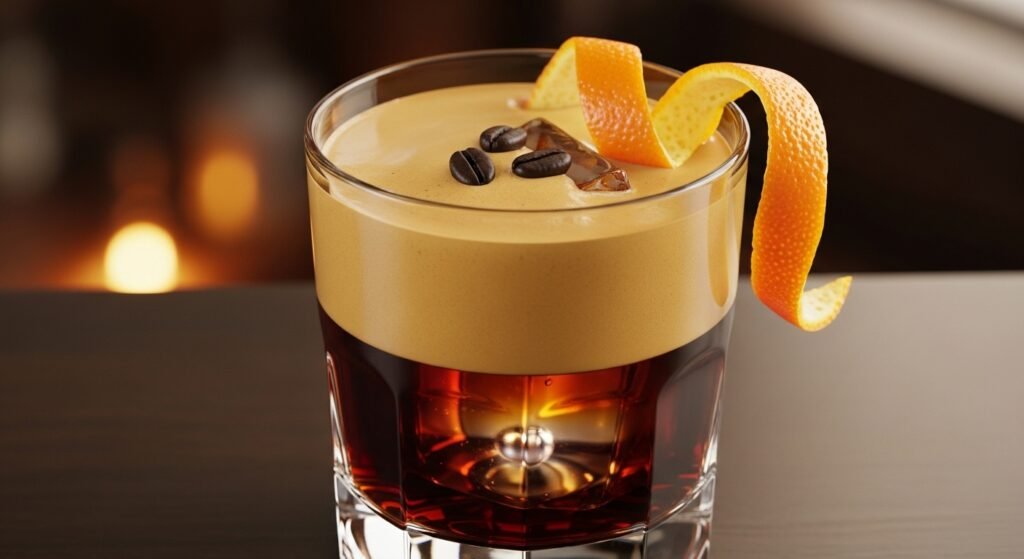
The Origin: From Spanish Tradition to Mexican Fusion
The word “carajillo” is rumored to have its roots in Cuba, during the time when it was a Spanish province. Soldiers would mix coffee with rum to give them corajillo (little courage) before battle. Over time, the recipe traveled back to Spain and eventually to Mexico, where it met its perfect partner: Licor 43.
Licor 43 is a Spanish liqueur made from a secret blend of 43 different citrus fruits, herbs, and spices, with a dominant note of vanilla. When combined with the intense acidity of a Precisely Calibrated Espresso Shot with Perfect Crema , a magical chemical reaction occurs. The fats in the espresso emulsify with the sugars in the liqueur, creating a texture that feels more like a milkshake than a standard cocktail.
The Science of the Shake: Texture and Emulsion
What defines the “Modern” Carajillo is the technique. It is served shaken, not stirred. When you add hot espresso to a shaker filled with ice and Licor 43, you are dealing with a rapid temperature exchange. This process traps tiny air bubbles within the coffee’s natural oils, resulting in a thick, velvety foam known as the “micro-crema.”
If you find that your Carajillo is thin or lacks that beautiful “Guinness-style” cascade, the culprit is usually the coffee. This is why Maintaining a Clean and Calibrated Burr Grinder is More Important Than the Machine Itself . If your grind is inconsistent, your espresso will lack the necessary lipids to sustain the foam, leaving you with a watery cocktail that separates too quickly.
Choosing the Right Bean for Mixology
Not every coffee profile works well in a Carajillo. Because Licor 43 is heavily weighted toward vanilla and citrus, you need a coffee that can stand its ground without being overwhelmed.
-
The Case for Chocolatey Medium Roasts: Brazilian or Guatemalan beans are classic choices. Their notes of toasted nuts and cocoa act as a bridge, connecting the vanilla of the liqueur to the roasted bitterness of the coffee.
-
The Case for African Brightness: If you want a more “modern” and avant-garde version, using Vibrant Floral Notes of an Ethiopian Heirloom to Shine Through the Intensity can be a revelation. The jasmine and bergamot notes of the Ethiopian bean interact with the citrus herbs of the liqueur to create a cocktail that tastes like a sophisticated orange-cream soda.
The Ratio: The Golden Rule of 1:1
The most accepted recipe for a Modern Carajillo is a simple 1:1 ratio.
-
50ml of Licor 43.
-
50ml of Fresh Espresso (or a very strong concentrate).
However, as you Develop a Professional Palate and Learn to Identify Hidden Nuances , you might find that certain high-altitude coffees require a bit more “room.” If you are using a very intense, acidic coffee, you might increase the liqueur to 60ml to balance the sharp notes. Conversely, for a darker roast, you might decrease the liqueur to let the smokiness of the bean lead the way.

Temperature and Dilution
Because the Carajillo is often enjoyed as a “digestif” after a large meal, it needs to be incredibly cold. The ice you use is just as important as the Invisible Ingredient: Your Local Water Quality and Mineral Content . If you use small, cloudy ice cubes, they will melt too fast, over-diluting the cocktail and ruining the intense flavor of the espresso. Large, clear ice blocks are preferred because they chill the drink without adding excess water, preserving the concentrated Science of Aftertaste Where the Sweetness Lingers Long After the Sip .
Maintenance of the Experience: Clean Shakers, Clean Coffee
One often-overlooked aspect of coffee cocktails is the “ghosting” of flavors. If your shaker isn’t perfectly clean, or if you are Neglecting the Maintenance and Cleaning of Your Espresso Machine’s Group Head , the Carajillo will have a metallic or “old oil” taste. The citrus notes of the Licor 43 are very sensitive; they will highlight any defect in the coffee. A pristine machine and clean tools are non-negotiable for a professional result.
Conclusion: The Ultimate Intersection
The Modern Carajillo is more than just a trend; it is a celebration of how far coffee culture has come. It takes the technical rigor of the barista and combines it with the creative flair of the bartender. It reminds us that coffee doesn’t always have to be a serious, academic pursuit; it can also be the soul of a party or the perfect conclusion to a dinner with friends.
By Applying Technical Rigor to Every Aspect of Your Brewing and Mixing , you can create a drink that is visually stunning and sensory-rich. The next time you have a bottle of Licor 43 and a fresh bag of high-altitude beans, don’t just reach for a mug. Reach for a shaker, embrace the science of the emulsion, and discover why the Carajillo has captured the imagination of the modern world.
It is a drink of courage, yes, but also a drink of absolute precision.

Brown Christopher is 47 years old and has been passionate about coffee since he was 15. For more than three decades, he has explored coffee culture, brewing methods, and the flavors behind every cup. Through this blog, he shares simple tips and knowledge to help beginners better understand and enjoy coffee in their daily lives. ☕