
In the world of professional coffee evaluation, the experience of drinking a cup doesn’t end when the liquid leaves your tongue. In fact, for many connoisseurs, the most important part of the journey is just beginning. This is the “aftertaste,” or finish—the lingering sensations that remain in the mouth and nasal cavity after the coffee has been swallowed. While a commercial, low-grade coffee often leaves a bitter, ashy, or drying sensation, a specialty-grade bean provides a complex, evolving finale that can last for several minutes.
The aftertaste is not a ghost; it is a measurable chemical event. It is the result of less-volatile molecules—specifically heavy oils and polyphenols—that coat the palate and slowly release aromatic vapors. When you are Evaluating the Complex Flavors of High-Altitude Beans Grown Above 1,800 Meters , the aftertaste is the final proof of the bean’s quality. If the finish is sweet and clean, the farmer and the roaster have succeeded.
The Biology of Retronasal Olfaction
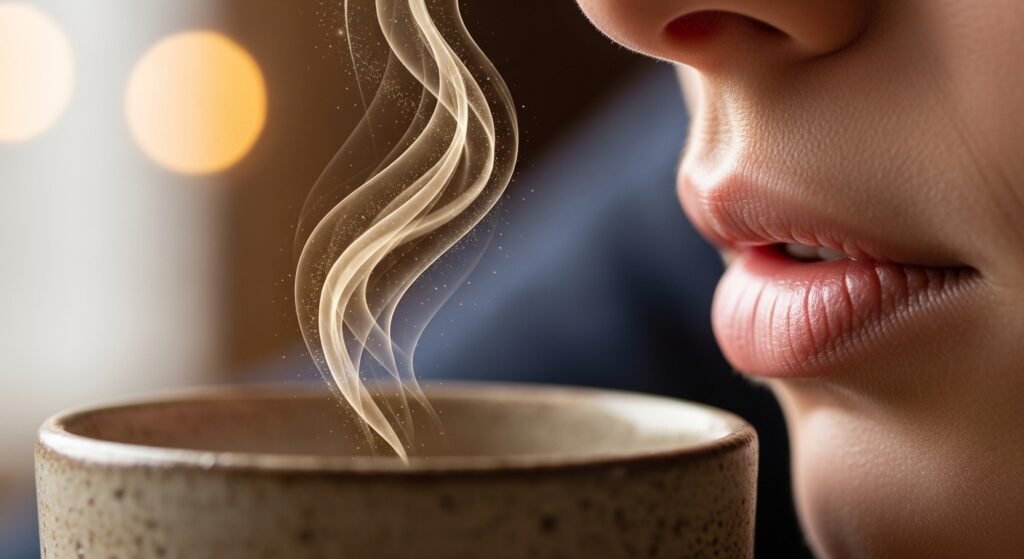
To understand aftertaste, we must understand how we “taste” with our noses. While our tongues detect basic tastes (sweet, sour, salty, bitter, and umami), the “flavor” of coffee—the notes of jasmine, blueberry, or chocolate—comes from our olfactory system.
When you swallow, a puff of air is pushed from the back of your throat into your nasal cavity. This is called retronasal olfaction. It carries the heavier, more complex aromatic compounds that only become apparent once the liquid is gone. This is why Hosting a Professional Coffee Cupping at Home and Slurping Forcefully is so important; the slurp aerates the coffee, ensuring these heavy molecules reach the olfactory sensors effectively.
Why Quality Coffee Stays Sweet
The hallmark of a great aftertaste is sweetness. In lower-quality beans, the finish is often dominated by “quinic acid” and “chlorogenic acid” degradation, which creates a metallic or “dirty” bitterness. In specialty coffee, however, the Unique Mineral Balance of Your Brewing Water works to extract long-chain sugars that linger on the tongue.
-
Lipids and Oils: High-quality Arabica beans have a higher lipid content than Robusta. These oils act as a “carrier” for flavor, sticking to the surface of your mouth and slowly releasing aromatics over time.
-
The “Clean” Finish: A clean finish means the flavor disappears gradually without leaving a dry (astringent) or “ashy” feeling. This is a sign of a perfect roast and a Precisely Calibrated Extraction Process .
The Role of Extraction in the Finish
Your brewing technique directly dictates the quality of the aftertaste. If you over-extract your coffee (using water that is too hot or a grind that is too fine), you break down the larger molecules into smaller, more bitter compounds that dominate the finish.
This is why Maintaining Your Grinder to Avoid ‘Fines’ (Microscopic Coffee Dust) is so vital. Fines extract much faster than the rest of the coffee, leading to a “muddled” aftertaste where the bright acidity of the origin is buried under a layer of generic bitterness. When your grind is uniform, the aftertaste reflects the Vibrant Floral Notes of an Ethiopian Heirloom or the Citrus Power of a Kenyan AA with surgical clarity.
Temperature: The Reveal
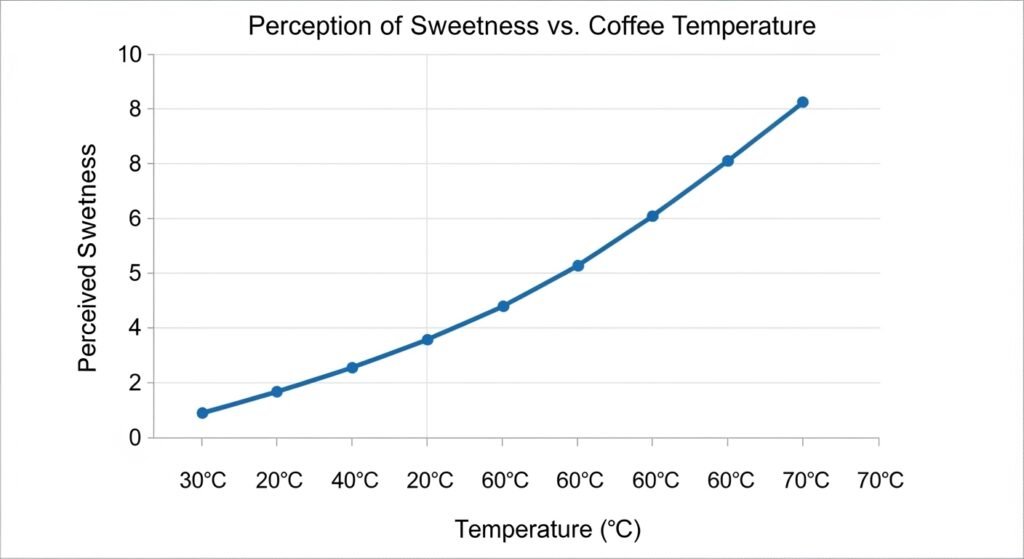
The aftertaste of a coffee changes as the liquid cools. A fascinating aspect of specialty coffee is that its quality often becomes more apparent at room temperature.
As the coffee cools, our perception of bitterness decreases and our perception of sweetness increases. This is the ultimate test: if a coffee has a beautiful, sweet aftertaste when it is lukewarm, you are dealing with an exceptional product. This is often the case with Modern Anaerobic Processed Brazilian Microlots , which can leave a finish reminiscent of fermented honey or tropical fruits that lasts for ten minutes or more.
Distinguishing Between Bitterness and Astringency
Many people confuse a “long” aftertaste with a “bitter” one. A long aftertaste should be pleasant—like the lingering notes of a piece of dark chocolate or a fine wine.
Astringency, on the other hand, is a physical sensation of dryness or “pucker” on the tongue, often caused by under-ripe cherries or Poor Water Quality Lacking Essential Minerals . If your mouth feels dry after a sip, the aftertaste is technically “defective.” A professional-grade coffee should leave your mouth feeling “watered” and clean, prompting you to take another sip.
The Aftertaste of Espresso vs. Filter
Espresso is a concentrate, meaning the aftertaste is amplified. Because of the pressure used in the Dialing-In Process , more oils are emulsified into the liquid, creating a finish that is incredibly intense.
Filter coffee (like a Chemex or V60), however, offers a more “transparent” aftertaste. Without the heavy oils, the finish is lighter and more focused on the delicate aromatics. Neither is superior, but they offer different ways to Explore the Science of How Coffee Lingers on the Human Palate .

Conclusion: The Final Word
The aftertaste is the “memory” of the coffee. It is the part of the experience that stays with you after the cup is empty and you’ve returned to your day. By paying attention to the finish, you develop a deeper respect for the Technical Care That Goes Into Every Step of the Coffee Chain .
Don’t rush your next cup. Take a sip, swallow, and wait. Let the aromatics rise, let the sugars settle on your tongue, and listen to what the coffee is telling you in its final moments. Whether it’s the honeyed sweetness of a Brazilian natural or the tea-like elegance of a high-altitude Ethiopian, the aftertaste is where the true soul of the coffee resides.

Brown Christopher is 47 years old and has been passionate about coffee since he was 15. For more than three decades, he has explored coffee culture, brewing methods, and the flavors behind every cup. Through this blog, he shares simple tips and knowledge to help beginners better understand and enjoy coffee in their daily lives. ☕