
When we hold a bag of specialty coffee, we often focus on the origin and the roast profile. However, there is a critical window of time—immediately after the coffee cherry is picked—that determines the chemical blueprint of the flavor. This is the “processing” stage. In this phase, the farmer decides how to remove the seed (the bean) from the fruit. This decision isn’t just logistical; it is a profound act of flavor engineering.
By Understanding the Unique Chemistry of Volcanic Soils and High-Altitude Terroirs , we know that a bean starts with a certain potential. But it is the processing method that dictates whether that potential is expressed as a clean, tea-like elegance or a wild, funky “fruit bomb.” Today, the specialty industry is moving beyond traditional methods and entering a new era of Experimental Fermentation, where the principles of winemaking and microbiology are applied to the coffee farm.
The Traditional Pillars: Washed and Natural
For decades, the world of coffee was divided into two main camps: the “Washed” (Wet) process and the “Natural” (Dry) process.
1. The Washed Process (Clarity and Acidity)
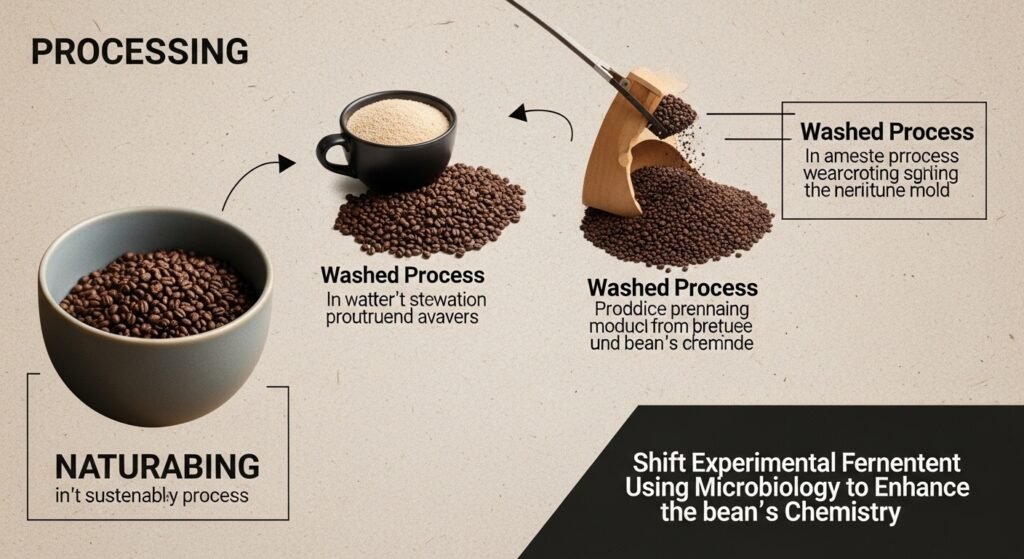
In the washed process, the skin and pulp are removed from the cherry using water and machinery before the beans are dried. Any remaining sticky mucilage is broken down through fermentation in water tanks.
-
The Flavor Result: This method highlights the “intrinsic” flavor of the bean. It produces a cup with high clarity, sparkling acidity, and a light body. It is the preferred method for High-Altitude Ethiopian and Kenyan Heirlooms because it allows the delicate floral and citrus notes to shine without interference from the fruit.
-
The Technical Challenge: It requires a vast amount of clean water and Precise Calibration of the Fermentation Tanks to ensure the acids don’t become vinegary.
2. The Natural Process (Body and Sweetness)
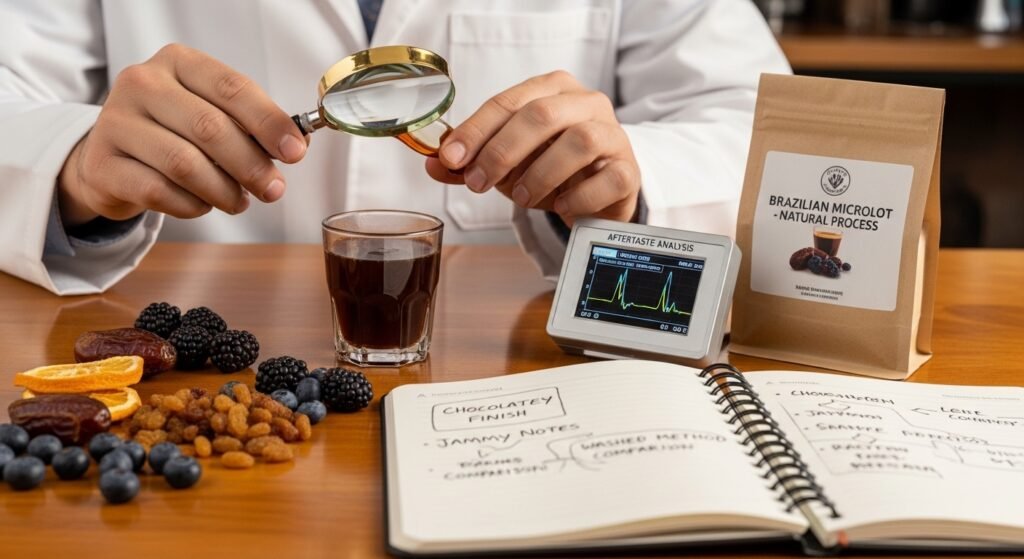
In the natural process, the entire cherry is dried in the sun, usually on “African beds” or brick patios. The bean remains in contact with the fruit and its sugars for weeks.
-
The Flavor Result: This creates a heavy, syrupy body and intense sweetness. Natural coffees often taste like dried fruits (raisins, dates) or berries. When you Analyze the Science of Aftertaste in a Natural Brazilian Microlot , you often find a lingering chocolatey or jammy finish that is impossible to achieve with the washed method.
The “Honey” Process: The Middle Ground
Popularized in Costa Rica, the Honey process is a hybrid. The skin is removed, but some of the sticky fruit (mucilage) is left on the bean during drying.
-
White and Yellow Honey: Less mucilage is left; the flavor is closer to a washed coffee but with more body.
-
Red and Black Honey: More mucilage is left; the flavor is closer to a natural coffee with intense, wine-like notes.
The Honey process is extremely risky. Because the beans are sticky, they can easily ferment too quickly or develop mold if they aren’t turned constantly. This level of Technical Care in the Drying Phase is what separates a specialty Honey process from a defective one.
The Experimental Frontier: Anaerobic Fermentation
The most exciting development in modern coffee is Anaerobic Fermentation. In this method, the coffee cherries (or the pulped beans) are placed in stainless steel tanks that are completely sealed to prevent oxygen from entering.
By removing oxygen, the farmer creates an environment where specific types of yeasts and bacteria—which thrive in anaerobic conditions—can work their magic.
-
Carbonic Maceration: A technique borrowed from the wine industry where the tanks are flushed with $CO_{2}$. This creates a high-pressure environment that forces the flavors of the fruit deep into the cellular structure of the bean.
-
The Sensory Result: These coffees are “fruit bombs.” They can taste like cinnamon, cloves, passion fruit, or even bubblegum. They are so intense that they are often used to Develop a Professional Palate through Comparative Home Cuppings .
The Impact on Brewing: Dialing-In the Process
The way a coffee is processed changes how it behaves in your machine or brewer.
-
Density and Solubility: Anaerobic and Natural coffees are often more “soluble” than Washed coffees because the long fermentation breaks down the bean’s structure. You may need to Calibrate Your Espresso and Use a Coarser Grind to avoid over-extracting these intense sugars.
-
Water Interaction: Because these beans are packed with complex fermented sugars, they are highly sensitive to the Mineral Concentration of Your Brewing Water . High magnesium water can make a funky anaerobic coffee taste too “boozy,” while a balanced water will keep it fruity and sweet.
-
Grinder Maintenance: Natural and Honey processed beans leave behind more “sticky” oil residue on your burrs. If you are Neglecting the Cleaning of Your Grinder , these oils will quickly go rancid and taint the delicate profile of your next batch.
Processing as a Tool for Sustainability
Processing isn’t just about flavor; it’s about survival. In regions where water is scarce, the Natural or Honey process is a more sustainable choice than the Washed process. Conversely, in humid environments where drying is difficult, the Washed process protects the harvest from mold.
The shift toward experimental fermentation also allows farmers in “lower” altitudes to produce “high-end” flavors. By Using Microbiology to Enhance the Bean’s Chemistry , they can compete with the prices commanded by traditional high-altitude estates.
Conclusion: The New Language of Flavor
Processing has transformed coffee from a simple commodity into a sophisticated craft beverage, similar to wine or craft beer. As a consumer, understanding whether your coffee is Washed, Natural, or Anaerobic gives you a “roadmap” of what to expect in the cup.
It reminds us that the perfect cup is a collaborative effort between nature and human ingenuity. By Applying This Technical Knowledge to Your Daily Brewing Routine , you can better appreciate the complex journey of the bean. The next time you see “Anaerobic Maceration” on a label, you’ll know you aren’t just buying coffee—you’re buying a carefully engineered chemical masterpiece.
Are you ready to explore the wild side of flavor?

Brown Christopher is 47 years old and has been passionate about coffee since he was 15. For more than three decades, he has explored coffee culture, brewing methods, and the flavors behind every cup. Through this blog, he shares simple tips and knowledge to help beginners better understand and enjoy coffee in their daily lives. ☕