
The Moka Pot is an icon of industrial design and a staple of Italian coffee culture. Invented by Alfonso Bialetti in 1933, it was designed to bring the “espresso” experience into the home. However, technically speaking, the Moka Pot is not an espresso machine. While a professional machine uses 9 bars of pressure, a Moka Pot operates at approximately 1.5 to 2 bars. It occupies a unique middle ground between the high-pressure intensity of espresso and the clean percolation of a Mastered Pour-Over Technique .
Despite its popularity, the Moka Pot is notorious for producing bitter, metallic, and burnt coffee. This is not a flaw of the device, but a misunderstanding of its physics. To brew a truly great cup, you must manage the “thermal runaway” that occurs on the stovetop and understand how High-Altitude Bean Density Affects the Resistance of the Coffee Puck .
How the Moka Pot Works: Steam vs. Pressure
The Moka Pot operates on a principle of thermal expansion. As the water in the bottom chamber heats up, it creates steam. Because the chamber is sealed, this steam creates pressure that pushes the remaining hot water up through the funnel, through the coffee grounds, and into the top collection chamber.
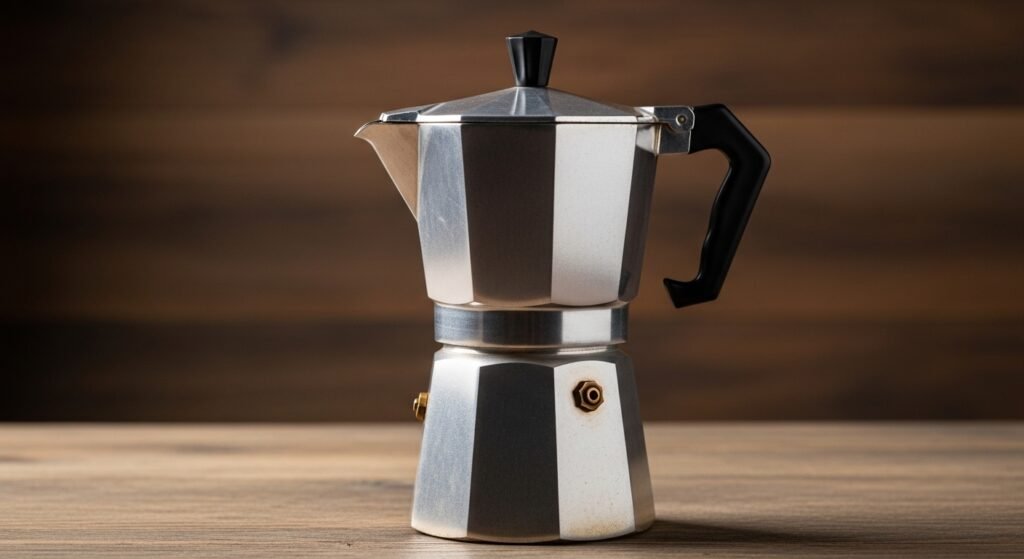
The most common mistake is starting with cold water. When you start with cold water, the coffee grounds sit on the stove and “roast” inside the metal basket while the water heats up. By the time the water begins to move, the grounds are already scorched. To avoid this, you should always start with water that is already near boiling. This allows the extraction to happen almost instantly, preserving the Vibrant Acidity of an African Coffee Profile .
The Importance of Grind Size and Distribution
The Moka Pot requires a specific grind size—finer than a pour-over but coarser than a true espresso. If the grind is too fine, the 1.5 bars of pressure will not be strong enough to push the water through, leading to a stalled extraction and a bitter, ashy cup.
Consistency is key. If you are Neglecting the Maintenance of Your Burr Grinder , the resulting “fines” will pass through the metal filter and create a muddy, silty texture in your final drink. Furthermore, unlike espresso, you should never tamp the coffee in a Moka Pot. Simply fill the basket, level it off, and tap it gently to settle the grounds. Tamping creates too much resistance for the low-pressure system, which can trigger the safety valve or result in an over-extracted mess.
Managing the Extraction Flow: The “Sputter” Point
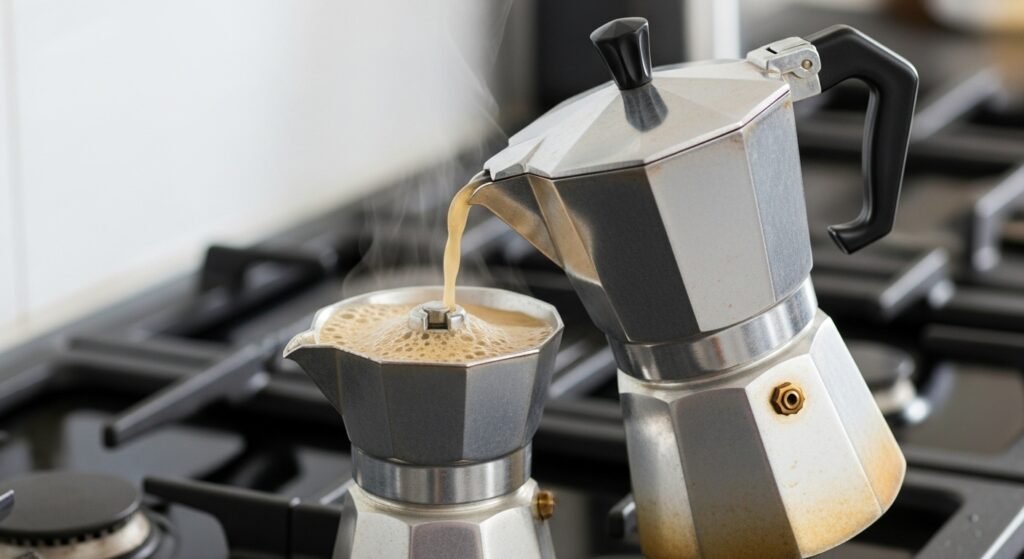
One of the most critical moments in Moka Pot brewing is the “Sputter.” This is the point at the end of the brew where the water level in the bottom chamber drops below the funnel, and steam begins to rush through the grounds. This steam is much hotter than the water and will instantly “burn” the extraction, destroying the Beautifully Complex Aftertaste of a Specialty Bean .
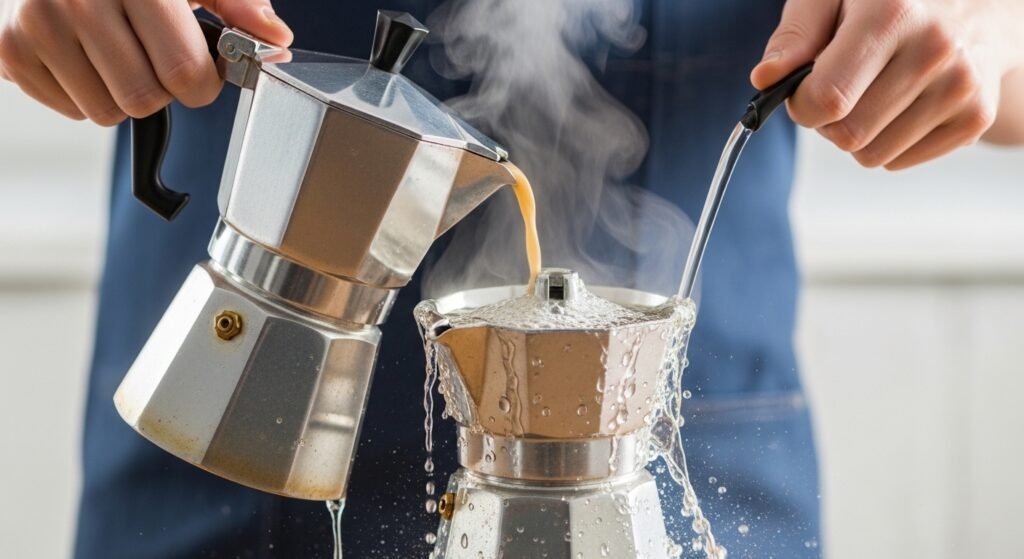
To master the Moka Pot, you must stop the brew before the sputtering begins. As soon as the coffee flowing into the top chamber begins to turn pale and bubbly (the “blonde” phase), remove the pot from the heat and run the bottom chamber under cold water. This thermal shock stops the pressure instantly, locking in the sweetness and preventing the harsh, bitter finish.
Water Quality and the Aluminum Debate
Most traditional Moka Pots are made of aluminum, which is an excellent conductor of heat but can be reactive. If you use water that is too acidic or too alkaline, it can corrode the metal over time. This is why Calibrating Your Water Quality and Mineral Balance is just as important for a $30 Moka Pot as it is for a $5,000 espresso machine.
Additionally, you should never wash a Moka Pot with aggressive detergents or scrub the “seasoning” off the inside. A simple rinse with hot water is usually enough. Over time, a thin layer of coffee oils coats the aluminum, which many purists believe protects the coffee from a metallic taste. However, if these oils go rancid because of Poor Equipment Hygiene , they will ruin your next batch.
Terroir Selection: What Works Best?
Because the Moka Pot produces a concentrated, intense cup, it favors certain types of coffee:
-
Brazilian and Colombian Naturals: These coffees, with their notes of nut, chocolate, and caramel, thrive in the Moka Pot. Their heavy body complements the brewer’s lack of a paper filter.
-
Experimental Fermentations: The intensity of a Moka Pot can highlight the wine-like notes of an Anaerobic Processed Coffee , making it feel almost like a liqueur.
-
Mixology Base: The Moka Pot is arguably the best home method for creating the base of a Sophisticated Coffee Cocktail Like the Carajillo if you do not own an espresso machine.
Troubleshooting: Leaks and Weak Coffee
If your Moka Pot is leaking steam from the center screw, it usually means your rubber gasket is old and brittle. This loss of pressure means the water will take longer to move, resulting in over-cooked coffee. Regularly check and replace your seals to Ensure Mechanical Precision in Your Brewing Ritual .
If the coffee tastes weak or watery, even with a dark roast, it is likely that you are experiencing “channeling.” Ensure your Water and Mineral Ratio is correct and that your coffee is distributed evenly in the basket without any clumps.
Conclusion: The Soul of the Italian Kitchen
The Moka Pot is a bridge between the past and the present. It requires us to slow down and listen to the sounds of the kitchen. By Applying Technical Rigor to This Stovetop Method , we can transform it from a source of “strong, bitter fuel” into a tool for genuine sensory exploration.
It reminds us that great coffee doesn’t always require expensive electricity or digital screens. Sometimes, all you need is a well-engineered piece of aluminum, Precisely Filtered Water , and the patience to watch the “liquid gold” rise into the chamber. Respect the physics, manage the heat, and the Moka Pot will reward you with one of the most soulful cups of coffee you have ever tasted.

Brown Christopher is 47 years old and has been passionate about coffee since he was 15. For more than three decades, he has explored coffee culture, brewing methods, and the flavors behind every cup. Through this blog, he shares simple tips and knowledge to help beginners better understand and enjoy coffee in their daily lives. ☕