
In the specialized language of coffee professionals, you will often see the acronym SHB (Strictly Hard Bean) or SHG (Strictly High Grown). These are not merely marketing labels; they are biological classifications that define the structural integrity and flavor potential of a coffee bean. To understand why the world’s most expensive coffees are grown on the steep slopes of the Andes, the Great Rift Valley, or the Mantiqueira de Minas in Brazil, we must look at the intersection of botany, atmospheric pressure, and metabolic stress.
Altitude is the invisible hand that shapes the “terroir.” While low-altitude coffees, often grown on flat plains, tend to be earthy, nutty, and consistent, high-altitude coffees are complex, acidic, and vibrant. This distinction is the foundation of the specialty movement. When you Analyze the Delicate Floral Notes of an Ethiopian Heirloom , you are tasting the direct result of a plant struggling to survive in the thin, cold air of a mountain peak.
The Biology of Slow Maturation
The primary reason high-altitude coffee tastes better is time. At elevations above 1,200 meters, the air is cooler, especially at night. This lower temperature slows down the metabolic rate of the coffee plant. Instead of the cherry ripening quickly under intense, consistent heat, the maturation process is delayed.
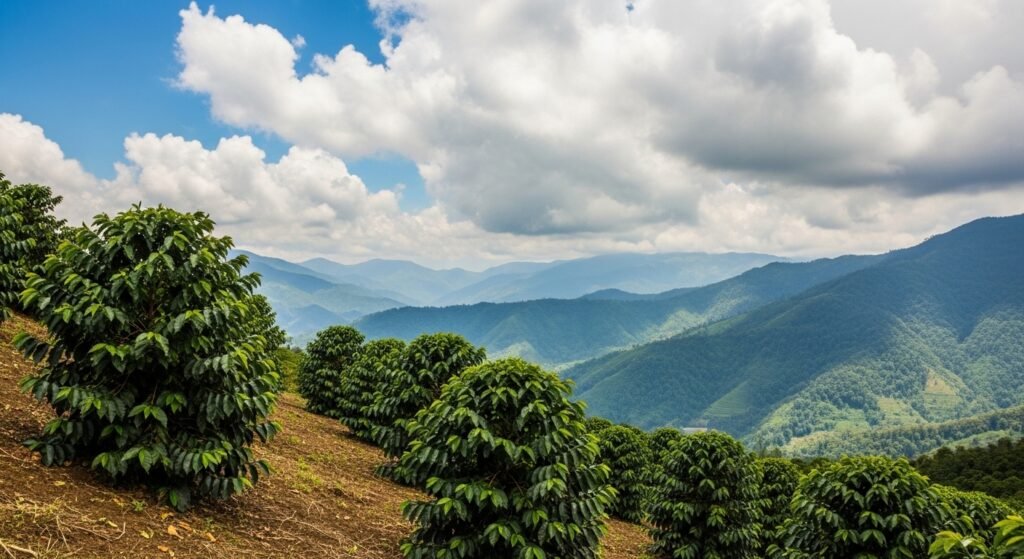
This delay is crucial for the development of complex sugars. As the fruit takes longer to ripen, the plant has more time to synthesize glucose and other chemical precursors. In the cup, this translates to a higher concentration of sweetness and a more balanced acidity. A “Hard Bean” (SHB) is physically denser because the cellular structure is more compact, a direct result of this slow growth. This density is a technical challenge during the Dialing-In Process of an Espresso Shot , as the water requires more energy to penetrate the tightly packed cells.
Acidity and Atmospheric Pressure
Acidity is often the most prized characteristic of specialty coffee, and it is intrinsically linked to altitude. High-altitude environments promote the development of organic acids—specifically malic acid (apple-like) and citric acid (lemon-like).
The thinner atmosphere at high altitudes allows for more intense UV radiation during the day, followed by a sharp drop in temperature at night. This thermal “stress” triggers the plant to produce these acids as part of its internal chemistry. When you Host a Coffee Cupping at Home , you can easily distinguish a mountain-grown bean by its “sparkling” or effervescent quality, a sensation that is rarely found in coffees grown at sea level.
The Brazilian Transformation: High-Altitude Terroirs
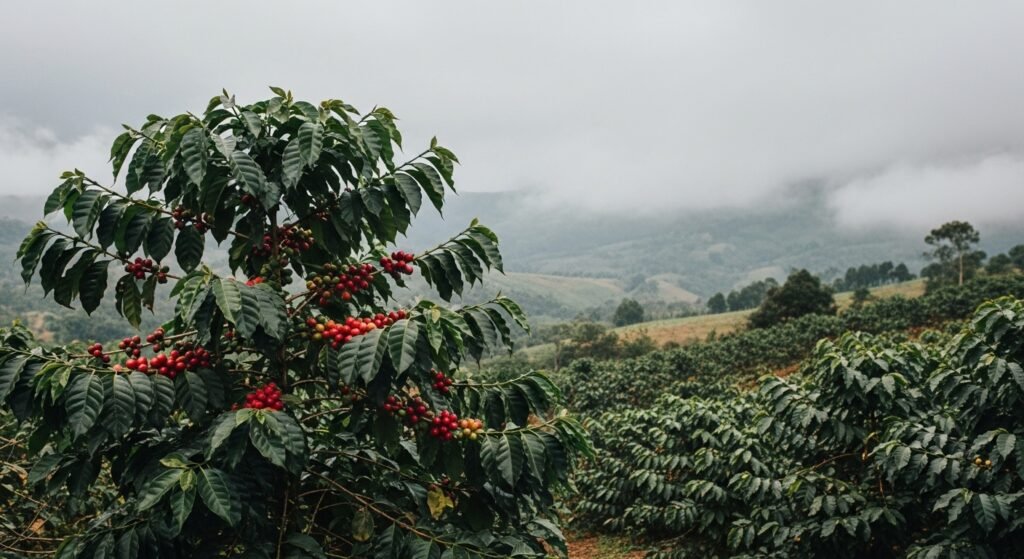
For decades, Brazil was known for its “Cerrado” coffees—grown on vast, flat plateaus at moderate altitudes (800m to 1,000m). While these are excellent for balance and chocolate notes, the modern Brazilian revolution is happening in the mountains.
Regions like Mantiqueira de Minas, Espírito Santo, and Chapada Diamantina offer altitudes reaching up to 1,400 meters or more. In these areas, the combination of high elevation and volcanic soil produces coffees that rival the best in the world. Brazilian mountain coffees are breaking stereotypes by offering notes of red fruits, white flowers, and honey, all while maintaining the creamy body that Brazil is famous for. To preserve these delicate mountain flavors, Strict Equipment Maintenance and Water Purity are essential; the subtle aromatics of a high-altitude Yellow Bourbon can be easily overwhelmed by mineral-heavy water or a dirty grinder.
The Role of Drainage and Soil
Mountains provide more than just cool air; they provide superior drainage. Coffee plants dislike “wet feet.” In flat, low-lying areas, water can settle around the roots, leading to over-hydration and a dilution of flavor.
On a slope, gravity ensures that water moves through the soil quickly. This forces the plant to develop deep, strong root systems to find nutrients. The minerals absorbed from these deep volcanic or metamorphic soils—such as phosphorus and potassium—contribute to the Science of Aftertaste and the Lingering Finish that specialty drinkers crave. This mineral interaction is why “mountain water” is often cited as the best for brewing, as it shares a similar chemical heritage with the beans themselves.
Challenges of Mountain Farming
If high altitude produces better coffee, why isn’t all coffee grown there? The answer is logistics and labor.
-
Manual Harvest: On steep slopes, mechanical harvesting is impossible. Every single cherry must be picked by hand. This increases the cost but also the quality, as human pickers only select the ripest fruit.
-
Low Yield: Because the plants grow slower and the environment is harsher, mountain farms often produce fewer bags per hectare than lowland farms.
-
Climate Risk: High-altitude farms are more susceptible to frost and unpredictable rainfall patterns caused by climate change.
These factors justify the premium price of specialty coffee. When you buy a bag of high-altitude beans, you are paying for the increased labor, the lower yield, and the biological struggle of the plant to create those complex sugars.
Altitude and Roast Profile
From a technical perspective, roasters treat mountain beans differently. Because the beans are so dense, they can withstand higher temperatures at the start of the roast without burning. A low-altitude bean is “softer” and more fragile; if a roaster applies too much heat too quickly, the bean will char.
This structural strength allows roasters to experiment with longer “Maillard” reactions, further enhancing the sweetness. This is why high-altitude coffees are often the most versatile, performing exceptionally well in both light-roast filter methods and medium-roast espressos.
Conclusion: Reaching for the Peak
The quest for high-altitude coffee is a quest for clarity and complexity. It reminds us that in nature, beauty often comes from adversity. The struggle of the coffee tree against the cold, thin air of the mountains is what creates the vibrant acidity and deep sweetness that we enjoy in our cups every morning.
The next time you look at a bag of coffee, check the elevation. If it says 1,500m or above, prepare your palate for a different experience. You aren’t just drinking a beverage; you are tasting the thin air, the volcanic soil, and the slow-motion chemistry of the peaks. Respect the altitude, Keep Your Brewing Gear Spotless , and let the mountains reveal their secrets.

Brown Christopher is 47 years old and has been passionate about coffee since he was 15. For more than three decades, he has explored coffee culture, brewing methods, and the flavors behind every cup. Through this blog, he shares simple tips and knowledge to help beginners better understand and enjoy coffee in their daily lives. ☕