
In the pantheon of coffee history, the Moka Pot—patented in 1933 by Alfonso Bialetti—stands as a masterpiece of industrial design and fluid dynamics. Often referred to as “stovetop espresso,” the Moka Pot does not actually produce true espresso (which requires 9 bars of pressure), but it creates a concentrated, intense, and viscous cup that sits perfectly between a filter brew and a professional shot.
However, the Moka Pot is also one of the most misunderstood tools. Many users complain of a “burnt” or “metallic” taste, which is almost always a result of poor thermal management. To master this device, you must understand the Technical Calibration of Extraction and Heat Control . By applying the principles of Water Chemistry and Mineral Balance , you can transform this humble aluminum pot into a high-precision extraction laboratory.
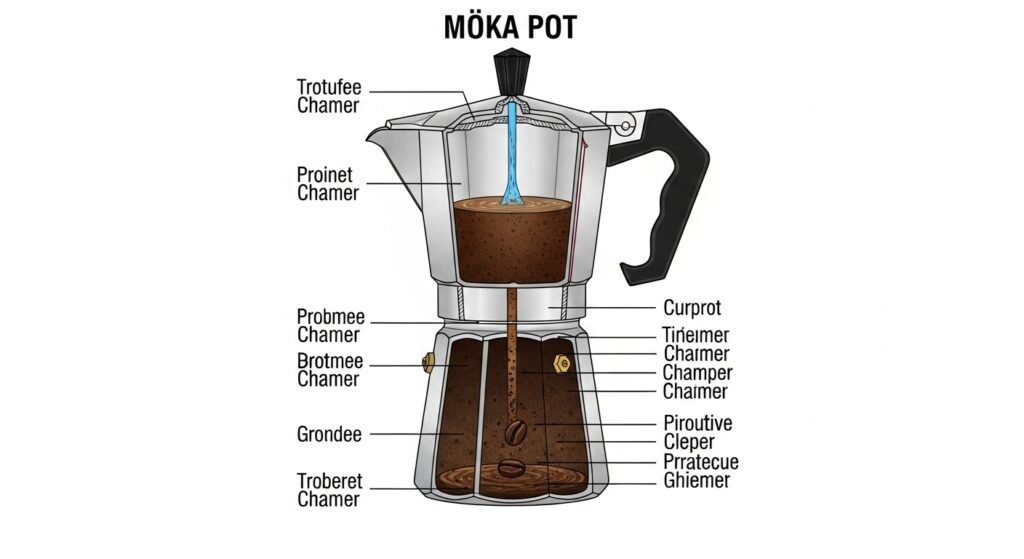
The Steam-Pressure Cycle: How It Works
The Moka Pot operates on a simple but delicate physical principle. As the water in the bottom chamber (the boiler) heats up, it generates steam. This steam creates pressure in the small headspace above the water level. Eventually, the pressure becomes strong enough to force the hot water down, through the funnel, and up through the compacted bed of coffee grounds.
The critical mistake many people make is starting with cold water in the boiler. This forces the coffee grounds to sit on the stove for several minutes, absorbing dry heat. By the time the water finally moves through the coffee, the grounds have been “toasted,” resulting in a bitter, ashy Science of Aftertaste .
-
Pro Tip: Always start with pre-heated (near-boiling) water in the boiler. This drastically reduces the time the coffee spends on the heat, preserving the Delicate Acids of High-Altitude Beans .
The Variable of Grind: Beyond “Espresso” Settings
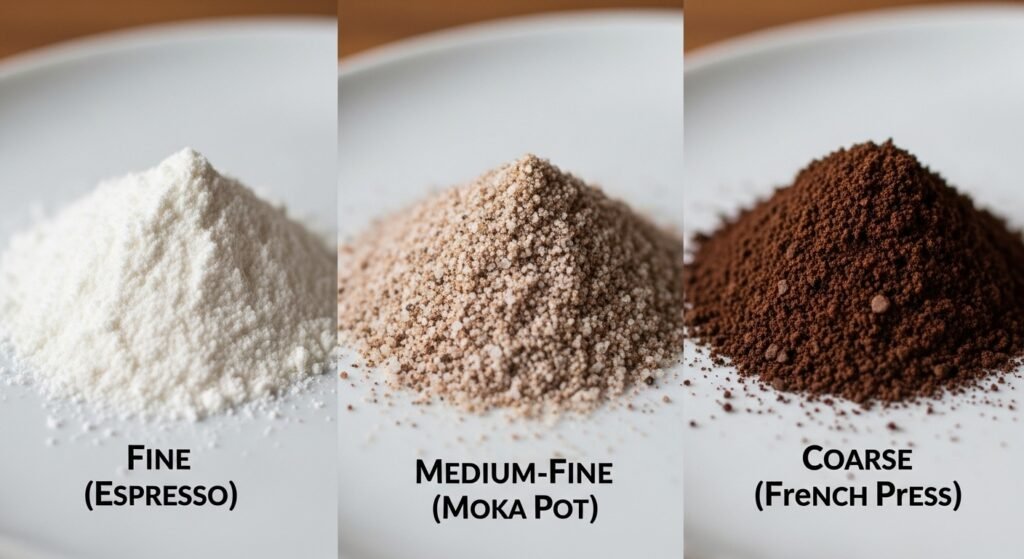
Because the Moka Pot uses more pressure than a V60 but less than a Rancilio or La Marzocco, the grind size is a specific niche.
-
Too Fine: If you use a professional espresso grind, the water will struggle to pass through the puck. This creates excessive pressure, often triggering the safety valve or leading to a “choked” brew that is over-extracted and bitter.
-
Too Coarse: The water will rush through too quickly, failing to dissolve the Dense Sugars of Specialty Mountain Coffees , resulting in a sour, watery mess.
The “Sweet Spot” is a medium-fine grind—slightly coarser than table salt. This allows for enough resistance to create body without causing the thermal damage that ruins the Regional Profiles of African or Brazilian lots .
Heat Management: The “Gas-Off” Technique
Precision in Moka Pot brewing requires active heat management. Once the coffee begins to flow into the upper chamber, you should immediately turn down the heat to its lowest setting. Your goal is a slow, syrupy stream—not a violent volcano of foam.
As soon as the coffee stream begins to pale and turn “blond” or bubbly (indicating that the desirable oils are gone and only bitter compounds remain), remove the pot from the heat and run the bottom chamber under cold tap water. This “thermal shock” stops the extraction instantly, preventing the final, most bitter stage of the brew from entering your cup. This is a Key Technique in Professional Coffee Evaluation adapted for home use.
Maintenance: Protecting the Aluminum and the Seal
A Moka Pot is built to last a lifetime, but only if you Maintain and Clean the Equipment Correctly .
-
Aluminum Care: Most Moka Pots are made of aluminum, which develops a “seasoning” or a protective oxide layer. Never use a dishwasher or abrasive sponges. A simple rinse with hot water and a soft cloth is usually enough.
-
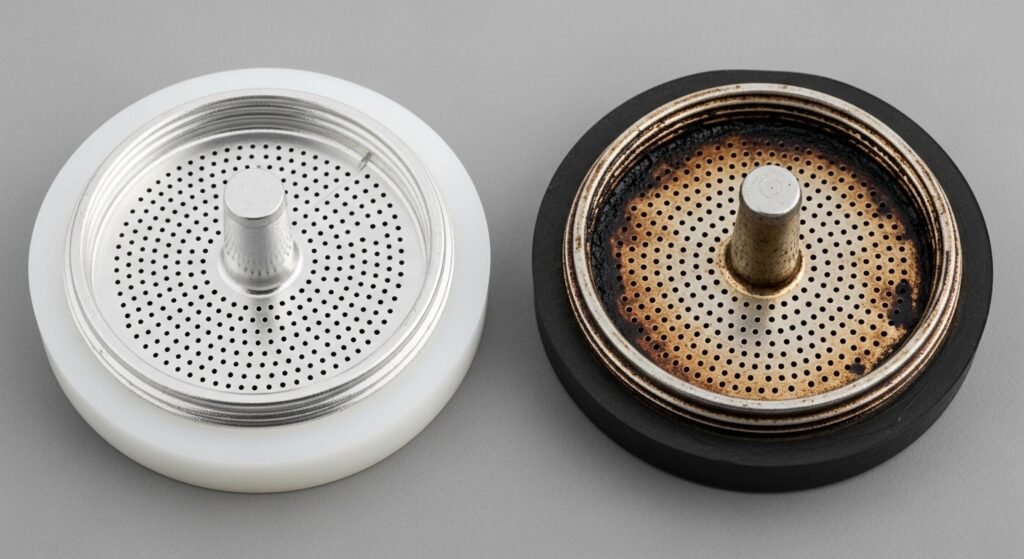
The Gasket: The rubber seal is the most common point of failure. Over time, it hardens and leaks pressure. Check it monthly. If it feels brittle or shows cracks, replace it immediately to ensure your Calibration of the Pressure-Heat Ratio remains consistent.
-
The Safety Valve: Once a month, push the pin of the safety valve with your finger to ensure it isn’t clogged with limescale from Poor Water Quality .
Choosing the Right Bean for the Moka Pot
The high intensity of the Moka Pot means it is excellent at highlighting “heavy” flavors:
-
Brazilian Naturals: The low acidity and high nut/chocolate profile of High-Altitude Brazilian Beans are amplified in a Moka Pot, creating a dessert-like experience.
-
African Washed Coffees: While trickier to brew, a Kenyan or Ethiopian Coffee in a Moka Pot can yield a vibrant, concentrated “juice” that is incredible when served over a small amount of hot water (a Moka-Americano).
Because the Moka Pot is so efficient at extraction, any defects in the bean will be magnified. This is why using Specialty Grade Beans with a Clear Traceability History is even more important than in standard drip methods.
Conclusion: Engineering a Classic
The Moka Pot is a bridge between the past and the future of coffee. It requires a hands-on approach that forces the brewer to engage with the sounds, smells, and visual flow of the extraction. By Applying the Scientific Principles of Thermal Shock and Grind Precision , you elevate a vintage Italian design into a tool capable of producing world-class flavor.
Respect the pressure, control the temperature, and always Keep Your Pot Spotless and Residue-Free . When you see that first golden stream of coffee slowly emerging from the spout, you’ll know that the physics of the mountain and the laboratory have finally met in your kitchen.

Brown Christopher is 47 years old and has been passionate about coffee since he was 15. For more than three decades, he has explored coffee culture, brewing methods, and the flavors behind every cup. Through this blog, he shares simple tips and knowledge to help beginners better understand and enjoy coffee in their daily lives. ☕