
In the pursuit of the perfect cup, we often obsess over variables like the Genetic Heritage of African Beans or the Precise Chemistry of Our Water. However, there is a silent enemy lurking in every kitchen and cafe: polymerized coffee oils and mineral scale. Coffee is an organic substance rich in lipids (oils). From the moment a bean is roasted, these oils begin to oxidize. When they come into contact with your equipment, they leave behind a sticky residue that, if not removed, turns rancid.
Dirty equipment is the primary reason why home-brewed coffee often fails to match the Vibrant and Sweet Aftertaste found in specialty cafes. Whether you are using a simple French Press or a multi-thousand dollar espresso machine, your results are only as good as your cleaning routine. To respect the High-Altitude Terroir of your beans, you must maintain a pristine brewing environment.
1. The Grinder: The Heart of Consistency
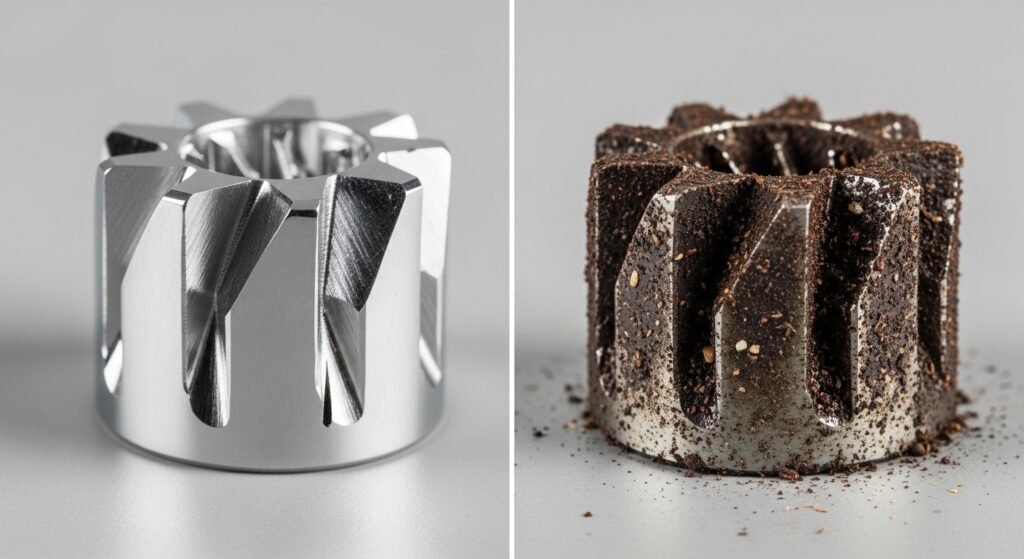
The grinder is arguably the most important piece of equipment you own, but it is also the most neglected. Every time you grind coffee, microscopic particles and oils are deposited on the burrs and inside the “chute” (the exit path).
Over time, these oils harden and turn into a “varnish.” When you grind fresh beans, they pass through this layer of rancid old oil, picking up flavors of smoke, fish, or stale nuts.
-
The Weekly Clean: Use a dedicated grinder cleaning product (typically organic, grain-based pellets). These pellets absorb the oils and knock loose the “fines” trapped between the burrs.
-
The Deep Clean: Once a month, you should physically open the grinder and vacuum out the internal chamber. Using a stiff brush to clean the teeth of the burrs will ensure that your Espresso Calibration remains Precise, as even a small amount of buildup can change the distance between the burrs.
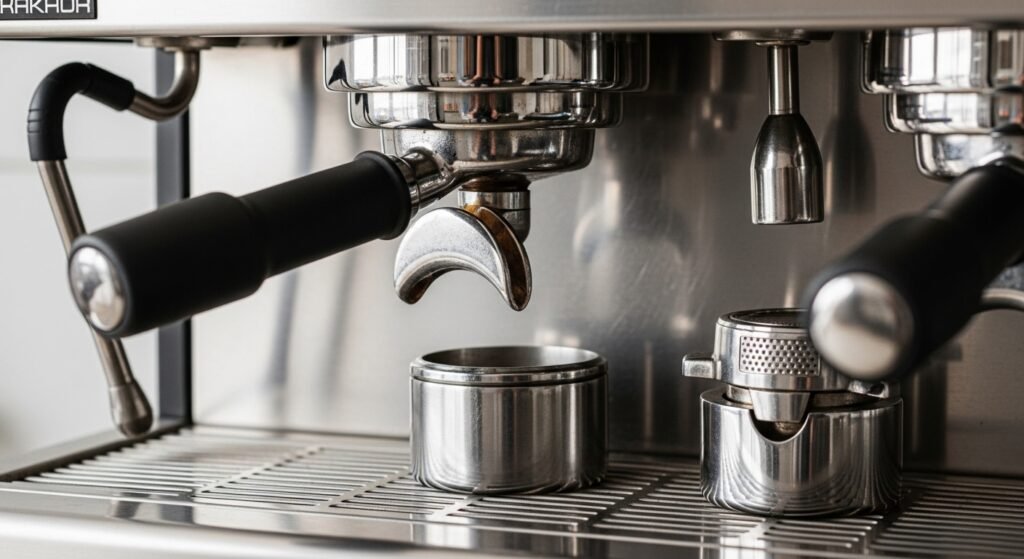
2. The Espresso Machine: Group Heads and Portafilters
Espresso machines operate under high heat and pressure, which accelerates the polymerization of coffee oils. The “shower screen” (where the water leaves the machine) and the “basket” in your portafilter are the two areas where flavor is most easily destroyed.
-
Backflushing: This is the process of using a blind filter and a specialized detergent to force cleaner through the internal “three-way solenoid valve.” If you do not backflash daily, the old coffee “honey” inside the machine will eventually block the flow and impart a permanent bitter taste to every shot.
-
The Steam Wand: Milk proteins are extremely “sticky.” If you do not purge and wipe your steam wand immediately after every use, milk travels up the wand and into the boiler, creating a bacterial hazard and a foul smell.
3. Dealing with the “Invisible Killer”: Limescale
As we discussed in our exploration of Water Quality and Mineral Composition, calcium and magnesium are essential for extraction but deadly for hardware. When water is heated, these minerals precipitate out and form “scale.”
Limescale acts as an insulator. In a kettle or an espresso boiler, scale buildup means the heating element must work harder and longer to reach the Optimal Brewing Temperature. This leads to thermal instability and eventually causes the element to burn out.
-
Descaling: Depending on your water hardness, you must use a citric acid or specialized descaling solution every 3 to 6 months. This dissolves the calcium carbonate ($CaCO_3$) and restores your machine’s efficiency.
4. Manual Brewers: French Press and Pour-Overs
Manual brewing equipment is not exempt from maintenance. The metal mesh of a French Press is a notorious trap for old oils. If you only rinse your press with water, the oils will remain in the mesh, oxidizing and ruining the Delicate Sensory Profile of Your Next Cup.
For glass carafes and ceramic drippers, “coffee stains” are actually layers of tannins. These stains are not just aesthetic issues; they are chemical layers that can influence the flavor of your coffee. A simple soak in a mixture of hot water and sodium percarbonate (like Cafiza or similar oxygen-based cleaners) will restore the glass to a “squeaky clean” state.

5. The Golden Rule of Cleaning: No Dish Soap!
A common mistake made by home enthusiasts is using standard dish soap. Most dish soaps contain perfumes and surfactants that are designed to stick to surfaces to provide a “shine.” These perfumes are incredibly potent and will absorb into the porous surfaces of your coffee equipment, making your High-Altitude African Coffee taste like “Lemon Fresh” soap.
Always use specialized, fragrance-free coffee detergents. These are designed to break down organic coffee oils without leaving a chemical residue or scent behind.
6. Developing a Maintenance Schedule
Consistency in cleaning is as important as consistency in brewing.
-
Daily: Wipe the steam wand, rinse the portafilter, and empty the drip tray.
-
Weekly: Soak baskets and portafilter heads in detergent; run grinder cleaning pellets.
-
Monthly: Deep clean the grinder burrs; check for scale in the reservoir.
-
Yearly: Replace rubber gaskets and O-rings. Rubber becomes brittle over time under heat, and a leaking gasket will prevent you from Achieving the Necessary Pressure for a Perfect Espresso.
7. The Impact on Your Wallet and Your Palate
Maintenance is an investment. A well-maintained espresso machine can last 15 to 20 years, whereas a neglected one will often fail within 3 years. Furthermore, the Science of Aftertaste is entirely dependent on a clean “canvas.”
If you are spending $30 on a bag of specialty beans but brewing them in a machine that hasn’t been cleaned in a month, you are effectively throwing away $25 of that value. The nuances of Mount Kenya’s Volcanic Soil simply cannot survive a encounter with rancid oils.
8. Conclusion: Respect the Craft
Cleaning is the “unsexy” part of being a barista, but it is the foundation of all quality. By keeping your equipment in peak condition, you ensure that the only thing you taste is the coffee itself. You honor the hard work of the farmers who grew the High-Altitude Beans and the roasters who spent hours perfecting the profile.
Remember, a clean machine is a consistent machine. When your equipment is spotless, your Dialing-In Process becomes much easier, as you no longer have to compensate for the “mystery flavors” of a dirty system. Treat your tools with respect, and they will reward you with a lifetime of exceptional coffee.
The secret to why your favorite cafe’s coffee tastes so much better than yours is rarely the beans alone; it is often the fact that they are Strictly Following a Professional Sanitation Routine to Ensure that Every Molecule of the Coffee’s Natural Chemistry is Preserved Without Distortion from Old Residues.

Brown Christopher is 47 years old and has been passionate about coffee since he was 15. For more than three decades, he has explored coffee culture, brewing methods, and the flavors behind every cup. Through this blog, he shares simple tips and knowledge to help beginners better understand and enjoy coffee in their daily lives. ☕