
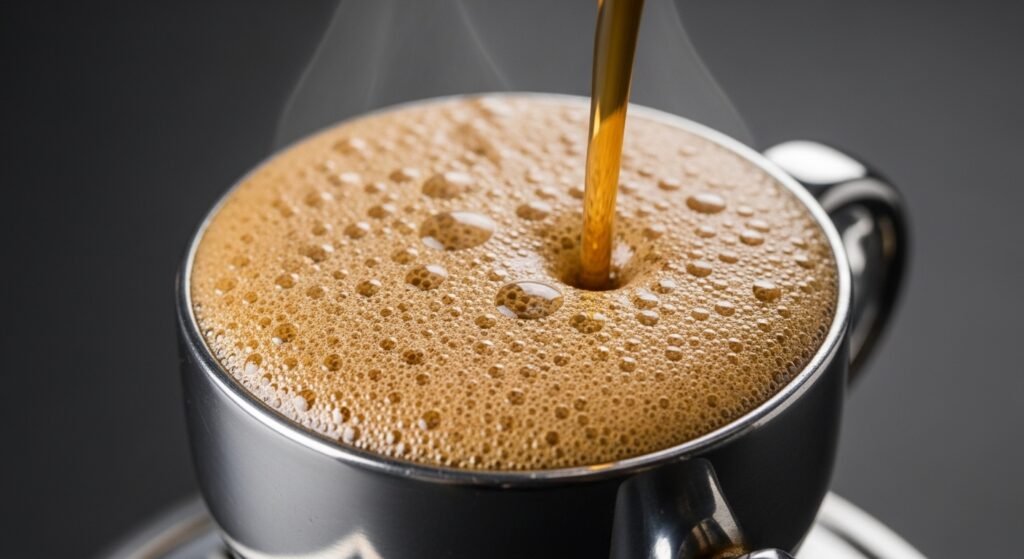
In the world of specialty espresso, the “crema”—that thin, golden-brown layer of micro-bubbles on top of the shot—is often viewed as the primary indicator of quality. While some beginners mistake crema for the flavor itself, professional baristas know that crema is actually a complex emulsion of CO2 gases and coffee oils (lipids). To master the Science of Aftertaste, one must understand how these lipids interact with water and pressure to create the tactile signature of a great espresso.
Unlike the Science of Cold Brew, where oils are extracted slowly over time, espresso forces these lipids out of the bean instantly. This creates a suspended state of matter that provides the “body” and “mouthfeel” we associate with High-Altitude Brazilian Coffees. Without lipids, coffee is just a dark infusion; with them, it becomes a textured experience.
1. What Exactly is Crema?
Crema is a “polyphasic” foam. This means it consists of three distinct states of matter:
-
Gas: Carbon dioxide (CO2) released from the roasted bean during extraction.
-
Liquid: The water-based coffee solution.
-
Solid: Microscopic fragments of coffee bean cell walls (fines).
The “glue” that holds these three phases together is the lipid content. When hot water hits the coffee puck at 9 bars of pressure, it emulsifies the oils. These oils surround the gas bubbles, preventing them from popping immediately. This is why Freshly Roasted Beans produce more crema; they contain more trapped CO2 and more intact lipid structures.
2. The Relationship Between Lipids and Mouthfeel
Lipids are responsible for the “viscosity” of the espresso. In a Well-Calibrated Extraction, these oils coat the tongue and the roof of the mouth. This coating does two things:
-
Tactile Perception: It creates a sensation of “creaminess” or “weight” that defines a high-quality mouthfeel.
-
Flavor Extension: Because many aromatic compounds are fat-soluble, the lipids hold onto these flavors, releasing them slowly over several minutes. This is the physiological basis of a Long and Sweet Aftertaste.
If your Water Quality is Poor, the mineral imbalance can interfere with this emulsion, leading to a thin, watery crema that disappears in seconds.
3. The Impact of Bean Origin on Crema Density
Not all beans produce the same amount of lipids.
-
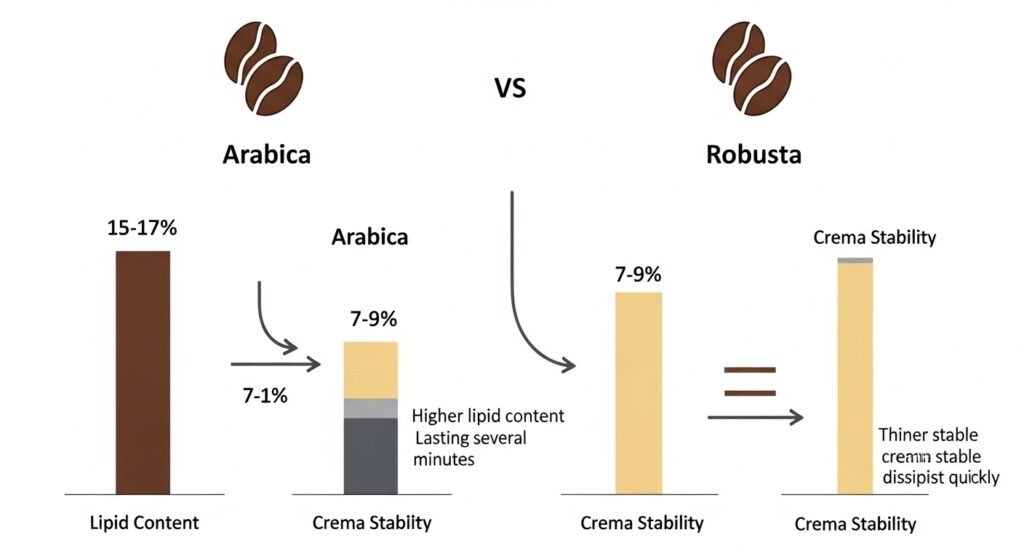
Robusta vs. Arabica: Robusta beans typically have fewer lipids but produce more stable, thicker crema. Arabica, especially High-Altitude Varieties from Ethiopia or Kenya, contains more oils but results in a thinner, more delicate crema that is highly aromatic.
-
Altitude and Density: Beans grown at extreme altitudes develop denser cellular structures. This density requires higher temperatures and precise Grind Calibration to effectively force the oils out into the cup.
4. The “Tiger Striping” Phenomenon
The mottled, dark-and-light pattern often seen on top of a professional espresso shot is known as “tiger striping.” This is caused by the extraction of highly concentrated coffee solids and oils toward the end of the shot.
-
Darker Stripes: Indicate high oil concentration and heavy solids.
-
Lighter Areas: Indicate the lighter, more acidic part of the extraction.
Tiger striping is a visual cue that your Equipment is Clean and your Dialing-In Process is accurate. If your portafilter or group head is dirty, old rancid oils will break the surface tension of the crema, causing it to look “splotchy” or pale
5. Roasting and Lipid Migration
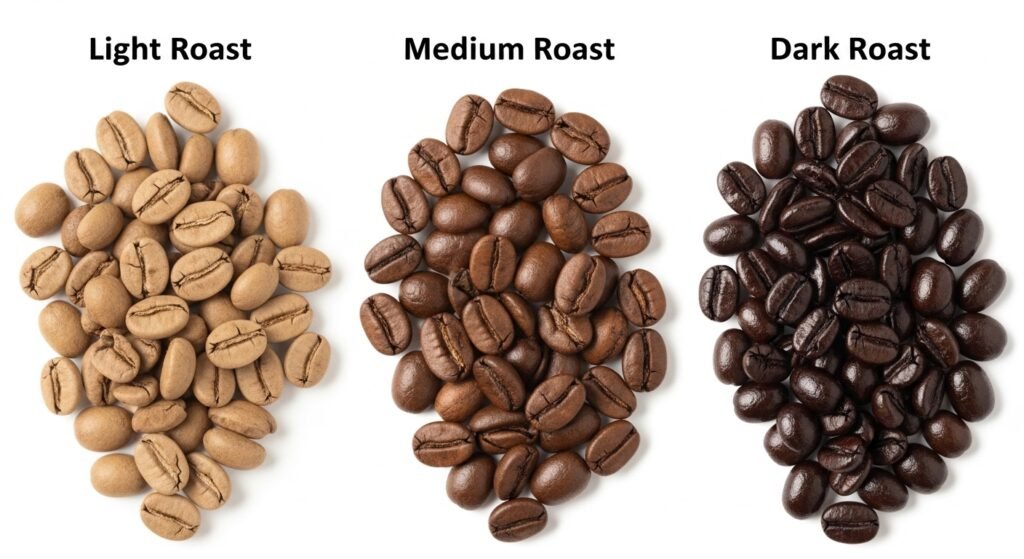
As coffee roasts, the internal pressure within the bean increases, forcing the oils from the center of the bean toward the surface.
-
Dark Roasts: Often have visible oils on the outside of the bean. While this might look “rich,” it means the oils are already exposed to oxygen and are starting to go rancid. This leads to a heavy but “ashy” crema.
-
Medium Roasts: These generally offer the best balance. The lipids are developed but still protected inside the bean, resulting in a sweet, vibrant, and Clean Aftertaste.
[IMAGEM2 – A photographic comparison of Light, Medium, and Dark roasted beans showing the different levels of external oil migration.]
6. How to Diagnose Your Crema
Your crema is a technical “health report” for your espresso:
-
Too Dark/Thin: The water was likely too hot, or the grind was too fine (over-extraction).
-
Too Pale/Large Bubbles: The beans are either too old (no CO2) or the grind was too coarse (under-extraction).
-
Disappears Instantly: This is a sign of Poor Water Quality (low mineral content) or a dirty cup with soap residue.
To fix these issues, you must return to the basics of Calibrating Your Espresso and ensuring your Maintenance Schedule is being followed strictly.
7. The Science of the “Stir”
Should you stir your crema? Scientifically, yes. Because crema is composed of the last part of the extraction, it can be quite bitter. Stirring the crema into the rest of the liquid homogenizes the lipids with the acids and sugars from the beginning of the shot. This creates a more balanced flavor profile and a smoother Science of Aftertaste experience.
8. Conclusion: Respecting the Lipids
Lipids are the unsung heroes of the espresso world. They are the reason coffee feels like a luxury rather than just a drink. By understanding the chemistry of the emulsion and the importance of Bean Freshness, you can engineer a crema that is not just beautiful to look at, but vital to the taste.
Keep your Grinder and Machine Clean, respect the High-Altitude Terroir, and always pay attention to the bubbles. The crema is the final signature of your skill as a barista, and a testament to the complex biology of the coffee bean.
The mastery of espresso texture relies on Consistently Balancing the Extraction of Soluble Solids with the Emulsification of Natural Lipids to Create a Stable Micro-foam that Enhances the Sweetness and Body of the Final Cup.

Brown Christopher is 47 years old and has been passionate about coffee since he was 15. For more than three decades, he has explored coffee culture, brewing methods, and the flavors behind every cup. Through this blog, he shares simple tips and knowledge to help beginners better understand and enjoy coffee in their daily lives. ☕