
To understand the current state of the coffee industry, one must understand the “Waves.” If the First Wave was about accessibility (mass-market instant coffee) and the Second Wave was about the “Starbucks effect” (espresso drinks and social spaces), the Third Wave is about the bean itself. In this era, coffee is no longer just a morning ritual; it is a complex artisanal product, comparable to fine wine or craft chocolate.
This movement has redefined everything from how we perceive Regional Terroirs to the technical ways we evaluate the Science of Aftertaste. The Third Wave treats the coffee bean as a biological marvel, demanding transparency in the supply chain and extreme precision in the Dialing-In Process.
1. Traceability: From Region to Farm
In the First and Second Waves, coffee was often sold by country or generic blend names. In the Third Wave, transparency is paramount. Consumers now look for “Single Origin” or even “Single Farm” (Micro-lot) coffees.
-
Farm-Level Detail: Knowing the name of the farmer and the specific hillside where the coffee grew allows for a deeper appreciation of the Secrets of High Altitude.
-
Varietal Awareness: Instead of just “Arabica,” Third Wave drinkers discuss specific cultivars like Gesha, SL-28, or Bourbon.
-
Processing Transparency: Whether a coffee is Washed, Natural, or Honey-processed is now a standard piece of information on the bag, as it dictates the final chemical profile of the cup.
2. The Lighter Roast Revolution
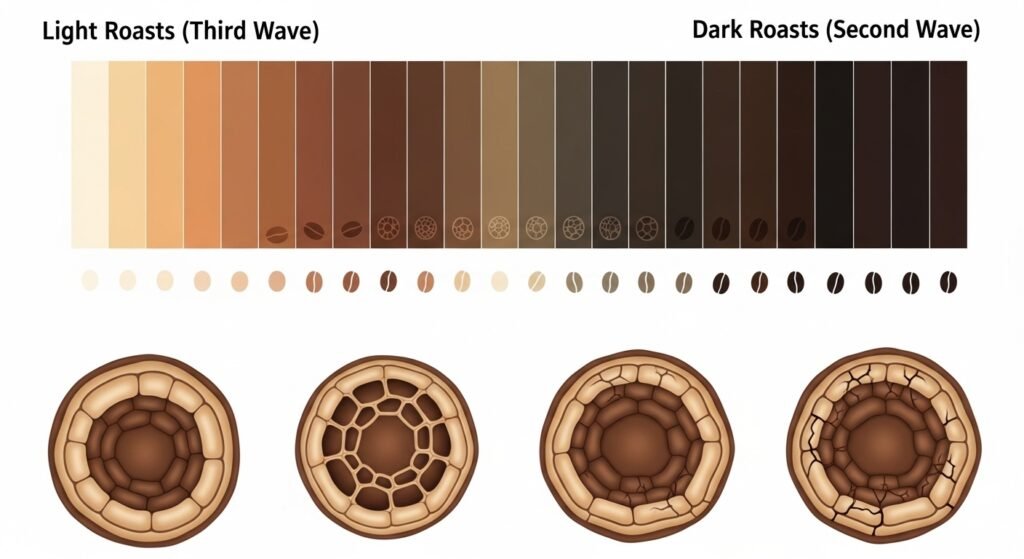
One of the most visible markers of the Third Wave is the shift away from dark, oily roasts. Roasters realized that the “charcoal” flavor of a dark roast masks the unique characteristics of the bean.
To highlight the Acidity of an Ethiopian Heirloom, the roast must be light enough to preserve the organic acids. This requires a much higher level of technical skill, as lighter roasts are harder to extract. If your Equipment is Not Maintained, the subtle floral notes of a light roast will be lost to the metallic or stale flavors of a dirty machine.
3. Direct Trade and Sustainability
The Third Wave moved away from the traditional “C-Market” (Commodity Market) pricing. Instead, specialty roasters often engage in Direct Trade. This means they pay a premium—often 2x to 4x the commodity price—directly to the farmer.
This premium is not just for quality; it is for sustainability. Higher pay allows farmers to invest in better Water Management Systems and organic fertilizers. This economic cycle ensures that the industry can continue to produce high-end beans despite the challenges of climate change and fluctuating market prices.
4. The Barista as a Scientist
In the Second Wave, a barista was someone who operated a machine. In the Third Wave, the barista is a sensory scientist. The modern barista must understand:
-
Refractometry: Using light to measure the Total Dissolved Solids (TDS) in a cup.
-
Water Chemistry: Tuning the magnesium and calcium levels in Brewing Water to optimize extraction.
-
Precision Weighing: Every dose and yield is weighed to 0.1g accuracy to ensure the Aftertaste remains consistent.
5. Manual Brewing: The Return to Slow Coffee
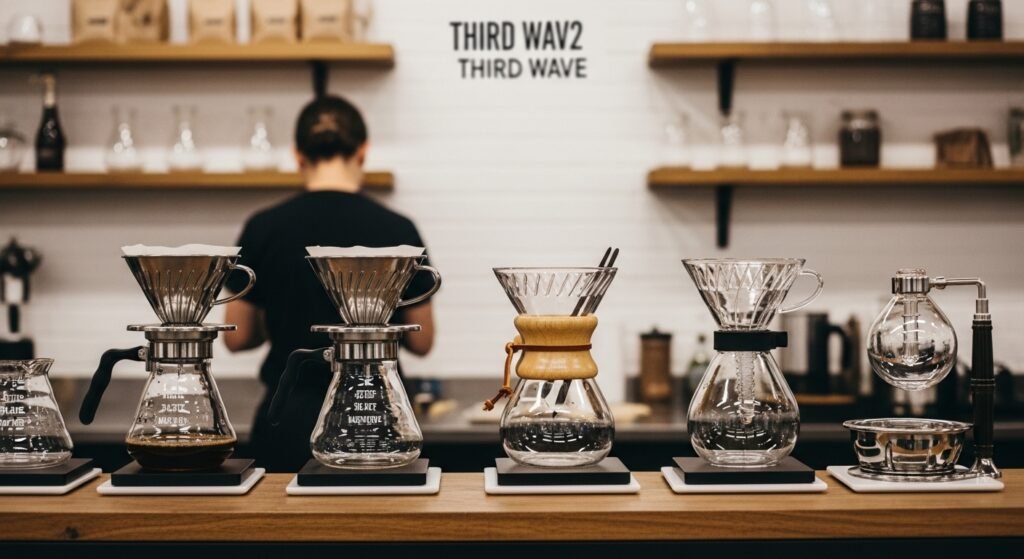
While the Second Wave was dominated by the espresso machine, the Third Wave brought manual methods back to the center stage. Tools like the Hario V60, Chemex, and AeroPress are favored because they allow for the clarity of flavor needed to appreciate High-Altitude African Beans.
Unlike the Science of Cold Brew, which focuses on a smooth, low-acid profile, manual hot brewing focuses on “transparency.” It allows the drinker to taste the volcanic soil and the specific climate of the farm.
6. Sensory Language and Professional Cupping
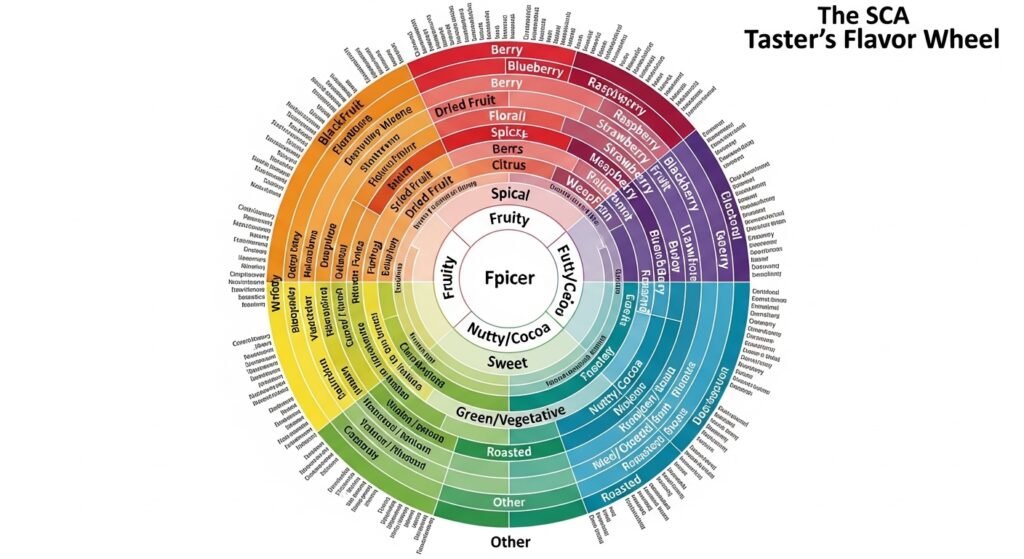
The Third Wave introduced a standardized language for flavor. The SCA (Specialty Coffee Association) Flavor Wheel is now the global dictionary for coffee. We no longer just say “it tastes like coffee.” We say it has “notes of stone fruit,” “a silky mouthfeel,” or “a phosphoric acidity.“
This level of detail is critical for Dialing-In Your Espresso. By identifying specific flavors, a barista can determine if the coffee is over-extracted or under-extracted, adjusting the grind size to achieve the perfect balance.
7. The Challenge of Education
The biggest hurdle for the Third Wave is consumer education. Many people, accustomed to the bitter and “burnt” flavors of the First and Second Waves, initially find Third Wave coffee too acidic or “sour.“
Educating the palate involves explaining that acidity is a positive trait—a sign of freshness and High-Altitude Origin. It also involves teaching consumers how to Maintain Their Home Equipment so they can recreate that artisanal experience at home without the interference of rancid residues.
8. Conclusion: Beyond the Cup
The Third Wave of coffee is more than just a way to drink a beverage; it is a movement toward quality, ethics, and scientific rigor. It bridges the gap between the humble farmer in Nyeri, Kenya and the discerning consumer in a modern city.
By treating coffee as an artisanal product, we ensure that every link in the chain—from the soil to the Water Quality—is treated with the respect it deserves. As we move forward, the focus remains on pushing the boundaries of what is possible within the bean, ensuring that the Science of Aftertaste continues to surprise and delight us for years to come.
The shift toward artisanal coffee is ultimately a journey of Understanding How Every Choice Made During Farming and Roasting Directly Impacts the Molecular Complexity of the Final Cup and the Lingering Sensory Experience of the Drinker.

Brown Christopher is 47 years old and has been passionate about coffee since he was 15. For more than three decades, he has explored coffee culture, brewing methods, and the flavors behind every cup. Through this blog, he shares simple tips and knowledge to help beginners better understand and enjoy coffee in their daily lives. ☕