
The Dawn Ritual: Beginning the Bonsai Day
The first rays of sunlight filter through the window, signaling the start of a new day. But before I even think about my morning coffee, my mind drifts to my bonsai. It’s more than just a plant; it’s a living sculpture, a miniature representation of nature’s grandeur, and a daily reminder of the delicate balance that sustains life. My morning routine isn’t just about checking on its well-being; it’s a mindful practice, a moment of quiet contemplation before the day’s chaos begins.
Why do I call it a ritual? Because it’s a carefully orchestrated sequence of observations and adjustments, designed to ensure the health and vitality of my tiny tree. It’s about more than just watering; it’s about truly seeing what the bonsai needs each day. It’s about anticipating its requirements and responding with precision and care.
The Initial Assessment: A Visual Sweep
My first step is always a visual inspection. I take a step back and observe the overall appearance of the bonsai. Is the foliage vibrant and healthy, or are there signs of discoloration or wilting? Are there any new growths that need attention? Are there any dead or dying leaves that need to be removed?
I’m looking for subtle changes that might indicate a problem. A slight drooping of the leaves, a change in color, or the presence of pests can all be early warning signs that something isn’t quite right. It’s akin to a doctor examining a patient; you look for the tell-tale signs that reveal the underlying condition.
Consider, for example, a Japanese maple bonsai. Its delicate leaves are particularly susceptible to sunburn. A quick visual check can reveal if the tree has been exposed to too much direct sunlight, which might necessitate moving it to a more shaded location. Or perhaps I notice a few leaves with small, irregular holes, a sign of potential insect infestation. This prompts me to investigate further and take appropriate action.
The Soil Moisture Check: The Foundation of Life
Water is the lifeblood of any plant, and bonsai are no exception. But unlike plants in the ground, bonsai are confined to small containers, which means that their water supply is limited. Overwatering can lead to root rot, while underwatering can cause dehydration and stress.
The key is to find the right balance. I never water my bonsai on a fixed schedule. Instead, I rely on a combination of visual cues and tactile assessment to determine when and how much water is needed.
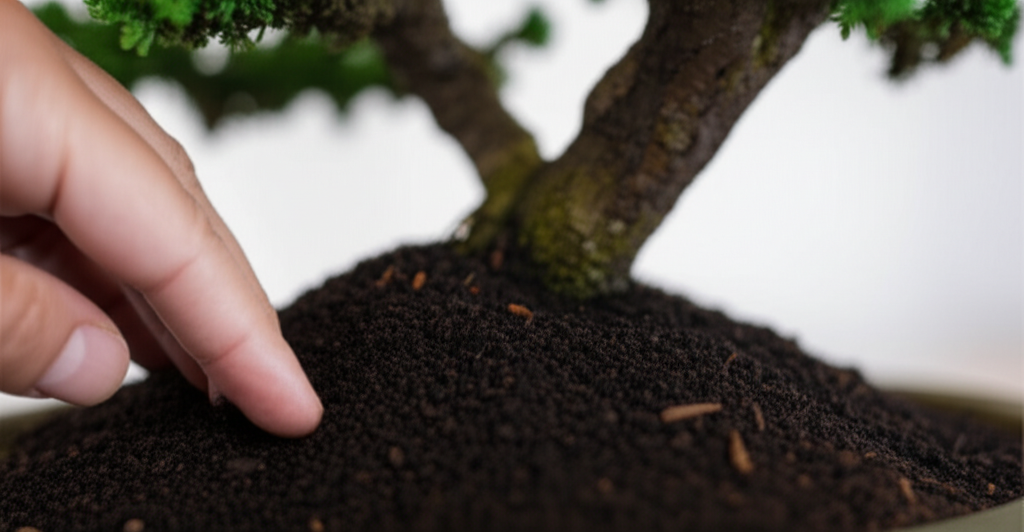
I start by looking at the surface of the soil. Is it dry and cracked, or is it moist and dark? Then, I use my finger to probe the soil a little deeper. Ideally, the top inch or two should feel slightly dry to the touch, but the soil underneath should still be moist.
This simple test tells me a lot about the moisture content of the soil. If the soil is bone dry, I know it’s time to water. If it’s soggy and waterlogged, I know I need to hold off. What happens if you ignore these signs? Overwatering can lead to root rot, a deadly condition that can quickly kill a bonsai. Underwatering, on the other hand, can cause the leaves to wilt and eventually drop off.
The Leaf Examination: Close-Up Inspection
After checking the soil, I move on to a more detailed examination of the leaves. I carefully inspect each leaf, looking for signs of pests, diseases, or nutrient deficiencies. This is where a magnifying glass can come in handy, allowing me to spot even the smallest problems before they escalate.
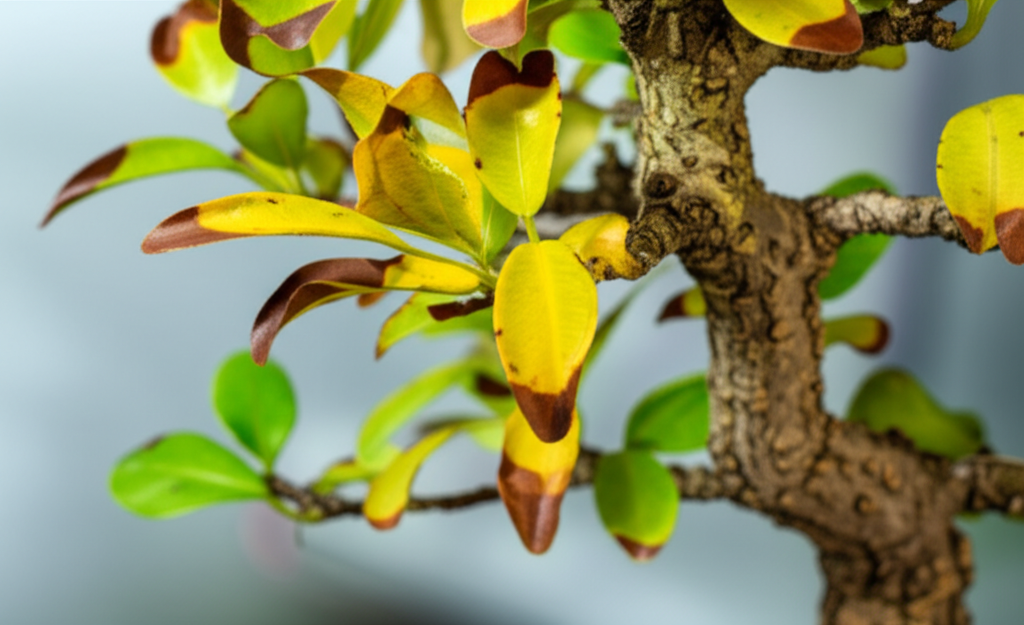
Are there any small insects crawling on the leaves? Are there any signs of discoloration, such as yellowing, browning, or spotting? Are there any unusual growths or deformities?
The answers to these questions can provide valuable clues about the health of the bonsai. For example, yellowing leaves might indicate a nitrogen deficiency, while brown spots might be a sign of fungal infection.
Imagine discovering a tiny spider mite infestation early on. A simple spray with insecticidal soap can often eliminate the problem before it has a chance to spread. Ignoring it, however, could lead to a full-blown infestation that weakens the tree and makes it more susceptible to other problems.
Addressing Immediate Needs: Taking Action
Once I’ve completed my initial assessment, it’s time to take action. This might involve watering, fertilizing, pruning, or pest control, depending on the specific needs of the bonsai.
Watering Techniques: The Art of Hydration
Watering bonsai is not as simple as just pouring water into the pot. It requires a delicate touch and a keen understanding of the tree’s needs. The goal is to saturate the soil without overwatering, and to ensure that all parts of the root system receive adequate moisture.
I typically use a watering can with a fine rose spout, which allows me to distribute the water evenly over the soil surface. I water slowly and deliberately, making sure that the water penetrates the soil and doesn’t just run off the sides.
I continue watering until water drains freely from the drainage holes in the bottom of the pot. This indicates that the soil is fully saturated. However, I avoid letting the bonsai sit in standing water, as this can lead to root rot.
Consider a juniper bonsai, which is particularly susceptible to root rot. It’s crucial to ensure that the soil is well-draining and that the tree is not overwatered. A good technique is to water thoroughly and then allow the soil to dry out slightly before watering again.
Fertilizing Wisely: Nourishing the Miniature Tree
Bonsai, like all plants, need nutrients to thrive. But because they are confined to small containers, they rely on us to provide those nutrients through fertilization. However, it’s important to fertilize wisely, as over-fertilizing can be just as harmful as under-fertilizing.
I typically use a balanced liquid fertilizer, diluted to half strength. I apply the fertilizer every two to four weeks during the growing season, and less frequently during the dormant season.
I also pay attention to the specific needs of my bonsai. For example, a flowering bonsai might benefit from a fertilizer that is higher in phosphorus, which promotes flower production. A foliage bonsai might benefit from a fertilizer that is higher in nitrogen, which promotes leaf growth.
Imagine a flowering cherry bonsai. A phosphorus-rich fertilizer can help to encourage abundant blooms, transforming the tree into a spectacular display of color. Ignoring the fertilizer needs could result in sparse flowering and a less vibrant display.
Pruning and Shaping: Maintaining the Artistic Vision
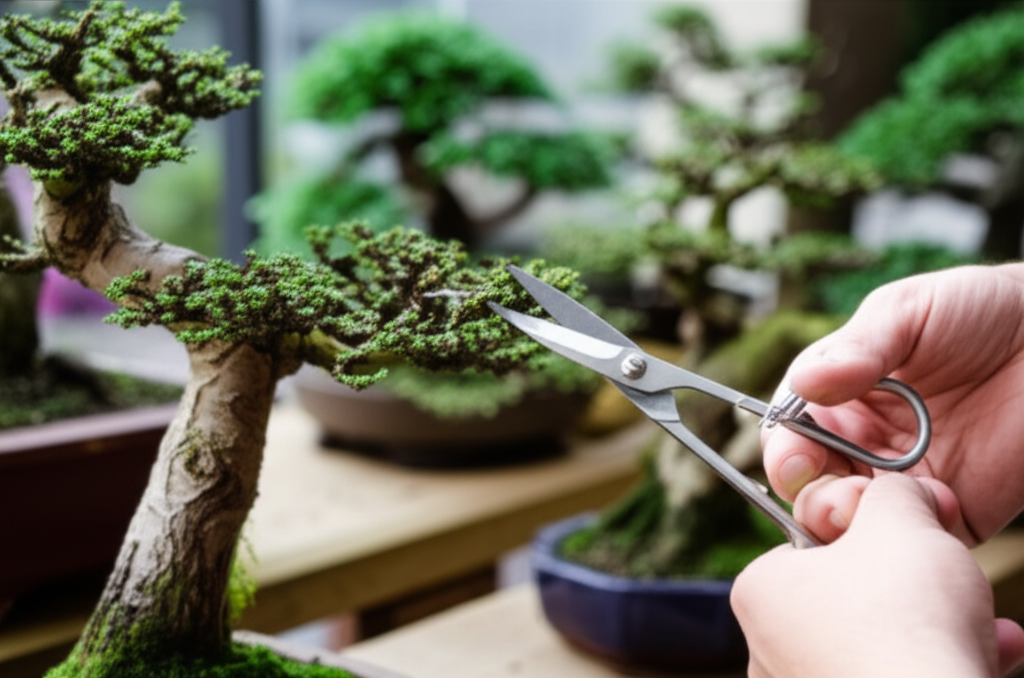
Pruning is an essential part of bonsai care. It helps to maintain the shape and size of the tree, and it also promotes healthy growth. Regular pruning encourages the development of a dense, compact canopy and helps to create a more aesthetically pleasing appearance.
I typically prune my bonsai every few weeks during the growing season. I remove any dead, damaged, or diseased branches, and I also prune back any new growth that is not in line with the desired shape.
There are two main types of pruning: maintenance pruning and structural pruning. Maintenance pruning is done to maintain the existing shape of the tree, while structural pruning is done to reshape the tree or to correct any structural problems.
Consider a pine bonsai. Careful pruning of the needles and branches can help to create a more windswept and dramatic appearance. Neglecting to prune the tree could result in an overgrown and unkempt appearance.
Addressing Potential Problems: Vigilance is Key
Even with the best care, bonsai can sometimes develop problems. Pests, diseases, and nutrient deficiencies can all affect the health and vitality of the tree. Early detection and treatment are essential to prevent these problems from escalating.
Pest Control: Identifying and Eliminating Threats
Pests are a common problem for bonsai. Aphids, spider mites, scale insects, and mealybugs are just a few of the pests that can attack bonsai. These pests can suck the sap from the leaves, causing them to yellow, wilt, and eventually drop off.
The key to pest control is early detection. I regularly inspect my bonsai for signs of pests, such as small insects crawling on the leaves, sticky honeydew, or webbing. If I find any pests, I take action immediately.
There are several different ways to control pests on bonsai. I typically start with the least toxic methods, such as hand-picking the pests off the leaves or spraying the tree with insecticidal soap. If these methods are not effective, I may resort to using a stronger pesticide.
Imagine discovering an aphid infestation early on. A simple spray with insecticidal soap can often eliminate the problem before it has a chance to spread. Ignoring it, however, could lead to a severe infestation that weakens the tree and makes it more susceptible to other problems.
Disease Prevention: Maintaining a Healthy Environment
Diseases can also affect bonsai. Fungal infections, such as root rot and leaf spot, are common problems. These diseases can cause the leaves to yellow, brown, and drop off, and they can eventually kill the tree.
The best way to prevent diseases is to maintain a healthy environment for your bonsai. This includes providing adequate ventilation, avoiding overwatering, and keeping the foliage clean.
If a bonsai develops a disease, it’s important to treat it promptly. I typically use a fungicide to treat fungal infections. I also remove any infected leaves or branches to prevent the disease from spreading.
Consider a Japanese maple bonsai that is susceptible to fungal diseases. Ensuring good air circulation and avoiding overwatering can significantly reduce the risk of infection. Ignoring these preventative measures could lead to a fungal outbreak that damages the tree.
Nutrient Deficiencies: Recognizing the Signs
Nutrient deficiencies can also affect the health of bonsai. A lack of essential nutrients can cause the leaves to yellow, stunt the growth of the tree, and reduce its overall vigor.
The most common nutrient deficiencies in bonsai are nitrogen, phosphorus, and potassium. Nitrogen deficiency can cause the leaves to yellow, while phosphorus deficiency can stunt the growth of the tree. Potassium deficiency can cause the edges of the leaves to turn brown.
I address nutrient deficiencies by fertilizing my bonsai with a balanced fertilizer. I also pay attention to the specific needs of my bonsai and adjust the fertilizer accordingly.
Imagine a bonsai that is showing signs of nitrogen deficiency. Applying a nitrogen-rich fertilizer can help to restore the tree’s health and promote healthy leaf growth. Neglecting the nutrient needs could lead to a weakened and unhealthy tree.
The Seasonal Adjustments: Adapting to the Changing Environment
Bonsai are sensitive to changes in the environment, and it’s important to adjust your care routine according to the seasons. During the growing season, bonsai need more water, fertilizer, and pruning than they do during the dormant season.
Spring Awakening: Encouraging New Growth
Spring is a time of renewal and growth for bonsai. As the weather warms up, the trees begin to emerge from their winter dormancy and start to produce new leaves and shoots.
During the spring, I increase the frequency of watering and fertilizing. I also begin pruning the trees to encourage new growth and maintain their shape.
I also pay attention to the changing light conditions. As the days get longer and the sun gets stronger, I may need to move my bonsai to a location where they will receive more shade.
Consider a deciduous bonsai, such as a Japanese maple, as it comes out of dormancy in the spring. Providing adequate water and fertilizer will help to support the flush of new growth and ensure that the tree gets off to a strong start. Neglecting these needs could result in weak and stunted growth.
Summer Care: Protecting from the Heat
Summer can be a challenging time for bonsai. The hot weather can cause the soil to dry out quickly, and the intense sunlight can scorch the leaves.
During the summer, I water my bonsai more frequently, sometimes even twice a day. I also provide them with shade during the hottest part of the day.
I also monitor the trees for signs of pests and diseases, which tend to be more prevalent during the summer months.
Imagine a bonsai that is exposed to direct sunlight during the hottest part of the summer day. The leaves could quickly become scorched and damaged. Providing shade can help to protect the tree from the intense heat and prevent leaf damage.
Autumn Preparation: Getting Ready for Winter
Autumn is a time of transition for bonsai. As the weather cools down, the trees begin to slow down their growth and prepare for winter dormancy.
During the autumn, I reduce the frequency of watering and fertilizing. I also begin to prune the trees less frequently.
I also pay attention to the changing light conditions. As the days get shorter and the sun gets weaker, I may need to move my bonsai to a location where they will receive more sunlight.
Consider a coniferous bonsai, such as a juniper, as it prepares for winter dormancy. Reducing the frequency of watering and fertilizing will help to slow down its growth and allow it to harden off before the cold weather arrives. Neglecting these preparations could make the tree more susceptible to winter damage.
Winter Dormancy: Providing Essential Protection
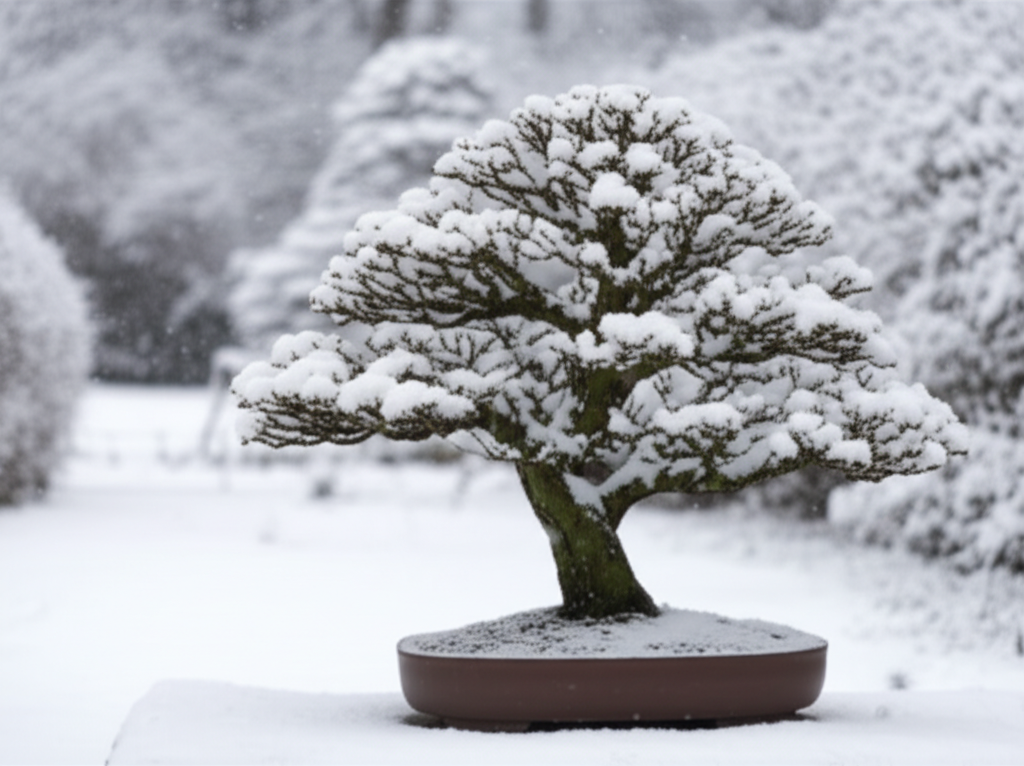
Winter is a time of rest for bonsai. During the winter months, the trees are dormant and require very little care.
During the winter, I water my bonsai only when the soil is dry. I also avoid fertilizing them altogether.
I also protect the trees from extreme cold and wind. Depending on the climate, this may involve moving them indoors or providing them with some form of insulation.
Imagine a bonsai that is left exposed to freezing temperatures during the winter months. The roots could freeze and die, killing the tree. Providing protection from the cold can help to ensure that the tree survives the winter and emerges healthy in the spring.
The Rewards of Dedication: A Thriving Bonsai
The daily ritual of caring for my bonsai is more than just a chore; it’s a meditative practice that connects me to nature and allows me to appreciate the beauty of the miniature world. It’s a reminder of the importance of patience, perseverance, and attention to detail.
The rewards of this dedication are a thriving bonsai that brings joy and tranquility to my life. It’s a living testament to the power of human connection with nature, and a reminder that even the smallest things can be incredibly beautiful and rewarding. So, what seemingly small act in your life, given daily care and attention, could blossom into something truly extraordinary?
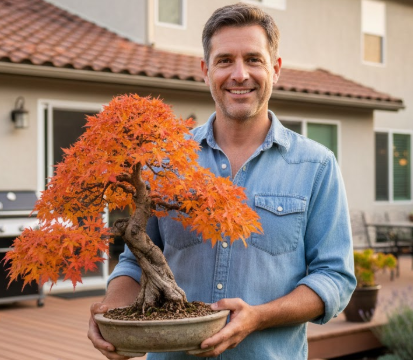
My name is Christopher Brown, I am 38 years old and I live in the United States. I am deeply passionate about the art of bonsai and have been cultivating trees for several years. What started as a simple curiosity turned into a daily practice and an important part of my life.
On this blog, I share my real experiences with bonsai — including what works, what doesn’t, and the lessons I learn along the way. I enjoy experimenting with techniques, observing the growth of each tree, and documenting the process with honesty and patience.
My goal with InfoWeHub is to help beginners feel more confident, avoid common mistakes, and discover the beauty of bonsai cultivation. If you are starting your journey or already love this art, you are welcome here.