
The Week I Almost Killed My Juniper
For years, I’ve preached the gospel of consistent bonsai care. Water deeply, fertilize sparingly, prune with purpose. These are the tenets I’ve lived by, the rules I’ve drilled into the heads of every novice who’s dared ask for my advice. And then, last spring, I almost undid it all with one simple, seemingly harmless act: I started rotating my pots every week.
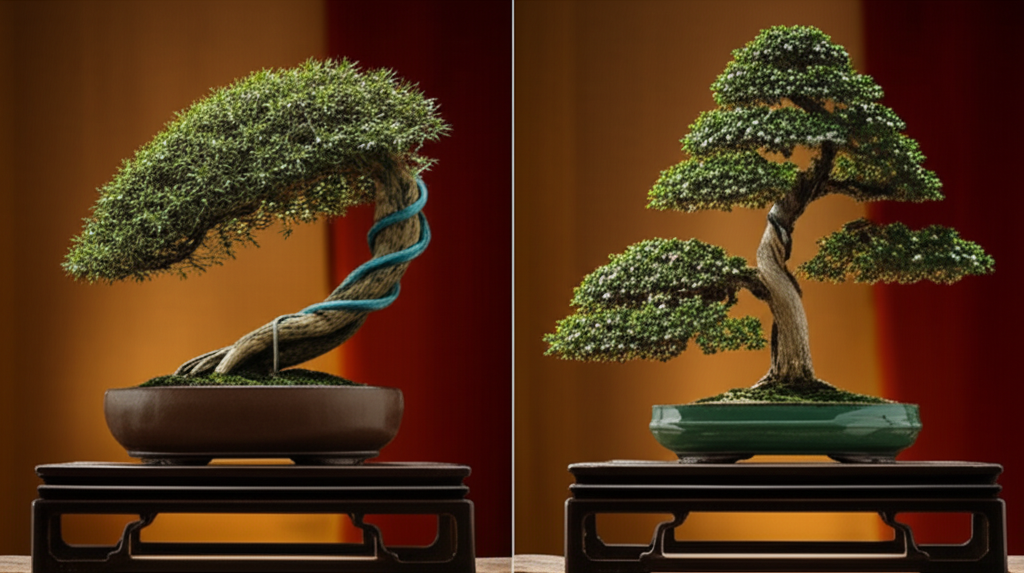
It sounds innocuous enough, doesn’t it? A little tweak to ensure even growth, a way to compensate for uneven light exposure. But in my eagerness to achieve perfect symmetry, I stumbled upon a lesson that shook my confidence and forced me to re-evaluate everything I thought I knew about these miniature trees. It all started with my prized Juniper procumbens ‘Nana’. This little beauty, a gift from my wife on our 25th anniversary, had been thriving under my care for nearly a decade. Its cascading branches, meticulously wired and pruned, formed a stunning windswept design that captured the raw beauty of nature.
I’d always been meticulous about its placement, ensuring it received the optimal amount of sunlight. But I couldn’t shake the feeling that one side was slightly fuller than the other. Perhaps it was my aging eyes playing tricks on me, or maybe it was just the inherent asymmetry of nature. Whatever the reason, I decided to take action. I reasoned that a weekly rotation would ensure that all sides of the tree received equal sunlight, promoting even growth and eliminating any imbalances. It was a simple solution, or so I thought.
The first few weeks went by without incident. The Juniper seemed perfectly happy, its needles a vibrant shade of green. I patted myself on the back for my ingenuity, convinced that I had discovered a secret weapon in the quest for bonsai perfection. But then, disaster struck. One morning, I noticed that the needles on one side of the tree were starting to turn brown. A wave of panic washed over me as I examined the affected area more closely. The needles were dry and brittle, crumbling at the slightest touch. It was clear that something was seriously wrong.
My mind raced, trying to pinpoint the cause of this sudden decline. Had I overwatered it? Under-fertilized it? Was it a fungal infection? I spent hours poring over my bonsai books, searching for a solution. But nothing seemed to fit the symptoms. It wasn’t until I stumbled upon an old article about the importance of stability in bonsai that the pieces started to fall into place. The article explained that bonsai trees, particularly those with established root systems, are highly sensitive to changes in their environment. They develop a complex network of relationships with their surroundings, adapting to the specific conditions of their location.
Rotating the pot, while seemingly innocuous, disrupted this delicate balance. It forced the tree to constantly reorient itself to the sun, straining its resources and weakening its defenses. In essence, I had been slowly torturing my Juniper, subjecting it to a constant barrage of stress. I immediately stopped the rotations and moved the tree back to its original position. I also gave it a generous dose of liquid fertilizer and misted its foliage regularly.
The recovery was slow and arduous. For weeks, I watched anxiously as the brown needles gradually fell off, fearing that I had inflicted irreparable damage. But slowly, miraculously, the tree began to recover. New growth emerged, and the remaining needles regained their vibrant green hue. It was a humbling experience, one that taught me a valuable lesson about the importance of observation and patience. Sometimes, the best thing you can do for your bonsai is to leave it alone.
The Sun’s Silent Influence: Understanding Phototropism
Why did rotating the pot have such a dramatic effect on my Juniper? The answer lies in a phenomenon known as phototropism, the tendency of plants to grow towards a light source. Plants, including bonsai, are exquisitely attuned to the direction of sunlight. They utilize hormones, primarily auxins, to regulate growth, concentrating these hormones on the shaded side of the stem. This uneven distribution causes the cells on the shaded side to elongate faster than those on the sunlit side, resulting in the stem bending towards the light.
Think of it like this: imagine you’re standing in a field, and someone is constantly tugging you gently towards the sun. You’d have to expend energy to resist the pull, to maintain your balance. Over time, this constant struggle would take its toll, leaving you exhausted and disoriented. That’s essentially what I was doing to my Juniper. By rotating the pot, I was forcing it to constantly reorient itself to the sun, disrupting its natural growth patterns and weakening its overall health.
The intensity of phototropism varies depending on the species of tree. Some species, like Ficus and Bougainvillea, are highly responsive to light, exhibiting dramatic bending towards the sun. Others, like Junipers and Pines, are less sensitive, but still affected by the direction of light. It’s crucial to understand the specific needs of your bonsai and to adjust your care accordingly.
For example, if you’re growing a Ficus bonsai indoors, you’ll need to rotate it regularly to ensure even growth. Otherwise, it will quickly become lopsided, with all its branches reaching towards the window. On the other hand, if you’re growing a Juniper bonsai outdoors, you may want to avoid rotating it altogether, allowing it to develop a natural, windswept appearance. The key is to observe your tree closely and to respond to its individual needs.
Beyond the Rotation: Other Mistakes I’ve Made
My near-fatal encounter with the rotating pot was just one of many mistakes I’ve made over the years. Bonsai is a journey of constant learning, a process of trial and error. And while I’m always striving to improve my skills, I’m not afraid to admit that I’ve made my fair share of blunders. In fact, I believe that these mistakes are essential for growth. They force us to question our assumptions, to re-evaluate our techniques, and to develop a deeper understanding of the art of bonsai.
One of my earliest mistakes was overwatering. In my eagerness to provide my trees with the best possible care, I tended to err on the side of caution, watering them frequently and generously. But I soon learned that bonsai roots need oxygen to thrive. Overwatering can lead to root rot, a deadly condition that can quickly kill even the most established tree. I lost several trees to root rot before I finally learned to check the soil moisture before watering. Now, I use the “chopstick test” – inserting a wooden chopstick into the soil and checking for moisture. If the chopstick comes out clean and dry, it’s time to water.
Another common mistake I see among beginners is over-fertilizing. Fertilizers are essential for providing bonsai trees with the nutrients they need to grow and thrive. But too much fertilizer can be just as harmful as too little. Over-fertilizing can lead to salt buildup in the soil, which can damage the roots and stunt growth. I once burned an entire collection of seedlings by applying too much fertilizer. Now, I use a diluted solution of organic fertilizer and apply it sparingly, only during the growing season.
And then there’s the issue of improper pruning. Pruning is a crucial aspect of bonsai care, essential for maintaining the tree’s shape and promoting healthy growth. But pruning too aggressively, or at the wrong time of year, can weaken the tree and make it susceptible to disease. I once pruned a Ficus bonsai too heavily in the middle of winter, and it took nearly a year for it to recover. Now, I research the specific pruning needs of each species and prune accordingly, always erring on the side of caution.
The Art of Observation: Listening to Your Trees
The most important lesson I’ve learned over the years is the importance of observation. Bonsai trees are not static objects; they are living organisms that are constantly changing and responding to their environment. To be a successful bonsai artist, you must learn to “listen” to your trees, to pay attention to their subtle cues and to respond to their individual needs.
Are the leaves drooping? Are the needles turning brown? Is the bark peeling? These are all signs that something is amiss. By observing your trees closely, you can detect problems early on and take corrective action before they become serious. For example, if you notice that the leaves are drooping, it could be a sign of underwatering. If the needles are turning brown, it could be a sign of overwatering or a fungal infection. If the bark is peeling, it could be a sign of sunscald or insect infestation.
But observation is not just about detecting problems. It’s also about understanding the natural growth patterns of your trees. How does the tree respond to pruning? How does it react to changes in temperature and humidity? By observing your trees over time, you can develop a deeper understanding of their individual needs and learn to anticipate their future growth.
I’ve developed a habit of spending at least 15 minutes each day simply observing my bonsai. I walk around my garden, examining each tree closely, looking for any signs of stress or disease. I also take note of the tree’s overall shape and growth, considering how I might improve its design through pruning and wiring. This daily ritual has become an essential part of my bonsai practice, allowing me to connect with my trees on a deeper level and to provide them with the care they need to thrive.

The Patience Paradox: Slowing Down to Speed Up
Bonsai is often described as an art of patience. It takes years, even decades, to develop a mature bonsai tree. But I’ve come to realize that patience is not just about waiting for the tree to grow. It’s also about slowing down, taking the time to observe, to learn, and to understand.
In our fast-paced world, we’re often tempted to rush things, to seek instant gratification. But bonsai teaches us the value of patience, the importance of allowing things to unfold at their own pace. It reminds us that true beauty takes time to develop, that the most rewarding achievements are often the result of years of dedication and hard work.
I’ve found that the more patient I am with my bonsai, the faster they seem to grow. When I’m in a hurry, I tend to make mistakes, to prune too aggressively or to over-fertilize. But when I slow down, when I take the time to observe and to understand, I’m able to make more informed decisions, to provide my trees with the care they need to thrive. It’s a paradox, but it’s true: slowing down is often the fastest way to achieve your goals.
Bonsai has taught me to be more patient in all aspects of my life. I’m more patient with my family, more patient with my work, and more patient with myself. I’ve learned to appreciate the beauty of the present moment, to savor the simple pleasures of life, and to trust that things will eventually work out, even if they don’t happen on my timeline.
The Future of My Garden: Lessons Learned and New Beginnings
So, what’s next for my bonsai garden? I’m constantly experimenting with new techniques, exploring different species, and pushing the boundaries of my creativity. I’m also committed to sharing my knowledge and experience with others, helping them to discover the joy and satisfaction of bonsai.
I’ve learned that there’s no such thing as a perfect bonsai artist. We all make mistakes, we all have setbacks. But it’s how we respond to these challenges that defines us. Do we give up in frustration, or do we learn from our mistakes and keep moving forward?
I choose to keep moving forward. I choose to embrace the challenges, to learn from my mistakes, and to continue growing as an artist and as a person. My bonsai garden is a reflection of my own personal journey, a testament to the power of patience, observation, and perseverance.
I’m currently working on a new project, a miniature forest planting using a variety of native trees. It’s a challenging project, but I’m excited to see it come to fruition. I’m also planning to expand my collection of Japanese maples, experimenting with different cultivars and techniques. And of course, I’ll continue to care for my existing trees, nurturing them and helping them to reach their full potential.
Bonsai is more than just a hobby for me; it’s a way of life. It’s a connection to nature, a source of inspiration, and a path to personal growth. I’m grateful for the lessons I’ve learned from my trees, and I’m excited to see what the future holds. The weekly rotation incident, as disastrous as it seemed at the time, was a powerful reminder of the delicate balance between intervention and observation. It reinforced the idea that the best care often involves a gentle hand, a keen eye, and a willingness to learn from both successes and failures.

Beyond Aesthetics: The Unexpected Mental Benefits
While the visual appeal of bonsai is undeniable, I’ve discovered that the practice offers a wealth of mental and emotional benefits that extend far beyond aesthetics. The act of meticulously caring for these miniature trees has become a form of meditation, a way to quiet the mind and connect with the present moment.
The repetitive tasks involved in bonsai care, such as pruning, wiring, and watering, can be incredibly soothing and therapeutic. They provide a sense of structure and order in a chaotic world, allowing me to focus my attention and reduce stress. The act of shaping and molding the trees is also a creative outlet, a way to express myself and to bring beauty into the world.
I’ve found that bonsai has also helped me to develop patience and perseverance. It takes years to develop a mature bonsai tree, and there are often setbacks along the way. But the process teaches you to be patient, to accept that things take time, and to never give up on your goals. The sense of accomplishment you feel when you finally achieve a beautiful and healthy bonsai is incredibly rewarding.
Furthermore, bonsai has fostered a deeper appreciation for nature. By working closely with these living organisms, I’ve gained a greater understanding of the interconnectedness of all things. I’ve learned to appreciate the beauty of imperfection, the resilience of nature, and the importance of respecting the environment. The act of creating a miniature landscape is a way to bring nature into my home, to connect with the earth, and to find peace and tranquility in a busy world.
Bonsai has also become a social activity for me. I’ve joined a local bonsai club, where I’ve met other enthusiasts who share my passion. We exchange tips and techniques, share our successes and failures, and support each other on our bonsai journeys. The sense of community and camaraderie has been invaluable, providing me with a network of friends who understand and appreciate my love for bonsai.

The Ultimate Test: Will I Rotate Again?
So, after all this, after nearly killing my beloved Juniper and learning so much about phototropism and the delicate balance of nature, will I ever rotate a bonsai pot again? The answer, perhaps unsurprisingly, is: it depends. I’ve learned that there are no hard and fast rules in bonsai, no one-size-fits-all solutions. Each tree is unique, with its own individual needs and characteristics.
If I have a young tree that’s still developing its branch structure, and I notice that one side is getting significantly less light than the other, I might consider a gentle rotation to encourage more even growth. But I’ll do it cautiously, observing the tree closely for any signs of stress. I’ll also avoid rotating it more than once a month, giving it plenty of time to adjust to the new orientation.
For mature trees with established root systems, I’m much more hesitant to rotate them. I’ve learned that stability is key, and that disrupting their environment can have unintended consequences. Unless there’s a compelling reason to do so, I’ll generally leave them in place, allowing them to develop their natural shape and character.
Ultimately, the decision to rotate a bonsai pot is a matter of judgment, based on careful observation, a deep understanding of the tree’s needs, and a willingness to learn from your mistakes. And that, in essence, is what bonsai is all about: a continuous process of learning, growing, and adapting, both as an artist and as a human being. The weekly rotation incident, while initially a setback, ultimately served as a valuable lesson, reminding me that the best approach to bonsai care is one of mindful observation, patient nurturing, and a deep respect for the wisdom of nature. It taught me that sometimes, the greatest improvements come not from drastic interventions, but from simply stepping back, observing, and allowing the tree to guide the way.
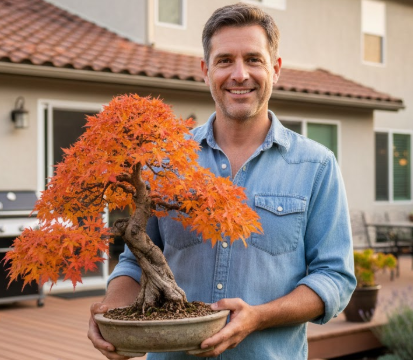
My name is Christopher Brown, I am 38 years old and I live in the United States. I am deeply passionate about the art of bonsai and have been cultivating trees for several years. What started as a simple curiosity turned into a daily practice and an important part of my life.
On this blog, I share my real experiences with bonsai — including what works, what doesn’t, and the lessons I learn along the way. I enjoy experimenting with techniques, observing the growth of each tree, and documenting the process with honesty and patience.
My goal with InfoWeHub is to help beginners feel more confident, avoid common mistakes, and discover the beauty of bonsai cultivation. If you are starting your journey or already love this art, you are welcome here.