
The Temptation of Speed
I’ve been cultivating bonsai for over thirty years now. You’d think that after all this time, I’d have mastered the art of patience. That I’d be immune to the siren song of immediate results. But you’d be wrong. There’s a saying in the bonsai world: “Bonsai is 90% patience.” I’ve always understood it intellectually, but last summer, I learned a harsh lesson about the true meaning of those words – a lesson that nearly cost me a prized Japanese Maple.
It all started innocently enough. I had acquired this Maple about five years prior, a beautiful specimen with delicate, crimson leaves that turned fiery red in the fall. It had been thriving in its pot, a testament to careful watering, diligent fertilizing, and thoughtful pruning. I’d even shown it at a local bonsai exhibition to some acclaim. I felt a deep connection to the tree, a sense of shared history and quiet growth. I envisioned decades of careful cultivation ahead, watching it mature and deepen in character.
But then, the itch began. I started noticing subtle things I wanted to “fix.” The root flare wasn’t quite as dramatic as I envisioned. A branch seemed to be growing at a slightly awkward angle. The moss on the soil surface looked a little patchy. Individually, these were minor imperfections, barely noticeable to the untrained eye. But to my increasingly critical gaze, they loomed large.
The Allure of “Improvement”
I began devouring articles and watching videos online, searching for techniques to accelerate the bonsai’s development. I stumbled upon some information about aggressive root pruning and heavy defoliation – methods designed to force new growth and supposedly “improve” the tree’s overall structure in a short period. The promise of faster results was intoxicating. I knew, deep down, that these techniques were risky, best left to experienced practitioners working with robust, established trees. But the temptation to see my vision realized quickly was too strong to resist.
Why is it that the more we know, the more tempted we are to take shortcuts? Perhaps it’s the arrogance of believing we can outsmart nature, bend it to our will. Or maybe it’s simply the impatience that plagues us all, the desire to see the fruits of our labor without putting in the necessary time and effort. Whatever the reason, I succumbed to the allure of instant gratification, and I’m ashamed to admit it.
The Day I Made the Mistake
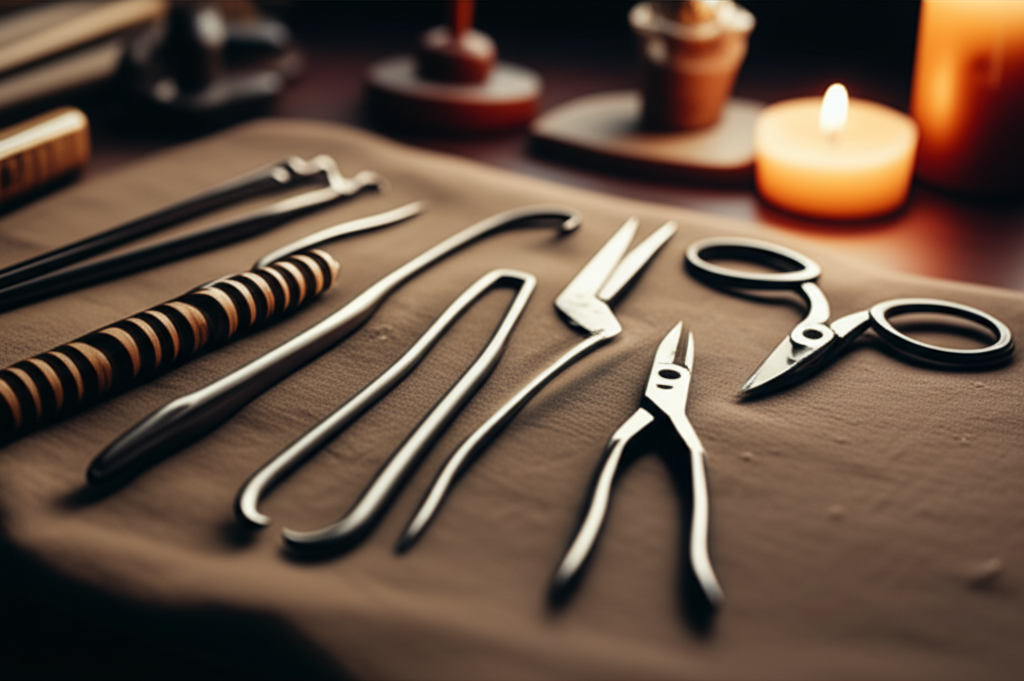
I chose a day when the weather was perfect – sunny and warm, but not excessively hot. I carefully removed the Maple from its pot, my hands trembling slightly with a mixture of excitement and apprehension. The root ball was dense and healthy, a testament to years of careful cultivation. But instead of admiring its vitality, I saw only potential for improvement. I started hacking away at the roots with my bonsai shears, removing what I deemed to be unnecessary growth. I trimmed aggressively, far more than I should have. I reasoned that by stimulating new root growth, I would encourage a more compact and aesthetically pleasing root system. I was blinded by my own flawed logic.
Next, I turned my attention to the foliage. I began defoliating the tree, stripping away a significant portion of its leaves. The idea was to force a new flush of growth, resulting in smaller, more refined leaves and a denser canopy. Again, I went too far, removing far more leaves than was prudent. As I stood back to admire my work, I felt a fleeting sense of satisfaction. The tree looked… different. More compact, more refined. But there was also an underlying sense of unease, a nagging feeling that I had crossed a line.
I repotted the Maple in a fresh mix of soil, watered it thoroughly, and placed it back in its usual spot in my garden. I told myself that everything would be fine, that I had simply given the tree a little boost. But deep down, I knew I had made a mistake. I had violated the fundamental principle of bonsai: respect for the tree’s natural rhythms and processes. I had tried to force it to conform to my vision, and I had paid the price.
Ignoring the Warning Signs
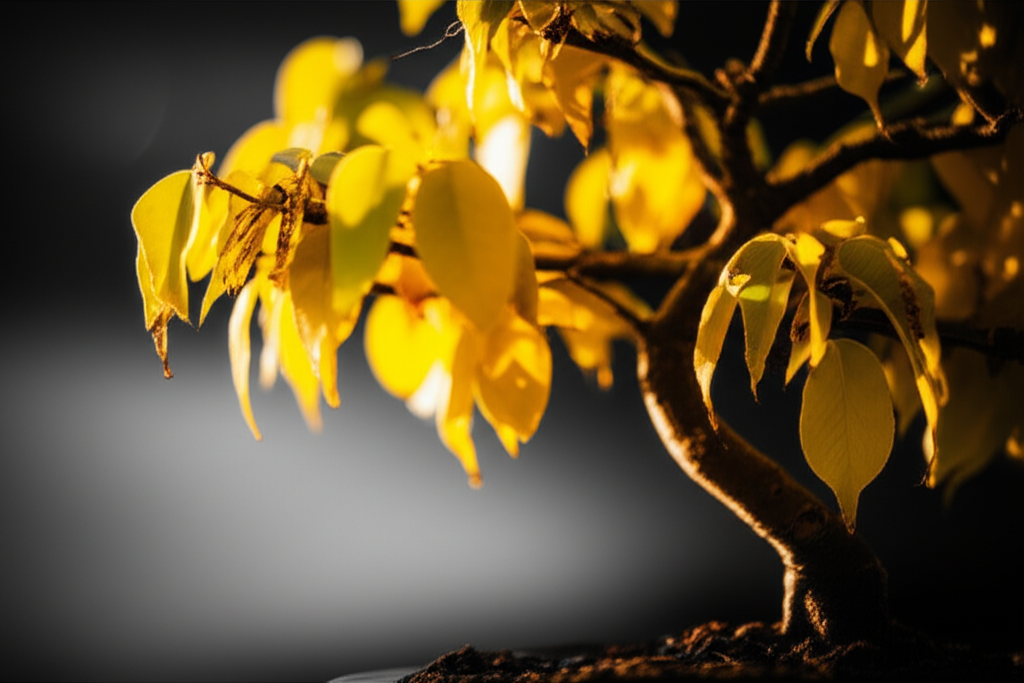
In the days that followed, the Maple began to show signs of stress. The leaves started to droop and turn yellow. The soil stayed damp for longer than usual, indicating that the roots were not absorbing water properly. I tried to reassure myself that this was normal, that the tree was simply adjusting to its new conditions. But the symptoms only worsened. The yellowing spread to more and more leaves, and some of the branches began to die back. Panic set in.
I frantically researched online, searching for solutions. I adjusted my watering schedule, trying to find the right balance between too much and too little moisture. I fertilized the tree with a diluted solution, hoping to give it a boost of energy. I even moved it to a shadier location, fearing that the sun was exacerbating the problem. But nothing seemed to work. The Maple continued to decline, its vibrant foliage replaced by a sickly yellow hue. It was heartbreaking to watch, like witnessing a slow and painful demise.
Why did I ignore the warning signs? Why did I persist in my misguided efforts, even as the tree was clearly suffering? Perhaps it was pride, the unwillingness to admit that I had made a mistake. Or maybe it was simply denial, the hope that somehow, miraculously, the tree would recover on its own. Whatever the reason, my inaction only compounded the problem. I was so focused on “fixing” the tree that I failed to see the obvious: I was killing it.
The Turning Point
One morning, I woke up to find the Maple looking even worse than before. Almost all the leaves had turned yellow or brown, and the branches were brittle and lifeless. I knew, with a sinking feeling, that I was about to lose it. I stood there for a long time, staring at the tree, feeling a profound sense of guilt and regret. I had allowed my impatience and ego to get the better of me, and I had nearly destroyed a beautiful and precious living thing.
It was then that I realized I had to do something drastic. I couldn’t simply stand by and watch the tree die. I decided to seek help from a local bonsai expert, a man named Mr. Tanaka who had been cultivating bonsai for over fifty years. I had met him at the bonsai exhibition, and I knew he was a master of the art. I loaded the Maple into my car and drove to his nursery, hoping against hope that he could offer some guidance.
Mr. Tanaka examined the tree carefully, his brow furrowed with concern. He asked me about my cultivation practices, and I confessed everything – my impatience, my misguided attempts to accelerate growth, my aggressive pruning and defoliation. He listened patiently, without judgment, and then he spoke. “You have been too eager,” he said softly. “You have tried to force the tree to grow according to your schedule, instead of allowing it to grow at its own pace. Bonsai is not about control; it is about cooperation. You must work with the tree, not against it.”
A Lesson in Humility
He explained that the Maple was suffering from severe root shock and nutrient deficiency. The aggressive pruning had weakened the tree, making it susceptible to disease and pests. The defoliation had deprived it of the energy it needed to recover. He prescribed a course of treatment that included gentle watering, careful fertilization, and protection from direct sunlight. He also advised me to resist the urge to prune or defoliate the tree for at least a year, allowing it to recover its strength.
I followed Mr. Tanaka’s instructions meticulously. I watered the tree sparingly, fertilized it with a diluted solution of seaweed extract, and kept it in a shaded area of my garden. I resisted the urge to interfere, to “fix” things. I simply allowed the tree to rest and recover. Slowly, gradually, the Maple began to respond. New leaves started to emerge, small and delicate, but full of life. The branches regained their flexibility, and the overall health of the tree improved. It was a slow and painstaking process, but it was also deeply rewarding.

The Road to Recovery
It took almost a year for the Maple to fully recover. By the following spring, it had regained its vibrant foliage and its healthy root system. It was still smaller and less developed than it had been before my ill-fated experiment, but it was alive. And more importantly, it was stronger and more resilient. I had learned a valuable lesson about the importance of patience and respect in the art of bonsai.
The experience taught me that bonsai is not about achieving a perfect aesthetic ideal. It’s not about forcing a tree to conform to our preconceived notions of beauty. It’s about nurturing a living thing, about working in harmony with nature, about accepting the tree’s imperfections and celebrating its unique character. It’s about slowing down, observing closely, and learning to appreciate the subtle rhythms of the natural world. It’s about understanding that growth takes time, and that true beauty emerges from patience, dedication, and a deep respect for the interconnectedness of all living things.
The Importance of Patience
Looking back, I realize that my impatience stemmed from a deeper insecurity. I was so focused on achieving a certain level of perfection that I lost sight of the simple joy of tending to a living thing. I had allowed my ego to get in the way, blinding me to the beauty that already existed in the Maple. I had forgotten that bonsai is not about control; it’s about collaboration. It’s about working with nature, not against it.
Since then, I’ve made a conscious effort to cultivate patience in all aspects of my life. I’ve learned to appreciate the slow, steady progress of growth, both in my bonsai and in myself. I’ve learned to let go of the need to control everything, to trust in the natural processes, and to accept the imperfections that make life so interesting. And I’ve learned that the most beautiful things in life are often the result of time, dedication, and a deep appreciation for the present moment.
What about the Maple now? It’s thriving. It’s perhaps not exactly where I originally envisioned it would be at this point, but it is resilient and beautiful. I’ve come to appreciate the subtle scars and imperfections it gained during its near-death experience. They tell a story, a story of resilience, a story of patience, a story of my own foolishness and subsequent learning.

A New Perspective
The near-loss of my Japanese Maple transformed my approach to bonsai. It instilled in me a deeper respect for the natural rhythms of the trees, a newfound appreciation for the value of patience, and a willingness to learn from my mistakes. I no longer view bonsai as a pursuit of perfection, but rather as a journey of collaboration, a dance between human intention and natural forces.
I’ve also become more cautious in my approach to new techniques and advice. While I still value learning from others and experimenting with different methods, I now approach such endeavors with a healthy dose of skepticism and a willingness to prioritize the well-being of my trees above all else. I understand that there are no shortcuts in bonsai, and that true mastery comes from years of dedicated practice and a deep understanding of the needs of each individual tree.
Perhaps the most important lesson I learned from this experience is the value of humility. I realized that I am not the master of my bonsai; I am merely its caretaker. My role is not to impose my will upon the tree, but rather to provide it with the conditions it needs to thrive and to guide its growth in a way that is both aesthetically pleasing and ecologically sound. It’s a partnership, a symbiotic relationship built on mutual respect and understanding.
So, the next time you’re tempted to rush the process, to take a shortcut, or to force your bonsai to conform to your vision, remember my story. Remember the wilting leaves, the brittle branches, and the sinking feeling of regret. Remember that patience is not just a virtue in bonsai; it is a necessity. And remember that the most beautiful and rewarding bonsai are those that are cultivated with love, respect, and a deep appreciation for the slow, steady rhythm of nature. And perhaps, most importantly, remember that even a 56-year-old man can learn a thing or two about patience. It’s a lifelong lesson, one that I am eternally grateful to my Japanese Maple for teaching me.
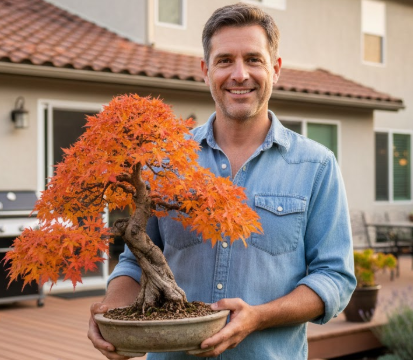
My name is Christopher Brown, I am 38 years old and I live in the United States. I am deeply passionate about the art of bonsai and have been cultivating trees for several years. What started as a simple curiosity turned into a daily practice and an important part of my life.
On this blog, I share my real experiences with bonsai — including what works, what doesn’t, and the lessons I learn along the way. I enjoy experimenting with techniques, observing the growth of each tree, and documenting the process with honesty and patience.
My goal with InfoWeHub is to help beginners feel more confident, avoid common mistakes, and discover the beauty of bonsai cultivation. If you are starting your journey or already love this art, you are welcome here.