
My Bonsai Journey: It All Starts Small
For nearly three decades, the art of bonsai has been more than just a hobby; it’s been a daily meditation, a teacher, and a profound connection to the natural world. I’m Christopher Brown, and like many, my initial fascination with these miniature trees stemmed from a sense of wonder. How could something so ancient and majestic be contained in such a small pot? The answer, as I’ve learned over the years, lies not in grand gestures, but in the accumulation of small, consistent habits.
I remember the initial failures vividly. My first bonsai, a humble juniper, quickly turned brown despite my best intentions. I overwatered it, underwatered it, and subjected it to harsh sunlight. I was so focused on the “big picture” – the perfect shape, the ideal aesthetic – that I overlooked the fundamental daily needs of the tree. It was a harsh but valuable lesson: bonsai is not about instant gratification; it’s about patience, observation, and consistent care. Are you looking to start your own Bonsai journey? Remember this: start small, learn continuously, and be patient.
What I’ve come to realize is that bonsai care is less about mimicking nature and more about understanding and responding to the specific needs of a living organism in an artificial environment. It’s about creating the optimal conditions for growth and health within the constraints of a small container. And that, more than anything, requires a commitment to daily habits.
The Power of Daily Observation
The Morning Ritual: A Detailed Inspection
Every morning, before I even think about my coffee, I visit my bonsai. This isn’t just a quick glance; it’s a dedicated period of observation. I examine each tree individually, paying close attention to the color and texture of the leaves, the moisture level of the soil, and any signs of pests or disease. This daily check has become almost intuitive. I can often spot a problem days or even weeks before it becomes serious, simply because I know what a healthy tree looks like. This daily observation is one of the most important habits that I have developed over the years.
For example, a slight yellowing of the leaves might indicate a nutrient deficiency, prompting me to adjust my feeding schedule. Small webs between branches could signal a spider mite infestation, requiring immediate treatment. A change in the bark’s texture might suggest a fungal infection. These are subtle clues, but they can make all the difference between a thriving bonsai and a struggling one. I also pay close attention to the overall shape of the tree. Are any branches growing out of proportion? Is the foliage becoming too dense? These observations inform my pruning and wiring decisions later in the day. It’s a constant feedback loop, a dialogue between me and the tree.
Consider this: a colleague of mine dismissed the importance of daily checks, arguing that he had a busy schedule and couldn’t dedicate the time. He relied on weekly inspections, which often proved too late. His trees were frequently plagued by pests and diseases, and he struggled to maintain their shape. In contrast, my daily observations allow me to address problems early, preventing them from escalating and ensuring the long-term health and beauty of my bonsai.
The Evening Review: Reflecting on the Day’s Growth
Just as important as the morning inspection is the evening review. Before sunset, I revisit my bonsai, taking note of how they’ve responded to the day’s conditions. Has the soil dried out too quickly? Are the leaves showing signs of stress from the afternoon sun? This review allows me to anticipate the next day’s needs and adjust my watering and shading accordingly. This is especially important in the summer, when the heat can quickly dehydrate the trees.
This evening review also gives me an opportunity to reflect on my pruning and wiring work. Did I remove too much foliage? Are the wires too tight? These are questions that I consider carefully, using the tree’s response as a guide. Sometimes, I’ll even make small adjustments in the evening, such as loosening a wire or adding a bit of water. It’s a continuous process of refinement, a constant striving for balance and harmony. The best way to improve your skills is to learn from your mistakes and successes. This is one of the most important things that I have learned over the years.
Watering: More Than Just a Daily Chore
The Art of Knowing When to Water
Watering is perhaps the most critical aspect of bonsai care, and it’s also one of the most misunderstood. There’s no one-size-fits-all answer to the question of how often to water. It depends on a variety of factors, including the species of tree, the size of the pot, the type of soil, the climate, and the time of year. The key is to learn to “read” the tree and water accordingly. For many years, I had a set schedule. I watered my bonsai every day, regardless of the weather or the tree’s needs. This led to overwatering, root rot, and the eventual demise of several trees. It was a painful but necessary lesson. Now, I water only when the soil feels dry to the touch.
I use a simple finger test to determine the moisture level. I insert my finger about an inch into the soil. If it feels dry, it’s time to water. If it feels moist, I wait. This method is far more reliable than relying on a fixed schedule. I also pay attention to the weight of the pot. A dry pot will feel significantly lighter than a wet one. This is another useful indicator of moisture level. The type of pot that you use will also influence how often you need to water your bonsai. For example, terracotta pots are more porous than plastic pots, so they will dry out more quickly.
Furthermore, I adjust my watering schedule based on the weather. During hot, sunny days, I may need to water twice a day. During cool, cloudy days, I may not need to water at all. It’s a constant balancing act, a continuous adaptation to the ever-changing environment. I use rainwater whenever possible, as it’s free of the chemicals and minerals that can harm bonsai. I collect rainwater in barrels and use it to water my trees. If rainwater is not available, I use tap water that has been left to sit for 24 hours to allow the chlorine to evaporate. I have also seen people use distilled water, but I have never tried this myself.
The Technique: Watering Thoroughly and Gently
When I do water, I water thoroughly, until the water drains freely from the bottom of the pot. This ensures that the entire root ball is moistened. I use a watering can with a fine rose to distribute the water evenly and gently. Avoid using a strong jet of water, as this can erode the soil and damage the roots. I water the soil, not the foliage. Wet foliage can attract fungal diseases. Water early in the morning, so the foliage has time to dry before nightfall. This will also help to prevent fungal diseases. You must be careful when you are watering your bonsai, as it is easy to damage the tree if you are not careful.
I also pay attention to the type of soil I’m using. Well-draining soil is essential for bonsai, as it prevents the roots from becoming waterlogged. I use a mixture of akadama, pumice, and lava rock, which provides excellent drainage and aeration. The mixture depends on the type of bonsai that you are growing. Some bonsai prefer a more acidic soil, while others prefer a more alkaline soil. It is important to research the specific needs of your bonsai before you choose a soil mixture. When you are watering your bonsai, make sure that you are using the correct type of water. Tap water can be harmful to some bonsai, so it is important to use filtered water or rainwater.
Fertilizing: Nourishing the Miniature World
Understanding the Nutrient Needs of Bonsai
Fertilizing is another essential aspect of bonsai care, but it’s often overdone. Bonsai, like all plants, need nutrients to grow and thrive. However, because they are grown in small pots with limited soil, they rely on us to provide these nutrients. The key is to understand the specific nutrient needs of your trees and to fertilize accordingly. The three main nutrients that plants need are nitrogen (N), phosphorus (P), and potassium (K). Nitrogen promotes leaf growth, phosphorus promotes root growth, and potassium promotes overall health and vigor. The NPK ratio of a fertilizer indicates the percentage of each nutrient it contains.
I use a balanced fertilizer with an NPK ratio of 10-10-10 during the growing season (spring and summer). This provides the trees with all the nutrients they need to grow healthy foliage and strong roots. During the dormant season (fall and winter), I use a fertilizer with a lower nitrogen content, such as 5-10-10. This helps to prevent excessive leaf growth during the winter months, which can weaken the trees. I also use organic fertilizers, such as fish emulsion and seaweed extract, which provide a slow-release source of nutrients and improve the soil structure. I apply fertilizer every two weeks during the growing season and once a month during the dormant season. However, I adjust my fertilizing schedule based on the specific needs of my trees. For example, if a tree is showing signs of nutrient deficiency, I may fertilize it more frequently. It can be harmful to over-fertilize your bonsai, so it is important to use the correct amount of fertilizer.
The Art of Applying Fertilizer
When applying fertilizer, it’s important to follow the instructions on the label carefully. Too much fertilizer can burn the roots and damage the tree. I always dilute the fertilizer to half strength to avoid this problem. I also apply the fertilizer to the soil, not the foliage. Foliar feeding can be effective, but it’s also more likely to burn the leaves. I water the tree thoroughly after applying fertilizer to help distribute the nutrients evenly throughout the soil. It is important to apply fertilizer to your bonsai at the correct time of day. The best time to apply fertilizer is in the morning or evening, when the sun is not too strong. This will help to prevent the fertilizer from burning the roots of the tree.
Pruning and Wiring: Shaping the Future
The Importance of Regular Pruning
Pruning is an essential part of bonsai care. It’s what allows us to control the shape and size of the tree and to create the illusion of age. Regular pruning also promotes healthy growth by encouraging branching and preventing overcrowding. The type of pruning you do will depend on the species of tree and the style of bonsai you’re trying to create. There are two main types of pruning: structural pruning and maintenance pruning. Structural pruning involves removing large branches to create the basic shape of the tree. This is typically done in the late winter or early spring, before new growth begins. Maintenance pruning involves removing small branches and leaves to maintain the shape of the tree and to promote healthy growth. This is typically done throughout the growing season.
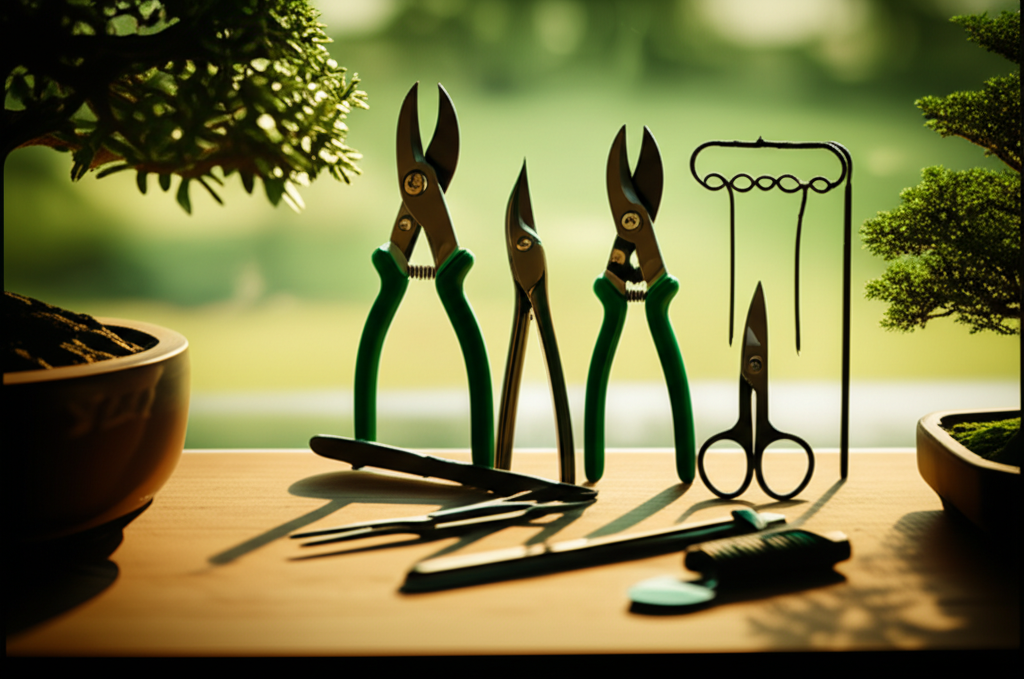
I use sharp, clean pruning shears to make clean cuts. Avoid tearing or crushing the branches, as this can damage the tree and make it more susceptible to disease. I also seal the cuts with pruning sealant to prevent infection and to promote healing. Pruning is not just about removing unwanted growth; it’s also about encouraging new growth in the right places. I use pinching to control the growth of new shoots. Pinching involves removing the tips of new shoots to encourage branching. This is typically done in the spring and summer. It is important to prune your bonsai regularly, as this will help to keep it healthy and looking its best. Pruning is a skill that takes time to learn, so be patient and don’t be afraid to experiment. I have found that the best way to learn how to prune bonsai is to practice.
The Art of Subtle Guidance with Wiring
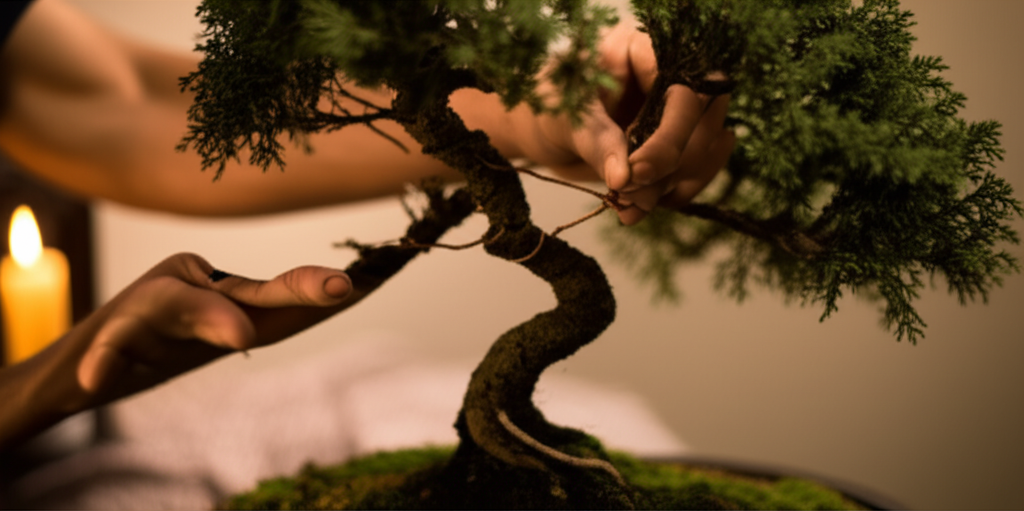
Wiring is another important technique used to shape bonsai. It involves wrapping wire around the branches to bend them into the desired position. Wiring is typically done on young, flexible branches. The wire should be just thick enough to hold the branch in place without damaging it. There are two main types of wire used for bonsai: aluminum wire and copper wire. Aluminum wire is softer and easier to bend than copper wire. It’s also less likely to damage the bark. However, it’s not as strong as copper wire, so it’s not suitable for bending thick branches. Copper wire is stronger than aluminum wire, so it’s suitable for bending thick branches. However, it’s also more likely to damage the bark, so it’s important to use it carefully.
I wrap the wire around the branch at a 45-degree angle, overlapping each turn slightly. This provides a secure hold without constricting the branch. I leave the wire on the tree for several months, until the branch has set in its new position. Then, I carefully remove the wire, being careful not to damage the bark. Wiring can be a tricky technique to master, but it’s an essential tool for shaping bonsai. With practice, you can learn to use wiring to create beautiful and unique bonsai designs. Remember to always remove the wire before it starts to bite into the bark of the tree. This can cause permanent damage. I have seen this happen to other bonsai enthusiasts.
Repotting: Renewing the Foundation
Knowing When and How to Repot
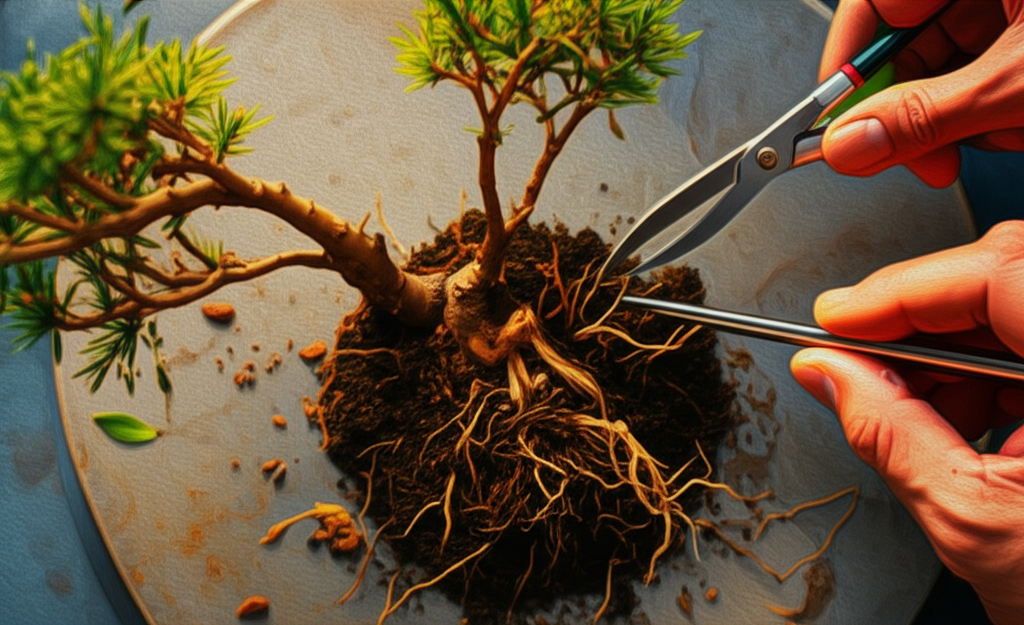
Repotting is a crucial part of bonsai care, but it’s also a stressful experience for the tree. It’s important to repot your bonsai every few years to replenish the soil and to prevent the roots from becoming pot-bound. The frequency of repotting depends on the species of tree and the size of the pot. Young trees typically need to be repotted more frequently than older trees. I repot my bonsai in the early spring, just before new growth begins. This gives the tree time to recover before the growing season. I carefully remove the tree from its pot and gently tease apart the roots. I remove about one-third of the root ball, being careful not to damage the main roots. I then repot the tree in fresh soil, using a well-draining bonsai mix. I water the tree thoroughly after repotting to help settle the soil. I have learned that it is important to be gentle when you are repotting your bonsai. The roots are very delicate and can be easily damaged.
Repotting is also a good opportunity to inspect the roots for signs of disease or pests. If you find any problems, treat them immediately. After repotting, I keep the tree in a sheltered location for a few weeks to allow it to recover. I also avoid fertilizing the tree for several weeks. Repotting is a stressful experience for the tree, so it’s important to give it time to recover. With proper care, your bonsai will thrive after repotting. When you are repotting your bonsai, it is important to use the correct type of soil. Bonsai soil is typically a mixture of akadama, pumice, and lava rock. This mixture provides good drainage and aeration, which are essential for healthy root growth. Repotting is also a good time to prune the roots of your bonsai. Root pruning helps to keep the tree small and compact.
Protecting from Pests and Diseases
Identifying Common Problems
Bonsai, like all plants, are susceptible to pests and diseases. It’s important to be vigilant and to identify problems early, before they become serious. Some of the most common pests that affect bonsai include aphids, spider mites, scale, and mealybugs. Aphids are small, soft-bodied insects that suck the sap from plants. They can cause leaves to become distorted and stunted. Spider mites are tiny spider-like creatures that also suck the sap from plants. They can cause leaves to become speckled and yellowed. Scale are small, armored insects that attach themselves to the stems and leaves of plants. They can cause leaves to turn yellow and drop off. Mealybugs are small, white, cottony insects that also suck the sap from plants. They can cause leaves to become distorted and stunted.
Common diseases that affect bonsai include fungal infections, such as root rot and leaf spot. Root rot is a fungal infection that affects the roots of plants. It can cause the roots to turn brown and mushy. Leaf spot is a fungal infection that affects the leaves of plants. It can cause the leaves to develop brown or black spots. I inspect my bonsai regularly for signs of pests and diseases. If I find any problems, I treat them immediately. There are a variety of treatments available for pests and diseases. I prefer to use organic treatments whenever possible. I also quarantine any infected trees to prevent the spread of pests and diseases to other trees. Preventing pests and diseases is always better than treating them. One of the most important things that you can do to prevent pests and diseases is to keep your bonsai healthy.
Preventative Measures and Treatments
To prevent pests and diseases, I keep my bonsai in a well-ventilated area and avoid overwatering. I also fertilize them regularly to keep them healthy and strong. If I do find pests or diseases, I treat them with organic insecticides or fungicides. I also remove any infected leaves or branches. When you are treating your bonsai for pests or diseases, it is important to follow the instructions on the label carefully. Some treatments can be harmful to your bonsai if they are not used properly. It is also important to identify the pest or disease correctly before you treat it. Using the wrong treatment can be ineffective or even harmful to your bonsai. If you are not sure what is wrong with your bonsai, consult with a professional bonsai expert. They will be able to help you identify the problem and recommend the best treatment.
The Long Game: Patience and Persistence
Bonsai is not a quick fix. It’s not a project that you can complete in a weekend. It’s a lifelong journey of learning and growth. It requires patience, persistence, and a willingness to learn from your mistakes. There will be times when you feel frustrated, when your trees don’t respond as you expect, when you lose a tree despite your best efforts. But it’s important to remember that these setbacks are part of the process. They are opportunities to learn and to grow as a bonsai artist. Over the years, I have lost many trees. Each loss has been painful, but each loss has also taught me something valuable. I have learned to be more patient, more observant, and more adaptable. I have also learned to appreciate the beauty and fragility of life.
The small daily habits that I’ve described in this article may seem insignificant, but they add up over time. They are the foundation of successful bonsai care. By observing your trees daily, watering them properly, fertilizing them regularly, pruning and wiring them carefully, repotting them as needed, and protecting them from pests and diseases, you can create beautiful and healthy bonsai that will last for generations. Do you want to become a master of bonsai? It is a long road, but the rewards are well worth the effort. The most important thing is to enjoy the journey.
More than anything, bonsai has taught me the value of patience, observation, and respect for nature. It’s a practice that has enriched my life in countless ways, and I encourage anyone who is drawn to it to take the plunge. Start small, be consistent, and never stop learning. The rewards, both tangible and intangible, are immeasurable. It truly is a labor of love, a daily conversation with nature, and a testament to the power of small, consistent actions.
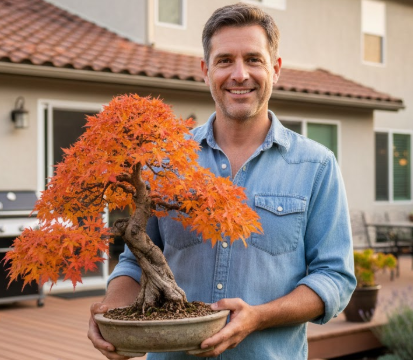
My name is Christopher Brown, I am 38 years old and I live in the United States. I am deeply passionate about the art of bonsai and have been cultivating trees for several years. What started as a simple curiosity turned into a daily practice and an important part of my life.
On this blog, I share my real experiences with bonsai — including what works, what doesn’t, and the lessons I learn along the way. I enjoy experimenting with techniques, observing the growth of each tree, and documenting the process with honesty and patience.
My goal with InfoWeHub is to help beginners feel more confident, avoid common mistakes, and discover the beauty of bonsai cultivation. If you are starting your journey or already love this art, you are welcome here.