
The Unassuming Observation That Changed Everything
For years, I’ve considered myself a reasonably competent bonsai enthusiast. I’ve nurtured dozens of trees, wrestled with stubborn branches, and even managed to coax a few reluctant blooms from seemingly lifeless twigs. But it was a simple, almost unremarkable, daily observation that fundamentally shifted my understanding of bonsai care and ultimately saved one of my most cherished trees: my Japanese Maple.
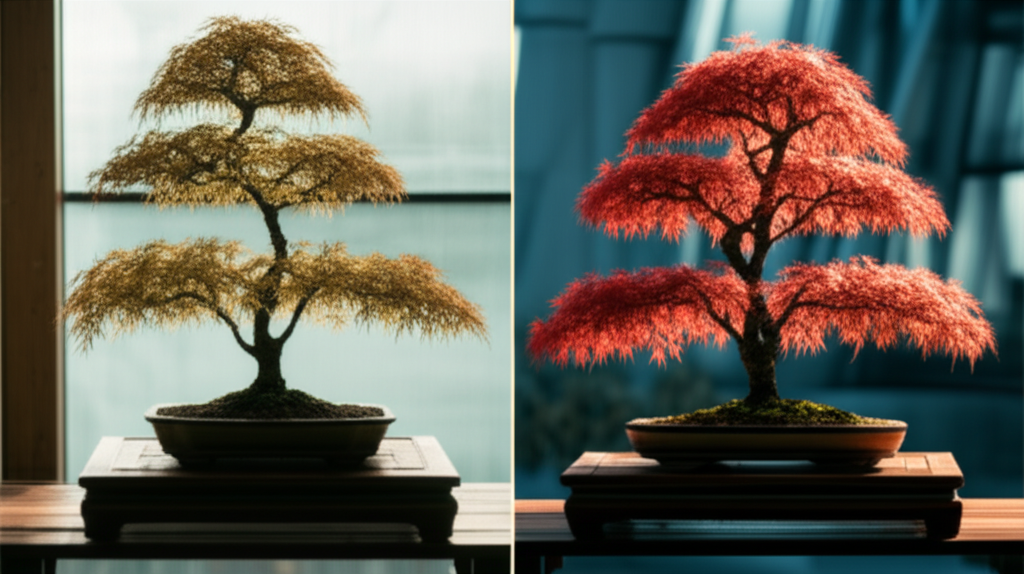
This particular Maple, a stunning specimen with fiery red leaves that blazed like embers in autumn, had been with me for nearly a decade. I’d painstakingly pruned and shaped it, repotted it with the utmost care, and diligently watered and fertilized it according to the best practices I’d learned from books, workshops, and online forums. Yet, despite all my efforts, it seemed to be slowly declining. The leaves were becoming increasingly pale, the growth was stunted, and a general air of malaise hung over the tree. I was baffled.
I consulted fellow bonsai enthusiasts, poured over articles on Japanese Maple care, and even considered sending a soil sample to a lab for analysis. Everyone offered well-meaning advice, but nothing seemed to make a difference. The Maple continued its slow, agonizing decline, and I began to fear that I was losing it.
The “Aha!” Moment
Then, one sweltering summer afternoon, while I was casually observing my bonsai collection during my daily routine, it struck me. Not with the force of a lightning bolt, but with the quiet certainty of a long-held truth finally revealed. I noticed that the soil surface of the Maple’s pot was significantly warmer and drier than the soil of my other bonsai, even though I watered them all at the same time, with the same amount of water. All of my bonsai are positioned on the same bench, receive the same sunlight, and are exposed to the same environmental conditions, but the Japanese Maple’s soil was clearly drying faster.
It wasn’t a groundbreaking discovery, I admit. But in that moment, everything clicked into place. The paler leaves, the stunted growth, the general air of unhappiness – it all pointed to one simple, yet crucial issue: underwatering. Now, I had been watering all of my bonsai daily, so it seemed counterintuitive that this specific tree was suffering from lack of water. My initial reaction was confusion, since every morning, I would drench the soil until water flowed freely from the drainage holes, thinking that I was providing adequate hydration.
But the key realization was this: the Maple’s pot, being slightly smaller and made of a particularly porous clay, was losing moisture much faster than the others. The position on the bench also played a role, as it was more exposed to the wind. Moreover, the Maple’s dense root system, while healthy, was likely absorbing water at an accelerated rate, further exacerbating the issue. I had been so focused on following a generic watering schedule that I had completely overlooked the specific needs of this particular tree.
The Solution: Tailoring Care to the Individual
Armed with this newfound understanding, I immediately adjusted my watering routine for the Japanese Maple. Instead of simply watering it daily along with the others, I started checking the soil moisture level multiple times a day, using my finger to probe beneath the surface. If the top inch of soil felt dry to the touch, I would water it thoroughly, making sure to saturate the entire root ball. On especially hot or windy days, I would even water it twice a day. I also moved the Maple to a slightly more sheltered location on the bench to reduce its exposure to the drying effects of the wind.
The results were almost immediate. Within days, the leaves started to regain their vibrant red color, and new growth began to emerge. The tree seemed to sigh with relief, as if a great weight had been lifted from its branches. Over the next few weeks, the Maple transformed from a sickly, struggling specimen into a picture of health and vitality. It was a truly remarkable turnaround, and it all stemmed from that one simple, almost accidental, observation.
This experience taught me a valuable lesson about bonsai care: there is no one-size-fits-all approach. While general guidelines and best practices are certainly helpful, each tree is an individual with its own unique needs and preferences. To truly thrive, a bonsai requires not just proper watering, fertilizing, and pruning, but also careful observation, attentive listening, and a willingness to adapt your care routine to its specific circumstances.
Beyond Watering: The Art of Attentive Observation
The story of my Japanese Maple highlights the importance of observation, but it’s not just about watering. Attentive observation is crucial for all aspects of bonsai care. It’s about learning to read the subtle signs that your tree is giving you, whether it’s the color of its leaves, the texture of its bark, or the angle of its branches.
Recognizing Subtle Signals
For example, a slight yellowing of the leaves can indicate a nutrient deficiency, while brown spots can be a sign of fungal disease. Wilting leaves can mean underwatering, but they can also indicate root rot caused by overwatering. The key is to pay close attention to the specific symptoms and to consider all the possible causes before jumping to a conclusion.
Similarly, the way a tree grows can tell you a lot about its health and vigor. A healthy tree will produce strong, even growth, with new shoots emerging from all parts of the tree. A weak or stressed tree, on the other hand, may only produce growth from the tips of its branches, or it may produce spindly, weak growth that is easily damaged. By observing these subtle signs, you can identify potential problems early on and take corrective action before they become serious.
The Importance of Patience
Of course, learning to read these subtle signals takes time and patience. It’s not something that you can learn overnight. It requires spending time with your trees, observing them closely, and learning to understand their individual personalities. It also requires a willingness to experiment and to learn from your mistakes.
I’ve made plenty of mistakes over the years, and I’m sure I’ll make plenty more in the future. But each mistake has taught me something valuable about bonsai care, and each success has reinforced the importance of attentive observation. Bonsai is not just a hobby; it’s a journey of learning and discovery, a continuous process of honing your skills and deepening your understanding of the natural world.
The Daily Ritual: More Than Just a Chore
For me, observing my bonsai is more than just a chore; it’s a daily ritual that I look forward to each day. It’s a chance to connect with nature, to slow down and appreciate the beauty of the natural world, and to learn something new about the art of bonsai. It’s a time for quiet contemplation, a moment of peace and tranquility in the midst of a busy day.
Each morning, after my first cup of coffee, I venture into my garden to greet my bonsai. I walk slowly among them, carefully examining each tree for any signs of stress or disease. I check the soil moisture level, water as needed, and prune any wayward branches. I also take a few moments to simply admire their beauty, to appreciate the intricate details of their leaves and branches, and to marvel at their resilience and tenacity.
This daily ritual has become an essential part of my life. It’s not just about keeping my bonsai alive; it’s about nurturing my own sense of well-being, about connecting with nature on a deeper level, and about finding peace and tranquility in the simple act of caring for these remarkable trees.
The Benefits of a Consistent Routine
Establishing a consistent daily routine is crucial for successful bonsai care. It’s not enough to simply water and fertilize your trees occasionally; you need to develop a regular schedule that includes all the necessary tasks, such as pruning, wiring, repotting, and pest control. A consistent routine allows you to stay on top of your bonsai’s needs and to identify potential problems early on, before they become serious.
Moreover, a consistent routine helps you to develop a deeper understanding of your trees. By observing them regularly, you’ll learn to recognize their individual personalities, to anticipate their needs, and to respond to their subtle cues. You’ll also develop a greater appreciation for the art of bonsai, as you witness the slow, gradual transformation of your trees over time.
Case Study: The Revival of My Juniper
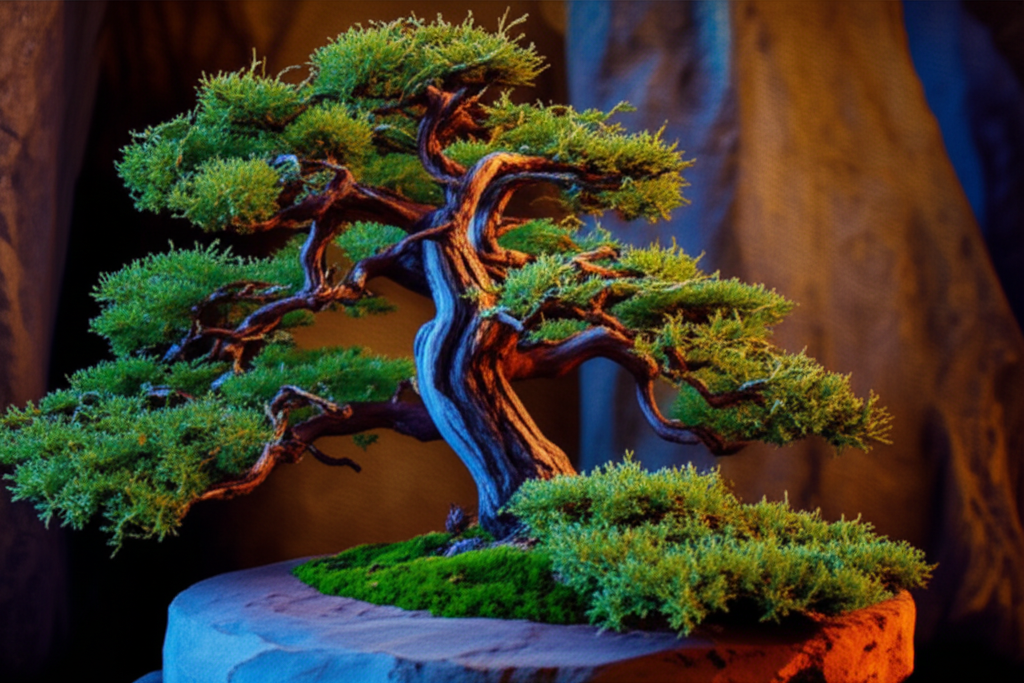
The importance of daily observation isn’t limited to just my Japanese Maple. Another example of how attentive care saved one of my bonsai is the story of my Juniper. I acquired this Juniper from a local nursery a few years ago. It was a relatively young tree, but it had a lot of potential. I envisioned it as a windswept tree, with its branches cascading gracefully over a rocky outcrop.
I carefully pruned and wired the Juniper, shaping it according to my vision. I repotted it into a bonsai pot and placed it in a sunny location in my garden. For the first few months, the Juniper thrived. It produced vigorous new growth, and its foliage turned a deep, healthy green. I was thrilled with its progress and confident that it would soon become a prized addition to my collection.
However, one day I noticed that the foliage was starting to turn brown. At first, I dismissed it as simply a natural shedding of old needles. But as the days passed, the browning continued to spread, and I realized that something was seriously wrong. I examined the tree closely and discovered that it was infested with spider mites. These tiny pests were sucking the sap from the needles, causing them to turn brown and die.
Spider mites can be a serious problem for bonsai, especially in hot, dry weather. They are difficult to detect, and they can quickly decimate a tree if left unchecked. Fortunately, because of my daily observation routine, I caught the infestation early on, before it had a chance to do too much damage.
Taking Immediate Action
I immediately took action to eradicate the spider mites. I started by spraying the tree with a strong jet of water to dislodge as many of the pests as possible. Then, I applied a miticide, a specialized pesticide designed to kill spider mites. I repeated the treatment several times over the next few weeks, carefully monitoring the tree to ensure that the infestation was completely eradicated.
The Juniper recovered slowly but surely. The browning needles gradually fell off, and new growth began to emerge. It took several months for the tree to fully recover, but eventually, it regained its health and vigor. Today, it is a thriving specimen, a testament to the power of attentive observation and timely intervention.
The Psychological Benefits of Bonsai
Beyond the practical aspects of bonsai care, there are also significant psychological benefits to be gained from this ancient art form. Bonsai requires patience, focus, and attention to detail, all of which can help to reduce stress and improve mental clarity. The act of caring for a bonsai can be a meditative experience, allowing you to escape from the distractions of modern life and to connect with nature on a deeper level.
Cultivating Patience and Mindfulness
The slow, gradual process of shaping and nurturing a bonsai teaches patience and mindfulness. It requires you to be present in the moment, to focus on the task at hand, and to appreciate the beauty of the natural world. There are no quick fixes or shortcuts in bonsai; it’s a long-term commitment that requires dedication and perseverance.
This cultivation of patience and mindfulness can have a profound impact on your overall well-being. It can help you to manage stress, to improve your concentration, and to develop a greater sense of inner peace. The act of caring for a bonsai can be a therapeutic experience, allowing you to release pent-up emotions and to find solace in the beauty and simplicity of nature.
A Connection to Something Larger
Furthermore, bonsai connects us to something larger than ourselves. It reminds us of the cyclical nature of life, the interconnectedness of all things, and the importance of respecting and protecting the environment. By nurturing a bonsai, we are not just caring for a tree; we are also contributing to the health and well-being of the planet.
The Future of My Bonsai Journey
My bonsai journey is far from over. I continue to learn and grow with each passing year, and I am constantly seeking new ways to improve my skills and deepen my understanding of this ancient art form. I am also committed to sharing my knowledge and experience with others, to help them discover the joys and benefits of bonsai.
Embracing Continuous Learning
I plan to continue attending workshops and seminars, to read books and articles, and to connect with other bonsai enthusiasts. I also hope to one day travel to Japan, the birthplace of bonsai, to learn from the masters and to experience the culture that has shaped this art form for centuries. I also want to try propagating my own trees from cuttings and seeds. It would be incredibly rewarding to watch a bonsai grow from a tiny seedling into a mature, beautiful specimen. I think this is the next logical step for me, and it’s something that excites me.
Bonsai is more than just a hobby for me; it’s a passion, a way of life. It’s a continuous process of learning, growing, and connecting with nature. And it all started with that one simple, unassuming observation: the soil of my Japanese Maple was drying out faster than the rest.
So, take a closer look at your bonsai today. Observe them carefully, listen to what they are telling you, and be prepared to adapt your care routine to their specific needs. You might be surprised at what you discover. The daily observation, seemingly small and insignificant, can unlock a deeper understanding and connection with your trees, leading to healthier, more beautiful bonsai and a more fulfilling bonsai journey for yourself. It’s about more than just keeping a plant alive, it’s about cultivating a relationship, a partnership with nature, that enriches both your life and the life of your tree.
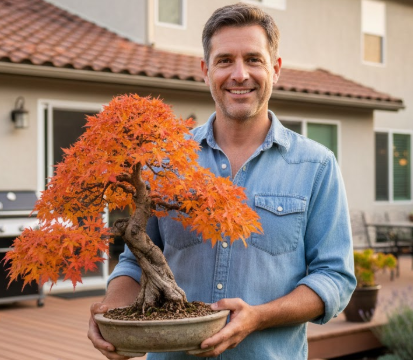
My name is Christopher Brown, I am 38 years old and I live in the United States. I am deeply passionate about the art of bonsai and have been cultivating trees for several years. What started as a simple curiosity turned into a daily practice and an important part of my life.
On this blog, I share my real experiences with bonsai — including what works, what doesn’t, and the lessons I learn along the way. I enjoy experimenting with techniques, observing the growth of each tree, and documenting the process with honesty and patience.
My goal with InfoWeHub is to help beginners feel more confident, avoid common mistakes, and discover the beauty of bonsai cultivation. If you are starting your journey or already love this art, you are welcome here.