
The Illusion of Untouched Nature: Training Bonsai for Natural Beauty
For decades, I’ve been captivated by the art of bonsai. It’s a dance between control and surrender, a constant negotiation with nature to create something that appears utterly untouched. The goal, as I see it, isn’t to force a tree into an unnatural shape, but to guide its growth in a way that mimics the grandeur and resilience we find in the wild. This, I believe, is where the true artistry of bonsai lies – in creating the illusion of untouched nature.
It’s a long game, this bonsai business. It demands patience, a keen eye, and a willingness to learn from your mistakes. I’ve certainly made my share over the years! But through those missteps, I’ve discovered techniques that consistently yield bonsai that possess a natural, unforced elegance. These aren’t tricks or shortcuts, but rather methods that encourage the tree to express its inherent character, guided by our hands.
Understanding the Tree’s Natural Tendencies
Before you even think about picking up your tools, you need to know your tree. Each species has its own growth patterns, its own unique way of responding to its environment. A Japanese maple, for instance, will behave very differently from a juniper. Ignoring these fundamental differences is a recipe for disaster. I’ve seen so many beginners try to force a tree into a style that simply doesn’t suit it, resulting in a stressed and ultimately unhappy bonsai.
Spend time observing your tree. Study how it grows in its natural habitat. What are the typical branching patterns? How does it respond to sunlight and shade? What kind of soil does it prefer? The more you understand the tree’s natural tendencies, the better equipped you’ll be to guide its growth in a way that looks both natural and aesthetically pleasing. Think of it as a conversation, not a command. You’re suggesting possibilities, not dictating terms.
For example, I once tried to train a ficus into a windswept style, something it’s simply not built for. The result was a stressed and awkwardly shaped tree that looked anything but natural. It was a valuable lesson in respecting the plant’s inherent nature.
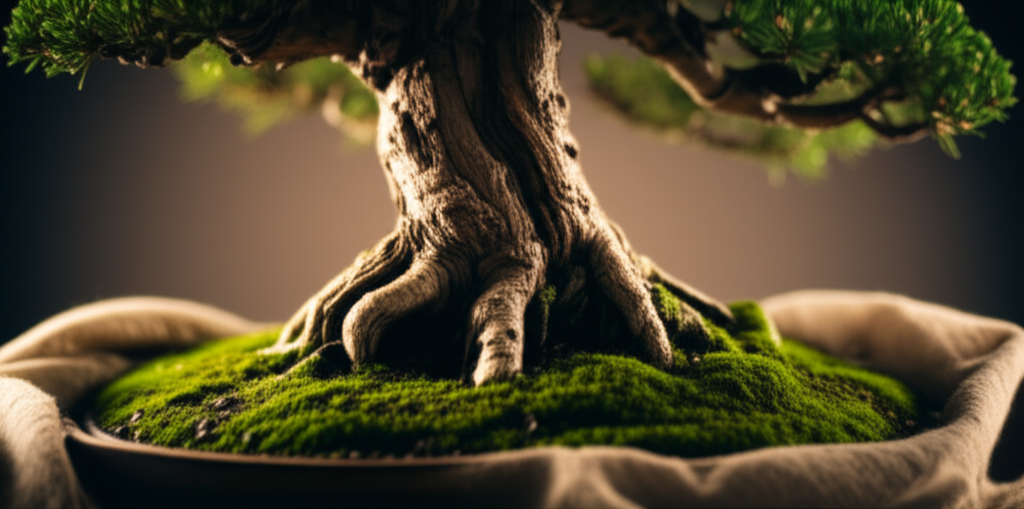
Techniques for Encouraging Natural Growth
Once you have a solid understanding of your tree’s natural tendencies, you can begin to employ specific techniques to encourage natural-looking growth. These techniques are not about imposing a rigid structure, but rather about subtly guiding the tree’s energy in a way that enhances its inherent beauty.
Selective Pruning: The Art of Subtraction
Pruning is arguably the most important technique in bonsai, and it’s certainly one that I’ve spent countless hours perfecting. It’s not just about removing unwanted branches; it’s about shaping the tree’s overall silhouette and encouraging new growth in the desired areas. The key to natural-looking pruning is selectivity. Avoid the urge to over-prune, as this can create an unnatural, “hedged” appearance. Instead, focus on removing branches that detract from the tree’s overall aesthetic, such as those that are crossing, growing inward, or are simply too thick.
Think about how trees grow in nature. They’re constantly shedding branches due to wind, snow, or lack of sunlight. Mimic this natural process by selectively removing branches that are no longer contributing to the tree’s overall health and appearance. I often step back and squint at the tree to identify areas that look cluttered or unbalanced. This helps me to see the overall composition and make more informed pruning decisions.
A specific example: I had a juniper that was becoming overly dense. Instead of simply shearing off the outer growth, I carefully removed individual branches from the interior of the tree, allowing more light and air to circulate. This not only improved the tree’s health but also created a more open and natural-looking branching structure.
Wiring: Gentle Guidance, Not Rigid Control
Wiring is another essential technique for shaping bonsai, but it should be used with caution. The goal is to gently guide the branches into the desired position, not to force them into unnatural contortions. I see wiring as a temporary scaffolding, a way to train the branches while they are still young and pliable. Once the branches have set in their new position, the wire should be removed to prevent scarring.
The type of wire you use is also important. I prefer anodized aluminum wire, as it’s soft and easy to work with. Copper wire is stronger but can be more difficult to remove without damaging the bark. When wiring, be sure to wrap the wire loosely around the branch, leaving enough room for growth. Avoid overtightening the wire, as this can restrict the flow of nutrients and water.
I remember a time when I was too eager to achieve a specific branch angle and overtightened the wire on a young maple. The result was a deep scar that took years to heal. That experience taught me the importance of patience and restraint when wiring.
Root Pruning and Repotting: Maintaining Vigor
Just as important as pruning the branches is pruning the roots. Root pruning is essential for maintaining the health and vigor of your bonsai. Over time, the roots of a bonsai can become pot-bound, restricting the flow of water and nutrients. Root pruning involves carefully removing a portion of the root mass and repotting the tree in fresh soil.
The frequency of repotting depends on the species of tree and its growth rate. Young trees typically need to be repotted every year or two, while older trees can go for several years between repottings. When repotting, be sure to use a well-draining soil mix that is specifically formulated for bonsai. I often add some organic matter to the soil to improve its fertility and water retention.
I once neglected to repot a pine for several years, and the roots became so compacted that the tree’s growth was severely stunted. After repotting, the tree bounced back with renewed vigor, producing lush new growth. This experience underscored the importance of regular root pruning and repotting.
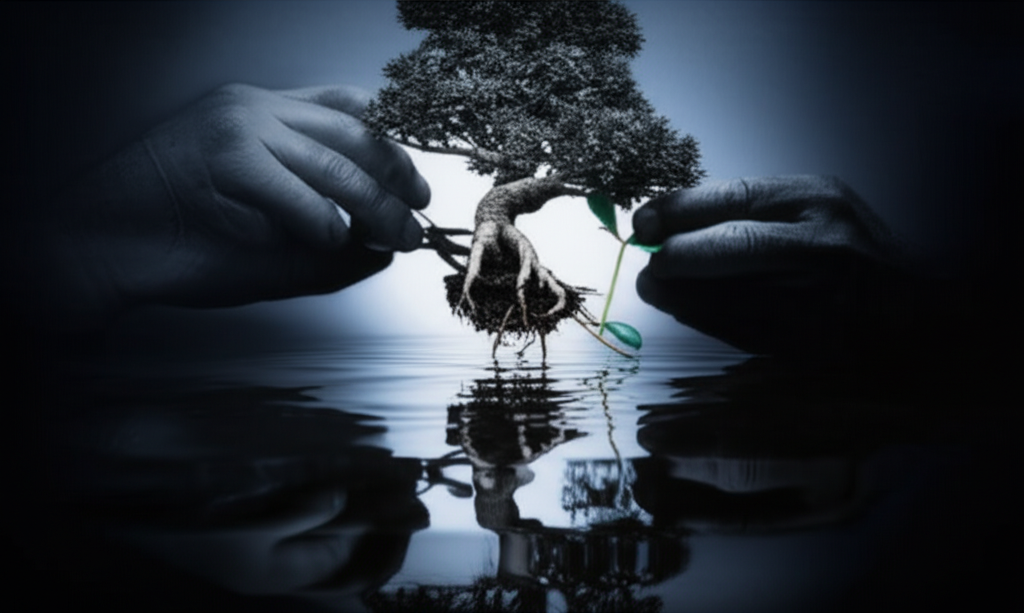
Defoliation: Encouraging Fine Ramification
Defoliation, the process of removing some or all of the leaves from a bonsai, can be a powerful tool for encouraging fine ramification (branching). By removing the leaves, you force the tree to produce new growth, which tends to be smaller and more compact. This can help to create a more dense and intricate canopy.
Defoliation should be done selectively and only on healthy, vigorous trees. It’s generally best to defoliate in the early summer, after the first flush of growth has hardened off. Avoid defoliating trees that are stressed or weakened, as this can further compromise their health.
I’ve had great success using defoliation on my deciduous bonsai, such as maples and elms. The resulting foliage is significantly smaller and more refined, contributing to the overall sense of scale and realism.
Watering and Fertilizing: Providing the Essentials
Proper watering and fertilizing are essential for the health and vigor of your bonsai. Overwatering and underwatering are both common mistakes that can lead to serious problems. The key is to find a balance that provides the tree with the moisture and nutrients it needs without causing root rot or nutrient deficiencies.
The frequency of watering depends on the species of tree, the size of the pot, and the climate. As a general rule, you should water your bonsai when the top inch of soil feels dry to the touch. When watering, be sure to soak the entire root ball, allowing the excess water to drain out of the bottom of the pot.
Fertilizing should be done regularly during the growing season. I prefer to use a balanced fertilizer that contains all the essential nutrients. Avoid over-fertilizing, as this can lead to excessive growth and an unnatural appearance. Slow-release fertilizers are a good option, as they provide a steady supply of nutrients over an extended period.
The Importance of Patience and Observation
Ultimately, the key to creating bonsai that possess a natural beauty is patience and observation. Bonsai is not a quick fix; it’s a long-term commitment that requires constant attention and care. You need to be willing to observe your trees closely, learn from your mistakes, and adapt your techniques as needed.
Don’t be afraid to experiment. Try different techniques and see what works best for you and your trees. But always remember to prioritize the health and well-being of your bonsai. A healthy tree is a beautiful tree, and a beautiful tree is one that reflects the natural world.
I’ve learned that the best bonsai are not those that are perfectly symmetrical or rigidly styled, but those that possess a sense of character and individuality. These are the trees that tell a story, that evoke a feeling of awe and wonder, that remind us of the beauty and resilience of nature.
It’s a journey, this bonsai art. There are no shortcuts, no magic formulas. It’s about connecting with nature, about learning to see the world in a new way, about finding beauty in the unexpected. And it’s a journey that I wouldn’t trade for anything.
Embracing Imperfection: The Beauty of Wabi-Sabi
In the world of bonsai, as in life, perfection is an illusion. The Japanese concept of wabi-sabi embraces the beauty of imperfection, the transience of all things. It encourages us to find beauty in the flaws, the wrinkles, the irregularities that make each bonsai unique. A slight bend in the trunk, a gnarled branch, a patch of moss growing on the bark – these are not imperfections to be corrected, but rather characteristics to be celebrated. They tell a story of resilience, of adaptation, of the passage of time.
When I first started out, I was obsessed with achieving perfect symmetry and flawless execution. I spent hours trying to eliminate every imperfection, only to realize that I was stripping the tree of its character and individuality. It was only when I began to embrace the principles of wabi-sabi that I truly began to appreciate the beauty of bonsai. I learned to see the value in the unexpected, to find beauty in the unconventional. And I discovered that it was these imperfections that ultimately made the trees so captivating.
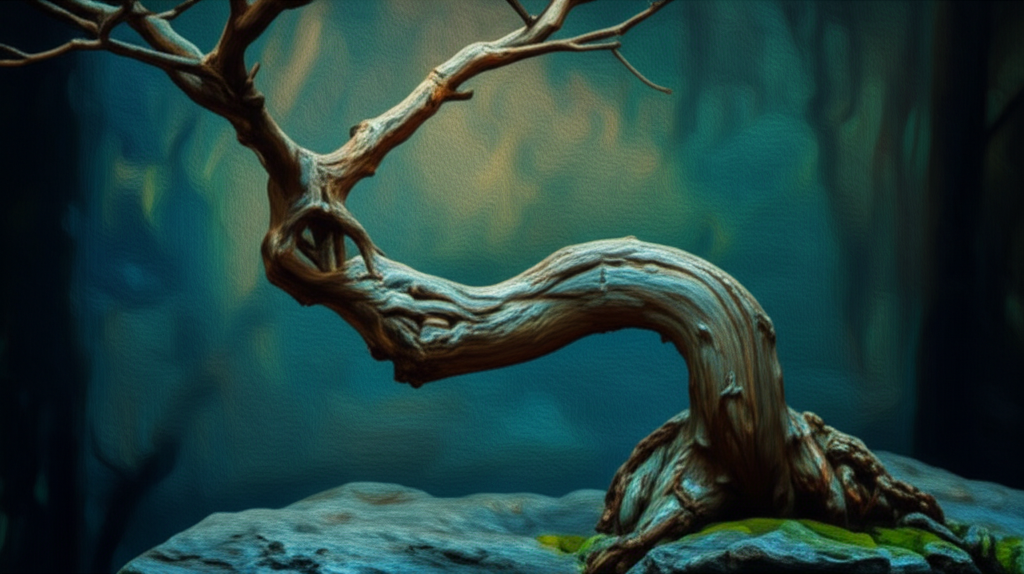
Case Studies: Lessons from the Masters (and My Mistakes)
Over the years, I’ve had the opportunity to learn from some truly exceptional bonsai artists. I’ve also made my fair share of mistakes, each one a valuable lesson in its own right. Here are a few case studies that illustrate some of the key principles of natural bonsai training.
The Windswept Juniper: Patience and Observation
I once acquired a juniper that was clearly destined for a windswept style. The trunk was already leaning dramatically to one side, and the branches were naturally cascading downwards. However, the tree was also quite dense and overgrown, making it difficult to see its underlying structure. My first impulse was to immediately prune away all the excess growth, but I resisted the urge. Instead, I spent several weeks observing the tree, studying its growth patterns and identifying the branches that were most essential to the windswept design.
I then began to selectively prune away the unwanted branches, taking care to maintain the tree’s natural asymmetry. I also used wiring to gently guide some of the branches into a more windswept position. The entire process took several months, but the result was a stunning bonsai that truly captured the essence of a tree battered by the elements.
The Literati Maple: Embracing the Unusual
Another memorable project involved a Japanese maple that had a somewhat unusual growth habit. The trunk was slender and contorted, and the branches were sparse and irregularly spaced. Most bonsai artists would have dismissed this tree as unsuitable for traditional bonsai styles, but I saw potential in its unique character. I decided to train it in the literati style, which emphasizes the tree’s natural elegance and emphasizes the beauty of its bare branches.
The key to training a literati bonsai is to minimize the foliage and accentuate the tree’s skeletal structure. I carefully pruned away the larger leaves and thinned out the branches, creating a sense of airiness and transparency. I also used wiring to gently refine the tree’s overall shape, emphasizing its natural curves and contours. The finished bonsai was a testament to the beauty of imperfection, a reminder that even the most unconventional trees can be transformed into works of art.
These are just a couple of examples of the many lessons I’ve learned over the years. The art of bonsai is a never-ending journey of discovery, a constant process of learning and refinement. But the rewards are well worth the effort. There’s nothing quite like the feeling of creating a bonsai that captures the essence of nature, a living sculpture that reflects the beauty and resilience of the natural world.
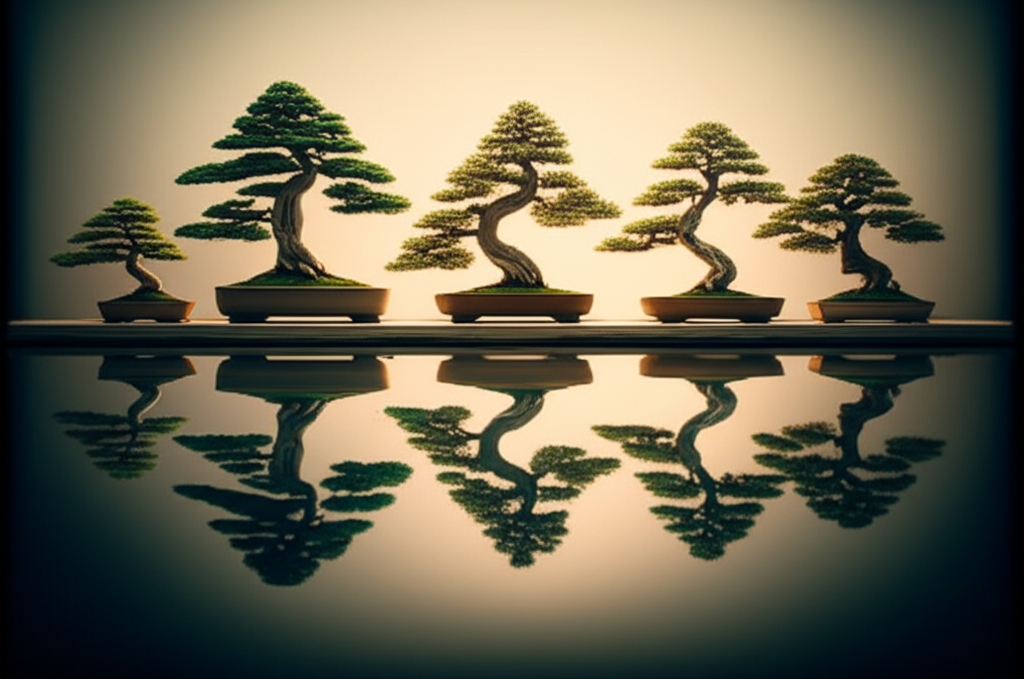
Beyond Technique: The Philosophy of Natural Bonsai
While mastering the techniques of bonsai is essential, it’s equally important to understand the underlying philosophy. Natural bonsai is more than just a set of techniques; it’s a way of seeing the world, a way of connecting with nature on a deeper level. It’s about cultivating patience, developing a keen eye for detail, and learning to appreciate the beauty of imperfection.
It’s about understanding that bonsai is not about control, but about collaboration. We are not imposing our will on the tree, but rather working with it to create something beautiful and harmonious. We are guiding its growth, not dictating it. We are respecting its natural tendencies, not forcing it into unnatural shapes.
And it’s about recognizing that bonsai is a living art form, constantly evolving and changing over time. A bonsai is never truly finished; it’s always in a state of becoming. As the tree grows and matures, we must continue to adapt our techniques and refine our vision. It’s a lifelong journey, a constant process of learning and growth.
So, as you embark on your own bonsai journey, remember to embrace the principles of natural bonsai. Cultivate patience, observe closely, and appreciate the beauty of imperfection. And above all, remember to connect with nature and allow yourself to be inspired by the world around you. The rewards will be immeasurable, a deeper connection with nature and the creation of living art that embodies the spirit of natural beauty. The art of bonsai is as much about the journey as it is the destination.
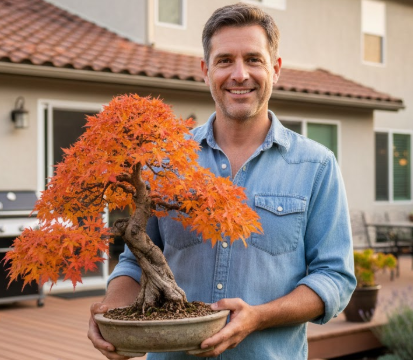
My name is Christopher Brown, I am 38 years old and I live in the United States. I am deeply passionate about the art of bonsai and have been cultivating trees for several years. What started as a simple curiosity turned into a daily practice and an important part of my life.
On this blog, I share my real experiences with bonsai — including what works, what doesn’t, and the lessons I learn along the way. I enjoy experimenting with techniques, observing the growth of each tree, and documenting the process with honesty and patience.
My goal with InfoWeHub is to help beginners feel more confident, avoid common mistakes, and discover the beauty of bonsai cultivation. If you are starting your journey or already love this art, you are welcome here.