
The Pruning Paradox: Why Beginners Fear the Shears
Let’s be honest, the first time I held a pair of bonsai shears to a promising little tree, my hands shook. It felt like I was about to commit arboreal assault. Years later, I understand that fear. It’s the fear of ruining something beautiful, of making a mistake that’s irreversible. It’s the paradox of pruning: we need to cut to create, to shape, to enhance life. But that initial snip? It’s terrifying.
I remember vividly my first bonsai, a little ficus I picked up at a local nursery. I’d read all the books, watched all the videos, convinced myself I was ready. And then, I stood there, paralyzed, staring at a branch that clearly needed to go. “What if I’m wrong?” I thought. “What if I kill it?” That ficus survived, thankfully, despite my hesitant pruning. But more importantly, I survived that initial fear. And so will you.
Understanding the “Why” Before the “How”
Before we even pick up our tools, it’s crucial to understand the why behind bonsai pruning. It’s not just about aesthetics, although that’s certainly part of it. It’s about directing the tree’s energy, controlling its growth, and maintaining its health. It’s about mimicking the natural processes that shape trees in the wild, but on a miniature scale.
Think of a windswept pine clinging to a rocky cliff. The constant wind prunes its branches, shaping it into a dramatic form. Nutrient-poor soil limits its growth. These natural stresses create the character we admire in bonsai. Pruning, in essence, is our way of replicating these stresses, of guiding the tree to express its inner strength and resilience.
Without pruning, a bonsai would quickly revert to its natural, untamed form. Branches would become leggy and sparse, the overall shape would lose definition, and the inner branches would be starved of light and air. Pruning is the key to maintaining the tree’s miniature size and artistic shape, as well as ensuring its long-term health and vigor.
Types of Pruning: Knowing Your Cuts
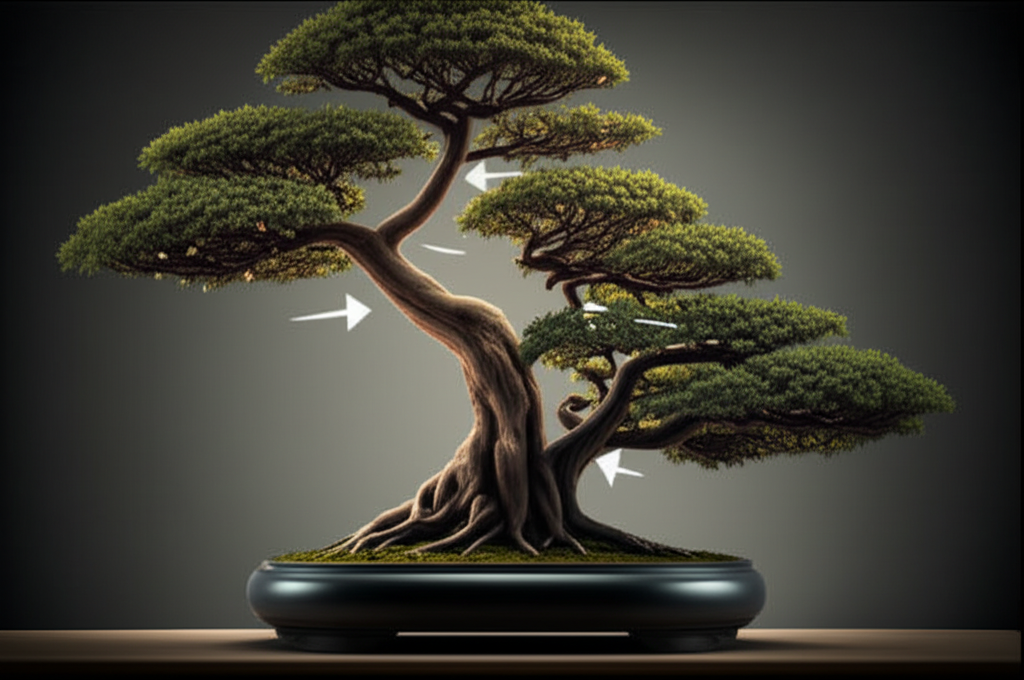
There are several different types of pruning techniques, each serving a specific purpose. Understanding these techniques is essential for effective bonsai care. Let’s break down the most common ones:
Thinning Cuts: Letting the Light Shine In
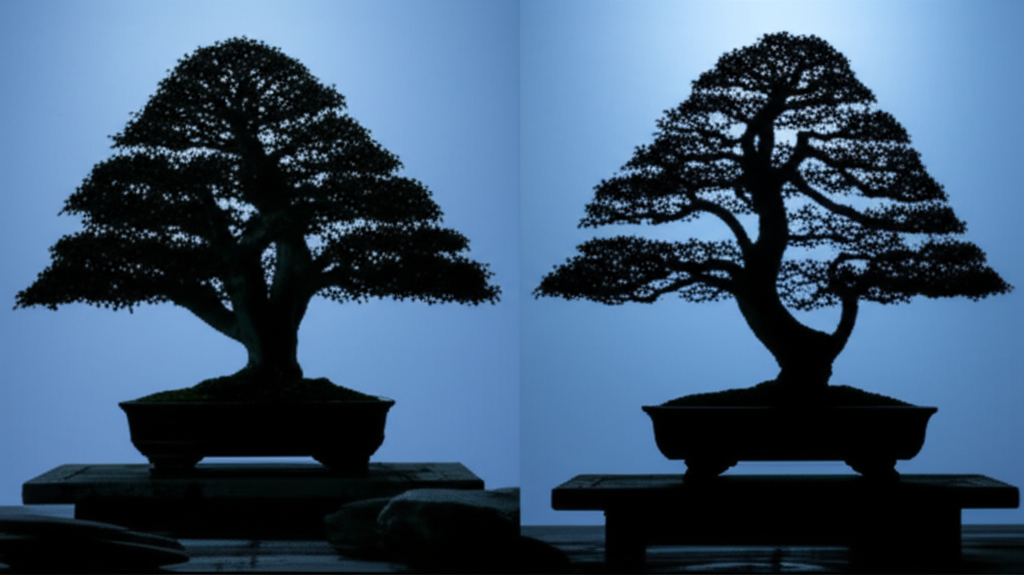
Thinning cuts involve removing entire branches or shoots back to their point of origin. This type of pruning is primarily used to improve air circulation and light penetration within the canopy. By removing congested growth, we allow sunlight to reach the inner branches and foliage, promoting healthy growth throughout the tree.
I often use thinning cuts on my junipers to prevent fungal diseases, which thrive in humid, poorly ventilated environments. It’s like giving the tree a good haircut, allowing it to breathe and bask in the sun. It also helps to reveal the underlying structure of the tree, highlighting its natural beauty.
Heading Cuts: Encouraging Back Budding
Heading cuts involve shortening a branch or shoot by cutting it back to a bud or another branch. This type of pruning is used to encourage back budding, which is the development of new growth closer to the trunk. By shortening the branch, we redirect the tree’s energy to the remaining buds, stimulating them to sprout and create a denser, more compact form.
Heading cuts are particularly useful for shaping deciduous trees, such as maples and elms. These trees readily back bud, allowing us to create intricate branch structures and maintain a desirable silhouette. However, it’s important to make heading cuts just above a bud that is pointing in the direction we want the new growth to go. This will help us to guide the tree’s growth and maintain its overall shape.
Root Pruning: Balancing Above and Below
Root pruning is an essential part of bonsai care, although it can be even more intimidating than branch pruning. It involves removing a portion of the tree’s root system during repotting. This helps to control the tree’s growth, prevent it from becoming root-bound, and encourage the development of a fine, fibrous root system.
I remember the first time I root pruned a tree. I was terrified of damaging the roots and killing the tree. But with careful observation and gentle handling, I was able to successfully prune the roots and repot the tree. The key is to remove about one-third of the root mass, focusing on thick, circling roots. This will create space for new, healthy roots to grow and ensure that the tree remains healthy and vigorous.
Tools of the Trade: Investing in Quality
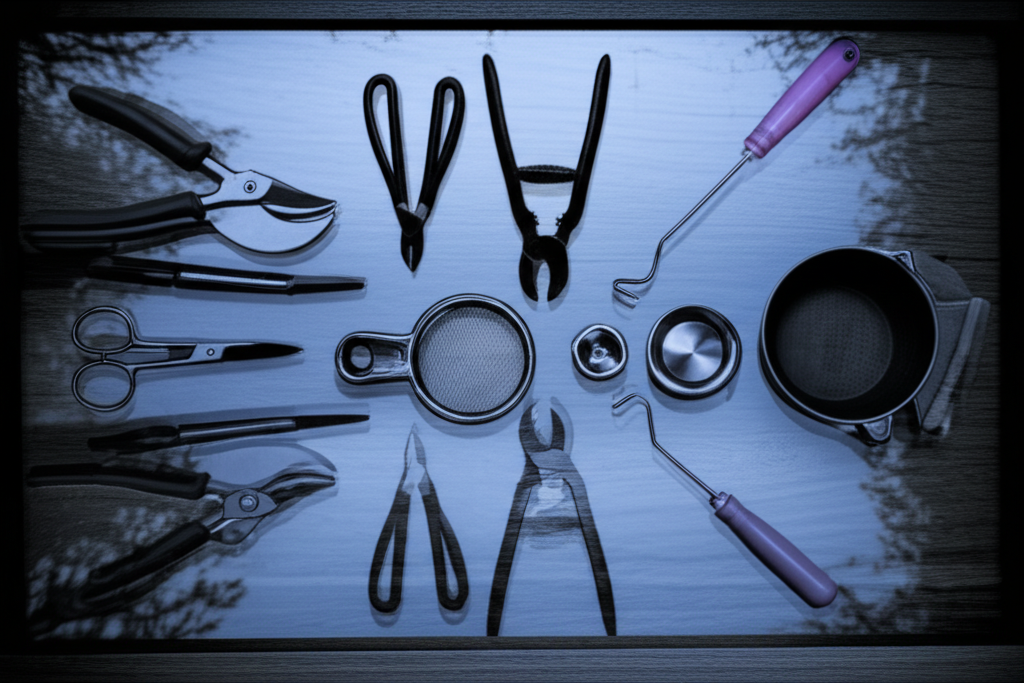
Using the right tools can make all the difference in your bonsai journey. Investing in high-quality tools will not only make pruning easier and more enjoyable, but it will also help to prevent damage to your trees. Here are some essential tools for bonsai pruning:
- Bonsai Shears: These are the workhorses of bonsai pruning. Choose a pair that is comfortable to hold and has sharp, precise blades.
- Branch Cutters: These are used for removing thicker branches that are too large for bonsai shears. Look for cutters with concave blades, which will create a clean, recessed cut that heals quickly.
- Root Hooks: These are used to gently tease apart the root ball during repotting.
- Soil Sieves: These are used to separate different particle sizes of soil for optimal drainage and aeration.
While it can be tempting to save money by purchasing cheaper tools, I’ve learned that it’s always better to invest in quality. Cheap tools are often dull and imprecise, which can lead to ragged cuts and increased risk of disease. High-quality tools, on the other hand, will last for years with proper care and will make pruning a much more enjoyable experience.
Overcoming the Fear: Practical Tips for Beginners
So, how do we overcome that initial fear of pruning? Here are some practical tips that have helped me over the years:
Start Small: Practice on Less Valuable Trees
Don’t start with your prized specimen. Begin with inexpensive nursery stock or cuttings. This will allow you to experiment with different pruning techniques without the pressure of potentially ruining a valuable tree. Think of it as a practice run, a chance to hone your skills and build your confidence.
I remember practicing on a row of privet hedges in my backyard. It wasn’t glamorous, but it gave me a chance to experiment with different pruning techniques and develop a feel for how plants respond to pruning. By the time I started working on my bonsai, I felt much more confident and prepared.
Observe and Plan: Don’t Just Cut Blindly
Before you make any cuts, take the time to observe your tree carefully. Consider its overall shape, its branch structure, and its health. Plan your pruning strategy in advance, visualizing the desired outcome. Ask yourself: What are my goals for this pruning session? Am I trying to improve the tree’s shape, encourage back budding, or improve air circulation?
I often sketch out my pruning plans on paper before I even pick up my tools. This helps me to visualize the changes I want to make and to avoid making impulsive cuts that I might later regret. It’s like having a roadmap for your pruning journey, guiding you towards your desired destination.
One Cut at a Time: Patience is Key
Don’t try to do too much at once. Pruning is an iterative process, and it’s always better to err on the side of caution. Make a few cuts, then step back and assess the results. You can always remove more later, but you can’t undo a cut that’s already been made.
I’ve learned this lesson the hard way, by making overzealous cuts that left my trees looking unbalanced and unnatural. Now, I always take my time, making small adjustments and carefully evaluating the results before proceeding further. It’s like sculpting a piece of art, slowly revealing the underlying beauty with each careful stroke.
Learn from Your Mistakes: Every Bonsai Teaches a Lesson
Even the most experienced bonsai artists make mistakes. The key is to learn from those mistakes and to use them as opportunities for growth. Don’t be discouraged if you make a bad cut or accidentally damage a branch. Every bonsai teaches a lesson, and every mistake is a chance to learn and improve.
I’ve killed my fair share of bonsai over the years, but each one has taught me something valuable. I’ve learned about the importance of proper watering, the effects of different pruning techniques, and the resilience of trees. These lessons have made me a better bonsai artist, and they will help you too.
Beyond the Basics: Advanced Pruning Techniques
Once you’ve mastered the basics of bonsai pruning, you can start to explore more advanced techniques. These techniques can help you to create more refined and intricate bonsai designs.
Wiring: Guiding the Branches
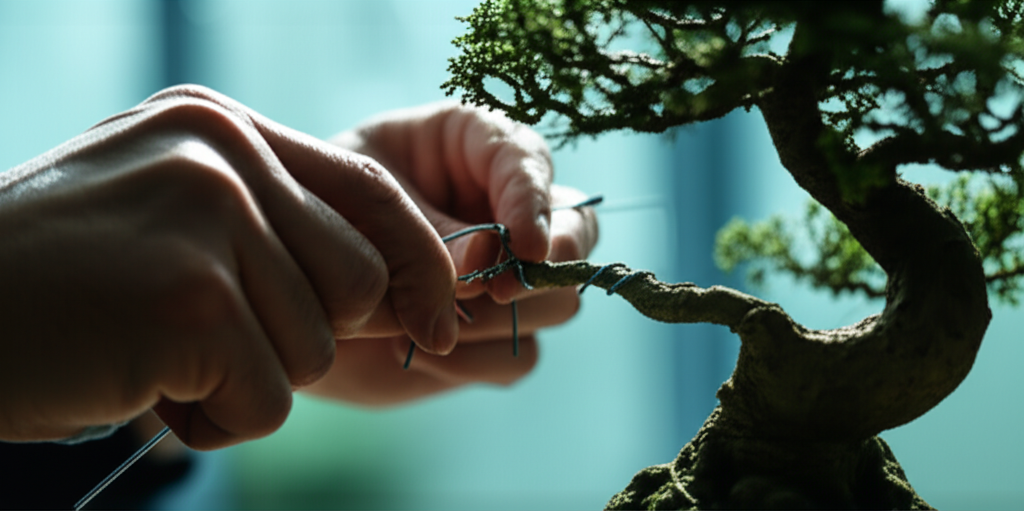
Wiring is a technique used to shape and position branches. It involves wrapping wire around the branches and gently bending them into the desired position. This can be used to create more interesting branch structures, to fill in gaps in the canopy, or to correct undesirable growth patterns.
Wiring is an art in itself, and it takes practice to master. It’s important to use the right type of wire, to wrap it properly, and to monitor the wire closely to prevent it from cutting into the bark. But with practice, you can use wiring to create truly stunning bonsai designs.
Grafting: Combining the Best of Both Worlds
Grafting is a technique used to join two different plants together. In bonsai, it is often used to combine the desirable characteristics of two different varieties. For example, you might graft a branch from a tree with beautiful flowers onto a tree with a strong trunk and root system.
Grafting can be a challenging technique, but it can also be very rewarding. It allows you to create unique and personalized bonsai designs that would not be possible otherwise.
Defoliation: Stimulating New Growth
Defoliation is the process of removing all or part of a tree’s leaves. This is typically done in late spring or early summer to stimulate new growth and to reduce the size of the leaves. Defoliation can also be used to improve the tree’s ramification, which is the density of its branching structure.
Defoliation is a powerful technique, but it should be used with caution. It can stress the tree if it is not done properly. However, when used correctly, defoliation can dramatically improve the appearance and health of your bonsai.
The Art of Patience: Pruning as a Practice
Bonsai pruning is more than just a horticultural technique; it’s a practice in patience, observation, and mindfulness. It requires us to slow down, to connect with nature, and to appreciate the beauty of the present moment.
When I’m pruning my bonsai, I’m not just shaping a tree; I’m shaping myself. I’m learning to be more patient, more observant, and more attuned to the rhythms of nature. I’m learning to let go of my expectations and to embrace the unexpected. I’m learning to find beauty in imperfection and to appreciate the journey, not just the destination.
So, the next time you pick up your bonsai shears, remember that you’re not just cutting branches; you’re engaging in a practice that can transform your life. Embrace the fear, learn from your mistakes, and enjoy the journey. The rewards are immeasurable.
Finding Your Own Style: The Personal Touch
As you gain experience, you’ll begin to develop your own unique style of bonsai pruning. You’ll find yourself gravitating towards certain shapes, certain techniques, and certain species. This is a natural part of the process, and it’s what makes bonsai such a personal and rewarding art form.
Don’t be afraid to experiment, to break the rules, and to find your own voice. There’s no right or wrong way to prune a bonsai, as long as you’re doing it with love, respect, and a genuine desire to enhance the tree’s beauty and health. Your bonsai should be a reflection of your own personality, your own creativity, and your own unique vision.
Common Mistakes: Avoiding the Pitfalls
Even with the best intentions, beginners often make common mistakes when pruning their bonsai. Being aware of these pitfalls can help you avoid them and ensure the health and beauty of your trees.
Over-Pruning: Less is More
One of the most common mistakes is over-pruning. It’s tempting to try and achieve a perfect shape in a single session, but this can stress the tree and weaken its overall health. Remember, pruning is an iterative process, and it’s always better to err on the side of caution.
I’ve definitely been guilty of over-pruning in the past, especially when I was first starting out. I would get carried away with the shears and end up removing too much foliage, leaving the tree looking bare and unnatural. Now, I always remind myself that less is more, and I try to prune gradually, making small adjustments over time.
Improper Cuts: Cleanliness is Key
Making improper cuts can also damage your trees. Ragged cuts can create entry points for pests and diseases, while flush cuts can damage the branch collar and impede healing. Always use sharp, clean tools and make precise cuts at the correct angle.
I always make sure to sterilize my tools before and after each pruning session. This helps to prevent the spread of diseases and to ensure that my trees remain healthy. I also take care to make clean, precise cuts, avoiding any unnecessary damage to the bark or wood.
Neglecting Aftercare: The Importance of Healing
Pruning is just one part of the process. Proper aftercare is essential for helping your trees recover and thrive. This includes providing adequate water, fertilizer, and sunlight, as well as protecting them from pests and diseases.
I always make sure to give my trees a boost of fertilizer after pruning to help them recover. I also keep a close eye on them for any signs of stress or disease. By providing proper aftercare, you can ensure that your trees remain healthy and beautiful for years to come.
Ultimately, the fear of pruning is a hurdle every bonsai enthusiast must overcome. It’s a journey of learning, adapting, and connecting with the natural world. Embrace the process, and your bonsai – and you – will flourish.
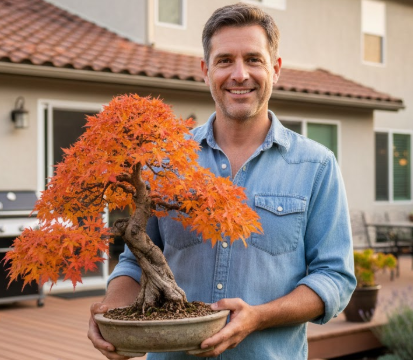
My name is Christopher Brown, I am 38 years old and I live in the United States. I am deeply passionate about the art of bonsai and have been cultivating trees for several years. What started as a simple curiosity turned into a daily practice and an important part of my life.
On this blog, I share my real experiences with bonsai — including what works, what doesn’t, and the lessons I learn along the way. I enjoy experimenting with techniques, observing the growth of each tree, and documenting the process with honesty and patience.
My goal with InfoWeHub is to help beginners feel more confident, avoid common mistakes, and discover the beauty of bonsai cultivation. If you are starting your journey or already love this art, you are welcome here.