
In the world of specialty coffee, there is a distinct difference between “making” coffee and “crafting” it. To the uninitiated, pulling a shot of espresso might look like a simple sequence: grind the beans, tamp the puck, and press a button. But for the serious enthusiast, those few seconds of extraction are the culmination of a rigorous scientific method known as “Dialing-In.” This is the process of adjusting your variables—grind size, dose, and yield—until you find the “sweet spot” where acidity, sweetness, and bitterness exist in perfect harmony.
Espresso is the most demanding of all brewing methods because it uses pressure to force water through coffee in a very short amount of time. Every tiny mistake is magnified. A single gram of difference in your dose or a hair-width change in your grind can be the difference between a syrupy, balanced masterpiece and a sour, thin mess. To master this, you must Understand the Role of High-Altitude Density and How It Resists Water Under Pressure .
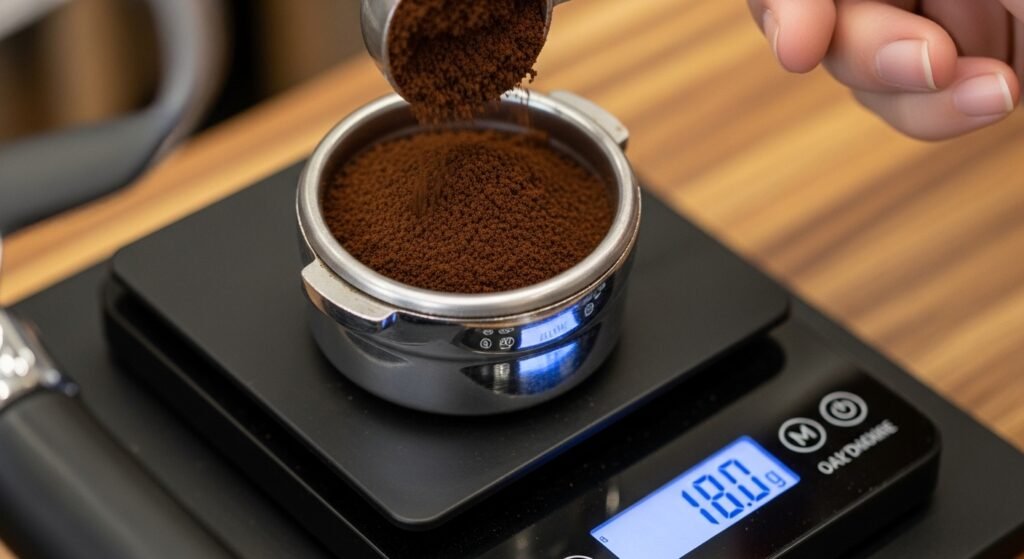
The Holy Trinity of Variables
When you start your morning calibration, you have three primary levers to pull. Mastering the interaction between these three is the secret to a professional-grade shot.
-
The Dose: This is the weight of dry coffee grounds you put into your portafilter basket. Most modern recipes range from 18g to 20g for a double shot.
-
The Yield: This is the weight of the liquid coffee in the cup. A standard “ratio” is 1:2, meaning if you put 18g of coffee in, you want 36g of espresso out.
-
The Time: This is the duration of the shot. Generally, you are aiming for your target yield to be reached in 25 to 30 seconds.
If your shot is running too fast (e.g., 36g in 18 seconds), the water is rushing through the gaps between the grounds too quickly, leading to under-extraction. If it runs too slow (e.g., 36g in 45 seconds), it is over-extracting. This is why Maintaining a Clean and Calibrated Burr Grinder is More Important Than the Machine Itself .
The Grind Size: The Micro-Adjustment Game
The grind size is the variable you will adjust most often. Even if you don’t change your beans, the humidity in the air or the temperature of your kitchen can cause the coffee to behave differently. Coffee is hygroscopic; it absorbs moisture from the air, causing the beans to swell slightly.
If your espresso tastes sour, salty, or “thin,” you are likely under-extracting. You need to grind finer to create more resistance for the water. If the espresso tastes bitter, ashy, or like burnt rubber, you are over-extracting. You need to grind coarser to let the water pass through more easily. This adjustment is what creates the legendary Science of Aftertaste Where the Sweetness Lingers Long After the Sip .
Tamping and Distribution: The Quest for Evenness
You can have the perfect grind size, but if your coffee puck isn’t perfectly level and evenly compressed, you will suffer from “channeling.” Channeling occurs when the high-pressure water finds a crack or a weak spot in the puck and rushes through it.
The result is a shot that is simultaneously sour (from the under-extracted parts of the puck) and bitter (from the over-extracted channel). This is why professional baristas use distribution tools and heavy, flat tampers. They are ensuring that every square millimeter of that coffee bed offers the same resistance. This mechanical consistency is what allows the Vibrant Floral Notes of an Ethiopian Heirloom to Shine Through the Intensity without being masked by harsh defects.
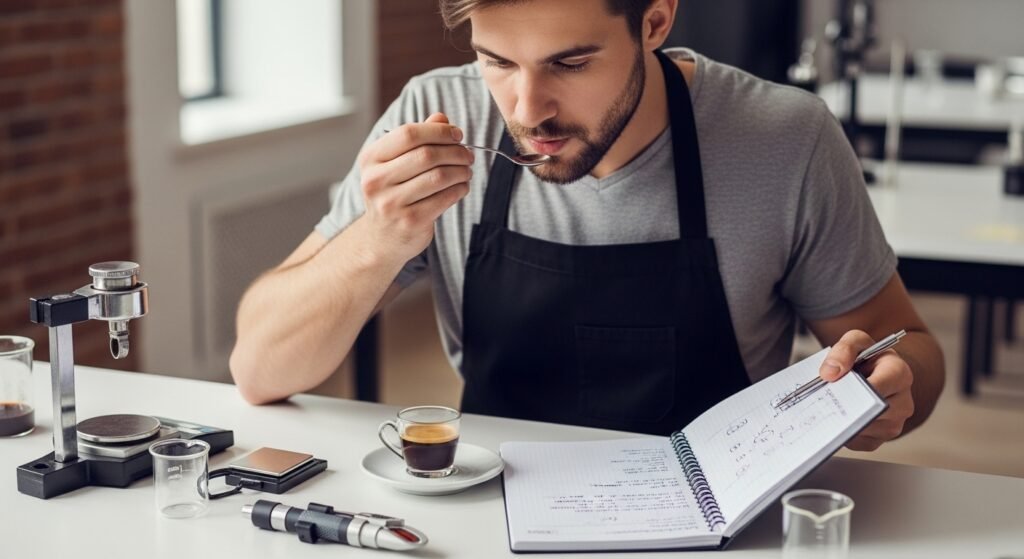
The Tasting Loop: Sensory Feedback
Dialing-in is not just about numbers; it’s about your palate. After every adjustment, you must taste the result.
-
Is the acidity “sparkling” or “vinegary”?
-
Is the body “syrupy” or “watery”?
-
Does the finish leave you wanting more?
If you are Evaluating Your Technique Using the Versatility of an AeroPress or a Siphon , you have more room for error. In espresso, there is no hiding. You are tasting the “soul” of the bean at 9 bars of pressure.
When to “Re-Dial” Your Coffee
Many home baristas make the mistake of dialing-in once and never touching the grinder again. In a professional cafe, the head barista will re-calibrate the espresso at least three times a day.
-
The Morning Shift: The beans have rested overnight.
-
The Lunch Rush: The grinder has become hot from constant use, causing the metal burrs to expand.
-
The Afternoon: The humidity in the room has changed as more people enter and the weather shifts.
If you notice your Water Quality and Mineral Composition shifting because of a new filter or a change in your local supply, you will also need to re-evaluate your grind. Softer water extracts differently than hard water, and your espresso recipe must adapt.
The Gear Matters: Precision Over Power
You don’t need a $10,000 machine to pull great espresso, but you do need a precision grinder and a reliable scale. Without a scale, you are guessing. If you can’t measure your dose to the $0.1$g, you will never achieve consistency.
As we have discussed, Keeping Your Internal Group Head and Solenoid Valves Clean and Free of Old Oils is the baseline for this entire process. If you are dialing-in on a dirty machine, you are calibrating against the flavor of rancid grease, not the flavor of the coffee.
Conclusion: The Pursuit of Perfection
Dialing-in is the ritual that separates the amateur from the expert. it is a process of trial and error that rewards patience and observation. It teaches you to listen to what the coffee is telling you.
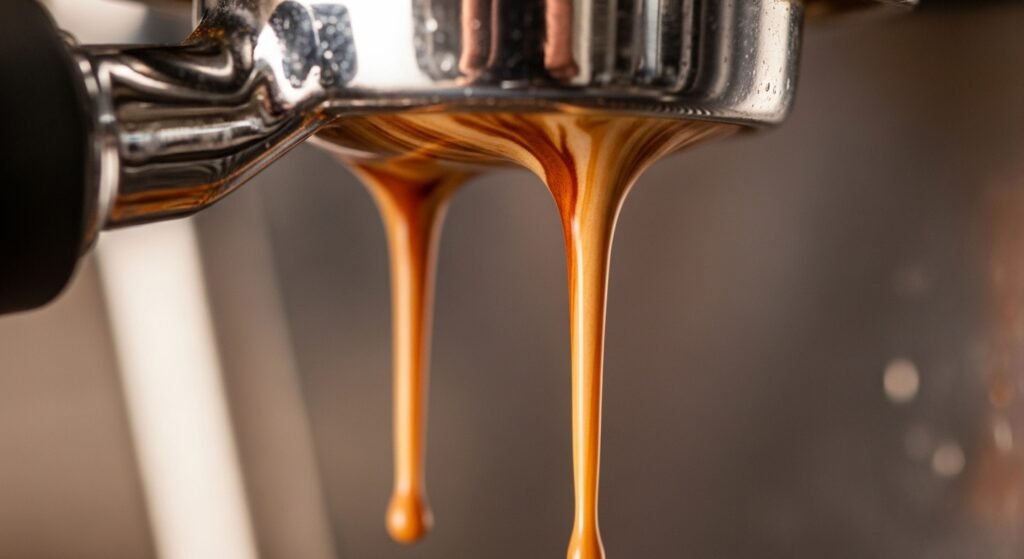
When you finally hit that perfect calibration—when the honey-thick liquid flows into the cup and the aroma fills the room—you realize that espresso is not just a drink; it is a moment of perfect chemistry. By Applying This Level of Technical Rigor to Every Aspect of Your Brewing , you elevate your daily routine into a professional craft.
So, the next time your coffee tastes a bit “off,” don’t settle for it. Take it as a challenge. Adjust your grind, weigh your dose, and hunt for that sweet spot. The perfect shot is waiting for you; you just have to dial it in.

Brown Christopher is 47 years old and has been passionate about coffee since he was 15. For more than three decades, he has explored coffee culture, brewing methods, and the flavors behind every cup. Through this blog, he shares simple tips and knowledge to help beginners better understand and enjoy coffee in their daily lives. ☕