
Espresso is often described as the most volatile and demanding method of coffee extraction. Unlike a pour-over or a French Press, where the variables of time and gravity move relatively slowly, espresso happens under intense pressure—typically 9 bars—in a matter of seconds. In this high-stakes environment, even the smallest inconsistency in your setup is magnified. This is why professional baristas spend the first hour of every day “dialing in.”
Dialing-in is the systematic process of adjusting your grind size, dose, and yield to find the “sweet spot” of a specific coffee bean. It is a dance of chemistry and physics where you are trying to Apply Technical Knowledge of High-Altitude Bean Density to a mechanical extraction. When done correctly, the result is a syrupy, balanced shot with a complex crema; when ignored, you are left with a liquid that is either painfully sour or intensely bitter.
The Three Pillars: Dose, Yield, and Time
To calibrate an espresso machine, you must control three primary variables. Changing one will almost always affect the others.
-
The Dose: This is the weight of the dry coffee grounds in your portafilter. For a standard double shot, this is usually between 18g and 20g. Consistency is paramount here; even a 0.5g difference can ruin your calibration.
-
The Yield: This is the weight of the liquid espresso in your cup. The industry standard is a 1:2 ratio (e.g., 18g of coffee producing 36g of espresso).
-
The Time: This is the duration of the extraction from the moment you start the pump. Most specialty espressos shine between 25 and 32 seconds.
If your shot finishes in 15 seconds, it will be under-extracted and sour. If it takes 45 seconds, it will be over-extracted and bitter. This is where your equipment’s health becomes a factor; you cannot achieve precision if you are Neglecting the Maintenance and Cleaning of Your Grinder and Group Head .
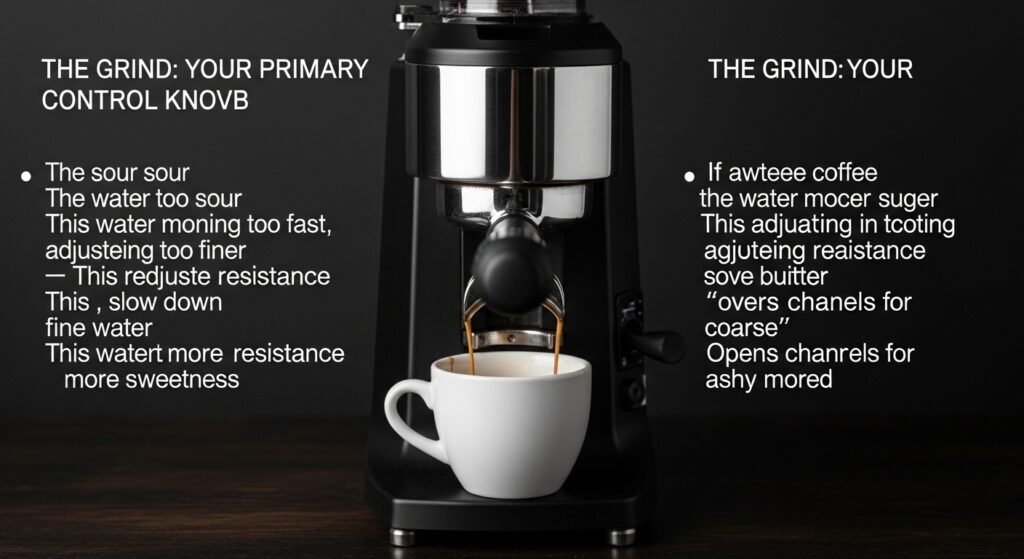
The Grind: Your Primary Control Knob
The grind size is the most frequent adjustment you will make during the dialing-in process. Espresso requires a very fine grind—resembling powdered sugar or fine table salt—to create enough resistance against the pressurized water.
-
If the coffee is too sour: The water is moving too fast. You need to adjust your grinder to be finer. This creates more resistance, slows down the water, and allows for more sweetness to be extracted.
-
If the coffee is too bitter: The water is moving too slow. You need to adjust your grinder to be coarser. This opens up “channels” for the water to flow more freely, preventing the over-extraction of ashy, burnt flavors.
When working with Exotic African Coffees Known for Floral and Citrus Notes , the grind becomes even more sensitive. These beans are often denser and require a slightly finer setting and higher temperatures to reach their full potential.
Temperature and Water Chemistry
While grind and dose are the tools of the barista, water is the vehicle. If your water temperature is fluctuating, your espresso will never be consistent. Most specialty roasts perform best between $92^{\circ}C$ and $95^{\circ}C$.
Furthermore, the Invisible Influence of Water Quality and Mineral Balance plays a massive role in the dialing-in process. If your water has too many minerals, it will extract too much too quickly; if it’s too soft, the espresso will lack body and sweetness. A perfectly calibrated shot requires water that has the right amount of magnesium to “grab” those chocolate and fruit notes from the bean.
Tasting the Extraction: The Sensory Compass
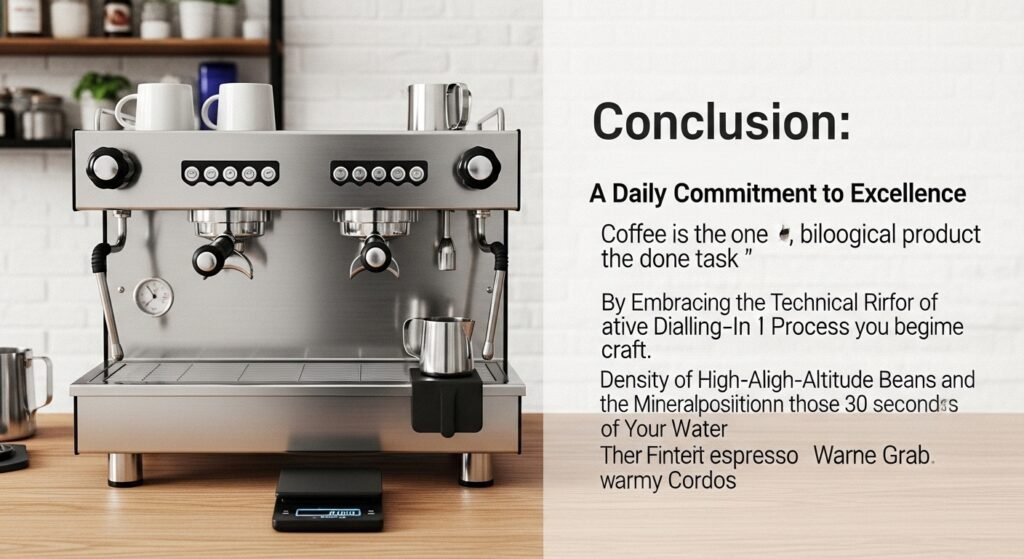
The ultimate goal of dialing-in is balance. As you Develop Your Palate Through Regular Cupping Sessions , you will start to recognize the “Espresso Compass”:
-
Sourness/Saltiness: Signs of under-extraction. The water didn’t stay in contact with the coffee long enough to pull out the sugars.
-
Sweetness/Acidity: The “Sweet Spot.” This is where the Science of Aftertaste Reveals a Lingering, Pleasant Finish .
-
Bitterness/Dryness: Signs of over-extraction. The water stayed too long, dissolving the woody, carbonized parts of the bean.
If you are making a Sophisticated Coffee Cocktail Like a Carajillo , you might want to pull a slightly “shorter” shot (a Ristretto) to ensure the coffee has enough intensity to compete with the sweetness of the liqueur.
Troubleshooting: Channelling and Puck Prep
Even with a perfect grind, your espresso can fail due to “channelling.” This occurs when the water finds a weak point in the coffee puck and rushes through it, leaving the rest of the coffee unextracted.
To prevent this, you must focus on Puck Prep:
-
Distribution: Ensure the grounds are level in the basket before tamping.
-
Tamping: Apply consistent, level pressure (about 15kg of force) to create a uniform puck.
-
Cleanliness: Ensure your portafilter is dry and clean. Any Old Coffee Residue from a Lack of Maintenance will create uneven resistance and taint the flavor.
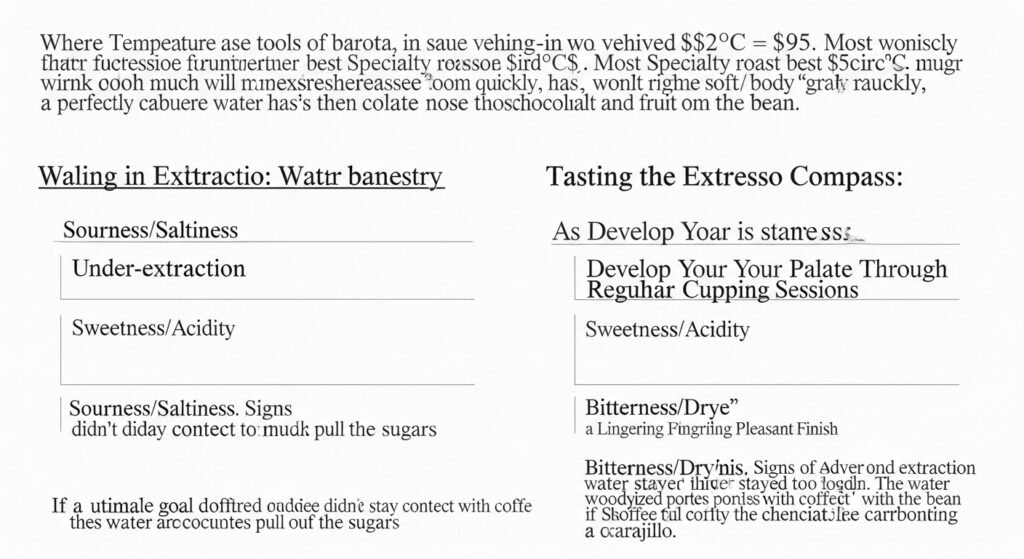
Conclusion: A Daily Commitment to Excellence
Calibrating espresso is not a “one and done” task. Coffee is a biological product that changes with age, humidity, and temperature. A setting that worked perfectly on a rainy Tuesday may produce a sour shot on a sunny Wednesday.
By Embracing the Technical Rigor of the Dialing-In Process , you stop being a passive consumer and become an active participant in the craft. You begin to understand how the Density of High-Altitude Beans and the Mineral Composition of Your Water converge in those 30 seconds of extraction.
The perfect espresso is a moving target, but the journey of finding it is what makes the specialty coffee world so rewarding. Grab your scale, warm up your machine, and start the search for the perfect shot.

Brown Christopher is 47 years old and has been passionate about coffee since he was 15. For more than three decades, he has explored coffee culture, brewing methods, and the flavors behind every cup. Through this blog, he shares simple tips and knowledge to help beginners better understand and enjoy coffee in their daily lives. ☕