
The Allure of the Long Game: Why Documenting Bonsai Growth Matters
For years, I’ve been captivated by the art of bonsai. It’s more than just a hobby; it’s a journey, a meditation, a conversation with nature played out over decades. But it’s not a conversation you can simply start and expect to understand immediately. It requires listening, patience, and meticulous record-keeping. That’s why I started documenting my bonsai’s journey, and I’m here to tell you why you should too.
Think of it like this: you wouldn’t embark on a long sea voyage without a map, a compass, and a logbook, would you? Bonsai is much the same. Without a record of what you’ve done, what worked, and what didn’t, you’re essentially sailing blind. You might get lucky, but you’re far more likely to run aground.
I remember when I first started, armed with enthusiasm but little practical knowledge. I’d prune, wire, and repot, but without consistently noting the results. Some trees thrived, others languished, and I couldn’t always pinpoint why. It was frustrating, like trying to solve a puzzle with half the pieces missing.
Then, about fifteen years ago, I committed to documenting every aspect of my bonsai cultivation. The results have been transformative. Not only have my trees become healthier and more aesthetically pleasing, but I’ve also deepened my understanding of bonsai principles and developed a much more intuitive connection with my trees.
Beyond Aesthetics: The Practical Benefits of a Bonsai Journal
While the aesthetic appeal of a well-tended bonsai is undeniable, the benefits of documenting its growth extend far beyond mere visual satisfaction. Keeping a detailed record provides a wealth of practical information that can significantly improve your bonsai skills and the health of your trees.
Tracking Progress and Identifying Problems: A growth diary allows you to monitor the tree’s development over time, noting changes in growth patterns, foliage color, and overall health. This makes it easier to identify potential problems early on, before they become serious. For example, if you notice a sudden yellowing of the leaves, you can review your records to see if you’ve recently changed your watering schedule, fertilizer regime, or the tree’s location.
I had a Japanese maple that started showing signs of nutrient deficiency. At first, I dismissed it as a minor issue, but by consulting my journal, I realized the symptoms had been gradually worsening over several weeks. This prompted me to test the soil pH, which revealed it was too alkaline, hindering the tree’s ability to absorb essential nutrients. I adjusted the soil accordingly, and the tree quickly recovered.
Learning from Mistakes: We all make mistakes, especially when we’re learning something new. The key is to learn from them. A bonsai journal provides a safe space to document your experiments, both successful and unsuccessful. By analyzing your past actions and their consequences, you can avoid repeating the same errors and refine your techniques.
I once experimented with a new wiring technique on a young juniper, hoping to create a more dramatic cascade effect. Unfortunately, I applied the wire too tightly, which restricted the flow of nutrients to the branches. As a result, several branches died back. I documented this failure in my journal, noting the specific wiring technique I used, the gauge of the wire, and the time of year. This experience taught me the importance of careful wire application and the need to monitor the tree closely for signs of stress.
Optimizing Care Routines: Every bonsai is unique, with its own specific needs and preferences. A growth diary allows you to tailor your care routines to the individual requirements of each tree. By tracking factors such as watering frequency, fertilization schedule, and pruning techniques, you can determine what works best for each species and cultivar.
I discovered that my Chinese elm thrived with a slightly different watering schedule than my Japanese maple, even though they were both grown in similar conditions. By keeping detailed records of their watering needs, I was able to optimize their growth and prevent overwatering or underwatering.

Crafting Your Bonsai Journal: A Step-by-Step Guide
Creating a bonsai journal doesn’t have to be complicated. The most important thing is to find a system that works for you and to be consistent in your record-keeping. Here’s a step-by-step guide to help you get started:
Choosing Your Medium: Paper vs. Digital
The first decision you’ll need to make is whether to keep your journal in a physical notebook or a digital format. Both options have their advantages and disadvantages.
Paper Journals: The traditional approach involves using a physical notebook and pen. This method offers a tactile experience that many find enjoyable and conducive to reflection. Paper journals are also immune to technological glitches and don’t require batteries or internet access.
I personally prefer using a paper journal. I find the act of writing by hand to be more engaging and mindful. I also like the ability to sketch diagrams and make annotations directly on the page. There’s something satisfying about flipping through the pages of a well-worn notebook, tracing the evolution of my trees over time.
Digital Journals: Digital journals offer the convenience of electronic storage and searchability. You can use a word processor, spreadsheet, or dedicated journaling app to record your observations. Digital journals are also easily backed up, ensuring that your data is protected from loss or damage.
If you’re more comfortable with technology, a digital journal might be a better choice for you. There are many excellent apps available that are specifically designed for tracking plant growth and care. These apps often include features such as photo storage, calendar reminders, and data analysis tools.
Essential Information to Record
Regardless of the medium you choose, there are certain key pieces of information that you should include in your bonsai journal. These include:
Tree Identification: Record the species, cultivar, and any other relevant identifying information. This will help you track the specific needs of each tree and avoid confusion.
Date of Acquisition: Note when you acquired the tree, as well as its age and origin, if known. This information can provide valuable context for understanding the tree’s growth history and potential.
Environmental Conditions: Record the tree’s location, lighting conditions, temperature, and humidity levels. These factors can have a significant impact on the tree’s health and growth.
Watering Schedule: Document when you water the tree, how much water you use, and any observations about the soil moisture levels. This will help you optimize your watering regime and prevent overwatering or underwatering.
Fertilization Schedule: Record the type of fertilizer you use, the dosage, and the date of application. This will help you track the tree’s nutrient intake and identify any potential deficiencies or imbalances.
Pruning and Wiring: Document all pruning and wiring activities, including the date, the techniques used, and the specific branches or roots that were affected. This will help you understand the tree’s response to these interventions and refine your styling techniques.
Repotting: Record the date of repotting, the type of soil used, and any observations about the root system. This will help you assess the tree’s root health and determine when it needs to be repotted again.
Pest and Disease Control: Document any pest or disease problems, the treatments you use, and the results. This will help you prevent future outbreaks and protect your trees from harm.
Photographs: Take regular photographs of your trees to document their progress over time. Photos can be a valuable tool for visualizing changes and identifying potential problems.
Tips for Consistent Record-Keeping
The key to a successful bonsai journal is consistency. Here are some tips to help you stay on track:
Set Aside Dedicated Time: Schedule a specific time each week or month to update your journal. This will help you make it a regular habit.
Keep Your Journal Accessible: Store your journal in a convenient location where you can easily access it when you’re working on your trees.
Be Specific and Detailed: The more information you record, the more valuable your journal will be. Don’t be afraid to be overly detailed in your observations.
Use a Consistent Format: Develop a consistent format for your entries to make it easier to find information later.
Don’t Be Afraid to Experiment: Try different methods of record-keeping until you find what works best for you.

Case Studies: Real-World Examples of the Power of Documentation
To illustrate the power of documentation, let’s look at a few real-world examples of how keeping a bonsai journal has helped me overcome challenges and achieve better results.
The Case of the Fickle Ficus
I had a ficus retusa that was constantly dropping leaves, despite my best efforts. I tried adjusting the watering, the lighting, and the fertilization, but nothing seemed to work. The tree was slowly declining, and I was at a loss.
Then, I decided to consult my bonsai journal. I reviewed my entries for the past year, and I noticed a pattern. The leaf drop always seemed to occur after I repotted the tree. This led me to suspect that the problem might be related to the soil I was using.
I researched different soil mixes for ficus trees and discovered that they prefer a slightly acidic soil with good drainage. The soil I had been using was too alkaline and retained too much moisture. I repotted the ficus in a new soil mix, and the leaf drop stopped almost immediately. The tree quickly recovered and is now thriving.
Without my bonsai journal, I would have likely continued to experiment with different watering and fertilization techniques, never realizing that the root cause of the problem was the soil.
The Puzzle of the Persistent Pests
I was battling a persistent aphid infestation on my Japanese maple. I tried various insecticides, but the aphids always seemed to come back. I was starting to feel like I was fighting a losing battle.
Again, I turned to my bonsai journal. I reviewed my entries for the past few months, and I noticed that the aphid infestations always seemed to occur after periods of warm, humid weather. This led me to suspect that the humidity might be creating a favorable environment for the aphids.
I decided to try increasing the air circulation around the tree by placing it in a more open location and using a fan. I also started misting the tree with water more frequently to wash away any aphids that might be present. These simple changes made a significant difference. The aphid infestation gradually subsided, and I haven’t had a problem since.
My journal helped me identify a subtle environmental factor that was contributing to the pest problem. By addressing this factor, I was able to eliminate the aphids without resorting to harsh chemicals.
The Secret to the Thriving Trident Maple
My trident maple has consistently outperformed all my other bonsai trees. It grows quickly, develops beautiful fall color, and is remarkably resistant to pests and diseases. For a long time, I couldn’t figure out why this tree was so successful.
One day, while reviewing my bonsai journal, I noticed that I had been consistently using a specific type of fertilizer on the trident maple. This fertilizer was slightly different from the one I used on my other trees. It contained a higher concentration of potassium, which is known to promote root growth and disease resistance.
I decided to switch to this fertilizer for all my bonsai trees, and I noticed a significant improvement in their overall health and vigor. The trident maple’s success had inadvertently led me to discover a better fertilization regime for all my trees.

Beyond the Individual Tree: The Journal as a Legacy
While the immediate benefits of documenting bonsai growth are undeniable, there’s a deeper, more profound value to consider: the journal as a legacy. Bonsai is an art that spans generations. The trees we cultivate today may well outlive us, becoming cherished heirlooms passed down through our families.
Imagine the joy of a future generation discovering your bonsai journal, filled with your notes, sketches, and insights. They’ll not only learn about the history of their beloved tree, but they’ll also gain a glimpse into your passion, your dedication, and your connection to nature.
My own grandfather was a keen gardener, though not specifically bonsai. I inherited his gardening journals when he passed, filled with weather notes, plant observations, and sketches of his garden layouts. Reading those journals now gives me an incredible sense of connection to him, even though he’s long gone. I can almost feel him standing beside me as I tend to the same plants he nurtured decades ago.
That’s the power of a documented legacy. It transcends time and connects us to future generations. It’s a way to share our knowledge, our experiences, and our love of bonsai with those who will come after us.
Sharing the Knowledge: Contributing to the Bonsai Community
Furthermore, the insights you gain from documenting your bonsai journey can be invaluable to the wider bonsai community. By sharing your experiences, both successes and failures, you can help others avoid common pitfalls and improve their own skills.
Consider publishing excerpts from your journal online, participating in bonsai forums, or even writing articles or books about your experiences. Your knowledge could inspire others to take up the art of bonsai or help seasoned practitioners refine their techniques.
I’ve often shared snippets from my journals at local bonsai club meetings, and the discussions that follow are always lively and informative. It’s amazing how much we can learn from each other, simply by sharing our experiences and perspectives.

Final Thoughts: Embracing the Journey
Documenting bonsai growth is not just about recording data; it’s about embracing the journey. It’s about slowing down, observing closely, and developing a deeper connection with your trees. It’s about learning from your mistakes, celebrating your successes, and sharing your knowledge with others.
So, grab a notebook, download a journaling app, or simply start taking notes on your phone. Begin documenting your bonsai journey today. You’ll be amazed at what you discover.
Remember, bonsai is a long-term commitment. It’s a process of continuous learning and refinement. By documenting your journey, you’ll not only become a better bonsai artist, but you’ll also create a valuable legacy for future generations.
The most beautiful bonsai are not just the result of skilled techniques, but also of years of careful observation, patient nurturing, and a deep understanding of the tree’s individual needs. Start your journal today, and begin your journey towards creating your own masterpiece.
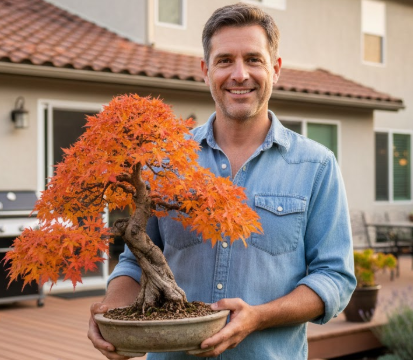
My name is Christopher Brown, I am 38 years old and I live in the United States. I am deeply passionate about the art of bonsai and have been cultivating trees for several years. What started as a simple curiosity turned into a daily practice and an important part of my life.
On this blog, I share my real experiences with bonsai — including what works, what doesn’t, and the lessons I learn along the way. I enjoy experimenting with techniques, observing the growth of each tree, and documenting the process with honesty and patience.
My goal with InfoWeHub is to help beginners feel more confident, avoid common mistakes, and discover the beauty of bonsai cultivation. If you are starting your journey or already love this art, you are welcome here.