
Getting Started: My Bonsai Journey and the Fundamentals
For almost three decades now, I’ve found myself captivated by the miniature world of bonsai. What started as a casual interest, sparked by a small juniper I picked up at a local nursery, has blossomed into a full-blown passion. Over the years, I’ve learned that bonsai is more than just growing small trees in containers; it’s an art form, a practice in patience, and a profound connection with nature. I’ve made my fair share of mistakes, lost a few trees along the way, but each experience has taught me invaluable lessons that I’m eager to share with you.
The first thing to understand is that bonsai isn’t about stunting a tree’s growth. It’s about shaping and training it to resemble a mature tree in nature, but in a miniature form. It’s a continuous process of pruning, wiring, and repotting to maintain the desired shape and size. Think of it as a living sculpture that you’re constantly refining.
Choosing Your First Bonsai
Selecting your first bonsai can be exciting, but it’s important to choose wisely. Don’t be swayed by the most exotic or expensive tree. Instead, opt for a species that is relatively easy to care for and well-suited to your local climate. Junipers, ficus, and Chinese elms are all excellent choices for beginners. They are resilient, forgiving of occasional mistakes, and readily available.
When selecting a tree, look for healthy foliage, a strong trunk, and a well-developed root system. Avoid trees with yellowing leaves, signs of pests or diseases, or a pot-bound root system. A healthy tree is much more likely to thrive and will give you a more rewarding experience as you learn the ropes.

The Essential Techniques: Pruning, Wiring, and Repotting
These three techniques form the cornerstone of bonsai cultivation. Mastering them is crucial for creating and maintaining beautiful bonsai trees. Let’s break them down step by step.
Pruning: The Art of Shaping
Pruning is the most fundamental technique in bonsai. It’s how we control the tree’s growth, shape its structure, and encourage ramification (the development of fine branching). There are two main types of pruning: structural pruning and maintenance pruning.
Structural pruning is done to establish the basic shape of the tree. It involves removing larger branches that don’t fit the desired design or that are growing in undesirable directions (e.g., straight up, straight down, or crossing other branches). This type of pruning is best done during the dormant season (late winter or early spring) before new growth begins.
Maintenance pruning, on the other hand, is done throughout the growing season to maintain the tree’s shape and encourage new growth in specific areas. It involves pinching back new shoots, removing unwanted leaves, and shortening branches to promote ramification. This type of pruning is more subtle and requires a keen eye for detail.
One of the biggest mistakes I made early on was being afraid to prune. I worried about hurting the tree or ruining its shape. But I quickly learned that pruning is essential for a healthy and beautiful bonsai. Don’t be afraid to experiment and learn from your mistakes. Remember, the tree will always grow back, and with each pruning session, you’ll gain a better understanding of its growth habits.
Wiring: Guiding the Branches
Wiring is another essential technique for shaping bonsai trees. It involves wrapping aluminum or copper wire around branches to bend them into the desired position. This allows you to create more interesting and dynamic shapes that would be impossible to achieve through pruning alone. It also allows you to open up the canopy and allows light to reach the inner branches.
When wiring, it’s important to use the correct gauge of wire and to wrap it at a 45-degree angle to the branch. Avoid wrapping the wire too tightly, as this can damage the bark and restrict growth. Also, remember to regularly monitor the wire. Once the branch has set in the desired position, remove the wire immediately to prevent it from cutting into the bark. This is especially important when the tree is actively growing. I’ve learned the hard way what happens when you forget to remove wire! The scars can take years to heal, and sometimes they never completely disappear.
Wiring is best done in the fall or winter when the tree is dormant and the branches are less likely to break. However, it can also be done during the growing season if necessary. Just be extra careful to avoid damaging the new growth.

Repotting: Refreshing the Roots
Repotting is a critical aspect of bonsai care. Over time, the soil in the bonsai pot becomes compacted and depleted of nutrients. Repotting allows you to refresh the soil, prune the roots, and maintain the tree’s size and health.
The frequency of repotting depends on the species of tree and its age. Younger trees typically need to be repotted every one to two years, while older trees can be repotted every three to five years. The best time to repot is in early spring, just before new growth begins.
When repotting, carefully remove the tree from its pot and gently loosen the soil around the roots. Use a chopstick or root hook to tease apart the root ball and remove any dead or diseased roots. Then, prune back the remaining roots by about one-third to encourage new growth. This is an essential part of maintaining the miniature size of the tree.
After pruning the roots, replant the tree in a new pot with fresh bonsai soil. Use a well-draining mix that is specifically formulated for bonsai trees. Avoid using garden soil, as it is too heavy and doesn’t drain well. Water the tree thoroughly after repotting and keep it in a sheltered location for a few weeks to allow it to recover.
Watering and Fertilizing: Nourishing Your Bonsai
Proper watering and fertilizing are essential for maintaining the health and vigor of your bonsai tree. However, it’s important to avoid overwatering or over-fertilizing, as this can be detrimental to the tree’s health.
Watering: Finding the Right Balance
Watering is perhaps the most critical aspect of bonsai care. Bonsai trees are grown in small pots with limited soil, so they dry out quickly. However, they also don’t like to sit in soggy soil, as this can lead to root rot. The key is to find the right balance.
The frequency of watering depends on several factors, including the species of tree, the size of the pot, the type of soil, and the weather conditions. As a general rule, water your bonsai tree when the top inch of soil feels dry to the touch. When you water, water thoroughly until the water drains freely from the bottom of the pot. This ensures that all of the roots are getting moisture.
Avoid watering your bonsai tree on a fixed schedule. Instead, check the soil moisture daily and water only when needed. This will help you avoid overwatering or underwatering.
One tip I’ve found helpful is to use rainwater whenever possible. Rainwater is naturally soft and free of chemicals, which makes it ideal for watering bonsai trees. If you don’t have access to rainwater, you can use tap water that has been allowed to sit for 24 hours to allow the chlorine to evaporate.
Fertilizing: Providing Essential Nutrients
Fertilizing is also essential for maintaining the health and vigor of your bonsai tree. Bonsai trees are grown in small pots with limited soil, so they need to be regularly fertilized to provide them with the nutrients they need to thrive.
There are many different types of bonsai fertilizers available, including liquid fertilizers, granular fertilizers, and slow-release fertilizers. I prefer to use a slow-release fertilizer, as it provides a steady supply of nutrients over a longer period of time. This helps to avoid nutrient deficiencies and promotes consistent growth.
When fertilizing, it’s important to follow the instructions on the fertilizer label carefully. Avoid over-fertilizing, as this can burn the roots and damage the tree. It’s also important to fertilize at the right time of year. During the growing season (spring and summer), fertilize your bonsai tree every two to four weeks. During the dormant season (fall and winter), reduce the frequency of fertilizing or stop fertilizing altogether.

Choosing the Right Soil: A Foundation for Success
The type of soil you use is crucial for the health of your bonsai tree. Bonsai soil needs to provide good drainage, aeration, and water retention. It also needs to be slightly acidic to support the growth of most bonsai species.
There are many different bonsai soil mixes available, but most of them contain a combination of three basic ingredients: akadama, pumice, and lava rock. Akadama is a type of baked clay that provides good water retention and aeration. Pumice is a volcanic rock that provides good drainage and aeration. Lava rock is another volcanic rock that provides good drainage and aeration.
The proportions of these three ingredients will vary depending on the species of tree and the climate. For example, trees that prefer drier conditions will benefit from a soil mix that is higher in pumice and lava rock. Trees that prefer wetter conditions will benefit from a soil mix that is higher in akadama.
You can also add other ingredients to your bonsai soil mix, such as peat moss, compost, or sand. However, it’s important to use these ingredients sparingly, as they can reduce drainage and aeration.
I’ve experimented with many different bonsai soil mixes over the years, and I’ve found that the best approach is to tailor the mix to the specific needs of each tree. Don’t be afraid to experiment and find what works best for you and your trees.
Pest and Disease Control: Protecting Your Investment
Like any plant, bonsai trees are susceptible to pests and diseases. Regular inspection and prompt treatment are essential for keeping your trees healthy and preventing serious problems.
Common Pests
Some of the most common pests that affect bonsai trees include aphids, spider mites, scale, and mealybugs. These pests can suck the sap from the leaves, stems, and roots of the tree, causing damage and weakening the plant.
Aphids are small, soft-bodied insects that are typically found on new growth. They can be controlled with insecticidal soap or a strong stream of water.
Spider mites are tiny, spider-like creatures that are difficult to see with the naked eye. They create fine webs on the leaves and can cause them to turn yellow or brown. Spider mites can be controlled with miticides or by increasing humidity.
Scale insects are small, armored insects that attach themselves to the stems and leaves of the tree. They can be controlled with horticultural oil or by scraping them off with a fingernail.
Mealybugs are soft-bodied insects that are covered in a white, waxy substance. They are typically found in the crevices of the tree and can be controlled with insecticidal soap or horticultural oil.
Common Diseases
Some of the most common diseases that affect bonsai trees include fungal diseases, such as root rot, leaf spot, and powdery mildew. These diseases can cause damage to the leaves, stems, and roots of the tree, and can even kill the plant.
Root rot is a fungal disease that affects the roots of the tree. It is typically caused by overwatering or poor drainage. Root rot can be prevented by using a well-draining soil mix and avoiding overwatering.
Leaf spot is a fungal disease that causes brown or black spots to appear on the leaves. It can be controlled with fungicides or by removing infected leaves.
Powdery mildew is a fungal disease that causes a white, powdery coating to appear on the leaves. It can be controlled with fungicides or by increasing air circulation.
The best way to prevent pests and diseases is to keep your bonsai trees healthy and well-cared for. This includes providing them with proper watering, fertilizing, and sunlight. It also includes regularly inspecting your trees for signs of pests or diseases and treating them promptly if you find any problems.
Finding Inspiration and Continuing to Learn
The world of bonsai is vast and ever-evolving. There’s always something new to learn, a new technique to try, or a new style to explore. Don’t be afraid to experiment, to make mistakes, and to learn from your experiences. That’s how you’ll grow as a bonsai artist.
One of the best ways to find inspiration is to visit bonsai gardens and exhibitions. Seeing the work of experienced bonsai artists can be incredibly inspiring and can give you new ideas for your own trees. There are also many excellent books, websites, and online forums dedicated to bonsai. Take advantage of these resources to learn new techniques, ask questions, and connect with other bonsai enthusiasts.
Most importantly, remember to enjoy the process. Bonsai is a journey, not a destination. It’s about connecting with nature, expressing your creativity, and cultivating patience and perseverance. Over the years, I have found myself not only finding joy in creating beautiful bonsai, but also in the practice of mindfulness and patience that it instills. The lessons learned from these miniature trees transcend the garden and permeate into other aspects of my life.
So, take a deep breath, grab your tools, and start shaping your own miniature world. The possibilities are endless, and the rewards are immeasurable. Remember to be patient, observant, and always open to learning. With time and dedication, you’ll be amazed at what you can achieve. The journey of a thousand bonsai starts with a single branch.
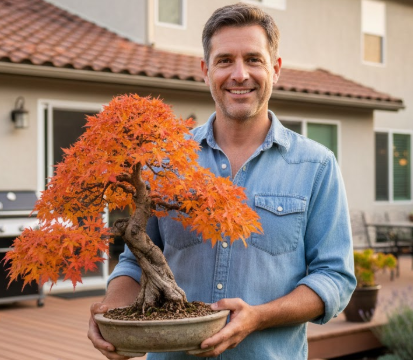
My name is Christopher Brown, I am 38 years old and I live in the United States. I am deeply passionate about the art of bonsai and have been cultivating trees for several years. What started as a simple curiosity turned into a daily practice and an important part of my life.
On this blog, I share my real experiences with bonsai — including what works, what doesn’t, and the lessons I learn along the way. I enjoy experimenting with techniques, observing the growth of each tree, and documenting the process with honesty and patience.
My goal with InfoWeHub is to help beginners feel more confident, avoid common mistakes, and discover the beauty of bonsai cultivation. If you are starting your journey or already love this art, you are welcome here.