
The Seed of an Idea: My Bonsai Journey Begins
It started, as many passions do, with a simple curiosity. I was browsing a local garden center, seeking a small, low-maintenance plant for my apartment. I’d recently moved to a smaller space and felt a pang of connection to nature that needed tending. I saw it then – a small, gnarled juniper bonsai, perched on a stand, radiating a quiet dignity. I was immediately captivated. It wasn’t just a plant; it was a miniature tree, a living sculpture, a testament to the power of patience and artistry. That little juniper ignited a spark in me, a fascination that has only grown stronger over the years. Little did I know that purchasing that single bonsai would transform my life in so many wonderful ways.
I remember bringing it home, placing it on my windowsill, and just staring at it for hours. I knew absolutely nothing about bonsai care. I read everything I could find, devouring books and online articles. I quickly learned that bonsai was far more than just keeping a plant alive; it was an art form, a practice of shaping and nurturing a living being over years, even decades. It was a dialogue between the artist and nature, a constant learning process. My initial attempts were, shall we say, less than stellar. I overwatered, underwatered, pruned at the wrong time, and generally subjected that poor juniper to a crash course in bonsai malpractice. But even as it struggled, I learned. I learned to observe, to listen, to understand the needs of the tree. And slowly, very slowly, I began to improve.
The Allure of Miniature Worlds
What is it about bonsai that holds such a strong appeal? For me, it’s the creation of a microcosm, a tiny world contained within a pot. It’s the illusion of age and grandeur, the feeling that you’re tending a tree that has stood for centuries, weathered countless storms, and witnessed the passage of time. It’s also the connection to nature, the opportunity to bring the beauty and serenity of the forest into my home. In our increasingly urbanized and fast-paced lives, bonsai offers a sanctuary, a reminder of the slow, steady rhythm of nature. Does creating this miniature world allow us to be closer to something bigger than ourselves?
But beyond the aesthetic appeal, bonsai is a deeply meditative practice. It requires focus, patience, and a willingness to let go of control. You can guide the tree, shape its branches, and influence its growth, but ultimately, it is the tree that dictates its own form. It’s a lesson in acceptance, in recognizing that you are not the master, but a collaborator. This collaborative process requires an understanding of your tree that can only come from time. I often find myself simply observing my trees, noticing the subtle changes in their leaves, the angle of their branches, the texture of their bark. It’s in these moments of quiet contemplation that I feel most connected to them, and to myself.
The Growing Pains: Lessons Learned the Hard Way
My bonsai journey has been filled with both triumphs and setbacks, moments of inspiration and periods of frustration. I’ve lost trees to neglect, to disease, and to my own ignorance. Each loss has been painful, but it has also been a valuable lesson. I remember one particularly harsh winter when I lost a prized Japanese black pine. I had neglected to protect it properly from the cold, and it simply withered away. I was devastated. I had spent years shaping that tree, and to see it die was like losing a part of myself. But that experience taught me the importance of winter care, of understanding the specific needs of each species, and of paying closer attention to the changing seasons. Was my mistake a necessary sacrifice for future success?
Another early mistake was over-pruning. I was so eager to create the desired shape that I would often remove too much foliage, weakening the tree and stunting its growth. I learned that pruning is a delicate balance, that it’s essential to understand the tree’s growth patterns and to prune only when necessary. I also learned the importance of patience. Bonsai is not a race; it’s a marathon. It takes years, even decades, to develop a truly mature and beautiful bonsai. It’s a process of slow, incremental changes, of constant refinement. The instant gratification culture that we live in today is completely at odds with the slow, deliberate nature of bonsai. And perhaps that’s part of its appeal: a reminder that some things cannot be rushed, that true beauty takes time to cultivate.
The Importance of Mentorship and Community
One of the most important things I’ve learned on my bonsai journey is the value of mentorship and community. Early on, I joined a local bonsai club, where I met experienced growers who were willing to share their knowledge and expertise. They taught me the fundamentals of bonsai care, from pruning and wiring to soil composition and pest control. They also provided invaluable feedback on my trees, helping me to see them with fresh eyes and to identify areas for improvement. The camaraderie and support of the bonsai community has been essential to my growth as an artist. It’s a place where I can share my successes and failures, ask for advice, and learn from others’ experiences. Is seeking guidance a sign of weakness, or a testament to the complexity of bonsai?
I remember attending my first bonsai workshop. I was intimidated and nervous, surrounded by experienced growers with trees that were far more advanced than mine. But the instructor was incredibly patient and encouraging, guiding me through the process of styling a juniper bonsai. I learned so much that day, not just about technique, but also about the philosophy of bonsai. The instructor emphasized the importance of respecting the tree’s natural form, of working with its inherent characteristics, and of allowing it to express its own unique personality. This resonated deeply with me and has shaped my approach to bonsai ever since. The bonsai community has been such an important part of my growth. I have made some of my closest friends through the local club, and we regularly exchange plants, seeds, and advice. The level of passion for this art never ceases to amaze me.
Finding My Style: More Than Just Technique
As I gained more experience, I began to develop my own personal style. I was no longer simply copying the techniques I had learned from others; I was starting to experiment, to innovate, to find my own voice. I realized that bonsai is not just about creating a miniature version of a tree; it’s about expressing your own artistic vision. It’s about conveying emotion, about telling a story, about capturing the essence of nature in a single, living sculpture. Is personal style the final destination, or the beginning of a new journey in bonsai?
I am particularly drawn to naturalistic styles, bonsai that mimic the forms of trees found in nature. I try to create bonsai that look as if they have been shaped by the wind, the rain, and the passage of time. I use deadwood to add character and age, and I carefully select pots that complement the tree’s form and style. I also experiment with different species, from traditional Japanese maples and pines to native North American trees like junipers and spruces. Each species has its own unique characteristics and challenges, and I enjoy the process of learning to work with them. My studio has now transformed into something of an experimental garden. I’m constantly trying out new techniques and tree varieties, hoping to discover something new that can be incorporated into my art.
The Zen of Bonsai: Patience and Acceptance
Bonsai has taught me a great deal about patience, acceptance, and the importance of living in the present moment. It’s a practice that requires you to slow down, to focus your attention on the task at hand, and to let go of your expectations. You can’t force a bonsai to grow faster or to conform to your will. You have to accept its limitations, to work with its strengths, and to appreciate its unique beauty. This is a valuable lesson that I have applied to other areas of my life. I have learned to be more patient with myself, to accept my imperfections, and to focus on the present rather than dwelling on the past or worrying about the future. Can the philosophy of bonsai extend beyond the garden and into our daily lives?
There are days when I feel frustrated with my bonsai, when I feel like I’m not making progress, when I’m tempted to give up. But then I remember why I started this journey in the first place: for the love of nature, for the challenge of creating something beautiful, and for the peace and tranquility that bonsai brings to my life. I pick up my tools, take a deep breath, and get back to work. And in those moments, I am reminded that bonsai is not just about the destination; it’s about the journey. It’s about the process of learning, growing, and connecting with nature. It’s about finding beauty in the imperfections, and appreciating the slow, steady rhythm of life. This acceptance is something I have to remind myself of daily.

Beyond the Pot: Bonsai as a Metaphor for Life
As I’ve grown older, I’ve come to see bonsai as more than just a hobby or an art form; it’s a metaphor for life itself. The way we shape and nurture our bonsai mirrors the way we shape and nurture our own lives. Just as a bonsai requires constant care and attention, so too does our well-being. We need to prune away the negative influences, to provide the necessary nourishment, and to protect ourselves from the harsh elements. We need to be patient with ourselves, to accept our imperfections, and to allow ourselves to grow and evolve in our own unique way. Is the garden a reflection of the gardener, or the other way around?
The challenges we face in bonsai also reflect the challenges we face in life. We encounter setbacks, we make mistakes, and we experience loss. But it’s how we respond to these challenges that defines us. Do we give up, or do we learn from our experiences and keep moving forward? Just as a bonsai can recover from a broken branch or a diseased root, so too can we overcome adversity and emerge stronger than before. The resilience of a bonsai is a testament to the power of life, and a reminder that even in the face of adversity, there is always hope for renewal.
The Future of My Bonsai Garden
Looking ahead, I am excited to continue my bonsai journey, to explore new techniques, to experiment with different species, and to share my passion with others. I hope to inspire others to discover the beauty and serenity of bonsai, and to experience the joy of connecting with nature. I plan to expand my collection, to create a more diverse and comprehensive bonsai garden. I also want to become more involved in the bonsai community, to teach workshops, to give demonstrations, and to share my knowledge and experience with others. I believe that bonsai has the power to transform lives, to bring people together, and to create a more peaceful and harmonious world. Can the art of bonsai contribute to a more sustainable and mindful future?
I am also eager to see how my bonsai trees will evolve over time. Some of my trees are already decades old, and I can only imagine what they will look like in another 50 or 100 years. It’s a humbling thought to realize that I am just a temporary caretaker of these living works of art, that they will outlive me and continue to inspire future generations. It’s a responsibility that I take seriously, and I am committed to preserving and protecting these trees for as long as I can. The thought of my grandchildren tending to these trees after I’m gone brings me an indescribable sense of peace. This art transcends a single lifetime, it continues from generation to generation.
Sharing the Gift: Passing on the Passion
One of the most rewarding aspects of my bonsai journey has been the opportunity to share my passion with others. I’ve taught workshops, given demonstrations, and mentored aspiring bonsai artists. It’s incredibly gratifying to see the spark ignite in someone’s eyes when they first discover the beauty and serenity of bonsai. I believe that everyone can benefit from the practice of bonsai, regardless of their age, background, or artistic ability. It’s a skill that can be learned and developed over time, and it’s a practice that can bring joy, peace, and a deeper connection to nature.
I try to emphasize the importance of patience, perseverance, and a willingness to learn from mistakes. I also encourage my students to find their own style, to experiment with different techniques, and to express their own unique artistic vision. I believe that bonsai is not just about following rules and techniques; it’s about creating something beautiful and meaningful. It’s about connecting with nature, expressing your creativity, and finding peace and tranquility in the process. Teaching others has forced me to re-examine my own techniques and beliefs, which has made me a better artist. The act of explaining the process helps to solidify my own understanding. The lessons that come with bonsai are so much more than just trimming a tree.
The Legacy of a Living Art
As I reflect on my bonsai journey, I am filled with gratitude for the many lessons I have learned, the challenges I have overcome, and the joy I have experienced. Bonsai has transformed my life in so many ways, teaching me patience, acceptance, and a deeper appreciation for the beauty of nature. It’s a practice that has brought me peace, tranquility, and a sense of purpose. I hope to continue my bonsai journey for many years to come, to explore new techniques, to experiment with different species, and to share my passion with others. I believe that bonsai is a living art form that has the power to inspire, to heal, and to connect us to the world around us. What will the future hold for the art of bonsai, and how will it continue to evolve and adapt to the changing times?
The best part is the feeling of zen I get when I’m working on my bonsai. It’s a form of meditation for me. It quiets my mind, allows me to be present in the moment, and connect with nature. It’s a welcome escape from the stresses of daily life. I want others to experience that feeling too. The bonsai community is like a family, we are all connected through this love of nature and art, and it is a beautiful thing to be a part of. I am excited to continue to grow and learn in the art of bonsai, and share this passion with others. I’ve found that the trees teach me more than I teach them, and that’s the real magic.

And so, my bonsai journey continues. It’s a journey of constant learning, of continuous refinement, and of unwavering dedication to the art of miniature trees. It’s a journey that has enriched my life in countless ways, and one that I hope to continue for many years to come. If you’re considering embarking on your own bonsai adventure, I encourage you to take the leap. It’s a rewarding and transformative experience that will connect you with nature, challenge your creativity, and bring peace and tranquility to your life. The best advice I can give? Be patient, be observant, and most importantly, enjoy the process. The journey is the reward, after all.
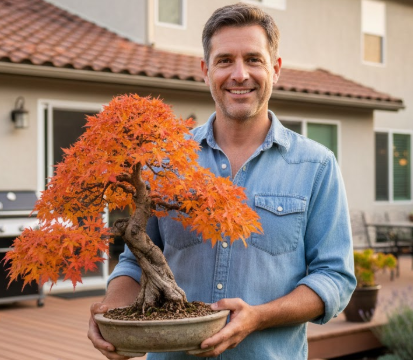
My name is Christopher Brown, I am 38 years old and I live in the United States. I am deeply passionate about the art of bonsai and have been cultivating trees for several years. What started as a simple curiosity turned into a daily practice and an important part of my life.
On this blog, I share my real experiences with bonsai — including what works, what doesn’t, and the lessons I learn along the way. I enjoy experimenting with techniques, observing the growth of each tree, and documenting the process with honesty and patience.
My goal with InfoWeHub is to help beginners feel more confident, avoid common mistakes, and discover the beauty of bonsai cultivation. If you are starting your journey or already love this art, you are welcome here.