
My Bonsai Journey: A Slow and Steady Start
I’ve always been drawn to the quiet artistry of bonsai. The idea of shaping a tree, guiding its growth over decades, and creating a miniature landscape has always seemed like the perfect blend of art and horticulture. For years, I admired them from afar, browsing through nurseries and books, always a bit intimidated by the perceived complexity. Finally, about five years ago, I decided to take the plunge. I wouldn’t say I’m a master yet, far from it, but I’ve learned a lot, mostly through trial and error, and I want to share some of my honest observations with any other beginners out there.
Let’s be honest, the world of bonsai can feel overwhelming at first. There’s a whole vocabulary to learn – nebari, apex, ramification – and a seemingly endless array of techniques, tools, and species to consider. It’s easy to get caught up in the details and lose sight of the fundamental principles. My initial approach was probably too academic. I read everything I could find, watched countless videos, and tried to absorb every piece of advice I could get my hands on. While knowledge is certainly important, I quickly realized that bonsai is much more about doing than knowing.
One of my biggest early mistakes was trying to rush the process. I wanted to see immediate results, to transform my young trees into miniature masterpieces in a matter of months. Of course, that’s not how bonsai works. It’s a slow, deliberate art that requires patience, observation, and a willingness to adapt. I learned this lesson the hard way when I over-pruned a young juniper, thinking I was shaping it according to some textbook example. Instead, I weakened the tree, and it took almost a year for it to fully recover. Now, I approach each tree with a much more patient and thoughtful mindset.
Choosing My First Trees: An Exercise in Humility
Selecting my first bonsai was an adventure in itself. I remember walking into a local nursery, feeling like a kid in a candy store. So many shapes, sizes, and species! I was drawn to the more mature-looking trees, the ones that already had a well-defined structure and a sense of character. But I soon realized that these trees were beyond my skill level. They required a deeper understanding of bonsai techniques and a more refined aesthetic sense. Plus, they were significantly more expensive!
I eventually settled on a few younger trees: a Japanese Maple, a Chinese Elm, and a Juniper. They were relatively inexpensive, healthy, and had good potential. The Japanese Maple, in particular, caught my eye with its vibrant green leaves and promising branch structure. The Chinese Elm, known for its resilience and adaptability, seemed like a good choice for a beginner like me. And the Juniper, with its distinctive foliage and rugged appearance, offered a different kind of challenge.
Starting with these younger trees allowed me to learn the fundamentals of bonsai without the pressure of working with more valuable or delicate specimens. I could experiment with different pruning techniques, wiring methods, and potting mixes without worrying about making irreversible mistakes. It was a humbling experience, realizing that I had a lot to learn, but it was also incredibly rewarding to see my trees slowly develop and mature under my care.

The Art of Pruning: More Than Just Cutting
Pruning is arguably the most important aspect of bonsai. It’s how we control the size and shape of the tree, encourage ramification (the development of finer branches), and maintain its overall health and vigor. But pruning is much more than just randomly snipping off branches. It’s a careful, deliberate process that requires a deep understanding of the tree’s growth habits and a clear vision of the desired outcome.
I initially struggled with pruning. I was afraid of cutting too much, of damaging the tree, or of ruining its potential. I would spend hours staring at my trees, trying to decide which branches to remove. I consulted countless books and videos, but I still felt uncertain and hesitant. It wasn’t until I started to experiment and observe the results that I began to develop a better understanding of pruning.
One of the key things I learned is that pruning is not a one-time event. It’s an ongoing process that needs to be adjusted based on the tree’s growth and development. Different species require different pruning techniques, and even individual trees within the same species may respond differently to pruning. The key is to be observant, patient, and willing to adapt your approach as needed.
For example, with my Japanese Maple, I focus on removing crossing branches, inward-growing branches, and any branches that detract from the tree’s overall shape. I also pinch back new growth to encourage ramification and maintain a compact form. With my Chinese Elm, I prune more aggressively, removing thicker branches to create a more open and airy structure. And with my Juniper, I carefully trim the foliage to maintain its distinctive shape and prevent it from becoming too dense.
Wiring and Shaping: Gentle Guidance
Wiring is another essential technique in bonsai. It allows us to gently guide the branches into the desired position, creating a more aesthetically pleasing and balanced form. Wiring involves wrapping a flexible wire around the branches and then carefully bending them into the desired shape. The wire acts as a temporary support, holding the branch in place until it sets in its new position.
I was initially intimidated by wiring. It seemed like a delicate and precise process that required a lot of skill and experience. I was afraid of breaking the branches or damaging the bark. But I quickly realized that wiring is not as difficult as it seems. With a little practice and patience, anyone can learn to wire their bonsai effectively.
The key is to use the right type of wire, to apply it correctly, and to monitor the tree closely. There are two main types of wire used in bonsai: aluminum and copper. Aluminum wire is softer and easier to bend, making it a good choice for beginners. Copper wire is stronger and more durable, making it better suited for thicker branches and more complex shapes. It’s important to choose the correct gauge of wire for the thickness of the branch being wired. Too thin and it won’t hold the branch, too thick and you risk damaging the tree.
When wiring a branch, it’s important to wrap the wire at a 45-degree angle, overlapping each turn slightly. This provides the best support and prevents the wire from cutting into the bark. Once the wire is in place, gently bend the branch into the desired shape. Avoid making sharp bends or forcing the branch too far. It’s better to make gradual adjustments over time than to risk breaking the branch. Regularly check the wire to ensure that it is not cutting into the bark. If it is, remove the wire immediately to prevent damage.
Soil, Watering, and Fertilizing: The Foundation of Health
The health of a bonsai depends on a number of factors, including soil, watering, and fertilizing. These three elements work together to provide the tree with the nutrients and moisture it needs to thrive. Choosing the right soil mix is crucial for bonsai. Unlike regular potting soil, bonsai soil needs to provide good drainage, aeration, and water retention. A typical bonsai soil mix consists of Akadama, Kanuma, and Kiryu, each of which has unique properties that contribute to the overall health of the tree.
Watering is another critical aspect of bonsai care. Bonsai trees are grown in shallow pots, which means that they dry out quickly. It’s important to water them regularly, especially during the hot summer months. The frequency of watering will depend on the species of tree, the size of the pot, and the weather conditions. As a general rule, water when the topsoil feels dry to the touch. Avoid overwatering, as this can lead to root rot.
Fertilizing is also essential for bonsai. Bonsai trees are grown in a limited amount of soil, which means that they quickly deplete the nutrients. It’s important to fertilize them regularly to provide them with the nutrients they need to grow and thrive. Use a balanced fertilizer that is specifically formulated for bonsai. Apply the fertilizer according to the manufacturer’s instructions. Avoid over-fertilizing, as this can damage the tree.
Pests and Diseases: Early Detection is Key
Like any plant, bonsai trees are susceptible to pests and diseases. Common pests include aphids, spider mites, and scale. Common diseases include root rot, fungal infections, and leaf spot. Early detection is key to preventing these problems from becoming serious. Regularly inspect your bonsai trees for signs of pests or diseases. Look for discoloration, unusual spots, or any other abnormalities. If you detect a problem, take action immediately.
There are a number of different treatments available for pests and diseases. For minor infestations, you can often control the problem by handpicking the pests or spraying the tree with water. For more serious infestations, you may need to use an insecticide or fungicide. Be sure to follow the manufacturer’s instructions carefully when using these products. It’s always preferable to use natural remedies when possible. For example, neem oil is a great natural insecticide that can be used to control a wide range of pests.
Preventing pests and diseases is always better than treating them. Keep your bonsai trees healthy by providing them with the proper soil, watering, and fertilizing. Also, ensure that they have good air circulation and are not overcrowded. Regularly clean your bonsai tools to prevent the spread of disease.

The Emotional Connection: More Than Just a Hobby
Growing bonsai is more than just a hobby for me. It’s a way to connect with nature, to express my creativity, and to find peace and tranquility in a busy world. There’s something incredibly rewarding about nurturing a tree, shaping its growth over time, and creating a miniature landscape that reflects my own aesthetic sense. The process of pruning, wiring, and caring for my bonsai trees forces me to slow down, to focus on the present moment, and to appreciate the beauty of the natural world.
I find that working with my bonsai is a form of meditation. It requires patience, concentration, and a willingness to let go of control. I can’t force the trees to grow in a certain way. I can only guide them, providing them with the conditions they need to thrive and trusting that they will eventually reach their full potential. This is a valuable lesson that I can apply to other areas of my life as well.
There’s also a deep sense of satisfaction that comes from seeing my bonsai trees develop and mature over time. Each tree has its own unique character and story, and I feel a sense of pride in having played a role in its development. Some of my trees have been with me for many years, and they have become like old friends. I’ve shared many moments with them, both good and bad, and they have always been a source of comfort and inspiration.
The Bonsai Community: Sharing the Passion
One of the most rewarding aspects of growing bonsai is being part of a community of like-minded individuals. There are bonsai clubs and societies all over the world, and they provide a great opportunity to learn from experienced growers, to share your own experiences, and to connect with others who share your passion. I joined my local bonsai club a few years ago, and it has been an invaluable resource for me. I’ve learned so much from the other members, and I’ve made some great friends along the way.
Bonsai clubs typically hold regular meetings, workshops, and exhibitions. These events provide an opportunity to learn new techniques, to see examples of outstanding bonsai, and to network with other enthusiasts. Workshops are particularly helpful for beginners, as they provide hands-on instruction from experienced growers. Exhibitions are a great way to showcase your own bonsai and to see the work of others.
In addition to local clubs, there are also many online forums and communities dedicated to bonsai. These online resources provide a wealth of information and a great way to connect with other growers from around the world. I’ve found these online communities to be incredibly helpful, especially when I’m facing a specific problem or need advice on a particular technique.
Continuing the Journey: Never Stop Learning
My bonsai journey is far from over. I’m still learning and growing as a bonsai artist, and I’m constantly seeking new challenges and opportunities to improve my skills. I’m currently experimenting with different species, different styles, and different techniques. I’m also trying to develop a deeper understanding of the aesthetic principles of bonsai. Bonsai is a lifelong pursuit, and I’m excited to see where it takes me.
One of the things I’ve learned is that there’s no single “right” way to grow bonsai. There are many different approaches, and each grower needs to find what works best for them. The key is to be open-minded, to experiment, and to learn from your mistakes. Don’t be afraid to try new things, and don’t be discouraged if you don’t see immediate results. The most important thing is to enjoy the process and to connect with the beauty of the natural world.
My advice to any beginner is to start small, to be patient, and to never stop learning. Choose a few easy-to-grow species, learn the basics of pruning, wiring, and watering, and join a local bonsai club or online community. Don’t be afraid to ask questions, and don’t be afraid to make mistakes. Mistakes are part of the learning process, and they can often be the most valuable lessons. And most importantly, have fun! Bonsai is a rewarding and fulfilling hobby that can bring you years of enjoyment.
Ultimately, growing bonsai is about cultivating patience, appreciating the slow unfolding of time, and finding beauty in the imperfect. It’s a journey of constant learning and refinement, a conversation between the artist and the tree, a partnership forged in respect and nurtured with care. And for me, it’s a journey I wouldn’t trade for anything.
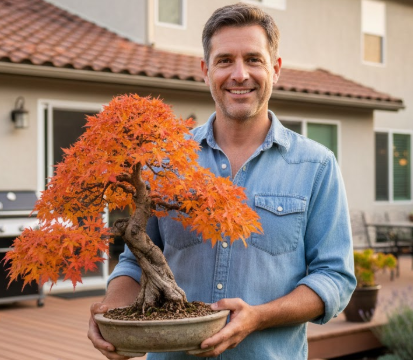
My name is Christopher Brown, I am 38 years old and I live in the United States. I am deeply passionate about the art of bonsai and have been cultivating trees for several years. What started as a simple curiosity turned into a daily practice and an important part of my life.
On this blog, I share my real experiences with bonsai — including what works, what doesn’t, and the lessons I learn along the way. I enjoy experimenting with techniques, observing the growth of each tree, and documenting the process with honesty and patience.
My goal with InfoWeHub is to help beginners feel more confident, avoid common mistakes, and discover the beauty of bonsai cultivation. If you are starting your journey or already love this art, you are welcome here.