
My Bonsai Awakening
For years, I admired bonsai trees from afar. I’d see them in garden centers, in magazines, even in movies, and I was always struck by their miniature beauty and the sense of serenity they seemed to embody. But I always felt intimidated. It looked like something that required an almost superhuman level of patience and skill, something far beyond my capabilities. It was an art form, a living sculpture, and I, well, I mostly just managed to keep my houseplants alive (and even that was sometimes a struggle!).
Then, a few months ago, something shifted. Maybe it was the quiet desperation of pandemic life, maybe it was a growing desire to connect with nature in a more meaningful way, or maybe it was simply that I finally had the time and space to dedicate to a new hobby. Whatever the reason, I decided to take the plunge. I bought a beginner’s bonsai kit, a small juniper pre-bonsai, and a whole lot of hope.
This is the story of that journey. This is my bonsai diary, a record of my triumphs and failures, my frustrations and joys, as I attempt to learn the ancient art of bonsai. I’m not an expert, far from it. But I’m learning, and I’m sharing what I learn along the way. Maybe, just maybe, it will inspire someone else to give it a try.
The First Steps: Research and Fear
Before I even touched my little juniper, I dove headfirst into research. I devoured books, watched countless YouTube videos, and joined online bonsai forums. The more I learned, the more I realized how much I didn’t know. There were terms like “ramification,” “apex,” “nebari,” and “apical dominance” that sounded like they belonged in a biology textbook, not a gardening guide.
The sheer volume of information was overwhelming. Different species required different techniques, different climates demanded different care, and different styles called for different approaches. It felt like I was trying to learn a new language, a language spoken in the rustling of leaves and the curve of branches.
My biggest fear was killing the tree. I knew that bonsai was a long-term commitment, a relationship between human and plant that could last for decades, even centuries. The thought of prematurely ending the life of this little tree, of failing to provide it with the care it needed, filled me with anxiety. What if I overwatered it? What if I underwatered it? What if I pruned it wrong? What if I just wasn’t good enough?
I remember hesitating for days before making my first cut. I stared at the tree, trying to visualize the shape I wanted to create, trying to understand the underlying principles of bonsai design. I felt like I was about to perform surgery, and the patient was my precious little juniper.
Choosing the Right Tools (and Overthinking It)
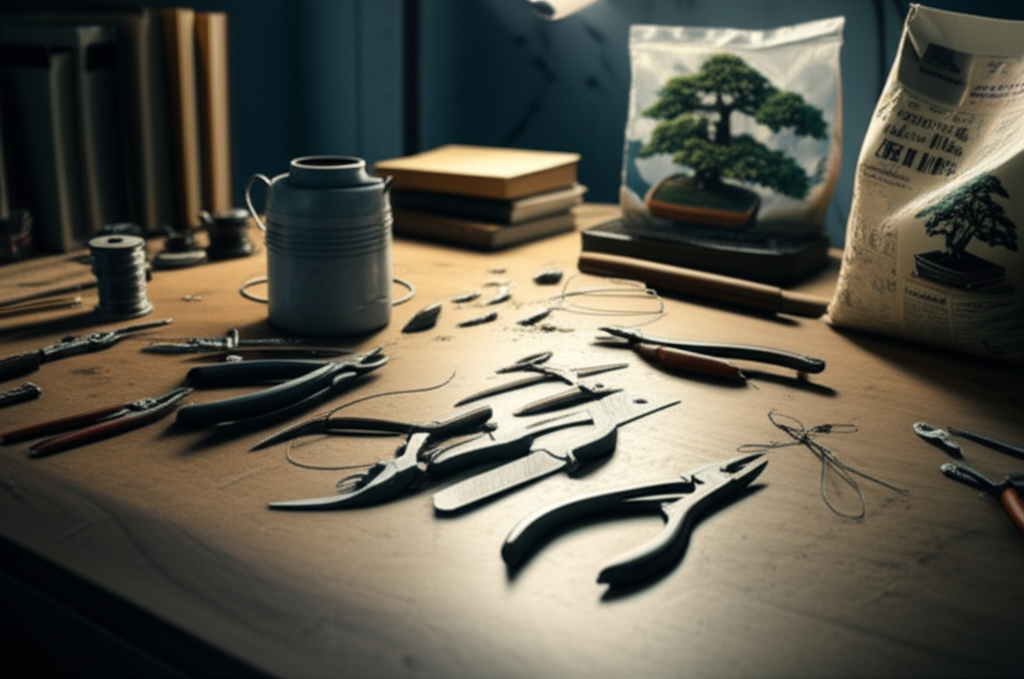
Of course, research quickly led to purchasing tools. I discovered the world of concave cutters, branch benders, root hooks, and bonsai wire. I bought a basic set of tools, trying to resist the urge to buy the most expensive, professional-grade equipment. After all, I was just a beginner. I didn’t need a $300 pair of bonsai shears… yet.
Even choosing the right soil mix was a daunting task. There were debates about akadama, kanuma, and pumice, about drainage, aeration, and pH levels. I eventually settled on a pre-mixed bonsai soil that seemed to be a good compromise for beginners. I figured I could experiment with different mixes later, once I had a better understanding of my tree’s needs.
The First Pruning: A Leap of Faith
Finally, the day arrived when I had to face my fears and prune the tree. I took a deep breath, put on my gardening gloves, and approached my little juniper with a pair of sharp, clean concave cutters. I started by removing any dead or diseased branches, following the advice I had read in my books and watched in my videos.
Then came the hard part: deciding which branches to keep and which to remove to create the desired shape. I wanted to create a windswept style, a classic bonsai design that evoked the image of a tree struggling against the elements. This meant removing branches that grew straight up or straight down, and favoring those that grew to the side, suggesting the force of the wind.
It was a nerve-wracking experience. Every cut felt like a permanent decision, a step from which there was no turning back. I tried to be mindful of the tree’s natural growth patterns, to work with its inherent tendencies rather than against them. But I also knew that I had to be bold, that I had to make sacrifices in order to achieve my vision.
After what felt like hours, I finally finished the pruning. I stepped back to admire my work, and I was…underwhelmed. The tree looked sparse and a little sad. I wondered if I had gone too far, if I had removed too much foliage. But I reminded myself that this was just the first step, that bonsai was a process of gradual refinement, not an instant transformation.
Wiring for Shape: A New Challenge
Next came the wiring. This involved wrapping thin copper wire around the branches to bend them into the desired positions. It was a delicate process, requiring patience and a steady hand. I had to be careful not to break the branches or damage the bark.
I quickly learned that wiring was as much about aesthetics as it was about mechanics. The way the wire was applied could either enhance or detract from the tree’s appearance. I tried to wrap the wire neatly and evenly, following the spiral pattern that I had seen in the instructional videos.
Bending the branches was surprisingly difficult. They were more rigid than I had expected, and I had to apply a fair amount of force to get them to move. I was constantly worried about breaking them, but I also knew that I had to be firm in order to achieve the desired shape.
After several hours of wiring, my fingers were sore and my eyes were tired. But I was finally finished. I stepped back to admire my work, and this time, I was more pleased. The tree was starting to take shape, to resemble the windswept image I had had in my mind.
The Waiting Game: Patience and Observation
Once the pruning and wiring were done, all that was left to do was wait. Bonsai is an exercise in patience, a slow and deliberate art form that requires a deep appreciation for the rhythms of nature. I knew that it would take months, even years, for my little juniper to fully respond to my interventions.
In the meantime, I focused on providing the tree with the best possible care. I watered it regularly, making sure the soil was moist but not soggy. I fertilized it with a diluted bonsai fertilizer, providing it with the nutrients it needed to grow. And I placed it in a location where it would receive plenty of sunlight.
I also spent a lot of time observing the tree, studying its growth patterns, and looking for any signs of stress or disease. I learned to recognize the subtle cues that indicated whether the tree was happy or unhappy. I noticed how the color of the foliage changed depending on the amount of sunlight it received, and how the branches responded to the wiring.
This process of observation was incredibly rewarding. It forced me to slow down, to pay attention to the details, and to appreciate the beauty of the natural world. I realized that bonsai was not just about shaping a tree, it was about cultivating a deeper connection with nature.
Dealing with Setbacks: Pests and Diseases
Of course, not everything went smoothly. I encountered my share of setbacks along the way. One day, I noticed that the foliage on my juniper was turning yellow and brown. I inspected the tree closely and discovered that it was infested with spider mites.
I was devastated. I had worked so hard to care for this tree, and now it was being attacked by tiny, invisible pests. I immediately researched treatments for spider mites and learned that there were several options, including insecticidal soap, horticultural oil, and predatory mites.
I decided to try insecticidal soap first, as it seemed to be the least toxic option. I sprayed the tree thoroughly, making sure to cover all the foliage, and repeated the treatment every few days. After a few weeks, the spider mites were finally gone, and the tree began to recover.
This experience taught me the importance of vigilance. I now inspect my bonsai trees regularly for any signs of pests or diseases, and I take action immediately if I find anything suspicious. I also learned that even the most experienced bonsai artists encounter setbacks, and that it’s important to learn from your mistakes and not give up.

Finding My Style: More Than Just a Hobby
As I continued to work with my bonsai trees, I began to develop my own style. I realized that bonsai was not just about following rules and techniques, it was about expressing your own creativity and vision. I started to experiment with different shapes and styles, trying to create trees that reflected my own aesthetic sensibilities.
I also began to appreciate the philosophical aspects of bonsai. I learned that bonsai was not just about creating a miniature version of a tree, it was about capturing the essence of nature, about conveying a sense of age, strength, and resilience. I realized that bonsai was a metaphor for life, a reminder of the importance of patience, perseverance, and acceptance.
Bonsai has become more than just a hobby for me. It’s a form of meditation, a way to connect with nature, and a source of endless fascination. It’s taught me patience, resilience, and the importance of attention to detail. It’s also given me a new appreciation for the beauty and complexity of the natural world.
Expanding the Collection: New Species, New Challenges
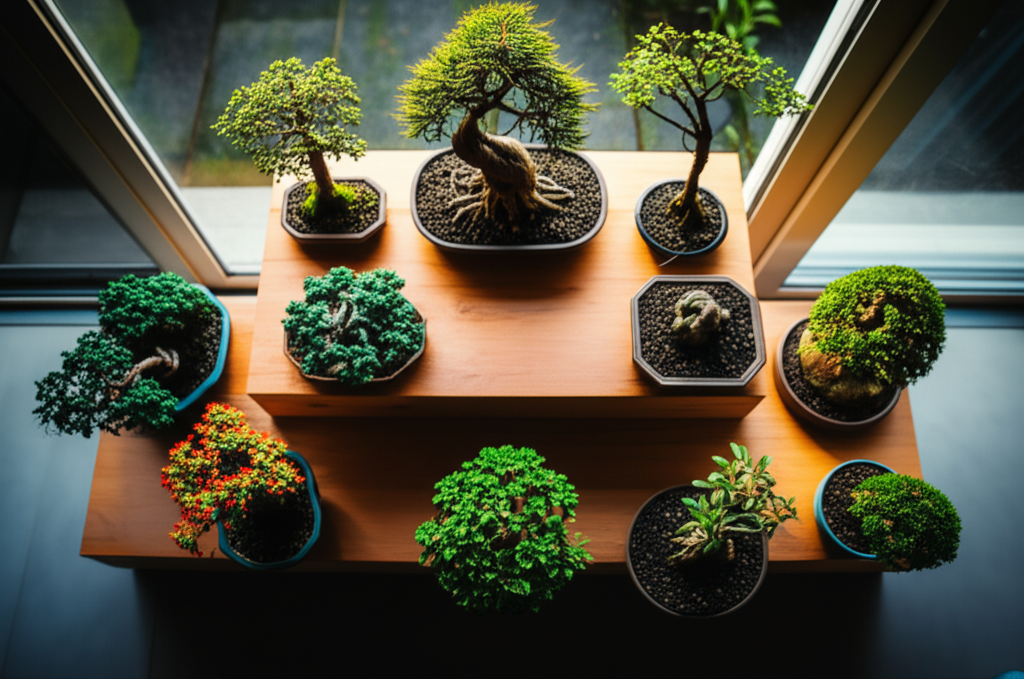
After successfully caring for my juniper bonsai for several months, I decided to expand my collection. I bought a Japanese maple, a Chinese elm, and a ficus, each with its own unique characteristics and care requirements.
The Japanese maple was particularly challenging. It required a different soil mix, a different watering schedule, and a different pruning technique than the juniper. I spent hours researching the specific needs of Japanese maples and carefully adjusted my care routine accordingly.
The Chinese elm was more forgiving. It was a fast-growing species that responded well to pruning and wiring. I was able to experiment with different styles and techniques without worrying too much about damaging the tree.
The ficus was the easiest to care for. It was a tropical species that thrived in warm, humid conditions. I kept it indoors during the winter and moved it outdoors during the summer. It grew quickly and vigorously, and I was able to create a beautiful bonsai in a relatively short amount of time.
The Community: Sharing and Learning
One of the best things about getting into bonsai has been discovering the bonsai community. I’ve joined online forums, attended local bonsai shows, and even taken a few workshops with experienced bonsai artists. It’s been incredibly helpful to connect with other enthusiasts, to share my experiences, and to learn from their knowledge.
The bonsai community is a diverse and welcoming group of people. There are beginners like me, experienced hobbyists, and even professional bonsai artists. Everyone is willing to share their knowledge and offer advice. I’ve learned so much from the community, and I’ve made some great friends along the way.
Attending bonsai shows has been particularly inspiring. It’s amazing to see the incredible artistry and skill that goes into creating these miniature masterpieces. I’ve also learned a lot about different bonsai styles and techniques by observing the work of other artists.
The Future: A Lifetime of Learning
My bonsai journey is far from over. I know that I have a lifetime of learning ahead of me. But I’m excited about the challenges and the rewards that lie ahead. I’m looking forward to continuing to develop my skills, to expanding my collection, and to sharing my passion for bonsai with others.
I’m also looking forward to seeing how my bonsai trees evolve over time. Bonsai is a long-term commitment, a relationship that can last for decades, even centuries. I hope to be able to pass my bonsai trees on to future generations, so that they can continue to appreciate the beauty and the wisdom of this ancient art form.
What started as a tentative experiment has blossomed into a genuine passion. I can’t imagine my life without the quiet focus and the deep satisfaction that bonsai brings. It’s a reminder to slow down, to appreciate the small details, and to find beauty in the unexpected. It’s a constant lesson in patience, perseverance, and the interconnectedness of all things.
And who knows, maybe one day I’ll even be able to create a bonsai tree that rivals the ones I see in the magazines. But even if I don’t, I’ll still be happy. Because for me, bonsai is not about achieving perfection, it’s about the journey itself.
Lessons Learned: Reflections on the Journey So Far
Looking back on my first few months of bonsai, several key lessons stand out. First and foremost, patience is paramount. Bonsai is not a quick fix or an instant gratification hobby. It requires dedication, time, and a willingness to wait for results. I’ve learned to appreciate the slow, steady growth of my trees and to find satisfaction in the small victories along the way.
Second, observation is crucial. Paying close attention to the needs of my trees, understanding their growth patterns, and recognizing the signs of stress or disease has been essential to their health and well-being. I’ve learned to see the world through the eyes of my trees, to anticipate their needs, and to provide them with the care they deserve.
Third, community is invaluable. Connecting with other bonsai enthusiasts has been incredibly helpful. Sharing experiences, asking questions, and learning from others has accelerated my growth and enriched my understanding of bonsai. The bonsai community is a supportive and welcoming group, and I’m grateful to be a part of it.
Fourth, don’t be afraid to experiment. Bonsai is an art form, and there’s no single right way to do it. I’ve learned to trust my intuition, to try new techniques, and to embrace the occasional mistake. Experimentation is essential to finding my own style and to developing my skills as a bonsai artist.
Finally, and perhaps most importantly, enjoy the process. Bonsai should be a source of joy and relaxation, not stress or frustration. I’ve learned to appreciate the simple act of working with my hands, of connecting with nature, and of creating something beautiful. The journey is just as important as the destination, and I’m grateful for every moment I spend with my bonsai trees.

So, that’s my bonsai journey so far. It’s been a challenging but incredibly rewarding experience. I’m excited to see what the future holds, and I’m grateful for the opportunity to share my passion with you. Remember, even the most experienced bonsai masters started somewhere. Don’t be afraid to take the plunge, to get your hands dirty, and to discover the magic of bonsai for yourself. You might just surprise yourself with what you can create.
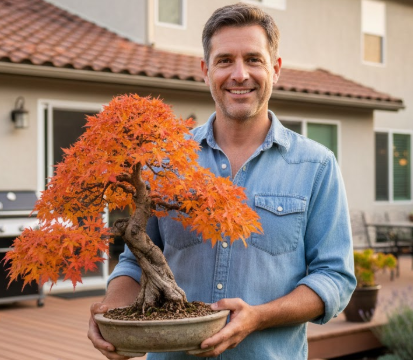
My name is Christopher Brown, I am 38 years old and I live in the United States. I am deeply passionate about the art of bonsai and have been cultivating trees for several years. What started as a simple curiosity turned into a daily practice and an important part of my life.
On this blog, I share my real experiences with bonsai — including what works, what doesn’t, and the lessons I learn along the way. I enjoy experimenting with techniques, observing the growth of each tree, and documenting the process with honesty and patience.
My goal with InfoWeHub is to help beginners feel more confident, avoid common mistakes, and discover the beauty of bonsai cultivation. If you are starting your journey or already love this art, you are welcome here.