
The Silent Struggle: A Bonsai’s Plea
For years, my bonsai collection was… adequate. I wouldn’t say they were thriving, but they weren’t exactly dying either. They existed in a sort of vegetative purgatory, stubbornly clinging to life but never quite reaching their full potential. I followed the rules, or so I thought. I watered them, fertilized them (maybe too much, if I’m being honest), and even attempted to prune them according to the diagrams in my well-worn bonsai books. Yet, something was amiss. The leaves were often a bit pale, the growth was slow and stunted, and the overall vibrancy that I saw in other bonsai enthusiasts’ gardens eluded me. It was frustrating, to say the least. I began to question my green thumb, wondering if I was simply destined to be a mediocre bonsai caretaker.
I remember one particular Japanese maple bonsai, a beauty I had acquired several years prior. It had the potential to be a real showstopper, with its delicate leaves turning fiery red in the fall. But year after year, the colors were muted, the growth was sparse, and the tree just looked…tired. I’d stare at it for hours, trying to decipher its silent plea. Was it too much sun? Not enough water? The wrong kind of fertilizer? I tried everything, tweaking this and adjusting that, but nothing seemed to make a significant difference. The tree remained stubbornly…meh.
The Root of the Problem (Literally)
The turning point came during a bonsai workshop led by a visiting master from Japan. He had a way of looking at a tree that seemed to penetrate its very soul. He wasn’t just seeing branches and leaves; he was seeing the tree’s history, its struggles, its potential. He spent a considerable amount of time examining my Japanese maple, his brow furrowed in concentration. Finally, he turned to me, a twinkle in his eye, and said, “The problem, my friend, is not above the soil. It is below.”
He explained that the single biggest mistake most novice bonsai enthusiasts make is neglecting the root system. We become so focused on the visible parts of the tree – the branches, the leaves, the overall shape – that we forget the foundation upon which everything else is built. Over time, the roots of a bonsai can become pot-bound, circling around the inside of the container and choking the tree. This restricts the flow of water and nutrients, leading to stunted growth, pale leaves, and a general lack of vigor. It’s like trying to run a marathon with your shoelaces tied together – you might make it to the finish line, but you’ll be miserable the whole time.
He then asked me when the last time I had repotted my Japanese maple. I sheepishly admitted that it had been…a while. Possibly longer than I cared to admit. He nodded knowingly. “That,” he said, “is your problem.”
The Revelation: Repotting and Root Pruning
The master’s words hit me like a ton of bricks. It was so obvious, yet I had completely overlooked it. I had been so busy fiddling with the superficial aspects of the tree that I had neglected the very thing that was sustaining it. It was a classic case of missing the forest for the trees, or, in this case, missing the roots for the branches.
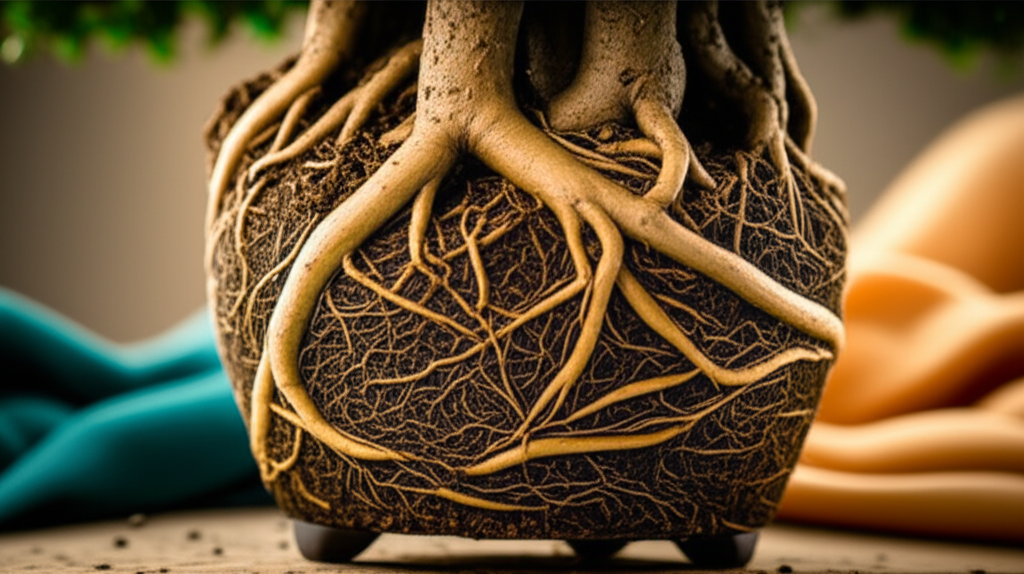
Following his instructions, I carefully removed the Japanese maple from its pot. What I saw was not pretty. The roots were a tangled mess, a solid mass of tightly packed fibers circling the inside of the container. There was very little soil left, and what remained was dry and compacted. It was a wonder the tree was still alive.
He then demonstrated the proper technique for root pruning. Using sharp, sterile shears, he carefully trimmed away the outer layer of circling roots, removing about one-third of the total root mass. He explained that this process, while seemingly drastic, actually stimulates new growth and encourages the roots to spread out and explore the soil. It’s like giving the tree a fresh start, a chance to breathe and thrive.
The Art of Bonsai Soil: A Crucial Element
He also emphasized the importance of using the right type of bonsai soil. Unlike regular potting soil, which tends to retain too much water and can suffocate the roots, bonsai soil is designed to be well-draining and aerated. He recommended a mix of akadama (a type of baked clay), pumice, and lava rock. This combination provides the perfect balance of drainage, aeration, and nutrient retention. I had been using a generic potting mix, a cardinal sin in the bonsai world, I now realized.
With the roots pruned and the proper soil mix prepared, I carefully repotted the Japanese maple. It felt like I was performing surgery, delicately placing the tree in its new home, ensuring that the roots were properly positioned and that the soil was evenly distributed. It was a slow and meticulous process, but I knew it was worth the effort.
The Transformation: From Weakling to Warrior
The change in the Japanese maple was almost immediate. Within a few weeks, new growth began to emerge, vibrant green shoots pushing their way through the branches. The leaves were larger and healthier, and the tree seemed to radiate with renewed energy. It was like I had given it a shot of life, a new lease on existence.
That autumn, the leaves turned a brilliant shade of crimson, the most vibrant color I had ever seen on that tree. It was a stunning display, a testament to the power of proper root care. I felt a surge of pride, knowing that I had finally unlocked the tree’s potential.
But the transformation wasn’t just physical. There was also a change in my own approach to bonsai. I became more patient, more observant, and more attuned to the needs of my trees. I realized that bonsai is not just about pruning and shaping; it’s about understanding the underlying biology of the tree and providing it with the optimal conditions to thrive. It’s about listening to the tree’s silent plea and responding with care and attention.
Beyond the Maple: A Collection Reborn
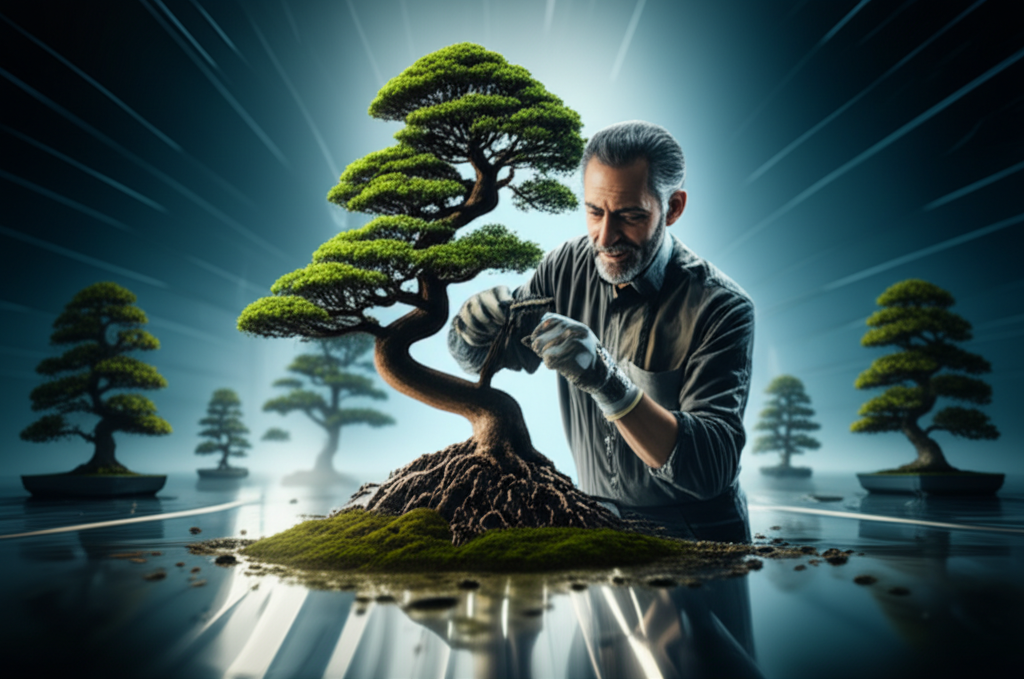
The success with the Japanese maple inspired me to repot and root prune all of my bonsai trees. It was a daunting task, but I was determined to give each and every one of them the same opportunity to thrive. I spent weeks carefully removing each tree from its pot, pruning the roots, and repotting them in the proper soil mix. It was a labor of love, and the results were astounding.
My entire collection underwent a dramatic transformation. The leaves became greener, the growth became more vigorous, and the trees seemed to exude a sense of vitality that had been missing for years. I finally understood what it meant to have a truly healthy bonsai collection. It wasn’t just about aesthetics; it was about creating an environment where the trees could flourish.
One of the most remarkable transformations was in my ficus bonsai. It had always been a bit of a problem child, prone to dropping leaves and susceptible to pests. But after repotting and root pruning, it became a lush, vibrant specimen, with glossy green leaves and a strong, healthy trunk. It was like a completely different tree.
The Importance of Observation: Learning to Listen
One of the most important lessons I learned from this experience is the importance of observation. Bonsai is not a passive hobby; it requires active engagement and a willingness to learn from the trees themselves. We need to pay attention to the subtle cues they give us – the color of the leaves, the rate of growth, the overall appearance of the tree – and adjust our care accordingly.
Are the leaves turning yellow? It could be a sign of overwatering or nutrient deficiency. Is the growth stunted? It could be a sign of root problems or insufficient sunlight. By carefully observing our trees, we can identify problems early on and take corrective action before they become serious.
It’s also important to remember that bonsai is not a one-size-fits-all approach. Each tree is unique and has its own specific needs. What works for one tree may not work for another. We need to experiment and find what works best for each individual tree in our collection.

Beyond the Basics: Advanced Techniques
Once I had mastered the basics of repotting and root pruning, I began to explore more advanced bonsai techniques. I learned about wiring, which is the process of using wire to shape the branches of a tree. This allows us to create more interesting and dynamic designs. I also learned about grafting, which is the process of joining two different plants together to create a hybrid. This can be used to improve the disease resistance or vigor of a tree.
One of the most challenging but rewarding techniques I learned was air layering. This involves creating roots on a branch while it is still attached to the parent tree. Once the roots have formed, the branch can be severed and planted as a new tree. This is a great way to propagate new bonsai trees from existing specimens.
However, these advanced techniques are best approached after one has a firm grasp on the fundamental principles of bonsai care. Root health is paramount. Without a strong, healthy root system, even the most skillfully wired or grafted tree will struggle to survive.
The Enduring Lesson: Patience and Perseverance
Bonsai has taught me many things, but perhaps the most important is the value of patience and perseverance. Bonsai is not a quick and easy hobby; it requires dedication, attention to detail, and a willingness to learn from your mistakes. There will be setbacks and disappointments along the way, but it’s important to keep learning and keep trying. The rewards are well worth the effort.
I’ve lost trees, made mistakes with pruning, and even accidentally overwatered a few to an early grave. But each failure has been a learning opportunity. I’ve come to appreciate the cyclical nature of life, the ebb and flow of growth and dormancy. Bonsai is a constant reminder that everything takes time and that the best things in life are often the result of hard work and dedication.
It’s also taught me a lot about myself. The act of meticulously caring for these miniature trees has instilled in me a sense of calm and focus that I never knew I possessed. It’s a meditative practice, a way to connect with nature and find peace in the midst of a chaotic world.
Sharing the Passion: Inspiring Others
Now, years after that fateful workshop, I find myself sharing my knowledge with others. I teach bonsai classes at the local community center and mentor aspiring bonsai enthusiasts. It’s a way for me to give back to the bonsai community and to help others avoid the mistakes I made along the way. I often tell them my story about the Japanese maple, emphasizing the importance of root care and the transformative power of repotting and root pruning.
There’s a certain joy in seeing the lightbulb go off in someone’s eyes when they finally understand the connection between the roots and the overall health of the tree. It’s like passing on a secret, a hidden key to unlocking the potential of these miniature masterpieces.
And so, my bonsai journey continues. I am constantly learning, experimenting, and refining my techniques. I still make mistakes, but I learn from them. And most importantly, I continue to find joy and satisfaction in the art of bonsai. It’s a lifelong pursuit, a journey of discovery that never ends. The simple act of fixing one simple mistake – neglecting the roots – transformed my entire approach to bonsai and, in a way, transformed me as well. It’s a lesson I will never forget.
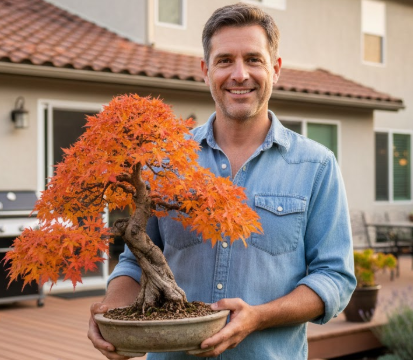
My name is Christopher Brown, I am 38 years old and I live in the United States. I am deeply passionate about the art of bonsai and have been cultivating trees for several years. What started as a simple curiosity turned into a daily practice and an important part of my life.
On this blog, I share my real experiences with bonsai — including what works, what doesn’t, and the lessons I learn along the way. I enjoy experimenting with techniques, observing the growth of each tree, and documenting the process with honesty and patience.
My goal with InfoWeHub is to help beginners feel more confident, avoid common mistakes, and discover the beauty of bonsai cultivation. If you are starting your journey or already love this art, you are welcome here.