
Embarking on the Bonsai Journey: A Personal Reflection
For decades, I’ve found immense joy and tranquility in the art of bonsai. It’s more than just a hobby; it’s a dialogue with nature, a testament to patience, and a constant learning experience. I remember vividly the excitement and slight apprehension I felt when I first decided to bring a bonsai into my life. The sheer number of options, the unfamiliar terminology, and the weight of responsibility for a living thing were a little daunting. Looking back, I realize I made a few mistakes along the way – mistakes I hope to help you avoid as you embark on your own bonsai journey.
Choosing your first bonsai can feel overwhelming, but it doesn’t have to be. With a little knowledge and a realistic understanding of what you’re getting into, you can find a tree that will thrive and bring you years of enjoyment. The goal here isn’t to become a bonsai master overnight, but to find a tree that suits your lifestyle, skill level, and aesthetic preferences.
Understanding the Basics: Species and Styles
One of the first things you’ll encounter when researching bonsai is the vast array of species and styles. This can be both exciting and confusing. Let’s break down some of the essential concepts.
Choosing the Right Species for Your Climate
The most crucial factor in selecting a species is understanding your local climate. Some trees are incredibly hardy and can withstand temperature extremes, while others are more delicate and require specific conditions. Ignoring this aspect is a surefire way to set yourself up for disappointment. I learned this the hard way with my first ficus. I was so captivated by its tropical beauty that I completely overlooked the fact that it couldn’t tolerate the cold winters of my region. Despite my best efforts, it eventually succumbed to the elements. Now, I primarily focus on species that thrive outdoors in my area, bringing them indoors only for short periods during extreme weather.
For beginners in temperate climates, consider species like junipers, Japanese maples, and pines. These are relatively forgiving and can adapt to a wide range of conditions. If you live in a warmer climate, ficus, bougainvillea, and other tropical species might be more suitable. Research is key. Find out which trees native to your region are commonly used for bonsai and which ones thrive in your specific microclimate (e.g., a sheltered patio vs. an exposed rooftop).
Exploring Bonsai Styles: From Formal to Informal
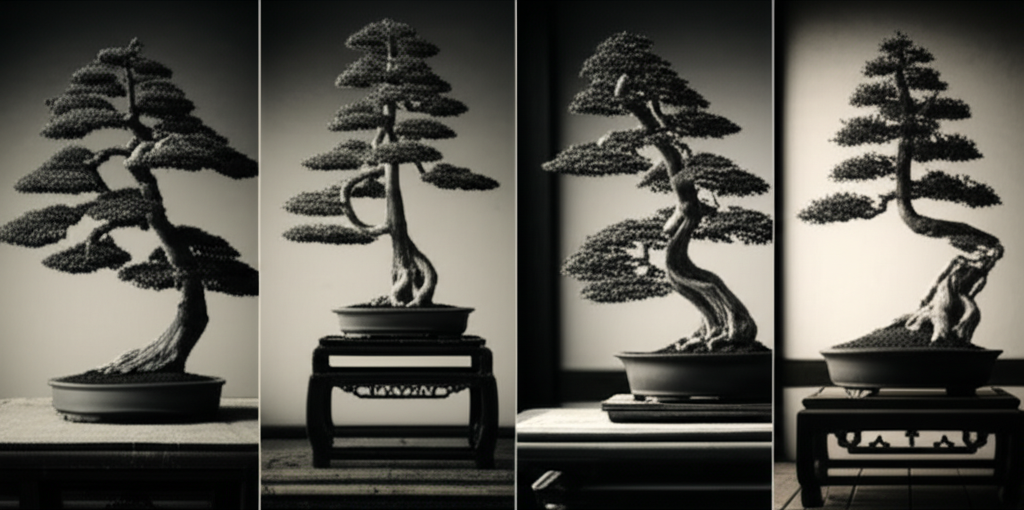
Bonsai styles refer to the various artistic forms that a tree can be trained into. Each style has its own set of characteristics and guidelines, though ultimately, the best style is the one that complements the tree’s natural growth habit and your personal aesthetic. Some popular styles include:
- Formal Upright (Chokkan): A straight, tapering trunk with symmetrical branching. This style conveys a sense of dignity and strength.
- Informal Upright (Moyogi): A slightly curved trunk with asymmetrical branching. This style is more natural and relaxed than the formal upright.
- Slanting (Shakan): A tree that grows at an angle, often suggesting a struggle against the elements.
- Cascade (Kengai): A tree that grows downward, over the edge of its pot, mimicking a tree growing on a cliff.
- Semi-Cascade (Han Kengai): Similar to the cascade style, but the tree doesn’t extend as far below the pot.
Don’t feel pressured to choose a specific style right away. As you gain experience, you’ll naturally gravitate towards certain styles that resonate with you. When I started, I was determined to create a perfect formal upright, but I soon realized that my trees had other ideas. I learned to embrace their natural tendencies and adapt my approach accordingly. It’s a journey of discovery, not a rigid adherence to rules.
Avoiding Common Pitfalls: What to Watch Out For
One of the most valuable things I can share is the knowledge gained from my own mistakes. Here are some common pitfalls to avoid when choosing your first bonsai:
The “Too Good to Be True” Trap
Be wary of bonsai offered at suspiciously low prices. Often, these trees are poorly cared for, improperly potted, or even unhealthy. I once purchased a “bargain” juniper, only to discover that it was infested with spider mites and had root rot. The cost of treating it far exceeded the initial savings. A healthy bonsai represents an investment of time and effort, so a low price should raise red flags.
Reputable nurseries and bonsai specialists will be able to provide you with detailed information about the tree’s history, care requirements, and potential problems. Don’t hesitate to ask questions and inspect the tree carefully before making a purchase. Look for signs of good health, such as vibrant foliage, a strong trunk, and well-draining soil.
Ignoring the Root System
The health of the root system is paramount to the overall well-being of the bonsai. Unfortunately, it’s also the part of the tree that’s hidden from view. A common mistake is to focus solely on the appearance of the foliage and trunk, neglecting the foundation upon which the entire tree depends.
If possible, gently lift the tree from its pot to inspect the roots. They should be firm, healthy-looking, and not excessively root-bound. Avoid trees with circling roots, a foul odor, or signs of decay. A healthy root system is essential for nutrient uptake and water absorption, which are crucial for the tree’s survival.
Overlooking the Importance of Drainage
Proper drainage is critical for preventing root rot and ensuring the health of your bonsai. Bonsai pots typically have drainage holes to allow excess water to escape. The soil mix should also be well-draining, allowing water to flow through freely without becoming waterlogged.
Avoid using garden soil or potting soil in your bonsai. These mixes tend to retain too much moisture and can suffocate the roots. Instead, opt for a specialized bonsai soil mix, which typically consists of akadama, pumice, and lava rock. These components provide excellent drainage, aeration, and nutrient retention.
Underestimating the Time Commitment
Bonsai is not a low-maintenance hobby. It requires regular watering, fertilizing, pruning, and repotting. If you’re not willing to dedicate the time and effort required to care for your tree, it’s best to reconsider. I’ve seen too many beginners become discouraged and abandon their bonsai after realizing the level of commitment involved.
Start with a species that is relatively easy to care for and gradually work your way up to more demanding varieties as you gain experience. Remember, bonsai is a long-term investment, and the rewards are proportional to the effort you put in. Think of it as a living sculpture that requires constant attention and refinement.
Finding the Right Source: Nurseries, Specialists, and Online Options
Choosing where to purchase your bonsai is almost as important as choosing the tree itself. Different sources offer different advantages and disadvantages. Here’s a breakdown of some common options:
Local Nurseries: A Hands-On Approach
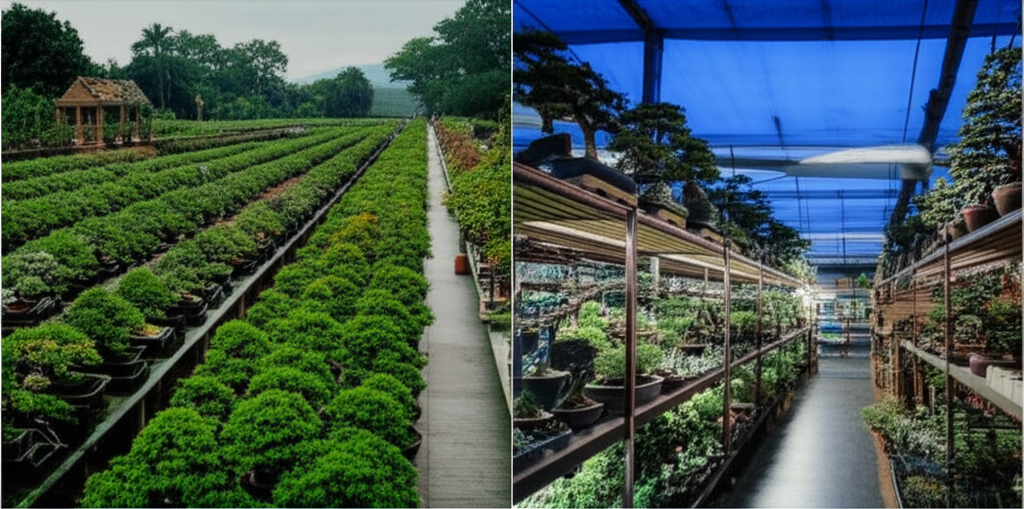
Local nurseries can be a great place to start, especially if you’re new to bonsai. You’ll be able to see the trees in person, inspect them carefully, and ask questions of the staff. However, not all nurseries are created equal. Look for nurseries that specialize in bonsai or have a dedicated bonsai section. The staff should be knowledgeable and able to provide you with guidance on selecting and caring for your tree.
Be aware that the selection at local nurseries may be limited, and the prices may be higher than those offered online. However, the ability to examine the tree in person and receive personalized advice can be invaluable, especially for beginners.
Bonsai Specialists: Expertise and Quality
Bonsai specialists are dedicated to the art of bonsai and typically offer a wide selection of high-quality trees. They often have years of experience and can provide you with expert advice on all aspects of bonsai care. The prices at bonsai specialist nurseries may be higher than those at general nurseries, but the quality of the trees and the level of expertise are often worth the investment.
Visiting a bonsai specialist nursery can be an educational experience in itself. You’ll have the opportunity to see a variety of different species and styles, learn about different techniques, and connect with other bonsai enthusiasts.
Online Retailers: Convenience and Variety
Online retailers offer a convenient way to browse a wide selection of bonsai from the comfort of your own home. However, it’s important to be cautious when purchasing bonsai online. You won’t be able to see the tree in person before you buy it, so you’ll have to rely on the photos and descriptions provided by the retailer.
Choose reputable online retailers with a good track record of customer satisfaction. Read reviews carefully and pay attention to the retailer’s return policy. Look for retailers that provide detailed information about the tree’s species, age, size, and care requirements. Be prepared to pot the tree yourself when it arrives, as shipping can sometimes disrupt the soil.
The Importance of Observation and Patience
Ultimately, the most important skills in bonsai are observation and patience. Bonsai is a process of constant learning and adaptation. You’ll need to observe your tree carefully to understand its needs and respond accordingly. This includes paying attention to the color of the foliage, the moisture level of the soil, and the overall health of the tree.
Patience is also essential. Bonsai is not a quick fix. It takes years, even decades, to develop a truly beautiful and mature bonsai. Don’t get discouraged if your tree doesn’t look perfect right away. Embrace the process and enjoy the journey. Remember that every tree is unique and has its own individual characteristics. The goal is not to create a perfect replica of a textbook example, but to nurture and guide your tree to its full potential.
Developing Your Bonsai Eye: Aesthetics and Design
As you gain experience with bonsai, you’ll begin to develop your “bonsai eye,” a sense of aesthetics and design that will guide your pruning and shaping decisions. This is a subjective process, but there are some general principles to keep in mind:
Creating Balance and Harmony
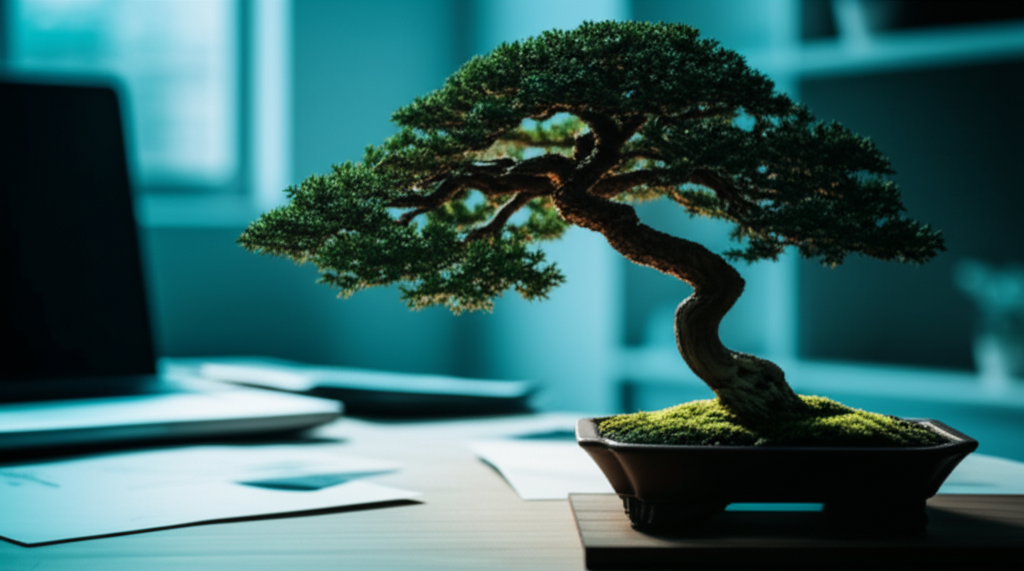
Balance and harmony are essential elements of good bonsai design. The tree should appear stable and well-proportioned. Avoid creating overly symmetrical or unbalanced designs. Strive for a natural and organic look that reflects the tree’s inherent beauty.
Consider the overall shape of the tree, the placement of the branches, and the relationship between the tree and the pot. Experiment with different angles and perspectives to find the most pleasing composition.
Using Negative Space Effectively
Negative space, or the empty space around the tree, is just as important as the tree itself. Negative space can help to define the shape of the tree, create a sense of depth, and draw the viewer’s eye to specific areas of interest.
Avoid overcrowding the tree with too many branches or foliage. Prune selectively to create open areas that allow light and air to circulate freely. Use negative space to create a sense of movement and dynamism.
Embracing Imperfection
Perfection is not the goal in bonsai. In fact, imperfection is often seen as a virtue. Embrace the natural flaws and imperfections of the tree. These imperfections can add character and depth to the design.
Don’t try to force the tree to conform to a rigid ideal. Instead, work with its natural tendencies and allow it to express its own unique personality. Remember that bonsai is a reflection of nature, and nature is rarely perfect.
The Joys of Bonsai: More Than Just a Hobby
For me, bonsai is far more than just a hobby. It’s a form of meditation, a connection to nature, and a constant source of learning and inspiration. The act of tending to a bonsai tree requires patience, focus, and attention to detail. It’s a way to slow down, disconnect from the stresses of daily life, and reconnect with the natural world.
The bond you form with your bonsai is unique. Over time, you’ll learn to understand its individual needs and quirks. You’ll celebrate its successes and mourn its setbacks. You’ll witness its transformation over the years, and you’ll be amazed by its resilience and beauty. The joy of seeing a bonsai tree thrive under your care is unparalleled.
Bonsai has taught me valuable lessons about patience, perseverance, and the importance of living in the present moment. It has also given me a greater appreciation for the beauty and complexity of nature. I encourage you to embark on your own bonsai journey and discover the many rewards that this ancient art has to offer. Don’t be afraid to make mistakes – they are part of the learning process. Embrace the challenge, be patient, and enjoy the journey.
I remember one particularly harsh winter where I thought I had lost one of my oldest junipers. The needles had turned brown, and the branches were brittle. I was heartbroken. But I continued to care for it, watering it sparingly and protecting it from the worst of the elements. To my surprise, in the spring, new green shoots began to emerge. It was a powerful reminder of the resilience of nature and the importance of never giving up hope.
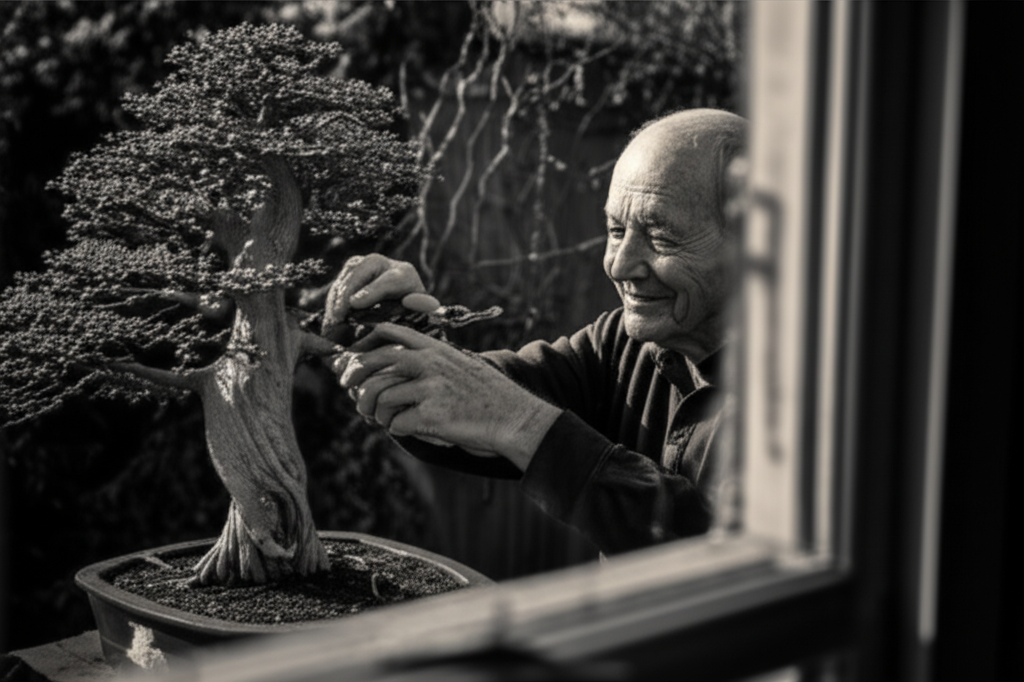
So, take the plunge. Choose a tree that speaks to you, learn its needs, and commit to providing it with the care it deserves. You might be surprised at the joy and fulfillment that bonsai can bring to your life. And remember, it’s not just about the tree; it’s about the journey.
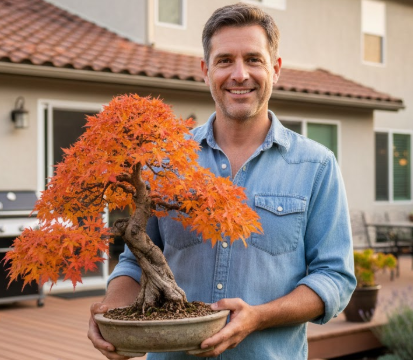
My name is Christopher Brown, I am 38 years old and I live in the United States. I am deeply passionate about the art of bonsai and have been cultivating trees for several years. What started as a simple curiosity turned into a daily practice and an important part of my life.
On this blog, I share my real experiences with bonsai — including what works, what doesn’t, and the lessons I learn along the way. I enjoy experimenting with techniques, observing the growth of each tree, and documenting the process with honesty and patience.
My goal with InfoWeHub is to help beginners feel more confident, avoid common mistakes, and discover the beauty of bonsai cultivation. If you are starting your journey or already love this art, you are welcome here.