
The Silent Plateau: When Your Bonsai Journey Stalls
I’ve been tending to bonsai for what feels like a lifetime, and let me tell you, the journey isn’t always a smooth, upward climb. There are plateaus, those frustrating periods where your little trees seem to stubbornly resist any further progress. They’re not dying, not exactly, but they’re also not thriving. They just… exist. I remember one particularly disheartening year with my prize-winning Japanese maple. It had been flourishing for years, winning local shows, and generally basking in the admiration of anyone who laid eyes on it. Then, seemingly overnight, it just… stopped. The vibrant red leaves lost their luster, new growth was minimal, and the overall vigor of the tree seemed to fade. It was like it had hit a brick wall, and I was left scratching my head, wondering what I had done wrong.
This experience wasn’t unique. I’ve spoken to countless other bonsai enthusiasts who have faced similar challenges. It’s a natural part of the process, a test of patience and knowledge. The key is to understand why your bonsai might be stagnating and, more importantly, how to reignite its growth. Over the years, I’ve identified several common culprits, and I’m going to share them with you, along with the solutions that worked for me.
The Foundation: Reassessing the Basics
Before diving into complex issues, it’s crucial to revisit the fundamentals. Are you providing your bonsai with the basic necessities it needs to thrive? This might seem obvious, but it’s surprising how often we overlook the simple things when troubleshooting a problem.
Watering: The Lifeblood of Your Bonsai: Are you watering correctly? Overwatering and underwatering are two of the most common mistakes. Overwatering can lead to root rot, which suffocates the roots and prevents them from absorbing nutrients. Underwatering, on the other hand, can cause the tree to dry out and become stressed. The key is to find the right balance. I personally use the “chopstick test.” I stick a chopstick into the soil, and if it comes out damp, I hold off on watering. If it’s dry, it’s time to water. Remember, different species have different watering needs, so research your specific bonsai.
Lighting: The Fuel for Photosynthesis: Is your bonsai getting enough light? Most bonsai need at least six hours of sunlight per day. If you’re growing your bonsai indoors, you may need to supplement with artificial lighting. I’ve found that LED grow lights work well, providing the necessary spectrum of light for healthy growth. Observe the leaves – are they pale or yellowish? This could indicate insufficient light. Leggy growth, where the branches are long and stretched with few leaves, is another sign of light deficiency.
Soil: The Foundation of Growth: Is your soil providing adequate drainage and nutrients? Bonsai soil needs to be well-draining to prevent root rot. A common mix includes akadama, pumice, and lava rock. These components provide excellent drainage and aeration. Over time, the soil can become compacted and lose its ability to drain properly. Repotting your bonsai with fresh soil every few years is essential for maintaining its health. I learned this the hard way when one of my older junipers started to decline. The soil had become so compacted that water was just sitting on the surface, suffocating the roots.

Nutrient Deficiency: The Hidden Hunger
Even with proper watering, lighting, and soil, your bonsai may still be lacking essential nutrients. Bonsai are grown in small containers with limited soil, so they rely on us to provide them with the nutrients they need. This is where fertilization comes in.
Decoding the Fertilizer Code: N-P-K
Fertilizers are labeled with three numbers, representing the percentage of nitrogen (N), phosphorus (P), and potassium (K) they contain. Nitrogen promotes leafy growth, phosphorus supports root development, and potassium enhances overall plant health. A balanced fertilizer, such as 10-10-10, is a good starting point for most bonsai. However, you may need to adjust the ratio depending on your bonsai’s specific needs. For example, a bonsai that is not producing enough new growth may benefit from a fertilizer with a higher nitrogen content.
The Right Dose: Less is More
It’s crucial to avoid over-fertilizing your bonsai. Over-fertilizing can burn the roots and damage the tree. I always recommend using a diluted fertilizer solution, about half the strength recommended on the label. It’s better to fertilize more frequently with a weaker solution than to over-fertilize with a strong solution. I fertilize my bonsai every two weeks during the growing season, and I reduce the frequency to once a month during the dormant season.
Organic vs. Synthetic: A Matter of Preference
There are two main types of fertilizers: organic and synthetic. Organic fertilizers are derived from natural sources, such as compost, manure, and bone meal. They release nutrients slowly over time, providing a more sustained source of nutrition. Synthetic fertilizers are manufactured chemically and release nutrients quickly. They are often more concentrated than organic fertilizers. I personally prefer to use organic fertilizers, as I believe they are gentler on the bonsai and better for the environment. However, synthetic fertilizers can be a good option if you need a quick boost of nutrients.
Root Bound: The Confined Existence
As your bonsai grows, its roots will eventually fill the pot. When this happens, the bonsai becomes root bound, meaning that the roots are so tightly packed together that they can no longer absorb water and nutrients effectively. Root bound bonsai often exhibit slow growth, yellowing leaves, and a general decline in health. This is something I neglected to check on one of my first bonsai, a ficus. It looked healthy enough, but it wasn’t thriving. When I finally repotted it, I was shocked to find a solid mass of roots circling the inside of the pot. It was like a tightly wound spring, preventing the tree from reaching its full potential.
The Art of Repotting: A Fresh Start
Repotting your bonsai is essential for preventing root boundness and maintaining its health. The frequency of repotting depends on the species and age of the bonsai. Young bonsai need to be repotted more frequently than older bonsai. As a general rule, repot deciduous bonsai every two to three years and evergreen bonsai every three to five years. When repotting, carefully remove the bonsai from its pot and gently loosen the roots. Prune away any dead or diseased roots, and shorten any overly long roots. Repot the bonsai in fresh soil, making sure to fill in any air pockets around the roots. After repotting, water the bonsai thoroughly and protect it from direct sunlight for a few weeks.
I’ve developed a specific technique for repotting over the years. I use a chopstick to gently tease apart the roots, being careful not to damage them. I also create a small mound of soil in the center of the pot to encourage the roots to spread outwards. And most importantly, I always make sure to water the bonsai thoroughly after repotting to help settle the soil and encourage new root growth.

Pest and Disease: The Silent Invaders
Pests and diseases can also cause your bonsai to stop progressing. Common bonsai pests include aphids, spider mites, scale, and mealybugs. These pests can suck the sap from the leaves, causing them to yellow, wilt, and eventually die. Diseases, such as fungal infections, can also damage the leaves and branches.
Early Detection: The Key to Prevention
The key to controlling pests and diseases is early detection. Inspect your bonsai regularly for signs of infestation or infection. Look for small insects on the leaves or stems, sticky residue, or discolored spots. If you catch a problem early, you can often treat it with simple methods, such as hand-picking the pests or spraying the bonsai with insecticidal soap or horticultural oil.
Natural Remedies: A Gentle Approach
I prefer to use natural remedies to control pests and diseases whenever possible. Neem oil is a natural insecticide and fungicide that is effective against a wide range of pests and diseases. Garlic spray is another effective remedy. Simply crush a few cloves of garlic and mix them with water. Spray the mixture on your bonsai to repel pests. For fungal infections, I sometimes use a baking soda solution. Mix one teaspoon of baking soda with one quart of water and spray the solution on the affected areas.
When to Call in the Experts
If you’re unable to control the pests or diseases with natural remedies, you may need to use a stronger chemical treatment. However, be sure to follow the instructions carefully and use the product sparingly. In severe cases, it may be necessary to consult with a professional bonsai specialist.
Environmental Stress: The Unseen Pressure
Sometimes, the problem isn’t with the bonsai itself, but with its environment. Bonsai are sensitive to changes in temperature, humidity, and air circulation. If the environment is not suitable, your bonsai may become stressed and stop progressing. I remember moving my bonsai collection to a new location once, and several of my trees started to decline. It took me a while to realize that the new location was much drier than the old one, and the bonsai were suffering from a lack of humidity.
Humidity: The Invisible Moisturizer
Many bonsai species prefer high humidity. If you live in a dry climate, you may need to increase the humidity around your bonsai. You can do this by placing the bonsai on a humidity tray, which is a shallow tray filled with water and pebbles. As the water evaporates, it will increase the humidity around the bonsai. You can also mist the bonsai regularly with water. I use a humidifier in my bonsai room during the winter months to maintain a consistent level of humidity.
Temperature: Finding the Sweet Spot
Bonsai also need a consistent temperature. Avoid exposing your bonsai to extreme temperature fluctuations. Protect them from drafts and direct sunlight, especially during the hottest part of the day. Different species have different temperature preferences, so research your specific bonsai. Some species can tolerate colder temperatures than others.
Air Circulation: The Breath of Life
Good air circulation is essential for preventing fungal diseases. Make sure your bonsai are not overcrowded and that there is plenty of space between them. You can also use a small fan to improve air circulation. However, avoid placing the fan directly in front of the bonsai, as this can dry out the leaves.
The Long Game: Patience and Observation
Ultimately, the key to overcoming a bonsai plateau is patience and observation. Bonsai are living things, and they respond to our care and attention. By carefully observing your bonsai and understanding its needs, you can identify the underlying cause of its stagnation and take steps to reignite its growth. Don’t get discouraged if you don’t see results immediately. It takes time for bonsai to respond to treatment. Just keep providing them with the best possible care, and eventually, they will reward you with their beauty and vitality.
I’ve learned over the years that bonsai is not just a hobby, it’s a relationship. It’s a partnership between you and the tree, a constant dialogue of observation, understanding, and care. And like any good relationship, it requires patience, commitment, and a willingness to learn from your mistakes. There have been times when I felt like giving up, when I thought I had done everything I could and my bonsai were still refusing to cooperate. But I always reminded myself that bonsai is a long game, a journey of years, even decades. And the rewards, the moments of beauty and serenity, are well worth the effort.

Beyond the Basics: Advanced Techniques to Stimulate Growth
Once you’ve addressed the fundamental needs of your bonsai, you can explore more advanced techniques to stimulate growth and improve its overall health and appearance. These techniques require a deeper understanding of bonsai physiology and a willingness to experiment.
Defoliation: A Controlled Shock
Defoliation is the process of removing all or part of the leaves from a bonsai. This technique is used to encourage new growth, reduce leaf size, and improve ramification (branching). It works by temporarily stressing the tree, which triggers a flush of new growth. Defoliation is best performed in late spring or early summer, when the tree is actively growing. I typically defoliate my deciduous bonsai every few years to maintain their shape and vigor. It’s a bit like giving the tree a fresh start, forcing it to put its energy into new growth. However, it’s important to note that defoliation should only be performed on healthy, vigorous bonsai. Weak or stressed bonsai may not be able to tolerate the shock of defoliation.
Wiring: Guiding the Growth
Wiring is a technique used to shape the branches of a bonsai. By wrapping wire around the branches, you can bend them into desired positions and create a more aesthetically pleasing shape. Wiring is best performed in the fall or winter, when the branches are more flexible. Use aluminum or copper wire specifically designed for bonsai. Be careful not to wrap the wire too tightly, as this can damage the bark. Monitor the wire closely, and remove it as soon as the branches have set in their new positions. I’ve spent countless hours meticulously wiring my bonsai, carefully shaping each branch to create a harmonious and balanced composition. It’s a delicate process that requires patience and a keen eye for detail.
Grafting: Combining the Best of Both Worlds
Grafting is a technique used to join two different plants together. In bonsai, grafting is often used to add desirable characteristics, such as flower color or branch structure, to an existing tree. There are several different grafting techniques, including approach grafting, cleft grafting, and bud grafting. Grafting can be a challenging technique to master, but it can be a powerful tool for improving the quality of your bonsai. I once grafted a branch from a weeping cherry onto a standard cherry bonsai to create a unique and eye-catching specimen. The result was a stunning tree with both upright and cascading branches.
These advanced techniques are not for the faint of heart. They require a significant investment of time and effort, and there is always a risk of failure. But if you’re willing to take the plunge, they can open up a whole new world of possibilities for your bonsai.

In the end, the journey of bonsai is one of continuous learning and growth, both for the tree and for the cultivator. Embrace the challenges, learn from your mistakes, and never stop exploring the endless possibilities of this ancient art form. The rewards are immeasurable, not just in the beauty of the trees themselves, but in the peace and tranquility they bring to our lives. And when your bonsai finally breaks through that plateau, when you see that new flush of growth, that vibrant burst of color, you’ll know that all the hard work and dedication was worth it. Because in the world of bonsai, patience truly is a virtue, and the journey is just as important as the destination.
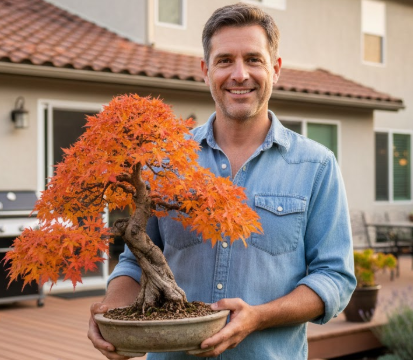
My name is Christopher Brown, I am 38 years old and I live in the United States. I am deeply passionate about the art of bonsai and have been cultivating trees for several years. What started as a simple curiosity turned into a daily practice and an important part of my life.
On this blog, I share my real experiences with bonsai — including what works, what doesn’t, and the lessons I learn along the way. I enjoy experimenting with techniques, observing the growth of each tree, and documenting the process with honesty and patience.
My goal with InfoWeHub is to help beginners feel more confident, avoid common mistakes, and discover the beauty of bonsai cultivation. If you are starting your journey or already love this art, you are welcome here.