
The Silent Language of Green: Beginning the Day with Bonsai
The morning light, soft and diffused, filters through the blinds, painting stripes across the floor. Most days, the urgency of emails and notifications pulls me immediately into the digital world. But on good days, on days I remember what truly matters, I start with the bonsai. Not because I *have* to, but because I *choose* to. Because in the quiet act of tending to these miniature trees, I find a grounding, a connection to something ancient and enduring that the digital world can never offer. It’s a conversation without words, a dialogue conducted through the language of water, light, and the gentle touch of pruning shears. It’s a ritual that sets the tone for the day, reminding me of the importance of patience, observation, and the slow, deliberate unfolding of life.
Is there a more potent symbol of mindful attention than a bonsai? Each tree, a testament to years – sometimes decades – of dedicated care. Each branch, a deliberate choice. Each leaf, a reflection of the environment it inhabits, and the care it receives. To ignore a bonsai is to slowly sentence it to a silent, withering demise. To care for it is to participate in a living art form, a collaborative dance between human intention and the inherent wisdom of nature.
The Morning Ritual: A Checklist of Connection
My daily bonsai care routine isn’t a rigid set of rules, but rather a flexible framework adapted to the individual needs of each tree. Weather, season, species – all play a role in dictating the day’s tasks. But there are certain core elements that remain constant, a kind of mindful checklist that anchors my mornings.
- Observation: This is the cornerstone of everything. Before I touch a single branch or leaf, I spend a few minutes simply observing each tree. I look for signs of stress, disease, or pest infestation. Are the leaves vibrant and healthy, or are they wilting or discolored? Is the soil moist, or dry? Are there any unusual spots or growths on the trunk or branches? This quiet observation is often the most crucial step, allowing me to identify potential problems early on, before they become serious. It’s about learning to “read” the tree, to understand its silent language.
- Watering: Watering bonsai is an art, not a chore. Overwatering is as detrimental as underwatering, leading to root rot and other problems. I check the soil moisture by gently inserting a finger into the top inch of the soil. If it feels dry to the touch, it’s time to water. But I don’t just drench the soil; I water slowly and deliberately, allowing the water to saturate the entire root ball. I use a watering can with a fine rose head to distribute the water evenly and gently, avoiding erosion of the soil surface. And I always water in the morning, giving the foliage time to dry before nightfall, which helps to prevent fungal diseases.
- Leaf Pruning and Pinching: This is where the art of bonsai truly comes alive. Leaf pruning involves selectively removing leaves to encourage new growth, improve air circulation, and maintain the desired shape of the tree. Leaf pinching, on the other hand, involves removing the tips of new shoots to control their growth and promote ramification (the development of finer branching). I use sharp, clean bonsai shears to make precise cuts, always mindful of the overall shape and balance of the tree. The goal is not to drastically alter the tree’s form, but rather to subtly guide its growth, enhancing its natural beauty.
- Pest and Disease Control: Regular inspection is the best defense against pests and diseases. If I spot any signs of infestation, such as aphids or spider mites, I take immediate action. I prefer to use natural remedies whenever possible, such as insecticidal soap or neem oil. But in some cases, stronger measures may be necessary. I always follow the instructions on the product label carefully and avoid spraying during the hottest part of the day, as this can damage the foliage. I also make sure to quarantine any affected trees to prevent the spread of pests or diseases to other plants.
- Turning and Positioning: Bonsai trees, like all plants, are drawn to light. To ensure even growth, I rotate each tree regularly, typically every few days. This prevents the branches on one side from becoming overly elongated while the branches on the other side remain stunted. I also consider the aesthetic presentation of the tree, adjusting its position to showcase its best features. The goal is to create a harmonious balance between the tree, its pot, and its surroundings.

The Art of Watering: More Than Just Moisture
Watering seems simple, doesn’t it? Just add water. But with bonsai, as with so many things, the devil is in the details. The frequency and amount of watering depend on a variety of factors, including the species of tree, the size of the pot, the type of soil, and the weather conditions. Overwatering is a common mistake, particularly among beginners. Bonsai pots typically have drainage holes to prevent water from accumulating at the bottom of the pot, but if the soil is too dense or the drainage holes are blocked, the roots can become waterlogged, leading to root rot.
Underwatering, on the other hand, can cause the leaves to wilt and eventually die. The key is to find the right balance, to provide enough water to keep the soil consistently moist, but not saturated. I’ve learned to rely on the “finger test” – inserting my finger into the top inch of the soil to check for moisture. But I also pay attention to the overall appearance of the tree. If the leaves are drooping or the soil is pulling away from the sides of the pot, it’s a sign that the tree needs water. If the soil is constantly wet or the leaves are yellowing, it’s a sign that the tree is being overwatered.
Beyond the Basics: Advanced Watering Techniques
For certain species, or during periods of extreme heat, I employ more advanced watering techniques. Misting the foliage with water can help to increase humidity and prevent the leaves from drying out. Submerging the entire pot in a basin of water for a few minutes can help to thoroughly saturate the root ball, particularly for trees that have become root-bound. And using rainwater or distilled water can help to prevent the buildup of minerals in the soil, which can be harmful to some species. I even collect the water from my dehumidifier to use on my acid-loving plants, like azaleas.
But perhaps the most important aspect of watering is to be mindful and present. To pay attention to the tree’s needs and to respond accordingly. To see watering not as a chore, but as an opportunity to connect with the tree and to nurture its growth. It’s a moment of quiet contemplation, a chance to appreciate the beauty and resilience of these miniature wonders.
Pruning: Sculpting Life, One Branch at a Time
Pruning is arguably the most important aspect of bonsai care. It’s the art of shaping and controlling the growth of the tree, creating a miniature version of a mature tree in nature. But pruning is more than just cutting off branches. It’s a deliberate act of sculpting, a process that requires careful planning, precise execution, and a deep understanding of the tree’s growth habits.
There are two main types of pruning: structural pruning and maintenance pruning. Structural pruning is done to establish the basic shape and form of the tree. It involves removing large branches and shaping the trunk to create a desired silhouette. Maintenance pruning, on the other hand, is done to maintain the tree’s shape and health. It involves removing dead, diseased, or crossing branches, as well as pinching back new growth to control its direction and density.
The Philosophy of Pruning: Respect and Intent
Before I make a single cut, I spend time studying the tree, visualizing the desired outcome. I consider the tree’s natural growth patterns and try to work with them, rather than against them. I also think about the overall balance and harmony of the tree, making sure that each branch is in proportion to the others and that the tree as a whole is visually appealing. It’s a process of constant refinement, a gradual shaping of the tree over time. And it requires patience, skill, and a deep respect for the living organism.
The tools I use are just as important as the techniques. I always use sharp, clean bonsai shears to make precise cuts. Dull or dirty shears can damage the tree and increase the risk of infection. I also have a variety of other tools, such as branch benders and wire, which I use to shape and position branches. But the most important tool is my mind, my ability to visualize the desired outcome and to execute the pruning with precision and care.

The Secret Life of Soil: Nourishing the Roots of Art
The soil in a bonsai pot is far more than just dirt. It’s a carefully crafted blend of different materials, each chosen for its specific properties. The ideal bonsai soil should provide good drainage, aeration, and water retention. It should also be slightly acidic, to promote healthy root growth. And it should be free of pests and diseases.
There are many different bonsai soil mixes available, but the most common ingredients include akadama, pumice, and lava rock. Akadama is a type of baked clay that provides excellent drainage and aeration. Pumice is a volcanic rock that helps to retain moisture. And lava rock adds structure to the soil and improves drainage. The proportions of these ingredients can be adjusted to suit the specific needs of different species of trees.
Repotting: A Renewal of Life
Over time, the soil in a bonsai pot can become compacted and depleted of nutrients. This can lead to poor root growth and a decline in the tree’s overall health. That’s why it’s important to repot bonsai trees regularly, typically every two to three years. Repotting involves removing the tree from its pot, trimming the roots, and replacing the old soil with fresh soil.
Repotting is a delicate process that should be done with care. I always use a sharp knife to carefully loosen the soil around the edges of the pot. Then, I gently lift the tree out of the pot, being careful not to damage the roots. I use a root rake to carefully remove the old soil from the roots, exposing the root ball. Then, I use sharp shears to trim any dead, diseased, or circling roots. Finally, I place the tree back in the pot and fill the pot with fresh soil, making sure to gently tamp down the soil to eliminate air pockets.
Beyond the Daily: Long-Term Vision and the Patience of a Tree
While my daily routine focuses on the immediate needs of my bonsai, it’s important to remember that bonsai cultivation is a long-term endeavor. It’s a process that requires patience, dedication, and a willingness to learn from mistakes. It’s about developing a relationship with the tree, understanding its needs, and responding accordingly. And it’s about appreciating the slow, deliberate unfolding of life.
I often think about the future of my bonsai, imagining how they will look in ten, twenty, or even fifty years. I envision the branches becoming more gnarled and twisted, the trunk becoming thicker and more textured, the overall shape becoming more refined and elegant. It’s a humbling experience to realize that I am only a temporary steward of these trees, that they will likely outlive me. But it’s also a source of great satisfaction to know that I am contributing to their long-term health and beauty.
The Lessons of Bonsai: Applied to Life
The lessons I’ve learned from bonsai extend far beyond the realm of horticulture. They have taught me the importance of patience, observation, and attention to detail. They have shown me the value of slow, deliberate action and the power of continuous improvement. And they have reminded me that true beauty lies not in perfection, but in the unique character and resilience of each individual being.
The daily ritual of bonsai care is more than just a routine; it’s a practice of mindfulness, a way to connect with the natural world and to cultivate inner peace. It’s a reminder that even in the midst of a chaotic and demanding world, there is always time for quiet contemplation and the simple act of caring for something beautiful. And in that act of caring, I find a deeper connection to myself, to the world around me, and to the enduring spirit of life.
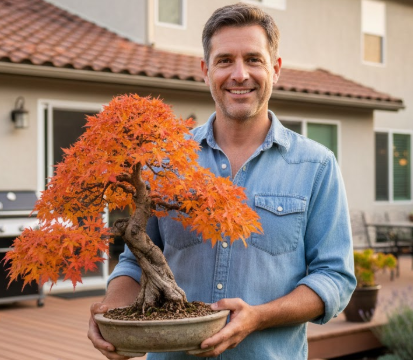
My name is Christopher Brown, I am 38 years old and I live in the United States. I am deeply passionate about the art of bonsai and have been cultivating trees for several years. What started as a simple curiosity turned into a daily practice and an important part of my life.
On this blog, I share my real experiences with bonsai — including what works, what doesn’t, and the lessons I learn along the way. I enjoy experimenting with techniques, observing the growth of each tree, and documenting the process with honesty and patience.
My goal with InfoWeHub is to help beginners feel more confident, avoid common mistakes, and discover the beauty of bonsai cultivation. If you are starting your journey or already love this art, you are welcome here.