
The Arrogance of a Beginner: My First Bonsai Disaster
They say humility is the first step to wisdom. In the world of bonsai, this couldn’t be truer. I remember the day I brought home my first bonsai – a beautiful little Juniper procumbens ‘Nana’. I was so proud, convinced I had a natural green thumb, destined to become a bonsai master in weeks. I’d read a few articles online, watched a handful of YouTube videos, and figured I knew enough. Oh, how wrong I was.
My initial approach was, in retrospect, utterly disastrous. I treated it like any other houseplant – watering it whenever I remembered, usually when the soil looked bone dry. I kept it indoors, because, well, it looked nice on the coffee table. Pruning? I’d occasionally snip off a stray branch that annoyed me, without any real understanding of the tree’s structure or growth habits. I even fertilized it with a generic houseplant fertilizer, completely oblivious to the specific needs of bonsai. The result? A slow, agonizing decline.
The needles started to turn brown, the branches became brittle, and the once vibrant green faded into a sickly yellow. It was a slow-motion train wreck, and I was the conductor, completely clueless about the impending disaster. I’d look at it, scratching my head, wondering why my “expert” care wasn’t working. “Maybe it just needs more water,” I’d think, proceeding to drown it even further. My arrogance blinded me to the obvious signs of distress, and my ignorance sealed its fate.
It wasn’t until a friend, a seasoned bonsai enthusiast named Kenji, paid me a visit that the truth finally dawned on me. He took one look at my poor Juniper and shook his head. “Christopher,” he said gently, “you’re killing it.” His words stung, but they were exactly what I needed to hear. He patiently explained my mistakes, pointing out the signs of neglect and improper care. He didn’t ridicule me, but rather offered guidance and encouragement. That day marked the beginning of my true bonsai journey – a journey of learning, humility, and a deep respect for these miniature trees.
The Deadly Sins of Bonsai Neglect
Looking back, my initial mistakes can be categorized into a few key areas, what I now call the “Deadly Sins of Bonsai Neglect.” These are the common pitfalls that many beginners fall into, and they can quickly lead to the demise of your precious tree. Let’s break them down:
- Improper Watering: Overwatering is just as bad, if not worse, than underwatering. Bonsai need well-draining soil and a proper watering schedule. I was drowning my Juniper, preventing its roots from getting the oxygen they needed.
- Insufficient Sunlight: Bonsai are trees, and trees need sunlight. Keeping my Juniper indoors, away from direct sunlight, was essentially starving it. They need several hours of direct sunlight each day to thrive.
- Incorrect Soil: Regular potting soil is too dense and retains too much water for bonsai. They require a specially formulated soil mix that provides good drainage and aeration. My choice of using a generic houseplant mix was suffocating the roots.
- Inadequate Pruning: Pruning isn’t just about aesthetics; it’s about maintaining the tree’s health and shape. I was randomly snipping branches without any understanding of the tree’s growth patterns, which was detrimental to its overall structure.
- Improper Fertilization: Bonsai have specific nutritional needs. Using a generic fertilizer can lead to nutrient imbalances and even burn the roots. They require a balanced fertilizer formulated for bonsai.
These mistakes, while seemingly simple, can have devastating consequences. My initial arrogance prevented me from recognizing them, and it cost me my first bonsai. But it was a valuable lesson, one that I’ve never forgotten.
Kenji’s Wisdom: A Turning Point
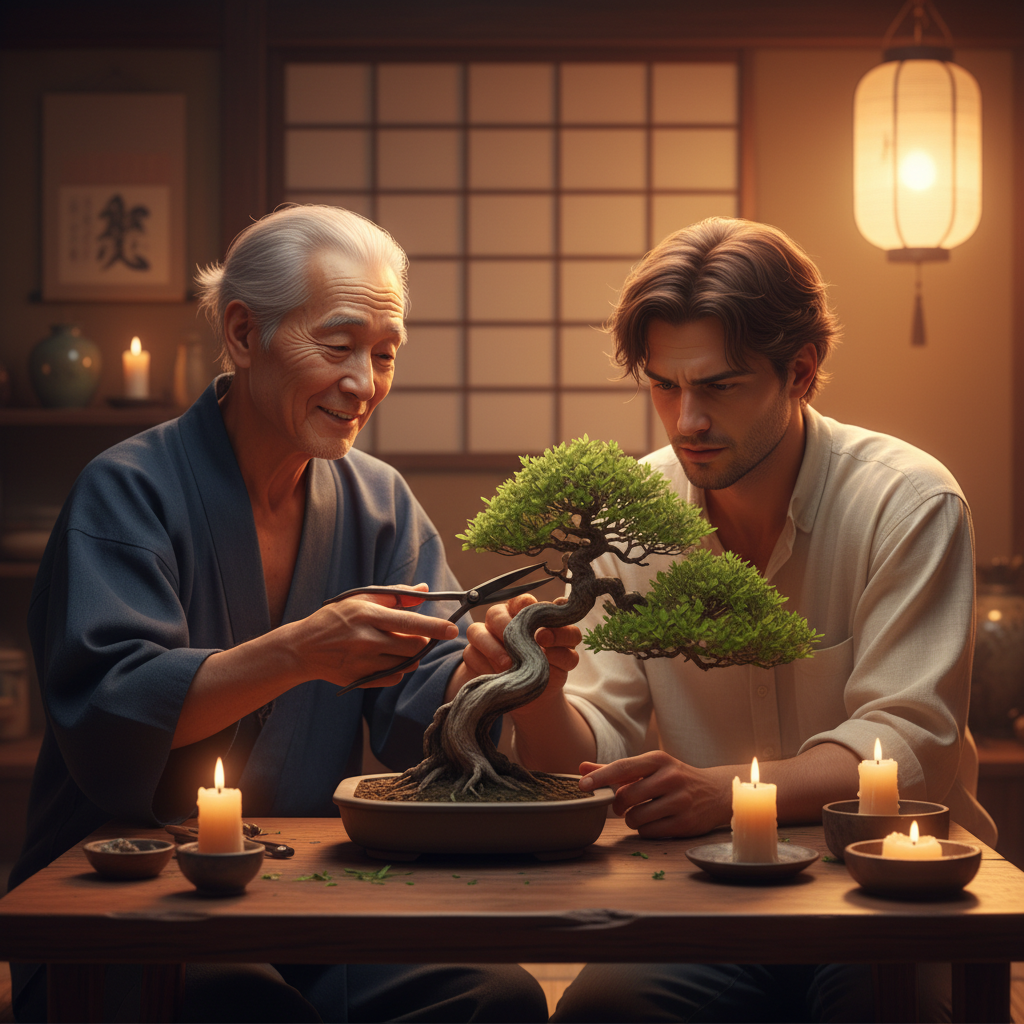
Kenji’s intervention was a pivotal moment. He didn’t just tell me what I was doing wrong; he showed me the right way to care for my bonsai. He invited me to his home, which was a veritable bonsai garden, filled with trees of all shapes and sizes. He spent hours explaining the principles of bonsai cultivation, from soil composition to pruning techniques. He emphasized the importance of patience, observation, and a deep understanding of the tree’s individual needs.
He started by explaining the importance of proper watering. “Think of the soil as a sponge,” he said. “You want to saturate it completely, but then allow it to dry out slightly before watering again.” He showed me how to check the soil moisture by inserting my finger an inch or two into the soil. “If it feels dry to the touch,” he explained, “it’s time to water. But if it’s still moist, wait a day or two.”
Next, he addressed the issue of sunlight. “Bonsai need sunlight to photosynthesize and produce energy,” he said. “Ideally, they should get at least six hours of direct sunlight each day.” He suggested moving my Juniper outdoors during the warmer months and providing supplemental lighting during the winter. He also explained the importance of protecting the tree from extreme temperatures and harsh winds.
Kenji also taught me about the importance of proper soil. He showed me how to mix my own bonsai soil using a combination of akadama, pumice, and lava rock. He explained that this mixture provides excellent drainage and aeration, which is essential for healthy root growth. He also emphasized the importance of repotting bonsai every few years to replenish the soil and prevent root binding.
The Art of Pruning: More Than Just Snipping
Perhaps the most valuable lesson Kenji taught me was the art of pruning. He explained that pruning is not just about aesthetics; it’s about maintaining the tree’s health and shape. He showed me how to identify and remove dead, diseased, or crossing branches. He also taught me how to pinch back new growth to encourage ramification and create a more compact form. He emphasized the importance of using sharp, clean tools and making precise cuts.
“Pruning is like sculpting,” Kenji said. “You’re shaping the tree into your vision, but you’re also guiding its growth and ensuring its health.” He stressed the importance of understanding the tree’s natural growth habits and working with them, rather than against them. He also emphasized the importance of patience and observation. “Don’t rush the process,” he said. “Take your time, observe the tree carefully, and make your cuts with intention.”
Kenji’s guidance was invaluable. He transformed my understanding of bonsai from a superficial hobby to a deep and meaningful practice. He taught me the importance of patience, observation, and respect for nature. He also instilled in me a love for the art of bonsai that continues to grow to this day.
The Resurrection: A Second Chance
Armed with Kenji’s wisdom, I embarked on a mission to resurrect my ailing Juniper. It was a slow and arduous process, but I was determined to give it a second chance. The first step was to repot it into a proper bonsai soil mix. I carefully removed the tree from its old pot, gently teased apart the tangled roots, and repotted it into a mixture of akadama, pumice, and lava rock. I made sure to provide good drainage and aeration, and I watered it thoroughly.
Next, I moved the Juniper outdoors to a location that received plenty of sunlight. I protected it from extreme temperatures and harsh winds, and I made sure to water it regularly, allowing the soil to dry out slightly between waterings. I also started fertilizing it with a balanced bonsai fertilizer, following Kenji’s instructions carefully.
The most challenging part was the pruning. The tree was in rough shape, with many dead and dying branches. I carefully removed the deadwood, making sure to use sharp, clean tools and making precise cuts. I also started pinching back new growth to encourage ramification and create a more compact form. It was a delicate balancing act, trying to remove the damaged portions while preserving the tree’s overall structure and shape.
Slowly but surely, the Juniper began to respond. New growth emerged, the needles started to regain their vibrant green color, and the branches became more flexible. It was a testament to the tree’s resilience and my newfound knowledge and care. It wasn’t an overnight transformation, but it was a steady and encouraging progress.
The Power of Patience and Observation
The resurrection of my Juniper taught me the importance of patience and observation. Bonsai is not a quick fix; it’s a long-term commitment. It requires patience, dedication, and a willingness to learn. It also requires careful observation. You need to pay attention to the tree’s needs and respond accordingly. You need to watch for signs of stress or disease and take action promptly.
I learned to observe the tree’s growth patterns, its response to watering and fertilization, and its overall health. I learned to recognize the subtle signs of distress, such as yellowing needles, drooping branches, or insect infestations. And I learned to take action quickly to address these issues before they became serious.
The experience also taught me the importance of perseverance. There were times when I felt discouraged, when the tree seemed to be making no progress. But I didn’t give up. I kept learning, kept observing, and kept caring for the tree to the best of my ability. And eventually, my efforts paid off.
Beyond Survival: Shaping a Vision
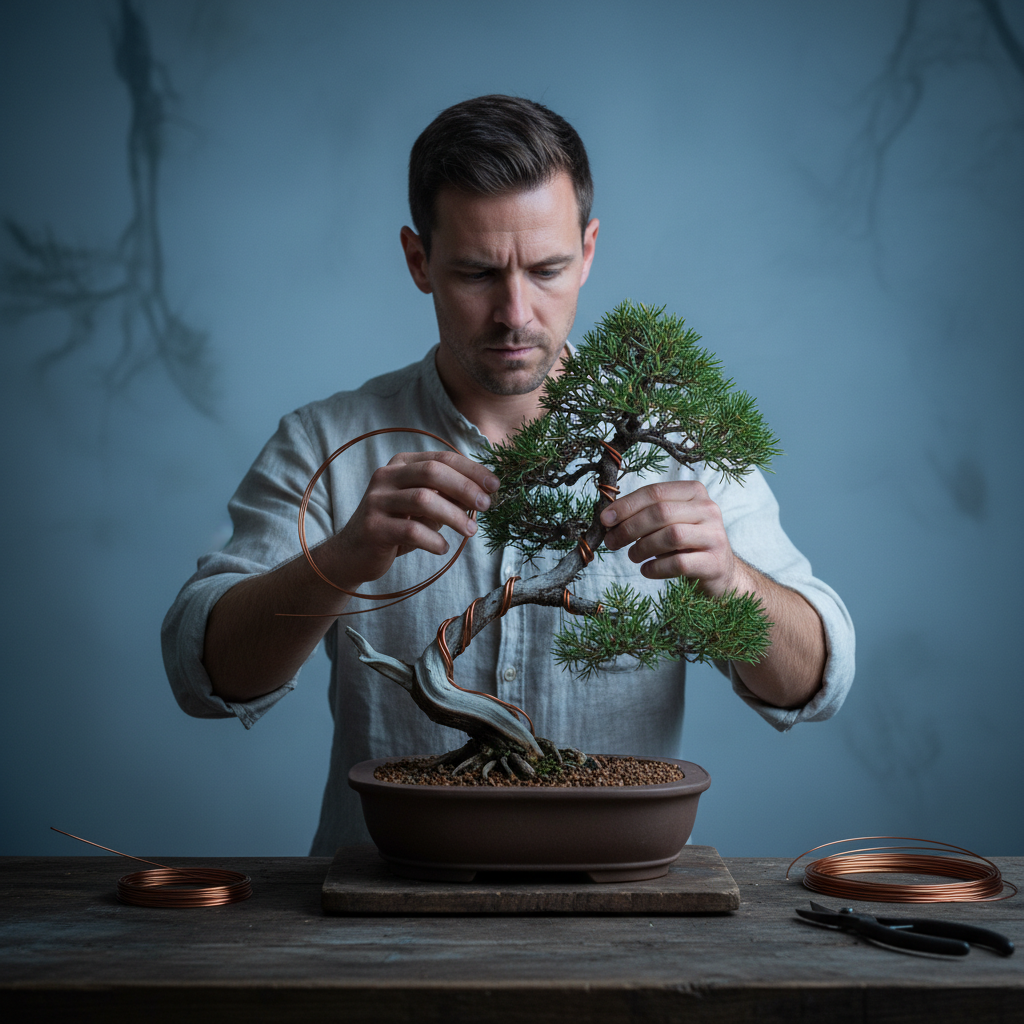
Once my Juniper had recovered, I began to focus on shaping it into a bonsai that reflected my vision. This involved more advanced techniques, such as wiring, grafting, and root pruning. Wiring is the process of wrapping branches with wire to bend them into desired shapes. Grafting is the process of joining two plants together to create a single, more desirable plant. Root pruning is the process of trimming the roots to control the tree’s growth and encourage ramification.
Wiring is a delicate art that requires patience and precision. You need to use the right type of wire, apply it properly, and monitor the tree carefully to prevent damage. I learned to use aluminum wire for younger, more flexible branches and copper wire for older, more rigid branches. I also learned to wrap the wire at a 45-degree angle, avoiding tight bends that could damage the bark.
Grafting is a more advanced technique that can be used to improve the tree’s vigor, add desirable characteristics, or repair damaged areas. I learned to graft scions (cuttings from a desired plant) onto the rootstock of my Juniper. I used a variety of grafting techniques, such as whip grafting, cleft grafting, and side veneer grafting. I also learned to protect the graft union with grafting tape and monitor it carefully to ensure successful healing.
The Importance of Root Pruning
Root pruning is an essential part of bonsai cultivation. It controls the tree’s growth, encourages ramification, and prevents root binding. I learned to root prune my Juniper every few years, carefully trimming the roots to create a compact and healthy root system. I also learned to repot the tree into fresh soil after root pruning.
Root pruning is a stressful process for the tree, so it’s important to do it at the right time of year and to provide proper aftercare. I learned to root prune my Juniper in the early spring, just before the start of the growing season. I also learned to water the tree thoroughly after root pruning and to protect it from extreme temperatures and harsh winds.
Shaping a bonsai is a continuous process that requires patience, skill, and a clear vision. It’s about working with the tree’s natural growth habits to create a miniature masterpiece that reflects your aesthetic sensibilities. It’s also about understanding the tree’s needs and providing it with the proper care to ensure its long-term health and vitality.
Beyond the Juniper: Expanding My Bonsai Horizons
The successful resurrection and shaping of my Juniper gave me the confidence to expand my bonsai horizons. I started acquiring other bonsai trees, each with its own unique challenges and rewards. I experimented with different species, such as Japanese maples, pines, and elms. I also explored different bonsai styles, such as formal upright, informal upright, slanting, and cascade.
Each species and style presented its own set of challenges. Japanese maples, for example, require careful attention to watering and fertilization to prevent leaf scorch. Pines require regular needle plucking and candle pruning to maintain their compact shape. Elms are relatively easy to care for, but they can be prone to pests and diseases.
The different bonsai styles also require different techniques and approaches. Formal upright bonsai require precise pruning and wiring to create a perfectly symmetrical shape. Informal upright bonsai allow for more naturalistic styling, but they still require careful attention to balance and proportion. Slanting bonsai require careful attention to root placement and trunk angle to create a dynamic and visually appealing composition. Cascade bonsai require specialized pots and careful pruning to create a dramatic and flowing form.
The Joy of Experimentation and Discovery
Experimenting with different species and styles has been a source of great joy and discovery. It has allowed me to expand my knowledge of bonsai cultivation, to develop my own unique aesthetic, and to connect with nature in a deeper and more meaningful way. It has also taught me the importance of adaptability and resilience.
There have been times when my experiments have failed. I’ve lost trees to pests, diseases, and improper care. But I’ve learned from my mistakes and have become a better bonsai artist as a result. I’ve also learned to appreciate the beauty and resilience of these miniature trees, and to respect the natural forces that shape them.
The world of bonsai is vast and ever-evolving. There’s always something new to learn, something new to discover, and something new to create. It’s a journey that never ends, and I’m grateful to be a part of it.
Sharing the Passion: Paying it Forward
As my bonsai skills have grown, I’ve felt a strong desire to share my passion with others. I started by mentoring a few friends who were interested in learning about bonsai. I showed them the basics of bonsai cultivation, shared my experiences, and offered guidance and encouragement. I also started giving workshops at local garden clubs and community centers. I taught people how to create their own bonsai trees, how to care for them properly, and how to appreciate the art of bonsai.
The response has been overwhelmingly positive. People are fascinated by the art of bonsai, and they’re eager to learn more. They’re also inspired by the beauty and tranquility of these miniature trees. I’ve seen firsthand how bonsai can bring joy and peace to people’s lives.
Sharing my passion for bonsai has been incredibly rewarding. It’s given me a sense of purpose and fulfillment. It’s also allowed me to connect with a community of like-minded individuals who share my love for nature and art.
The Importance of Community and Mentorship
I believe that community and mentorship are essential for the growth and development of any art form. Learning from others, sharing experiences, and supporting each other are crucial for fostering creativity and innovation. I’m grateful for the mentors who have guided me on my bonsai journey, and I’m committed to paying it forward by mentoring others.
I encourage anyone who is interested in bonsai to seek out a local bonsai club or community. There are many resources available online and in libraries, but nothing beats the experience of learning from experienced bonsai artists in person. Attending workshops, participating in exhibitions, and joining online forums are all great ways to connect with the bonsai community.
The art of bonsai is a gift, and it’s a gift that should be shared. By sharing our passion with others, we can help to preserve and promote this ancient art form for future generations.
The Legacy of a Miniature Tree
My journey with bonsai has been a transformative experience. It has taught me patience, humility, and respect for nature. It has also given me a sense of purpose and fulfillment. But perhaps the most important thing it has taught me is the legacy of a miniature tree. A bonsai is not just a plant; it’s a living work of art that can be passed down from generation to generation.
A well-cared-for bonsai can live for hundreds of years, becoming a symbol of family history and tradition. It can be a reminder of loved ones who have passed away, or a celebration of new beginnings. It can be a source of inspiration and comfort, providing a connection to nature and a sense of peace and tranquility.
I hope that my bonsai trees will continue to thrive long after I’m gone, bringing joy and beauty to those who inherit them. I also hope that my experiences and insights will inspire others to embark on their own bonsai journeys, and to discover the magic and wonder of these miniature trees.
So, what began with the near-fatal neglect of a single Juniper has blossomed into a lifelong passion, a deep connection with nature, and a legacy I hope to leave behind. It’s a reminder that even from our biggest mistakes, beauty and wisdom can grow, just like a bonsai, with patience, care, and a little bit of humility.
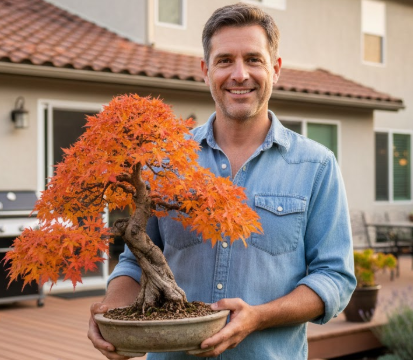
My name is Christopher Brown, I am 38 years old and I live in the United States. I am deeply passionate about the art of bonsai and have been cultivating trees for several years. What started as a simple curiosity turned into a daily practice and an important part of my life.
On this blog, I share my real experiences with bonsai — including what works, what doesn’t, and the lessons I learn along the way. I enjoy experimenting with techniques, observing the growth of each tree, and documenting the process with honesty and patience.
My goal with InfoWeHub is to help beginners feel more confident, avoid common mistakes, and discover the beauty of bonsai cultivation. If you are starting your journey or already love this art, you are welcome here.