
The Dance of Shape and Balance: My Bonsai Journey
For over three decades, I’ve immersed myself in the art of bonsai, a journey that has been as much about self-discovery as it has been about shaping trees. It’s a practice that demands patience, a keen eye, and a deep respect for the natural world. Over the years, I’ve learned that creating a truly exceptional bonsai isn’t just about technique; it’s about understanding the underlying principles of aesthetics and how they relate to the health and vitality of the tree.
In this article, I want to share some of the practical techniques I’ve found most effective for improving the shape and balance of bonsai. These are lessons learned through countless hours of observation, experimentation, and, yes, even a few mistakes along the way. I hope that by sharing my experiences, I can help you on your own bonsai journey, guiding you towards creating miniature masterpieces that reflect your unique vision and connection with nature.
Understanding the Fundamentals of Bonsai Design
Before we delve into specific techniques, it’s crucial to grasp the fundamental principles that guide bonsai design. These principles are not rigid rules, but rather guidelines that help us create aesthetically pleasing and harmonious compositions. Think of them as the notes in a musical scale – understanding them allows you to create beautiful melodies, but mastery comes from knowing when to break the rules and improvise.
One of the most important principles is balance. A balanced bonsai feels stable and grounded, with a sense of visual equilibrium. This doesn’t necessarily mean perfect symmetry; in fact, asymmetrical designs are often more dynamic and interesting. However, the weight of the branches, trunk, and foliage should be distributed in a way that creates a sense of harmony.
Another key principle is movement. A good bonsai should have a sense of flow and direction, guiding the viewer’s eye through the composition. This can be achieved through the angle of the trunk, the arrangement of the branches, and the placement of the foliage. We aim to mimic the natural growth patterns of trees in the wild, but with a touch of artistic interpretation.
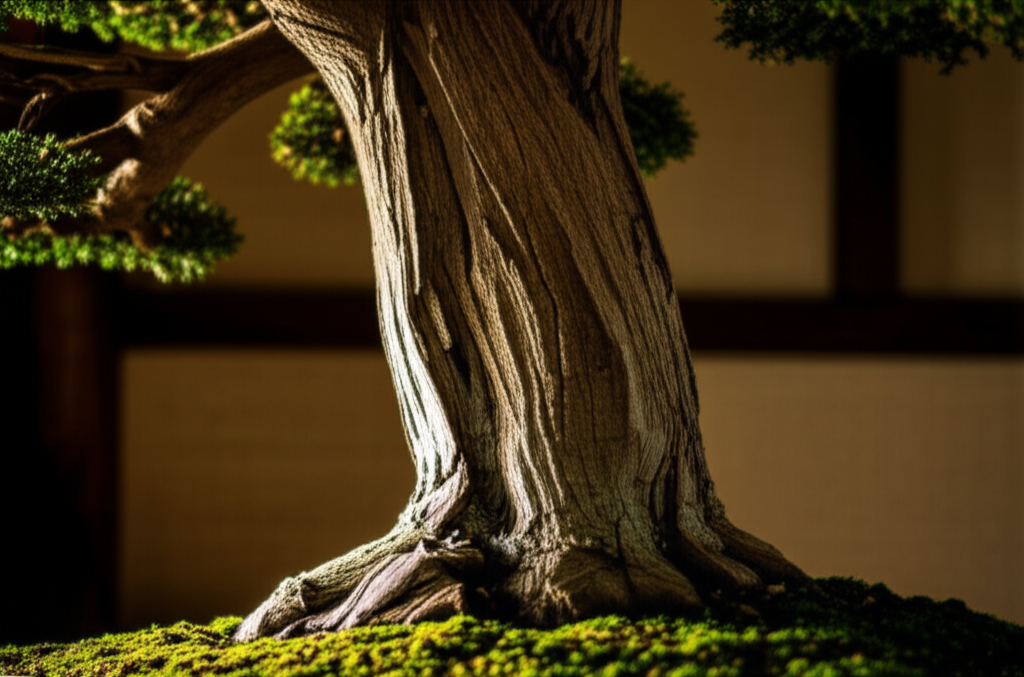
Taper is also essential. The trunk of a bonsai should gradually taper from the base to the apex, creating a sense of age and strength. This can be achieved through careful pruning and shaping over time. A sudden, abrupt change in the trunk’s thickness can disrupt the visual flow and make the tree look unnatural.
Finally, branch placement is crucial. Branches should be arranged in a way that creates negative space and allows light to penetrate the inner foliage. This not only improves the tree’s health but also adds depth and dimension to the composition. The branches should also alternate along the trunk, rather than growing directly opposite each other, which can create an unnatural look.
Practical Techniques for Shaping Bonsai
Now that we’ve covered the fundamental principles, let’s move on to some practical techniques for shaping bonsai. These techniques are the tools of our trade, allowing us to manipulate the growth of the tree and guide it towards our desired form.
Wiring: Guiding the Growth
Wiring is one of the most fundamental techniques in bonsai shaping. It involves wrapping branches with wire to hold them in a desired position, effectively “training” them to grow in that direction. I remember my first attempt at wiring – the wire was too tight, I damaged the bark, and the branch eventually died. It was a painful lesson, but it taught me the importance of patience and precision.
The key to successful wiring is to use the correct type and gauge of wire. Copper wire is generally preferred for deciduous trees, as it’s more pliable and easier to bend. Aluminum wire is often used for conifers, as it’s less likely to stain the bark. The gauge of the wire should be appropriate for the thickness of the branch – too thin, and it won’t hold its shape; too thick, and it can damage the bark.
When wiring, start at the base of the branch and wrap the wire around it in a spiral pattern, maintaining a consistent angle and tension. Avoid crossing the wire over itself, as this can create pressure points and damage the bark. Once the branch is wired, you can gently bend it into the desired position. Be careful not to force it, as this can cause it to break.
It’s important to monitor the wire closely and remove it before it starts to bite into the bark. This can happen surprisingly quickly, especially during periods of rapid growth. Once the branch has held its new position for a few months, it should be safe to remove the wire. I’ve found that using wire cutters specifically designed for bonsai work helps to avoid damaging the bark during removal.
Pruning: Sculpting the Silhouette
Pruning is another essential technique for shaping bonsai. It involves selectively removing branches and foliage to control the tree’s growth, improve its structure, and enhance its overall appearance. I often think of pruning as sculpting – we’re taking away what we don’t need to reveal the beauty that lies beneath.
There are two main types of pruning: structural pruning and maintenance pruning. Structural pruning is used to establish the basic shape of the tree, removing unwanted branches and creating a balanced silhouette. Maintenance pruning is used to maintain the tree’s shape, control its growth, and encourage new foliage.
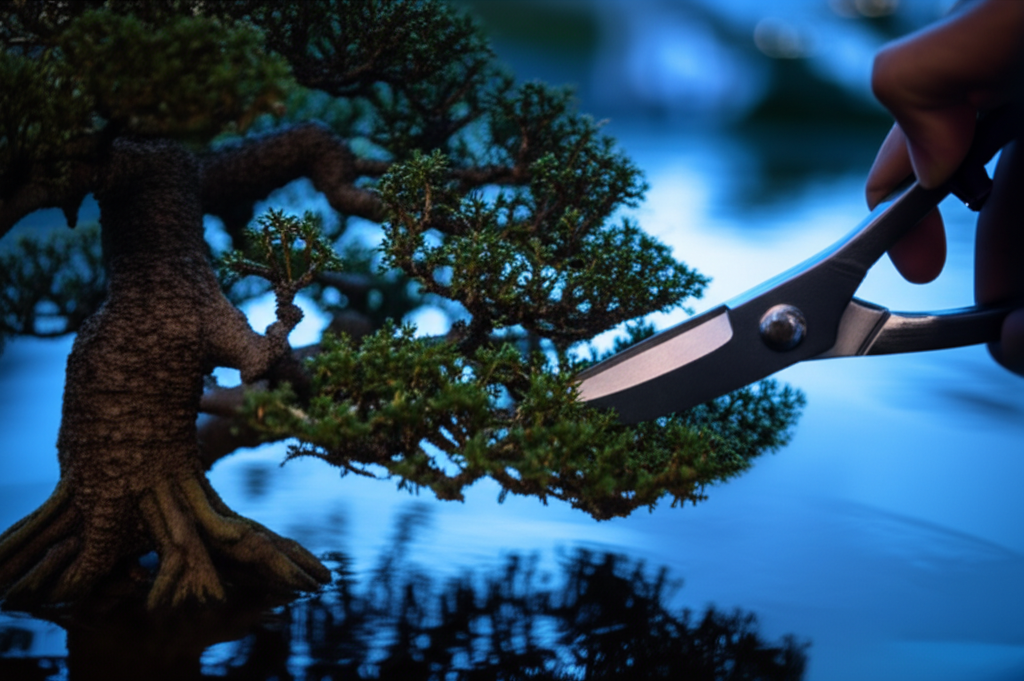
When pruning, it’s important to make clean cuts close to the trunk or branch, avoiding leaving stubs. Stubs can rot and create entry points for pests and diseases. I always use sharp, high-quality pruning shears to ensure clean cuts and minimize damage to the tree.
One of the most important aspects of pruning is understanding the tree’s growth habits. Some trees, like Japanese maples, tend to produce long, leggy growth, while others, like junipers, tend to be more compact. Knowing how your tree grows will help you to prune it effectively and maintain its desired shape.
Over-pruning can weaken the tree and make it more susceptible to pests and diseases. It’s always better to prune conservatively and gradually, rather than trying to achieve the desired shape all at once. Remember, patience is a virtue in bonsai.
Defoliation: Refining the Foliage
Defoliation is a technique that involves removing all or part of the tree’s leaves. This can be done to reduce the size of the leaves, improve the tree’s ramification (branching), and enhance its autumn color. Defoliation is a more advanced technique and should only be performed on healthy, vigorous trees.
I remember the first time I tried defoliation on a Japanese maple. I was nervous about stressing the tree, but the results were remarkable. The new leaves that emerged were smaller, more densely packed, and had a richer color. It was like giving the tree a fresh start.
When defoliating, it’s important to leave the petioles (leaf stems) intact. These petioles will eventually fall off on their own, and new buds will form at their base. Removing the petioles can damage the buds and prevent new growth.
Defoliation is typically performed in late spring or early summer, after the first flush of growth has hardened off. Avoid defoliating trees that are stressed or weakened, as this can further compromise their health. It’s also important to provide the tree with adequate water and nutrients after defoliation to support new growth.
Achieving Balance: The Art of Negative Space
Creating balance in bonsai isn’t just about the physical arrangement of branches and foliage; it’s also about the interplay of positive and negative space. Negative space is the empty space around and between the branches, and it plays a crucial role in defining the tree’s shape and creating a sense of depth and dimension.
Think of a sculpture – the empty space around the solid form is just as important as the form itself. It helps to define the shape, create a sense of movement, and draw the viewer’s eye to specific areas. The same principle applies to bonsai.
By carefully pruning and arranging the branches, we can create negative space that enhances the tree’s overall composition. Negative space can be used to create a sense of airiness and lightness, or to emphasize the strength and solidity of the trunk. It can also be used to guide the viewer’s eye through the composition, highlighting specific features and creating a sense of visual flow.
One of the best ways to create negative space is to remove branches that are growing in unwanted directions or that are crowding the inner foliage. This will not only improve the tree’s structure but also allow more light to penetrate the inner foliage, promoting healthy growth.
Another way to create negative space is to use wiring to position branches in a way that creates open areas around them. This can be particularly effective for creating a sense of depth and dimension in the composition.
I often find myself stepping back from my bonsai and squinting my eyes to get a better sense of the negative space. This helps me to see the overall shape of the tree and identify areas that need to be adjusted. It’s a simple technique, but it can make a big difference in the final result.
Common Mistakes and How to Avoid Them
Over the years, I’ve made my fair share of mistakes in bonsai shaping. It’s a learning process, and mistakes are inevitable. However, by learning from my own experiences and the experiences of others, I’ve been able to avoid some of the most common pitfalls.
One of the most common mistakes is over-watering. Bonsai are often grown in small pots, which can dry out quickly. However, over-watering can be just as damaging, leading to root rot and other problems. It’s important to water bonsai only when the soil is dry to the touch, and to ensure that the pot has adequate drainage.
Another common mistake is using the wrong type of soil. Bonsai soil should be well-draining and aerated, allowing the roots to breathe and preventing waterlogging. Regular potting soil is often too heavy and dense for bonsai, and can lead to root problems. I always use a specially formulated bonsai soil mix that contains ingredients like akadama, pumice, and lava rock.
Failing to protect bonsai from extreme temperatures is another common mistake. Bonsai are more susceptible to temperature fluctuations than trees grown in the ground, and can be damaged by frost, heat, or strong winds. It’s important to provide bonsai with adequate protection during periods of extreme weather, such as bringing them indoors or placing them in a sheltered location.
Ignoring pests and diseases is also a common mistake. Bonsai are susceptible to a variety of pests and diseases, which can weaken the tree and even kill it. It’s important to regularly inspect bonsai for signs of pests or diseases, and to take appropriate action to control them. I prefer to use organic pest control methods whenever possible, to avoid harming beneficial insects and the environment.
Finally, one of the biggest mistakes is rushing the process. Bonsai is an art that requires patience and dedication. It takes years, even decades, to create a truly exceptional bonsai. Don’t try to rush the process, and enjoy the journey. Remember, the goal is not just to create a beautiful tree, but to develop a deeper connection with nature and with yourself.

Beyond Technique: Cultivating Patience and Observation
While mastering the techniques of wiring, pruning, and defoliation is essential, the true art of bonsai lies in cultivating patience and observation. It’s about learning to see the tree not just as a collection of branches and leaves, but as a living organism with its own unique character and needs.
I’ve spent countless hours simply observing my bonsai, watching how they respond to different conditions, noticing subtle changes in their growth patterns, and learning to anticipate their needs. This process of observation has taught me more than any book or workshop ever could.
Patience is also crucial. Bonsai is not a quick fix; it’s a long-term commitment. It takes years of careful shaping and nurturing to create a truly exceptional bonsai. There will be setbacks along the way – branches that die, leaves that turn brown, designs that don’t quite work out. But it’s important to persevere, to learn from your mistakes, and to keep moving forward.
I often find myself drawing parallels between bonsai and life. Both require patience, perseverance, and a willingness to adapt to changing circumstances. Both involve periods of growth and periods of dormancy. And both offer the opportunity to create something beautiful and meaningful out of the raw materials that we are given.
So, as you embark on your own bonsai journey, remember to cultivate patience and observation. Take the time to truly understand your trees, to learn their individual needs, and to appreciate their unique beauty. And don’t be afraid to make mistakes – they are an essential part of the learning process. With patience, dedication, and a little bit of luck, you’ll be well on your way to creating bonsai that are both beautiful and inspiring.

Ultimately, the goal of bonsai is not just to create a miniature tree, but to create a work of art that reflects your own unique vision and connection with nature. It’s a journey of self-discovery, a process of learning to see the beauty in the small things, and a reminder that even the most humble of plants can be transformed into something extraordinary with patience, dedication, and a little bit of love. And that, to me, is the true magic of bonsai.
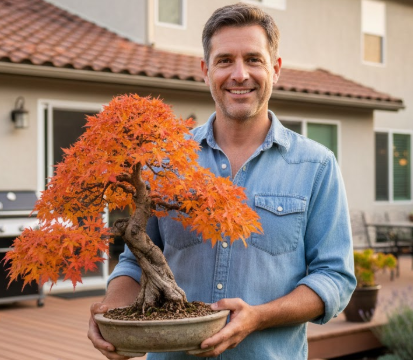
My name is Christopher Brown, I am 38 years old and I live in the United States. I am deeply passionate about the art of bonsai and have been cultivating trees for several years. What started as a simple curiosity turned into a daily practice and an important part of my life.
On this blog, I share my real experiences with bonsai — including what works, what doesn’t, and the lessons I learn along the way. I enjoy experimenting with techniques, observing the growth of each tree, and documenting the process with honesty and patience.
My goal with InfoWeHub is to help beginners feel more confident, avoid common mistakes, and discover the beauty of bonsai cultivation. If you are starting your journey or already love this art, you are welcome here.