
While the pour-over is celebrated for its clarity, the French Press is the king of texture. Patented in its modern form by Italian designer Attilio Calimani in 1929, the French Press (or cafetière) is a full-immersion brewer. This means that for the entire duration of the brew, every single coffee ground is in constant contact with the water. There is no paper filter to trap the Delicate Oils and Lipids Found in High-Altitude Beans , resulting in a cup with unparalleled mouthfeel and weight.
However, many people struggle with a “muddy” or “bitter” French Press. This is not a failure of the method, but a failure of technique. To master this device, you must understand the chemistry of extraction and why Water Mineralogy is More Critical in Immersion than in any other Method .
The Chemistry of Immersion: Why It Differs from Drip
In a drip or pour-over system, fresh water is constantly being introduced to the grounds, which maintains a high “concentration gradient” and speeds up extraction. In a French Press, the water stays the same. As the water becomes saturated with coffee solubles, its ability to extract more flavors slows down.
This “lazy” extraction is actually a benefit. It is much harder to over-extract a French Press than a V60. This slow, gentle process is ideal for Evaluating the Science of Aftertaste in Natural Processed Brazilian Coffees , as it coaxes out the heavy chocolate and nutty notes without the sharp, aggressive acidity often found in high-pressure methods.
The Variable of Grind: The Coarse Paradox
The most common advice for French Press is to use a “coarse” grind. While this is generally true to prevent the grounds from passing through the metal mesh, a grind that is too coarse will result in a watery, underextracted cup.
To achieve the perfect balance, you must Ensure Your Burr Grinder is Calibrated to a Uniformity Similar to Sea Salt . If your grinder produces too many “fines” (microscopic dust), they will pass through the filter and continue to extract in your cup, turning your last sip into a bitter, silty experience. This is why Regular Grinder Maintenance and Cleaning is non-negotiable for French Press enthusiasts.
The James Hoffmann Technique: A Modern Revolution
In recent years, the specialty coffee community has moved away from the “plunge and pour” method toward a more refined technique popularized by world champion James Hoffmann.
-
The Brew: Mix coffee and water and wait 4 minutes.
-
The Break: Stir the top “crust” so the grounds sink to the bottom.
-
The Wait: Instead of plunging immediately, wait another 5 to 7 minutes. This allows the silt to settle naturally at the bottom of the beaker.
-
The Plunge: Lower the filter only until it touches the surface of the liquid. Do not press down into the grounds.
By using this method, you are Applying Professional Cupping Rigor to Your Home Brew , resulting in a cup that has the body of a French Press but the clarity of a filter coffee.
Water Quality: The 98% Rule
Because the water sits with the coffee for nearly 10 minutes, the Mineral Balance of Your Water is paramount. If your water is too hard, the extended contact time will pull out harsh, alkaline flavors. If it is too soft, the coffee will taste hollow.
For the best results, use water with a high magnesium content to Unlock the Vibrant Fruit Notes of African Coffees . Magnesium acts as a bridge, pulling the complex sugars out of the beans during the long immersion.
Temperature Stability: The Thermal Mass Factor
A French Press is usually made of glass or stainless steel. Glass is a poor insulator; it loses heat rapidly to the surrounding air. If the temperature drops below $85^{\circ}C$ during the first four minutes, you will fail to extract the Complex Phosphoric Acids found in High-Altitude Terroirs .
-
Pro Tip: Always pre-heat your French Press with boiling water before adding the coffee grounds. This ensures the “thermal mass” of the brewer doesn’t steal the energy needed for extraction. Double-walled stainless steel presses are even better for maintaining the heat required for a Precise Technical Extraction.
Maintenance: The Hidden Oils
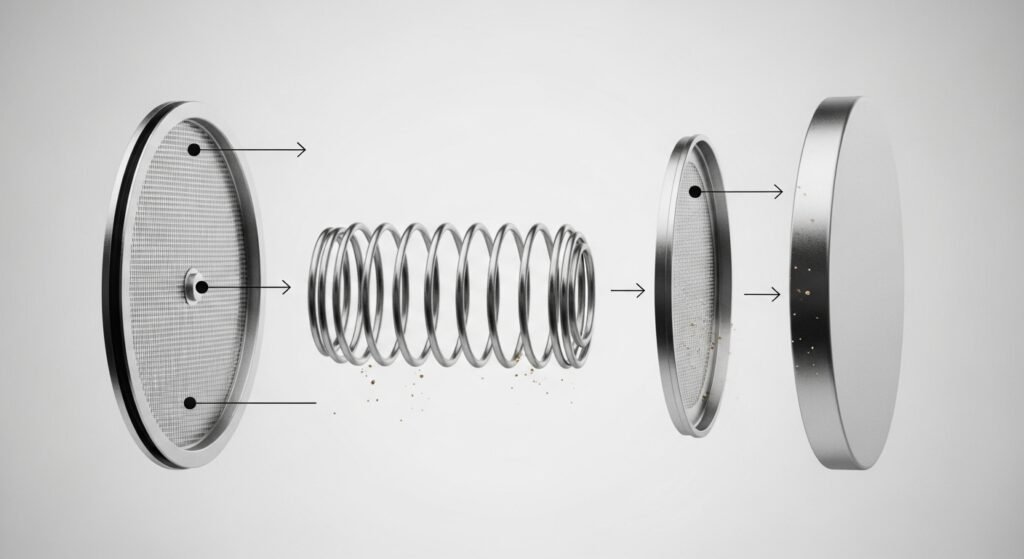
The French Press is the most difficult brewer to keep clean. The metal mesh filter is composed of multiple layers where old coffee oils can easily hide. If you do not Disassemble the Filter Assembly and Clean it with Coffee Detergent Regularly , these oils will go rancid.
Rancid oil has a very specific “fishy” or “stale” aroma that will ruin even the most expensive Modern Carajillo or Specialty Beverage . A clean press is the difference between tasting the “terroir” and tasting last week’s breakfast.
Terroir Selection for Immersion
While any coffee can be brewed in a French Press, some origins truly shine:
-
Sumatran and Earthy Profiles: The heavy body of the French Press complements the forest-floor and spicy notes of Indonesian coffees.
-
Dark Roast Blends: If you enjoy traditional “bold” coffee, the French Press maximizes the caramelization and smoky sweetness of these roasts.
-
Natural Processed Ethiopians: The immersion method highlights the “creamy” blueberry notes of a Natural Sidamo or Yirgacheffe in a way that paper filters often strip away.
Conclusion: The Ultimate Test of Patience
The French Press teaches us that speed is not always the friend of flavor. By Applying Scientific Principles to This Century-Old Method , we transform a simple pot into a high-precision extraction tool. It invites us to stop rushing and wait for the laws of physics to settle the grounds and clarify the liquid.
Respect the grind, control your temperature, and keep your equipment spotless. If you do, the French Press will reward you with a cup that is rich, honest, and deeply satisfying—a true masterclass in the power of full immersion.

Brown Christopher is 47 years old and has been passionate about coffee since he was 15. For more than three decades, he has explored coffee culture, brewing methods, and the flavors behind every cup. Through this blog, he shares simple tips and knowledge to help beginners better understand and enjoy coffee in their daily lives. ☕