
In the pantheon of coffee equipment, very few devices have earned a permanent place in the Museum of Modern Art (MoMA). The Chemex, with its hourglass figure, heat-resistant glass, and iconic wooden collar, is the exception. Invented in 1941 by the eccentric chemist Dr. Peter Schlumbohm, the Chemex was designed to apply the principles of laboratory filtration to the kitchen counter. It wasn’t just about making coffee; it was about achieving absolute chemical purity.
The Chemex is often praised for its design, but its true genius lies in its physics. Unlike other brewers, it prioritizes “clarity” above all else. When you are Evaluating the Lingering Science of Aftertaste in High-Altitude Beans , the Chemex acts as a high-definition lens, stripping away the “noise” of oils and fines to reveal the crystalline acidity and delicate sugars hidden within.
The Secret is in the Paper: The Lab-Grade Filter
The most defining characteristic of the Chemex isn’t actually the glass—it’s the paper. Chemex filters are 20% to 30% heavier than standard coffee filters. They are made of a proprietary lab-grade fiber that is designed to trap even the smallest “fines” (microscopic coffee dust) and the majority of the bean’s natural oils (cafestol).
This heavy filtration process radically alters the mouthfeel of the coffee. While an Espresso Shot Calibrated for Intensity and Body is dense and syrupy, a Chemex brew is light, elegant, and tea-like. This makes it the ideal tool for Identifying the Delicate Jasmine and Bergamot Notes of a Washed Ethiopian Heirloom . If you want to taste the “origin character” in its purest form, the Chemex is the undisputed champion.
Temperature Stability and Thermal Shock
Because the Chemex is made of non-porous Borosilicate glass, it does not absorb odors or chemical residues. However, glass is also sensitive to temperature. If you pour boiling water into a cold Chemex, the glass can undergo thermal stress, and more importantly, the water temperature will drop too rapidly, leading to under-extraction.
Professional baristas always “pre-heat” the vessel. By pouring hot water through the filter and into the glass before adding the grounds, you achieve two things: you rinse away the “paper taste” and you prime the glass to maintain a stable brewing temperature. This stability is crucial when Brewing High-Altitude Beans That Require High Kinetic Energy to Extract Minerals .
[Image showing the thick, triple-folded side of a Chemex filter and how it prevents air-locks during the pouring process]
The Pouring Technique: Patience and Precision
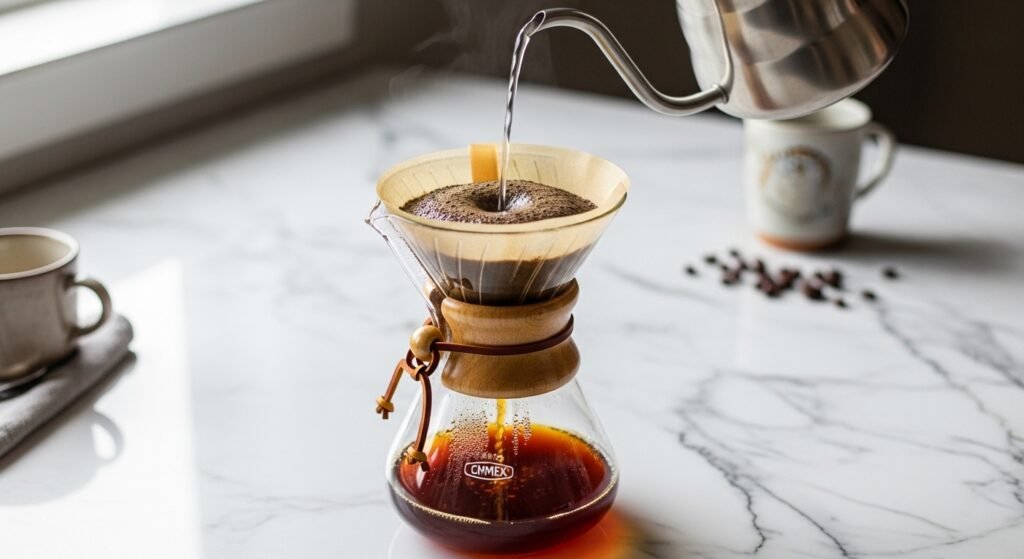
The Chemex is not a “set it and forget it” device. It requires an active engagement with the water. Because the filter is so thick, the water takes longer to pass through the grounds. If you pour all the water at once, you will create a “high bed” where the water bypasses the coffee, leading to a thin and watery cup.
Instead, use a “pulse-pour” method:
-
The Bloom: Pour twice the weight of the coffee in water and wait 45 seconds. This allows the Carbon Dioxide Trapped in Freshly Roasted Beans to escape, making room for the water to enter the cell structure.
-
The Concentric Circles: Pour in slow, steady spirals, avoiding the very edges of the filter.
-
The Draw-Down: Monitor the time. A perfect Chemex brew should finish between 4 and 5 minutes. If it’s taking 7 minutes, your grind is too fine; if it’s finishing in 3, your grind is too coarse.
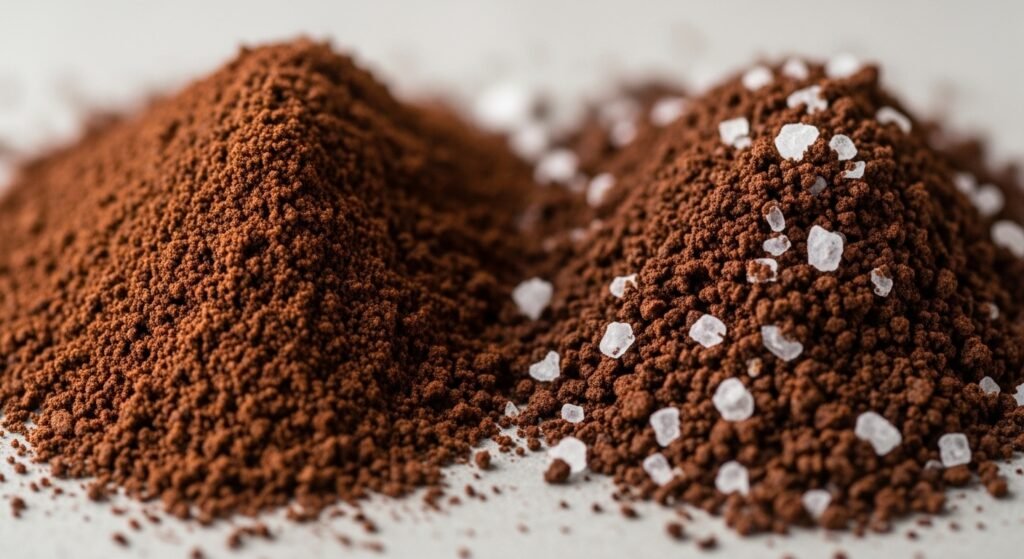
The Grind: Finding the “Coarse Kosher Salt” Sweet Spot
Because the Chemex filter is so restrictive, you must use a coarser grind than you would for a V60 or a standard drip machine. If you grind too fine, the filter will “clog,” and the water will sit on top of the grounds for too long, resulting in a bitter, over-extracted aftertaste.
This is why Maintaining a High-Quality Burr Grinder and Ensuring It Is Free of Old Oil Residue is non-negotiable. If your grinder produces too many “fines,” they will migrate to the bottom of the Chemex filter and stop the flow entirely. Consistency in particle size is the only way to achieve the clarity that the Chemex promises.
Oxygen and Decanting: The Final Stage
One of the hidden benefits of the Chemex’s hourglass shape is aeration. As the coffee drips into the bottom chamber, it falls through the air, slightly oxidizing and “opening up,” much like a fine red wine in a decanter.
Before serving, you should swirl the Chemex to “homogenize” the brew. The first drops that fall into the vessel are the most concentrated and acidic, while the last drops are the most bitter. Swirling ensures that every cup has the same Balanced Mineral Profile Provided by Your Filtered Water Supply .
Why the Chemex is the Best for Large Groups
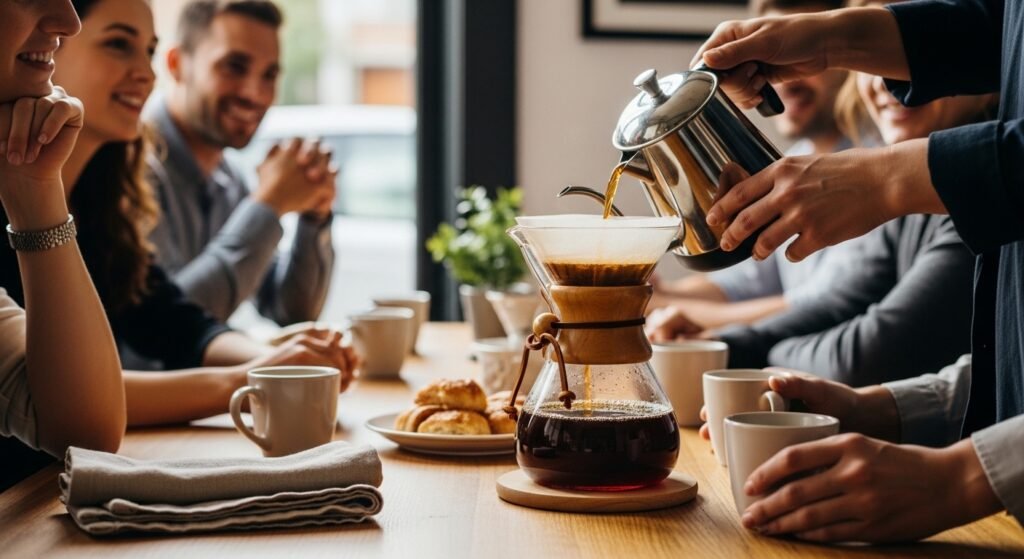
Unlike the AeroPress or the V60, which are typically single-serving brewers, the Chemex comes in sizes that can brew up to 10 cups at once. However, brewing 1.5 liters of coffee requires even more attention to Water Quality and Mineral Saturation . Large volumes of water can quickly become over-buffered by bicarbonates, which can kill the vibrant acidity of the beans.
Conclusion: The Laboratory of the Home
The Chemex remains a favorite of the specialty coffee community because it forces us to slow down. It is a visual and sensory reminder that coffee is a chemical extraction—a delicate balance of temperature, time, and surface area.
When you master the Chemex, you aren’t just making a drink; you are creating a clarity of flavor that is impossible to achieve with any other method. By Applying This Level of Technical Rigor to Your Morning Routine , you turn your kitchen into a laboratory of taste. You move beyond the “coffee” category and enter the realm of pure sensory exploration.
The next time you want to truly “see” a coffee, reach for the Chemex. Let the thick paper do its work, let the non-porous glass preserve the purity, and taste the difference that geometry and clarity can make.

Brown Christopher is 47 years old and has been passionate about coffee since he was 15. For more than three decades, he has explored coffee culture, brewing methods, and the flavors behind every cup. Through this blog, he shares simple tips and knowledge to help beginners better understand and enjoy coffee in their daily lives. ☕