
In my three decades in the coffee industry, I have seen hundreds of gadgets come and go. I’ve seen the rise of “smart” scales that talk to your phone and espresso machines that require a software engineering degree to operate. But if you walk into my private kitchen, you will find a strange, glass contraption that looks more like a 19th-century chemistry set than a coffee maker. It is the Siphon, also known as the Vacuum Pot.
While the world has largely moved toward the convenience of the Geometry of Flavor: Why I Still Prefer the V60 After 30 Years, the Siphon remains the most theatrical and, arguably, the most precise way to brew a cup of coffee. As someone who witnessed The Third Wave Defined: My Witness Account of the Specialty Shift, I remember when every serious “coffee bar” had a row of glowing halogen burners and glass globes. Today, the Siphon is becoming a lost art. But is it just a show, or does it offer something that modern drippers simply cannot match?
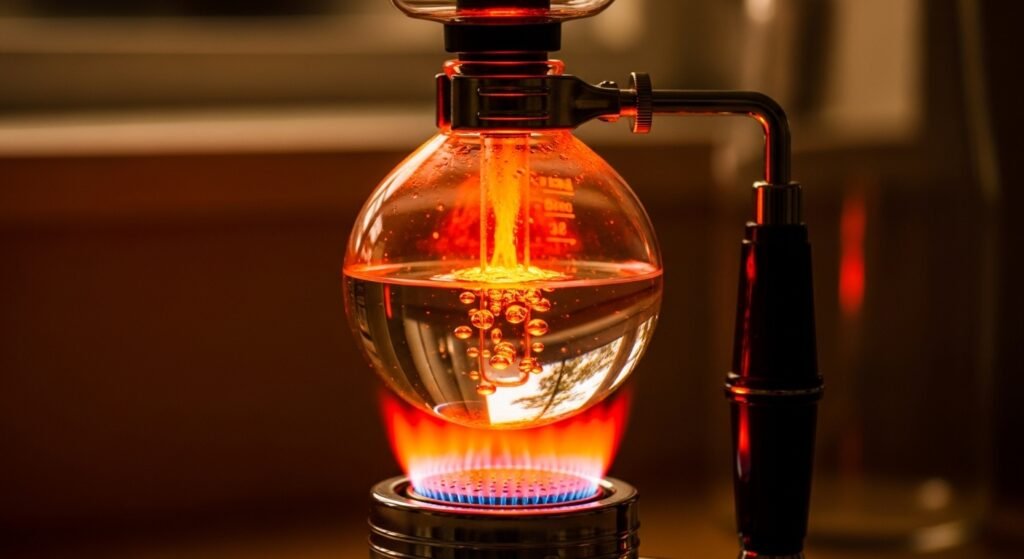
The Physics of the Vacuum: A Brewing Masterclass
The Siphon is a full-immersion brewing method, but it operates differently than a French Press. It uses vapor pressure and vacuum suction to move water through the coffee grounds.
-
The Rise: You heat water in the bottom globe. As the air and water vapor expand, they force the hot water up a glass tube into the upper chamber.
-
The Steep: The coffee grounds are added to the upper chamber. Because the heat source remains active, the water stays at a near-boiling, constant temperature.
-
The Draw-Down: When you remove the heat, the air in the bottom globe cools and contracts, creating a powerful vacuum that “sucks” the brewed coffee through a cloth or paper filter back into the bottom.
This constant temperature is the Siphon’s “secret weapon.” In a V60 or a Chemex, the water temperature drops the moment it hits the coffee and continues to fall throughout the brew. In a Siphon, you can maintain a rock-solid $94^{\circ}C$ ($201^{\circ}F$) for the entire duration of the immersion. This lead to a level of extraction efficiency that is incredibly hard to achieve with pour-overs. For a veteran like me, this stability is the pinnacle of How to Develop a Professional Palate: A 30-Year Guide, as it allows the coffee’s sweetness to fully develop without the thermal fluctuations that often muddy the flavor.
The Flavor Profile: Total Clarity with Maximum Body
The most fascinating thing about the Siphon is its “clean” mouthfeel. Because it uses a cloth filter (traditionally), it allows more oils to pass through than a paper filter, but it traps almost all the “fines” (the silt that makes French Press coffee muddy).
The result is a cup that is vibrantly clear but feels incredibly “round” and heavy on the tongue. When I use a Siphon for Kenyan Slingshots: That Unforgettable Tomato Acidity Explained, the results are staggering. The phosphoric acidity doesn’t just “ping” the palate; it resonates. The savory tomato and blackcurrant notes are amplified by the high-temperature extraction, creating a cup that is as intense as an espresso but as clear as a tea.
However, this intensity comes at a price. The Siphon is unforgiving. If your grind size is off by a hair, the vacuum draw-down will take too long, and the coffee will over-extract, turning that beautiful acidity into a bitter, ashy mess. It is the ultimate test for any barista.
The High Cost of Beauty: Maintenance and Frustration
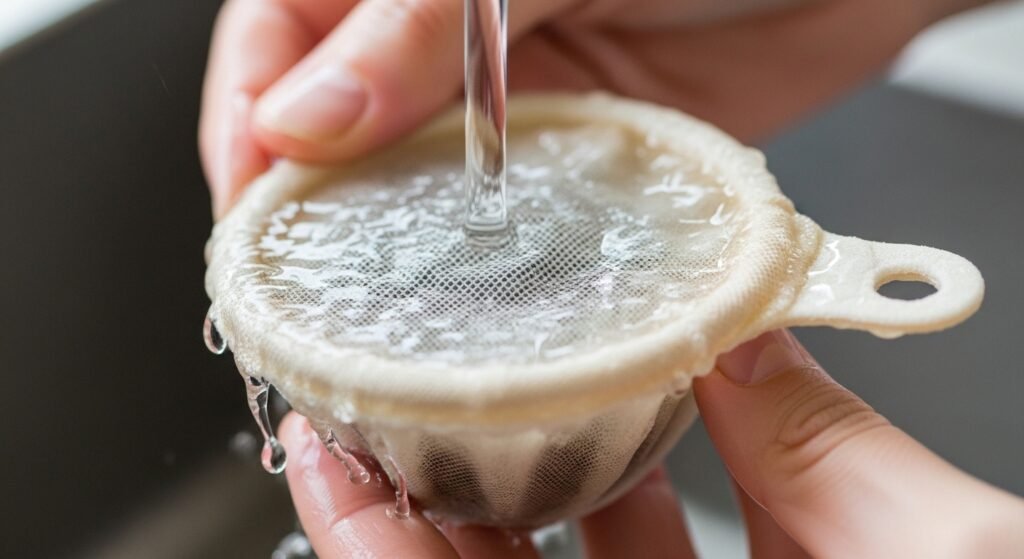
After 30 years, I’ve broken more glass Siphon globes than I care to admit. The equipment is fragile, expensive, and notoriously difficult to clean. The cloth filters, while providing the best flavor, are a nightmare to maintain. They must be kept in water in the refrigerator to prevent them from going rancid, and they need to be replaced frequently.
This is why many modern cafes have abandoned the Siphon. In a busy shop, you can’t afford to spend 8 minutes on a single cup only to have the glass shatter in the sink five minutes later. But for the home enthusiast, these “flaws” are actually part of the charm. Brewing a Siphon is a meditative ritual. It requires you to be present, to watch the bubbles, to smell the change in aroma as the vacuum begins its work. It is the antithesis of “instant” culture.
The Halogen Revolution: Why the Heat Source Matters
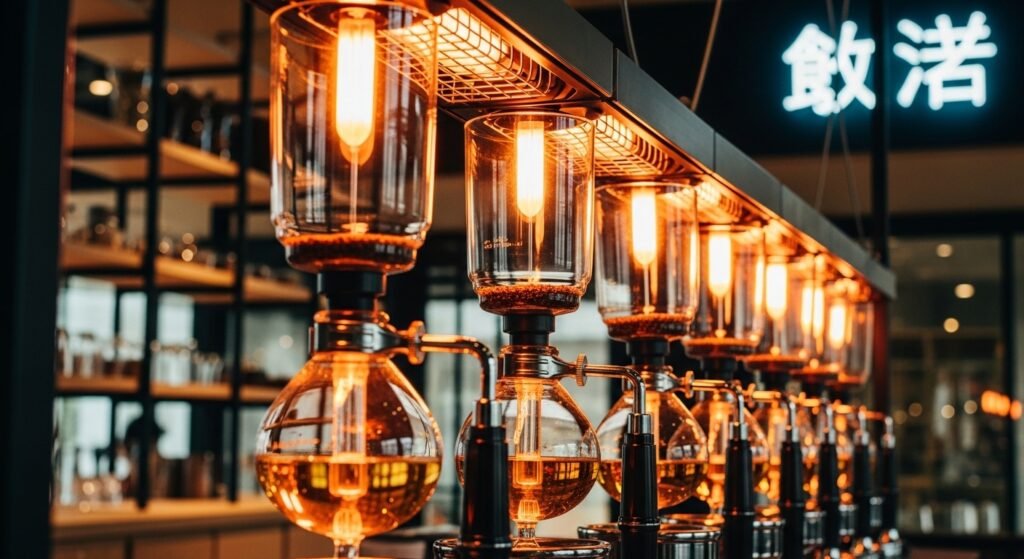
In the old days, we used alcohol lamps—flickering blue flames that were hard to control and smelled like a hospital. The modern Siphon experience changed when the Japanese company Hario introduced the Halogen Beam Heater.
These red glowing lamps allow you to dial in the heat with a knob, giving you total control over the “bubbling” in the upper chamber. It turned the Siphon from a dangerous experiment into a professional tool. If you are serious about this method, don’t waste your time with spirit burners. Invest in a beam heater. It is the bridge between 19th-century physics and 21st-century Equipment and Accessories: Invest in the Grinder, Not the Machine.
Why it Still Matters in 2026
So, is the Siphon worth the effort in an age of automated precision? My answer is a resounding yes, but with a caveat: it is for the moments when you want to truly experience your coffee, not just drink it.
The Siphon represents a time when we weren’t afraid of complexity. It reminds us that coffee is a science, yes, but it is also a performance. When I host a cupping or a dinner party, I always pull out the Siphon. It sparks conversation. It forces people to slow down and ask, “How does that even work?”
More importantly, it forces you to Develop a Professional Palate in a way that no other method can. Because the extraction is so efficient and the temperature so high, every flaw in your beans is exposed. It is the “truth-teller” of the coffee world. If your beans were roasted poorly or are past their prime, the Siphon will tell you in the first sip.
Final Verdict: The Soul of the Specialty Movement
As I look back on 30 years, I see the Siphon as the soul of the specialty movement. It is impractical, it is difficult, and it is beautiful. It is the embodiment of the “Third Wave” philosophy: the belief that the perfect cup of coffee is worth any amount of effort.
If you are a beginner, stick to your V60 for a while. But once you feel you have a handle on your grind size and your water quality, do yourself a favor: buy a glass vacuum pot. Put on some music, light the burner, and watch the water defy gravity. It is a reminder that in our world of shortcuts and speed, there are still some things that require our full, undivided attention. And in the end, that attention is what makes the coffee taste so damn good.

Brown Christopher is 47 years old and has been passionate about coffee since he was 15. For more than three decades, he has explored coffee culture, brewing methods, and the flavors behind every cup. Through this blog, he shares simple tips and knowledge to help beginners better understand and enjoy coffee in their daily lives. ☕