
The Allure of the Quick Fix: A Bonsai Tragedy
I’ve been working with bonsai for over thirty years. You’d think, after all that time, I’d be immune to the siren song of the internet “expert.” But pride, as they say, comes before a fall. And my fall involved a particularly lovely Japanese maple I’d been cultivating for almost a decade.
This maple, a vibrant crimson in the autumn and a delicate green in the spring, was the pride of my collection. I’d nurtured it from a sapling, carefully shaping its branches, repotting it with meticulous attention, and watering it with the unwavering dedication only a bonsai enthusiast can truly understand. It was more than just a tree; it was a living sculpture, a testament to patience and perseverance.
Then, I noticed a slight yellowing of the leaves, particularly on the lower branches. Nothing drastic, mind you, but enough to trigger the nagging anxiety that every bonsai artist knows. I started researching, consulting my trusted books, and even reaching out to some fellow bonsai enthusiasts I knew. The consensus was varied, ranging from a minor nutrient deficiency to potential root rot.
And that’s when I made my mistake. I turned to the internet. Specifically, I stumbled upon a bonsai forum where a user, self-proclaimed as a “Bonsai Master” (the red flags were waving, but I ignored them), offered a seemingly miraculous solution. A concoction of household chemicals, he claimed, would cure any ailment plaguing my maple. He presented it with such confidence, such conviction, that I, in my moment of weakness, fell for it.
Looking back, I can see how easily I was swayed. The internet promises instant gratification, quick fixes, and simple solutions to complex problems. And in the world of bonsai, where patience is paramount and results are often measured in years, the allure of a shortcut is undeniably tempting. But bonsai, like life itself, rarely offers shortcuts without consequences.
The Recipe for Disaster: Blind Faith and Bad Advice
The “Bonsai Master’s” formula was a bizarre mix of Epsom salts, vinegar, baking soda, and… dish soap. Yes, dish soap. He claimed the Epsom salts would provide magnesium, the vinegar would adjust the soil pH, the baking soda would act as a mild fungicide, and the dish soap would help the mixture penetrate the soil. It sounded… scientific enough, I suppose. Desperate enough, I was willing to try anything.
I meticulously followed his instructions, carefully measuring each ingredient and mixing it into a solution. The smell alone should have been a warning sign – a strange, acrid aroma that certainly didn’t resemble anything a healthy tree would appreciate. But I pressed on, blinded by the hope of a quick recovery for my beloved maple.
I applied the solution to the soil, making sure to thoroughly saturate the root ball. The forum user had even recommended a specific watering schedule, which I diligently followed. I waited, anxiously, for the miracle to occur. Instead, I witnessed a slow, agonizing decline.
The yellowing of the leaves intensified, spreading to the upper branches. The leaves began to curl and droop, losing their vibrant color. The soil, once healthy and rich, started to develop a strange, white crust. My maple, my beautiful maple, was dying.
In a panic, I reached out to the “Bonsai Master” again, describing the worsening condition of my tree. His response was dismissive, almost callous. He blamed my watering habits, my soil composition, even the weather. He offered no solutions, no apologies, just a vague suggestion to “try a stronger dose.”

The Aftermath: A Costly Lesson in Trust
I knew, deep down, that I had made a terrible mistake. I had ignored my instincts, dismissed the advice of trusted friends, and placed my faith in a faceless, nameless stranger on the internet. And the price for my folly was the life of my cherished Japanese maple.
I tried everything I could to revive it. I flushed the soil with clean water, repotted it in fresh bonsai mix, and even pruned away the most severely damaged branches. But it was too late. The damage was irreversible. Within a few weeks, my maple was gone, leaving behind an empty pot and a profound sense of regret.
The experience was devastating. I felt a deep sense of loss, not just for the tree itself, but for the years of effort and dedication I had invested in it. I also felt foolish, betrayed by my own desperation and naiveté. How could I, a seasoned bonsai artist, have fallen for such an obvious scam?
The answer, I realized, was simple: I had allowed the allure of the quick fix to cloud my judgment. I had prioritized speed and convenience over sound horticultural principles. And I had forgotten the most important lesson of bonsai: that patience, observation, and respect for nature are the keys to success.
Rebuilding Trust: Returning to the Fundamentals
After the loss of my maple, I took some time to reflect on my mistakes. I realized that I had become too complacent, too reliant on external sources of information. I had forgotten the importance of trusting my own instincts and relying on the knowledge I had accumulated over the years.
I decided to go back to the fundamentals, to revisit the principles that had guided me in my early years of bonsai. I reread my favorite books, attended workshops led by experienced instructors, and spent countless hours observing and caring for my remaining trees.
I also resolved to be more skeptical of information I found online. I learned to critically evaluate sources, to look for evidence-based advice, and to be wary of anyone offering miracle cures or instant solutions. I realized that the internet, while a valuable resource, can also be a breeding ground for misinformation and scams.
Most importantly, I learned to trust my own intuition. I realized that after thirty years of working with bonsai, I had developed a deep understanding of the needs of my trees. I knew when something was wrong, and I knew how to respond. I just needed to have the confidence to trust my own judgment.
The Slow Road to Recovery: A New Beginning
The loss of my Japanese maple was a painful experience, but it was also a valuable lesson. It taught me the importance of patience, skepticism, and self-reliance. It reminded me that bonsai is not about quick fixes or instant gratification, but about long-term commitment and a deep connection with nature.
I eventually replaced the maple with a new sapling, a different variety this time – a Trident maple. I approached its cultivation with renewed dedication, applying the lessons I had learned from my previous mistake. I focused on creating a healthy root system, providing the right nutrients, and carefully shaping its branches. I didn’t rush the process, and I didn’t expect miracles. I simply nurtured the tree, patiently waiting for it to grow and mature.
Years later, that Trident maple is now a thriving bonsai, a testament to the power of patience and perseverance. It’s a reminder that even in the face of adversity, it’s always possible to learn from our mistakes and start anew. It also reminds me to be very, very careful about taking advice from strangers on the internet.

The Dangers of the Echo Chamber: Seeking Diverse Perspectives
One of the biggest problems with online forums and social media groups is the potential for echo chambers. People tend to gravitate towards groups that share their existing beliefs, reinforcing those beliefs and making them less likely to consider alternative perspectives.
This can be particularly dangerous in the world of bonsai, where there are many different schools of thought and techniques. If you only listen to one group of people, you may miss out on valuable information and limit your growth as a bonsai artist.
I learned this lesson the hard way. By relying solely on the advice of the “Bonsai Master” on the forum, I had effectively created an echo chamber for myself. I had shut out other perspectives and become convinced that his methods were the only way to save my tree. This ultimately led to its demise.
To avoid falling into this trap again, I made a conscious effort to seek out diverse perspectives. I joined multiple bonsai clubs, attended workshops led by instructors with different backgrounds, and read books and articles from a variety of sources. I also made a point of engaging in respectful discussions with people who held different opinions than my own.
This exposure to different viewpoints broadened my understanding of bonsai and helped me to become a more well-rounded artist. I learned that there is no single “right” way to do things, and that the best approach often depends on the specific tree, the environment, and the individual artist.
The Value of Mentorship: Learning from Experienced Hands
While online resources can be helpful, there’s no substitute for learning from an experienced mentor. A mentor can provide personalized guidance, share their knowledge and wisdom, and help you to avoid common mistakes.
Finding a good mentor can be challenging, but it’s well worth the effort. Look for someone who has a proven track record of success, who is willing to share their knowledge, and who is patient and supportive. Attend local bonsai club meetings and workshops, and ask around. You might be surprised at how many experienced bonsai artists are willing to take on mentees.
I was fortunate enough to find a mentor early in my bonsai journey, a retired nurseryman named Mr. Tanaka. He taught me the fundamentals of bonsai, from pruning and wiring to repotting and watering. He also shared his philosophy of bonsai, emphasizing the importance of patience, observation, and respect for nature. His guidance was invaluable, and I credit him with much of my success.
Even after all these years, I still occasionally reach out to Mr. Tanaka for advice. His insights are always helpful, and his encouragement is always appreciated. A good mentor can be a lifelong resource, providing support and guidance throughout your bonsai journey.

The Importance of Observation: Letting the Tree Speak
One of the most important lessons I’ve learned about bonsai is the importance of observation. Bonsai trees are living organisms, and they are constantly communicating their needs through their appearance. By carefully observing your trees, you can learn to recognize the subtle signs of stress, disease, or nutrient deficiencies.
For example, a slight yellowing of the leaves might indicate a nutrient deficiency, while drooping leaves might suggest overwatering or underwatering. By paying attention to these subtle cues, you can take corrective action before the problem becomes serious.
I learned this lesson the hard way with my Japanese maple. I was so focused on finding a quick fix that I failed to notice the subtle signs of decline until it was too late. If I had been more observant, I might have been able to identify the problem earlier and take steps to save the tree.
To improve your observation skills, spend time each day examining your trees. Look closely at the leaves, branches, trunk, and roots. Pay attention to the color, texture, and shape of each part of the tree. Also, be aware of the environmental conditions, such as temperature, humidity, and sunlight. By combining careful observation with a knowledge of bonsai principles, you can become a more skilled and effective bonsai artist.
Beyond the Internet: Trusting Your Own Hands
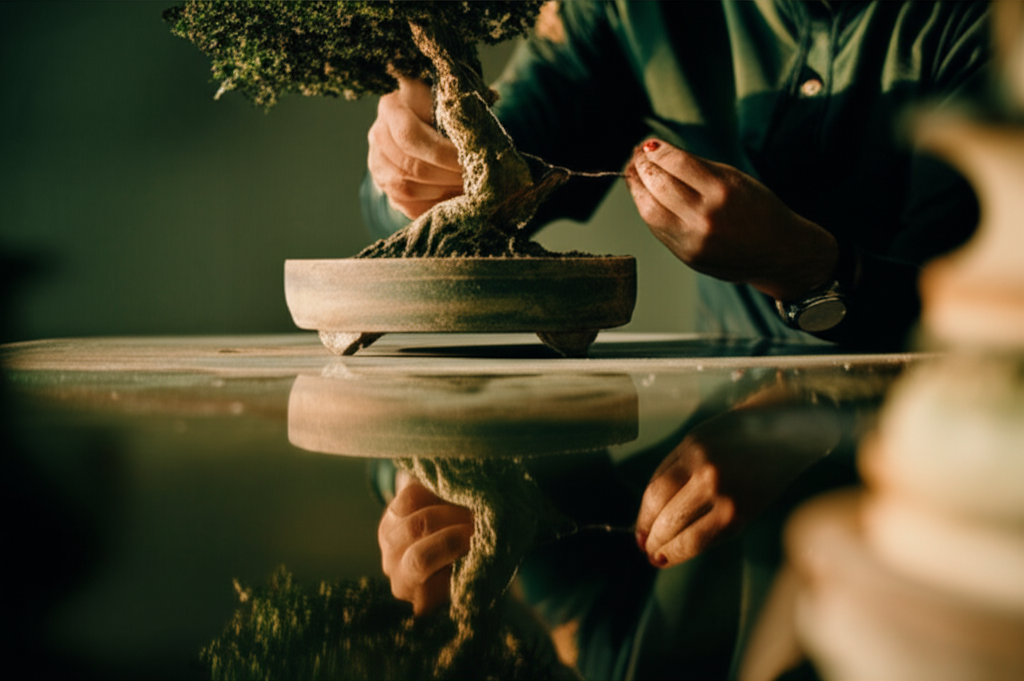
The internet is a fantastic resource, no doubt. But nothing replaces the tactile, sensory experience of working with your own hands. Feeling the soil, shaping the branches, observing the subtle changes in the leaves – these are all crucial aspects of the bonsai experience that cannot be replicated online.
When I first started, I spent hours just touching and examining my trees. I would feel the texture of the bark, the firmness of the soil, the suppleness of the branches. I learned to “read” the tree with my hands, developing a deep understanding of its physical characteristics.
This hands-on experience is essential for developing your skills as a bonsai artist. It allows you to connect with the tree on a deeper level, to understand its needs, and to appreciate its unique beauty. So, while the internet can provide valuable information and inspiration, don’t forget to get your hands dirty and trust your own instincts.
The Final Harvest: Wisdom from a Fallen Tree
The mistake I made by following bad advice from the internet cost me a beloved tree, but it also yielded a harvest of invaluable lessons. It taught me to be skeptical of quick fixes, to seek diverse perspectives, to trust my own intuition, and to appreciate the importance of hands-on experience.
Bonsai is more than just a hobby; it’s a journey of learning and growth. It’s about patience, perseverance, and a deep connection with nature. And sometimes, the most valuable lessons are learned from our mistakes.
So, the next time you’re tempted to follow the advice of a “Bonsai Master” on the internet, remember my story. Remember the fallen Japanese maple, and remember the wisdom it taught me. And remember that the best way to learn bonsai is to get your hands dirty, trust your own instincts, and never stop learning.
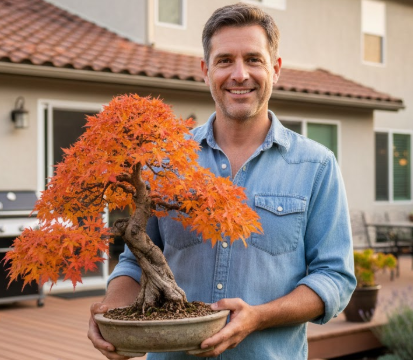
My name is Christopher Brown, I am 38 years old and I live in the United States. I am deeply passionate about the art of bonsai and have been cultivating trees for several years. What started as a simple curiosity turned into a daily practice and an important part of my life.
On this blog, I share my real experiences with bonsai — including what works, what doesn’t, and the lessons I learn along the way. I enjoy experimenting with techniques, observing the growth of each tree, and documenting the process with honesty and patience.
My goal with InfoWeHub is to help beginners feel more confident, avoid common mistakes, and discover the beauty of bonsai cultivation. If you are starting your journey or already love this art, you are welcome here.