
The Hubris of the Beginner: A Bonsai’s Near-Death Experience
They say experience is the best teacher, but sometimes the tuition fee is a little too high. I’ve been captivated by the art of bonsai for decades now, drawn to its delicate balance of artistry and horticulture. But like any worthwhile pursuit, the path to mastery is paved with mistakes, missteps, and the occasional near-fatal blunder. And believe me, I’ve made my fair share.
This is the story of one such blunder, a mistake born of overconfidence and a profound misunderstanding of a bonsai’s fundamental needs. It’s a story about how I almost killed my first bonsai, a beautiful little Japanese maple that I had grand visions for. I’m Christopher Brown, by the way, and I’ve been tending to these miniature marvels for longer than I care to admit. What I’m about to share isn’t just a cautionary tale, it’s a testament to the patience and resilience required to truly connect with these living works of art.
The Allure of the Maple: A New Bonsai Parent
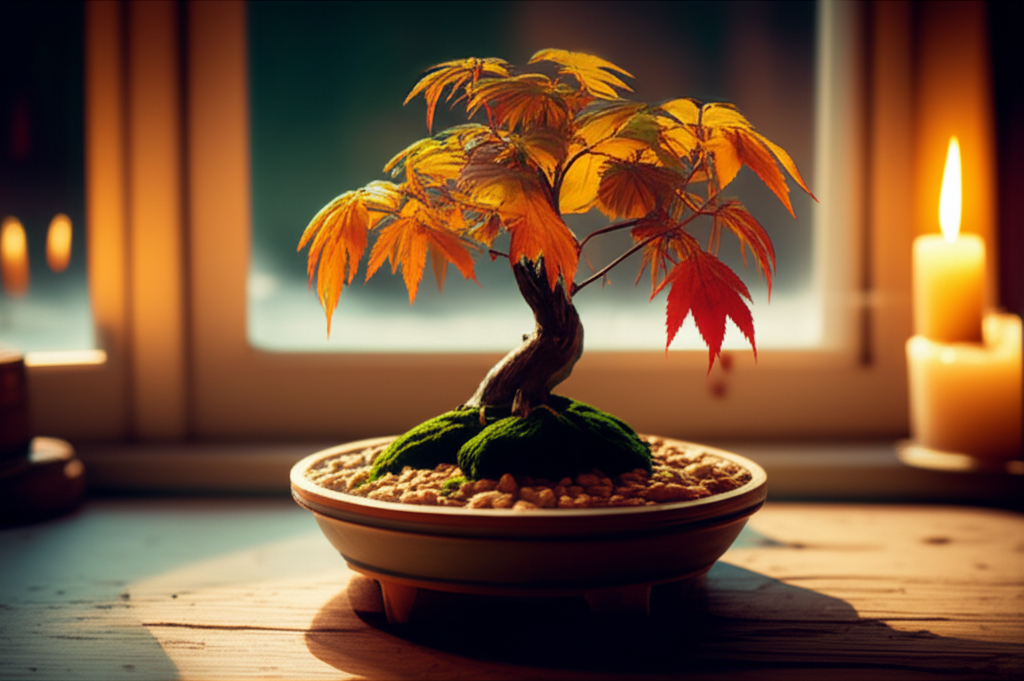
I remember the day I brought her home – that little Japanese maple. She was vibrant, full of life, with leaves that practically glowed under the nursery lights. I envisioned her gracing my patio, a miniature masterpiece that would be the envy of all my bonsai-loving friends. I had read all the books, watched countless videos, and felt, foolishly, that I was ready. I was armed with knowledge, or so I thought, and a burning desire to create something beautiful. I was, in short, utterly unprepared for the reality of bonsai care.
You see, reading about bonsai is one thing; actually caring for one is entirely another. It’s like reading a cookbook versus actually cooking a gourmet meal. You might understand the theory, but until you get your hands dirty (literally, in this case), you’re just scratching the surface. And I, armed with my theoretical knowledge and boundless enthusiasm, was about to learn that lesson the hard way.
The Fatal Mistake: Neglecting the Fundamentals
The mistake, as I look back on it now, was a classic case of neglecting the fundamentals. I was so focused on the artistry of bonsai – the shaping, the pruning, the aesthetic considerations – that I completely overlooked the basic needs of the tree itself. I was so busy trying to make it beautiful that I forgot to simply keep it alive.
I was so preoccupied with the aesthetics that I failed to recognize the subtle signs of distress. The leaves were starting to droop, the color was fading, and the soil was bone dry. But I, in my infinite wisdom, attributed it to the normal stresses of transplanting and ignored the obvious warning signs. I thought, “Oh, it’s just adjusting.” Or, “It probably just needs a little more time.” Excuses, all of them. Excuses that nearly cost me my first bonsai.
The Importance of Observation: Learning to Listen to Your Tree
One of the most important lessons I’ve learned in my years of bonsai cultivation is the importance of observation. A bonsai is a living thing, and like any living thing, it communicates its needs through subtle cues. It’s up to us, as its caretakers, to learn to read those cues and respond accordingly. Is the soil too dry? Are the leaves drooping? Are there any signs of pests or disease? These are all questions we should be asking ourselves every day.
Think of it like learning a new language. At first, the words and phrases are foreign and incomprehensible. But with practice and patience, you begin to understand the nuances of the language, the subtle inflections and unspoken meanings. Similarly, with bonsai, you learn to “listen” to your tree, to understand its needs and respond to its signals. And believe me, a thirsty bonsai speaks volumes, even if it doesn’t use words.
The Wake-Up Call: Recognizing the Damage
The reality of the situation didn’t truly hit me until I saw the leaves starting to turn brown and brittle. It wasn’t just a slight droop or a subtle fading of color anymore. This was full-blown distress, a desperate cry for help that I had ignored for far too long. Panic set in. I realized I had been so caught up in my own artistic ambitions that I had completely neglected the basic needs of my tree.
It’s a humbling experience to realize you’ve made such a fundamental mistake, especially when the consequences are staring you in the face. It’s like realizing you’ve been driving with your eyes closed the entire time. The relief of not crashing is quickly replaced by the sheer horror of realizing how close you came to disaster. That’s exactly how I felt – horrified and deeply ashamed.

Emergency Measures: A Desperate Attempt at Revival
I immediately sprang into action, desperately trying to salvage what was left. I soaked the soil thoroughly, making sure the water drained freely from the bottom of the pot. I moved the tree to a shadier location, away from the harsh afternoon sun. I even misted the leaves with water, hoping to rehydrate them and restore some of their vitality. It was a full-blown bonsai emergency, and I was doing everything I could to avert disaster.
I remember thinking, “Please, don’t die on me. I promise I’ll do better.” It might sound silly, talking to a tree, but in that moment, it felt like the most natural thing in the world. It was a heartfelt plea, a promise to be a better caretaker, to pay attention, to listen, and to never again neglect the fundamental needs of my bonsai.
The Long Road to Recovery: Patience and Persistence
The next few weeks were a tense waiting game. I diligently watered the tree, making sure the soil stayed consistently moist but not waterlogged. I monitored the leaves closely, watching for any signs of improvement. I researched everything I could about reviving stressed bonsai, learning about the importance of humidity, fertilization, and proper drainage. It was a crash course in bonsai resuscitation, and I was determined to pass with flying colors.
The recovery was slow and gradual. The brown leaves didn’t magically turn green overnight. But slowly, subtly, I started to see signs of life. New buds began to emerge, tiny green shoots that promised a return to vitality. It was a testament to the resilience of the tree, and a validation of my efforts. I was learning that bonsai is not just about artistry, it’s about patience, persistence, and a deep respect for the natural world.
Lessons Learned: A Newfound Appreciation
That near-death experience taught me some invaluable lessons about bonsai care. First and foremost, it taught me the importance of observation. I learned to pay attention to the subtle cues that my tree was giving me, to recognize the signs of distress before they became critical. I learned to “listen” to my bonsai, to understand its needs and respond accordingly.
Secondly, it taught me the importance of the fundamentals. I realized that all the artistic techniques in the world are useless if you can’t keep your tree alive. Proper watering, drainage, sunlight, and fertilization are the foundation of bonsai care, and neglecting these fundamentals is a recipe for disaster. And finally, it taught me the importance of patience. Bonsai is not a sprint; it’s a marathon. It requires time, dedication, and a willingness to learn from your mistakes. There are no shortcuts, no quick fixes, and no guarantees. But the rewards, when they come, are well worth the effort.
Beyond Survival: Thriving, Not Just Surviving
The Japanese maple didn’t just survive; it thrived. It regained its vibrant color, its leaves grew lush and full, and it became the miniature masterpiece I had always envisioned. But more importantly, it became a symbol of my journey as a bonsai enthusiast, a reminder of the lessons I had learned, and a testament to the power of patience and perseverance. That experience reshaped my entire approach to bonsai.
It’s not enough to simply keep a bonsai alive. The goal is to help it thrive. This means providing the optimal conditions for growth, protecting it from pests and diseases, and nurturing its natural beauty. It means going beyond the basics and delving into the nuances of bonsai care, understanding the specific needs of each species, and adapting your techniques accordingly. I started spending more time simply observing my trees, becoming intimately familiar with their growth patterns and subtle changes.
The Ongoing Journey: Continuous Learning and Refinement
Even after decades of experience, I still consider myself a student of bonsai. There’s always something new to learn, a new technique to master, a new perspective to explore. The world of bonsai is vast and complex, and the journey of learning is never truly complete. I continue to read, research, and experiment, always striving to improve my skills and deepen my understanding of this ancient art form.
And perhaps most importantly, I continue to share my knowledge and experiences with others. I believe that bonsai is an art form that should be accessible to everyone, and I’m always happy to help aspiring bonsai enthusiasts avoid the mistakes I made along the way. Because ultimately, the greatest reward of bonsai is not just the beauty of the trees themselves, but the community of people who share a passion for this unique and rewarding art.
Passing on the Wisdom: Sharing the Art of Bonsai
I now regularly host workshops in my backyard, teaching others the basics of bonsai care and sharing the hard-earned lessons I’ve learned over the years. I emphasize the importance of observation, patience, and respect for the trees. I tell them my story – the story of the maple that almost died – hoping to inspire them to avoid the same mistakes.
I encourage them to experiment, to try new techniques, and to find their own unique style. But I also remind them that the most important thing is to enjoy the process, to connect with the trees, and to appreciate the beauty of nature. Bonsai is more than just a hobby; it’s a way of life. It teaches you patience, resilience, and a deep appreciation for the natural world. It connects you to something larger than yourself, a tradition that spans centuries and cultures. And it reminds you that even the smallest things can be beautiful, if you take the time to care for them.
The most rewarding part is seeing the spark ignite in their eyes, watching them transform from hesitant novices to confident caretakers. It’s a privilege to pass on this ancient art, to share the wisdom I’ve accumulated over the years, and to help others discover the joy of bonsai.

So, if you’re thinking about trying your hand at bonsai, don’t be afraid to make mistakes. It’s part of the learning process. Just remember to pay attention to your trees, listen to their needs, and never stop learning. And who knows, maybe one day you’ll be sharing your own bonsai story with the world.
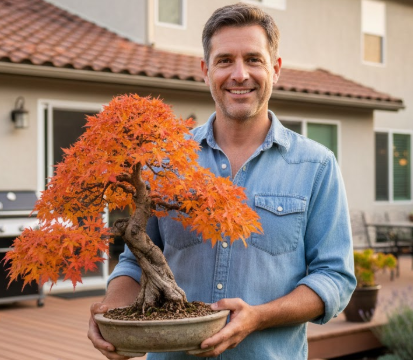
My name is Christopher Brown, I am 38 years old and I live in the United States. I am deeply passionate about the art of bonsai and have been cultivating trees for several years. What started as a simple curiosity turned into a daily practice and an important part of my life.
On this blog, I share my real experiences with bonsai — including what works, what doesn’t, and the lessons I learn along the way. I enjoy experimenting with techniques, observing the growth of each tree, and documenting the process with honesty and patience.
My goal with InfoWeHub is to help beginners feel more confident, avoid common mistakes, and discover the beauty of bonsai cultivation. If you are starting your journey or already love this art, you are welcome here.