
In the global map of specialty coffee, East Africa stands as a sacred territory. While Central and South America are known for their balance, sweetness, and chocolatey comfort, the coffees of Ethiopia and Kenya are celebrated for their radical individuality. To taste a high-quality African coffee for the first time is often a “revelation moment” for many enthusiasts—a point where they realize that coffee can taste less like a roasted seed and more like a delicate tea infused with jasmine, bergamot, or sun-ripened berries.
The rise of these profiles in the specialty market is not merely a trend; it is a recognition of unique genetics and extreme geography. By Understanding the Role of High-Altitude Density and How It Resists Water Under Pressure , we can begin to see why these regions produce the most expensive and sought-after beans on earth. They are the benchmark for acidity and the primary subjects for those who wish to Develop a Professional Palate through Home Cupping Rituals .
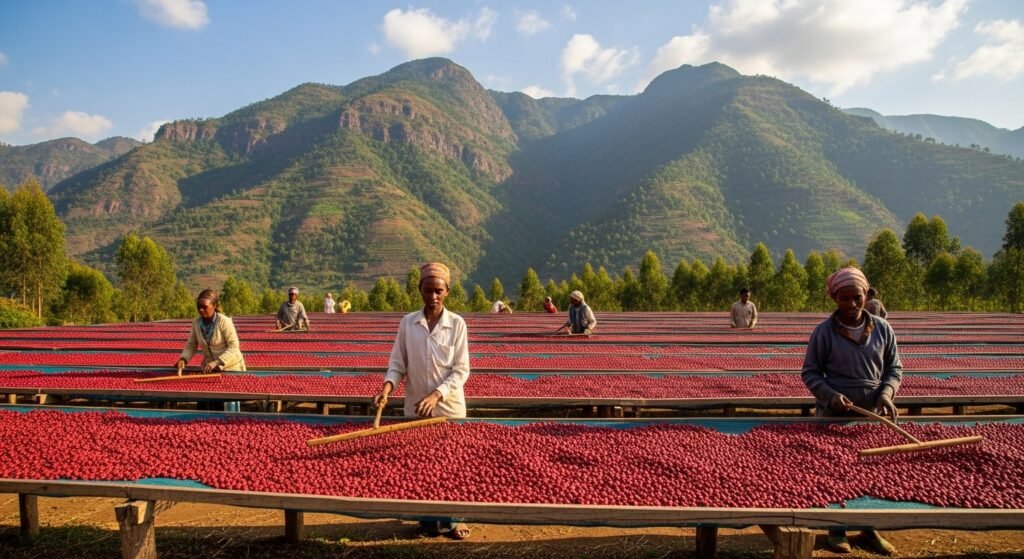
Ethiopia: The Genetic Birthplace
Ethiopia is the cradle of Arabica coffee. Unlike most coffee-producing countries, where the plants were introduced by colonial powers, coffee grows wild in the Ethiopian forests. This has resulted in thousands of “heirloom” varieties—genetics that exist nowhere else on the planet.
The Two Faces of Ethiopia: Washed vs. Natural
The way an Ethiopian coffee is processed dramatically changes its “soul.”
-
Washed (Yirgacheffe/Sidamo): These are the icons of clarity. By removing the fruit before drying, the focus remains on the bean’s intrinsic floral notes. Expect aromas of jasmine, lemon zest, and a tea-like body. These beans are so delicate that they require Precisely Filtered Water to Avoid Neutralizing Their Sparkling Acids .
-
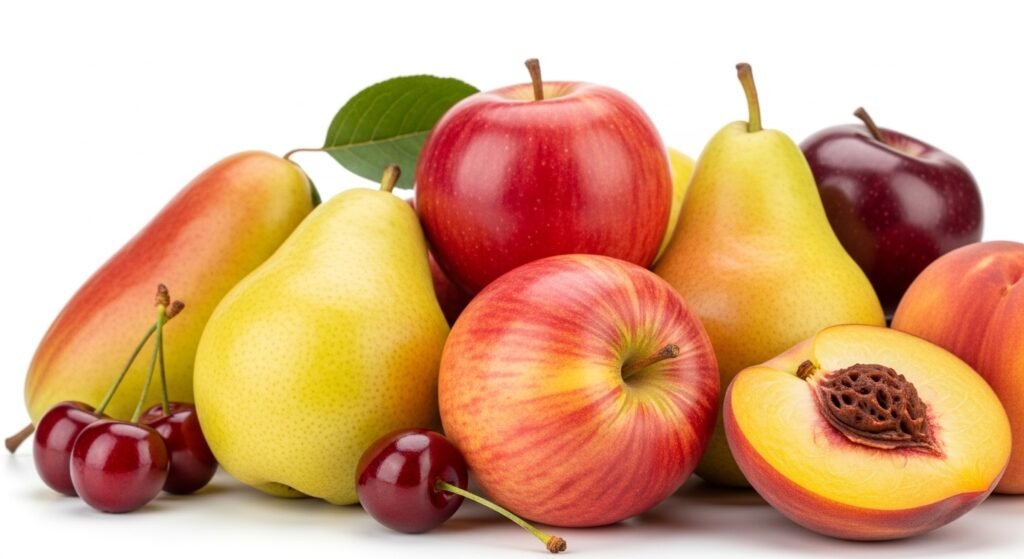
Natural (Guji/Harrar): Dried with the cherry intact, these are “fruit bombs.” They are famous for intense notes of blueberry, strawberry, and dried apricot. The Science of Aftertaste in These Natural Lots is particularly complex, often leaving a sweetness reminiscent of fruit jam.
Kenya: The Power of Scientific Precision
If Ethiopia is about genetic diversity, Kenya is about technical perfection. Kenyan coffee is famous for its “SL-28” and “SL-34” varieties, which were developed in laboratories to produce exceptional flavor.
Kenyan coffees are defined by their Phosphoric Acidity. This is a physical sensation on the tongue that feels “sparkling” or “effervescent,” similar to the bubbles in a carbonated drink. This intensity is what makes a Kenyan coffee stand out even in a Sophisticated Coffee Cocktail Like a Modern Carajillo , as its flavor profile is powerful enough to cut through any liqueur or milk.
The “Double Washed” Process
Kenya is known for a unique processing method involving a double fermentation and long soaking periods in clean mountain water. This “polishes” the flavor, removing every hint of bitterness and leaving only the pure, vibrant fruit—notes of blackcurrant (cassis), grapefruit, and tomato sweetness are common hallmarks.
Brewing the African Spirit: Challenges and Rewards
Because African coffees are typically grown at extreme altitudes (often above 2,000 meters), the beans are incredibly dense. This density presents a challenge for the home barista.
-
Grind Size Consistency: These dense beans shatter differently. To avoid a muddled cup, you must Maintain a Clean and Calibrated Burr Grinder to Ensure a Uniform Particle Size . If your grinder produces too many “fines,” the delicate floral notes will be overwhelmed by a dry, ashy bitterness.
-
Temperature Control: To penetrate the dense cellular structure of an Ethiopian bean, you often need higher water temperatures ($94^{\circ}C$ to $96^{\circ}C$). Without enough heat, the coffee will taste “green” or sour rather than vibrantly acidic.
-
The Extraction Window: These coffees are unforgiving. A few seconds of over-extraction can turn a blackcurrant note into a medicinal one. This is why Calibrating Your Extraction Process is a Continuous Art when working with East African lots.
The Sensory Impact: Why They Dominate Competitions
If you look at the World Barista Championships or Brewers Cup rankings, Ethiopia and Kenya are almost always at the top. This is because they offer Sensory Clarity. When a taster says they perceive “lavender” or “white peach,” it isn’t an exaggeration; the chemical precursors in these beans are so concentrated that the flavors are unmistakable.
By Applying Technical Care to Every Step of Your Brewing , you can unlock these notes at home. It transforms your morning routine from a caffeine delivery system into a geographical exploration. You aren’t just drinking coffee; you are tasting the minerals of the Great Rift Valley.
Sustainability and the Future of African Coffee
The rise of these coffees has also brought attention to the “Direct Trade” model. Because Ethiopian and Kenyan coffees are so valuable, roasters are willing to pay many times the “Fair Trade” price to secure the best harvests. This investment goes directly into the washing stations and the cooperatives, allowing them to Invest in Better Maintenance for Their Processing Equipment , which in turn leads to even higher quality in the following years.
However, climate change poses a significant threat to these high-altitude regions. As temperatures rise, the “ideal” coffee belt is moving higher up the mountains, where there is less land available. This makes every bag of high-altitude African coffee a precious, finite resource that deserves our full attention and technical respect.
Conclusion: The Ultimate Palate Trainer
There is no better way to understand the potential of specialty coffee than by exploring the profiles of Ethiopia and Kenya. They represent the extreme edges of what the Coffea Arabica plant can achieve. Ethiopia offers the mystery and complexity of the ancient world, while Kenya offers the power and precision of modern botanical science.
Whether you prefer the tea-like elegance of a washed Sidamo or the aggressive, sparkling acidity of a Nyeri AA, these coffees will challenge your perceptions. By Combining a Clean Machine, Precise Water, and a Calibrated Grinder , you can bridge the gap between your kitchen and the highlands of Africa.

Brown Christopher is 47 years old and has been passionate about coffee since he was 15. For more than three decades, he has explored coffee culture, brewing methods, and the flavors behind every cup. Through this blog, he shares simple tips and knowledge to help beginners better understand and enjoy coffee in their daily lives. ☕