
To speak of African coffee is to speak of the very soul of the Coffea Arabica species. While Brazil and Vietnam dominate the world in terms of volume, the high-altitude plateaus of East Africa remain the undisputed gold standard for complexity, acidity, and aromatic intensity. From the wild forests of Ethiopia to the scientific precision of Kenyan cooperatives, African coffees represent the “Third Wave” ideal: a beverage that tastes more like a delicate fruit infusion than a traditional “cup of joe.”
The global fascination with these origins is not just a trend; it is rooted in a Deep Genetic Heritage and the Secrets of High-Altitude Cultivation . To unlock the potential of these beans, one must apply the most Precise Calibration Techniques and ensure the Purity of the Brewing Water , as their delicate floral notes are easily overwhelmed by technical errors.
Ethiopia: The Birthplace of Legend
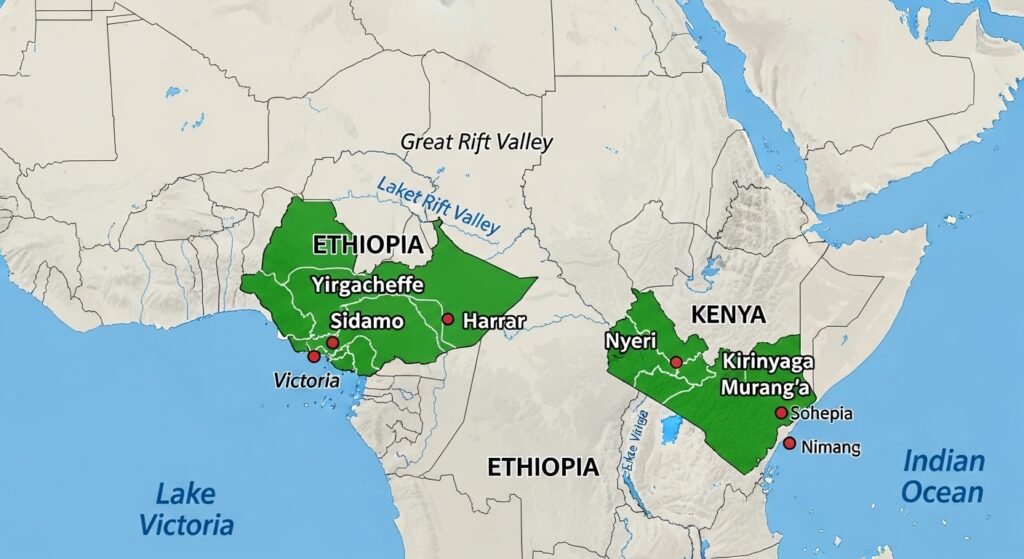
Ethiopia is the only place in the world where coffee grows natively in the wild. Unlike the rest of the world, where plants are descendants of a few smuggled seeds, Ethiopia possesses a genetic diversity that is staggering. There are thousands of “Heirloom” varieties still undiscovered by science, hidden in the forests of Kaffa and Jimma.
The Two Faces of Ethiopian Processing
The evolution of Ethiopian coffee history is defined by its two primary processing methods, which create vastly different sensory profiles:
-
Washed Process (Yirgacheffe/Sidamo): Introduced as a way to “clean” the flavor, washed Ethiopian coffees are famous for their tea-like body and intense floral aromas (jasmine, bergamot).
-
Natural Process (Harrar/Guij): The traditional method where the cherry dries around the seed. This results in a heavy body and wild, “funky” notes of blueberry and dried fruits.
When you Host a Coffee Cupping at Home , comparing a Washed Yirgacheffe with a Natural Guji is the quickest way to understand how human intervention shapes the Science of Aftertaste .
Kenya: The Science of Precision
If Ethiopia is about history and mystery, Kenya is about rigorous engineering and botanical selection. The Kenyan coffee industry, which rose to prominence in the mid-20th century, is built on a sophisticated auction system and the famous “SL” (Scott Laboratories) varieties.
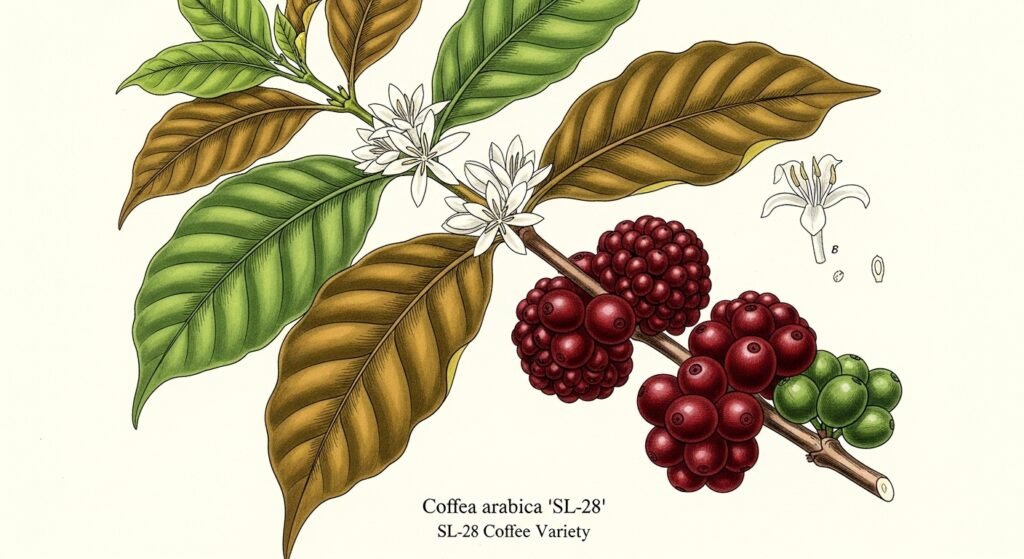
The SL-28 and SL-34 Varieties
Developed in the 1930s, these varieties were selected for their drought resistance and, more importantly, their exceptional cup quality. Kenyan coffees are known for their “effervescent” acidity—a sharp, phosphoric zing that reminds tasters of blackcurrant, tomato, or grapefruit. This unique profile is a direct result of the iron-rich volcanic soil and the High-Altitude stress of the Mount Kenya region .
The “Kenyan Double Wash” is another technical evolution. By soaking the beans in water for 24 to 48 hours after fermentation, Kenyan producers remove every trace of mucilage, leading to the cleanest Aftertaste and Texture in the entire world of coffee.
The Impact of the “Third Wave” on African Trade
The evolution of these origins was accelerated by the Third Wave of Coffee. Before the 2000s, many high-quality African lots were blended away into commercial products. Specialty roasters changed this by focusing on “Micro-lots” and “Direct Trade.”
By identifying the specific farm or cooperative, roasters can justify paying much higher prices—often 300% to 500% above the commodity market price. This wealth has allowed cooperatives in Kenya and Ethiopia to invest in Better Processing Equipment and Water Filtration Systems . However, these delicate beans are fragile; if your Grinder is Dirty or Your Espresso Machine is Scale-Ridden , the nuances of a $50/lb Kenyan lot will be lost to rancid bitterness.
Challenges: Climate and Genetic Preservation
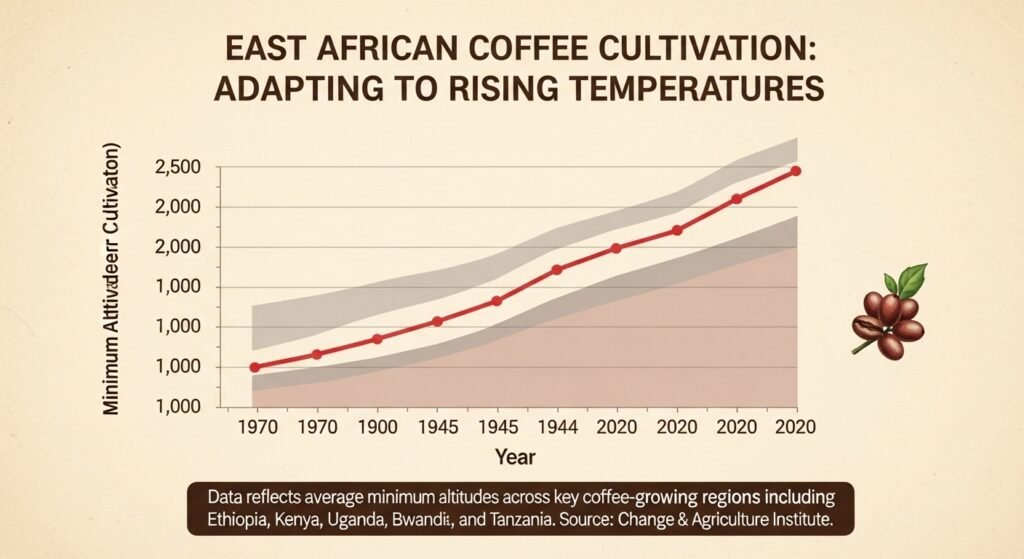
The future of African coffee history faces significant threats. As global temperatures rise, the “cool” zones of the High-Altitude Mountains are shrinking. In Ethiopia, wild coffee forests are disappearing due to deforestation, which could mean the loss of genetic traits that could save the species from future diseases.
Furthermore, the labor-intensive nature of African production means that younger generations are often moving to cities, leaving the ancient heritage of coffee farming behind. This social evolution is forcing the industry to find new ways to make coffee farming sustainable and profitable for the smallholder.
Conclusion: The Eternal Standard
The rise of African coffees has fundamentally redefined what we consider “luxury” in a cup. They taught us that coffee can be elegant, transparent, and complex. Whether it is the ancient, wild sweetness of Ethiopia or the sharp, scientific brilliance of Kenya, these origins continue to be the yardstick by which all other Regional Terroirs are measured.
To drink these coffees is to participate in a history that spans over a millennium. By Maintaining Your Equipment and respecting the Technical Variables of Extraction , you honor the work of thousands of hands in the Great Rift Valley. African coffee is not just a drink; it is a legacy in liquid form.

Brown Christopher is 47 years old and has been passionate about coffee since he was 15. For more than three decades, he has explored coffee culture, brewing methods, and the flavors behind every cup. Through this blog, he shares simple tips and knowledge to help beginners better understand and enjoy coffee in their daily lives. ☕