
In the landscape of specialty coffee, Africa represents the birthplace of the species and the pinnacle of flavor complexity. While High-Altitude Brazilian Beans are celebrated for their nutty and chocolate-forward profiles, African coffees—specifically those from Ethiopia and Kenya—offer a sensory experience that is often described as “tea-like,” “floral,” and “electrically acidic.”
To brew these coffees successfully, one must move beyond basic techniques and master the Science of Aftertaste. These beans are the product of unique volcanic soils and ancient genetics, requiring a delicate touch during the Dialing-In Process and a deep understanding of Water Chemistry to unlock their full potential.
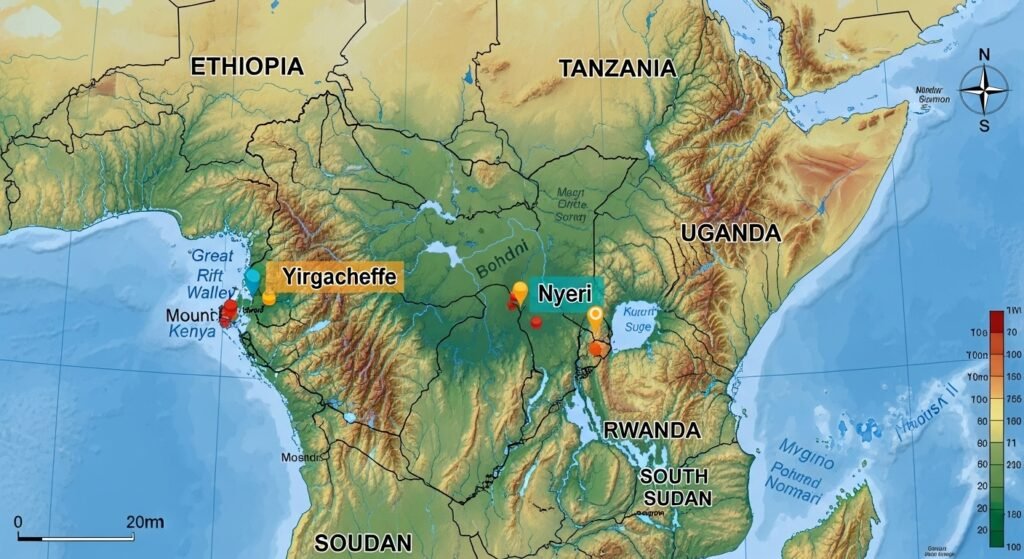
1. Ethiopia: The Genetic Motherland
Ethiopia is the only place on Earth where coffee grows wild. Unlike most coffee-producing countries that rely on a few cultivated varieties (like Bourbon or Caturra), Ethiopia is home to thousands of “Heirloom” varieties that have yet to be genetically mapped.
-
The Terroir of Yirgacheffe and Sidamo: These regions are world-famous for their high elevations (up to 2,200 meters). The thin air and cool nights slow down the fruit’s maturation, concentrating sugars and organic acids.
-
Flavor Profile: A washed Ethiopian coffee typically tastes of jasmine, bergamot, and lemon zest. A “Natural” process Ethiopian coffee, on the other hand, is a fruit bomb, often tasting of blueberries and strawberries.
Because these beans are often smaller and more irregular than their South American cousins, they require a High-Quality Grinder and Regular Maintenance to ensure a consistent particle size, preventing the “fines” from making the delicate floral notes taste bitter.
2. Kenya: The Power of Phosphoric Acid
If Ethiopia is about elegance, Kenya is about power. Kenyan coffee is widely regarded as some of the most intense and structured coffee in the world. This intensity is driven by two main factors: the SL-28 and SL-34 cultivars and the region’s rich volcanic soil.
-
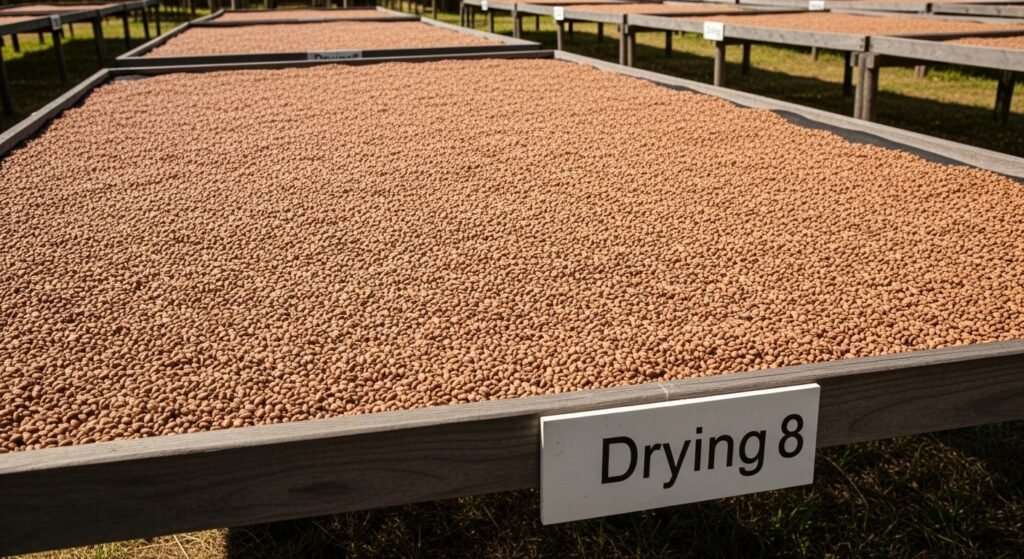
The Double-Washed Process: Kenya utilizes a unique “72-hour fermentation” or double-washing process. This meticulous method removes all mucilage and “polishes” the bean, resulting in a cup with unparalleled clarity and a sparkling acidity.
-
The “Tomato” Note: A controversial but famous characteristic of Kenyan coffee is its savory-sweet balance. High-quality Kenyans often display notes of blackcurrant, grapefruit, and a savory richness reminiscent of sun-ripened tomatoes.
This intensity is directly linked to the Secrets of High Altitude. The volcanic soil of Mount Kenya is rich in phosphorus, which the plant converts into phosphoric acid—the same compound that gives high-end sodas their “sparkle.”
3. The Brewing Challenge: Density and Extraction
African beans are physically denser than most other coffees. This density is a direct result of the slow-growth cycle at high elevations. When brewing, this means:
-
Heat Resistance: You often need water at the higher end of the spectrum ($94^{\circ}C$ to $96^{\circ}C$) to penetrate the cellular structure.
-
Grind Adjustment: Because they are hard, they can shatter into more “fines” (dust). To maintain a clean Science of Aftertaste, you must use a burr grinder that is in top condition.
If your equipment is dirty, the Rancid Oils Trapped in the Burrs will instantly overwhelm the delicate jasmine or blackcurrant notes of these expensive beans.
4. Water: The Invisible Modifier for African Coffees
As we’ve explored in our guide to Water Quality, the mineral content of your water can make or break an African coffee.
-
The Bicarbonate Trap: If your water has high alkalinity, it will neutralize the phosphoric and citric acids that make Kenya and Ethiopia famous. Your $50/kg coffee will taste like generic “brown water.”
-
The Magnesium Solution: A slightly higher concentration of magnesium in your water will help “grab” the floral and fruity acids, pulling them into the cup with greater vibrance.
5. Roasting: Preserving the Acidic Structure
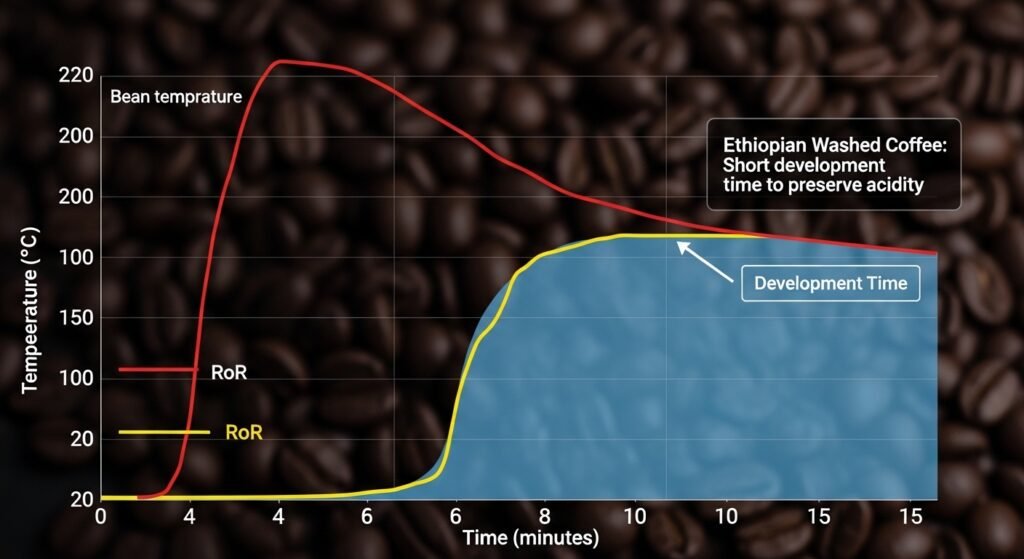
Roasters treat African beans with extreme care. They typically use a “Light to Medium” roast profile. If the roast is too dark, the sugars carbonize, and the delicate florals are replaced by smoke and ash. This would be a tragedy, as it masks the Regional Terroir that farmers worked so hard to cultivate.
6. Sensory Perception: Training Your Palate
Tasting African coffees is the best way to develop your palate. The clarity of a washed Yirgacheffe allows you to isolate the sensation of “acidity” without the interference of heavy bitterness.
-
Retronasal Awareness: When you swallow a Kenyan coffee, the Aftertaste is often exceptionally long and “effervescent.” By exhaling through your nose after the sip, you can catch the lingering aroma of berries or dried flowers.
7. The Social and Economic Impact of African Specialty Coffee
Buying Ethiopian and Kenyan coffee is not just a culinary choice; it is an economic one. In Ethiopia, coffee accounts for nearly 30% of the country’s export revenue. The “Auction System” in Kenya is one of the most transparent in the world, rewarding farmers for high-quality “AA” or “AB” lots. Supporting these origins ensures that the History and Evolution of Coffee continues to thrive in its ancestral home.
8. Conclusion: The Pinnacle of the Bean
To drink an African coffee is to drink history. Whether it is the wild, floral complexity of an Ethiopian heirloom or the powerful, acidic structure of a Kenyan SL-28, these coffees represent the absolute peak of what Coffea Arabica can achieve.
To do them justice, you must be a technical brewer. You must Calibrate Your Extraction with precision, ensure your Water is Balanced, and keep your Equipment Spotless. When all these factors align, the African bean provides a flavor experience that is simply unparalleled in any other beverage.
The true secret to enjoying these origins lies in Mastering the Relationship Between Water Mineralization and the Dense Cellular Structures Found in High-Elevation Plants to Ensure Every Delicate Floral Note is Fully Extracted Without Bitterness.

Brown Christopher is 47 years old and has been passionate about coffee since he was 15. For more than three decades, he has explored coffee culture, brewing methods, and the flavors behind every cup. Through this blog, he shares simple tips and knowledge to help beginners better understand and enjoy coffee in their daily lives. ☕