
In my three decades of traversing the “Coffee Belt,” I have stood on the misty slopes of Mount Kenya and navigated the dense jungles of Sumatra. Each origin has its charm, but there is a specific magnetic pull that always brings me back to the backbone of the Americas. From the volcanic peaks of Guatemala to the high plateaus of Costa Rica, Central America has consistently defined what we consider the “gold standard” of a balanced cup. It isn’t just luck or tradition; it is a violent geological history combined with extreme geography that creates a flavor profile nearly impossible to replicate elsewhere.
When I first tasted a Strictly Hard Bean (SHB) from Antigua in the early 90s, I was struck by its crystalline acidity and deep, cocoa-like sweetness. At the time, I didn’t fully grasp the “why.” Today, after seeing how The Third Wave Defined: My Witness Account of the Specialty Shift has elevated our understanding of agronomy, I can tell you that the secret lies in the very ground beneath the trees. The relationship between volcanic soil, microclimates, and altitude is the holy trinity of Central American coffee.
The Gift of Fire: Volcanic Soil and Mineral Complexity
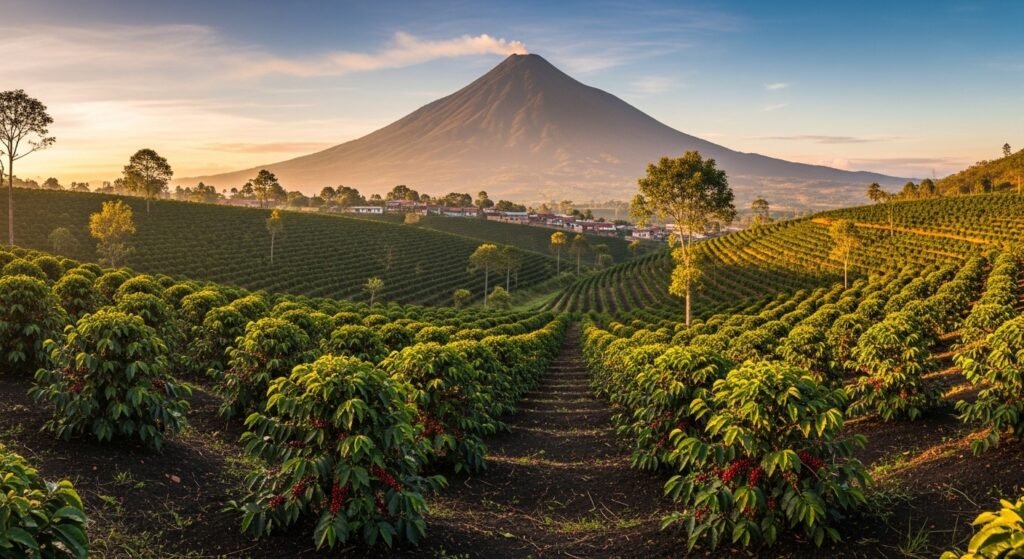
Most people look at a volcano and see destruction. A coffee farmer looks at a volcano and see a fountain of life. Central America is part of the “Pacific Ring of Fire,” and its soil is enriched by millennia of ash and lava flows. This volcanic soil is young, porous, and packed with minerals like potassium, magnesium, and phosphorus.
Why does this matter for your morning brew?
-
Drainage: Volcanic soil has incredible drainage properties. Coffee trees hate “wet feet”—excess water around the roots can lead to rot and diluted flavors. The porous nature of ash allows water to pass through while retaining just enough moisture for the plant to thrive.
-
Mineral Absorption: The unique mineral composition of the soil directly influences the How to Develop a Professional Palate: A 30-Year Guide. For instance, high potassium levels are often linked to increased sugar development in the coffee cherry.
-
Acidity and Structure: The nitrogen-rich ash contributes to the vibrant, phosphoric acidity that is a hallmark of the region.
When I walk through a farm in the Tarrazú region of Costa Rica, I can feel the “crunch” of the volcanic soil under my boots. It is a living, breathing medium that breathes character into every bean. It is the foundation of the Geometry of Flavor: Why I Still Prefer the V60 After 30 Years, providing the raw materials that our brewing methods eventually unlock.
The Altitude Factor: Why “High Grown” is the Only Way
If soil is the soul of the coffee, altitude is its temperance. In Central America, the best coffees are grown between 1,200 and 1,800 meters above sea level. In my travels, I’ve noticed that as you climb higher, the air becomes thinner, the nights become colder, and the coffee cherries grow much slower.
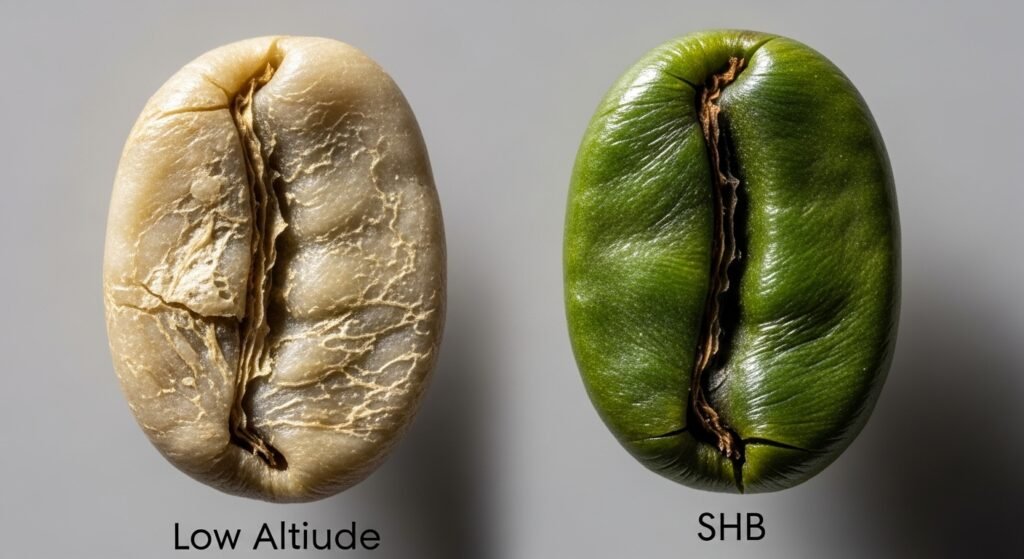
This slow maturation is the key to density. A coffee bean grown at high altitude is physically harder and denser than one grown in the lowlands.
-
Sugar Concentration: Because the fruit stays on the branch longer, it has more time to develop complex sugars and organic acids.
-
Cellular Structure: The density of a high-altitude bean allows it to withstand the high heat of a roaster without “scorching,” preserving the delicate aromatic compounds.
-
The “SHB” Designation: In many Central American countries, the highest grade is labeled Strictly Hard Bean (SHB). This isn’t just a fancy name; it is a guarantee that the coffee was grown at an altitude where the cold nights forced the bean to become a compact powerhouse of flavor.
Regional Variations: A Journey Through the Isthmus
Even though they share a volcanic backbone, each country in Central America offers a different “dialect” of flavor. Over 30 years, I’ve developed a mental map of these nuances:
-
Guatemala: For me, Guatemala is the king of complexity. Whether it’s the smoky notes of Antigua or the bright, apple-like acidity of Huehuetenango, these coffees have a “structured” feel. They are the backbone of many world-class espresso blends.
-
Costa Rica: This is the land of innovation. From the traditional washed process to the revolutionary “Honey Process,” Costa Rican farmers are more like lab technicians. They focus on clarity and a honey-like sweetness that is incredibly clean on the palate.
-
Honduras: Long considered a source for “blender” coffee, Honduras has surged in the last decade. The high-altitude lots from Santa Barbara are now competing with the best in the world, offering tropical fruit notes that rival African origins.
-
Panama: We cannot talk about Central America without mentioning the Geisha variety. While technically an Ethiopian heirloom, it found its true expression in the volcanic soil of Boquete, Panama. It is the “perfume” of the coffee world—floral, jasmine-heavy, and light-bodied.
The Challenges of the High Slopes
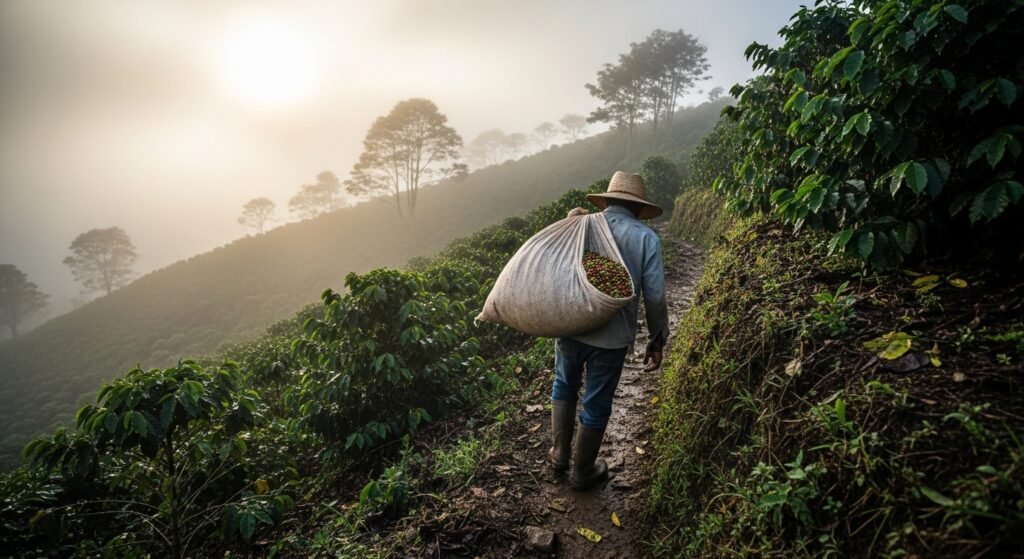
It isn’t all perfect vistas and great cupping scores. Growing coffee at high altitudes on volcanic slopes is incredibly difficult. Most of these farms are so steep that mechanical harvesting is impossible. Every single cherry you drink from these regions was picked by a human hand, often while navigating treacherous terrain.
Furthermore, “La Roya” (Coffee Leaf Rust) has devastated many Central American farms in recent years. High-altitude Arabica trees are delicate. They are susceptible to temperature fluctuations caused by climate change. As a witness to this industry for 30 years, I have seen entire families lose their livelihoods to a single bad season. This is why supporting these origins is about more than just flavor; it is about preserving a fragile ecosystem and a way of life.
Conclusion: The Enduring Reign of Central America
Why does Central America “rule the world” in the specialty coffee scene? Because it offers the perfect balance. While an Ethiopian coffee might be too “wild” for some, and a Brazilian too “heavy,” a high-altitude Guatemalan or Costa Rican coffee feels like home. It has the acidity to excite the palate, the sweetness to satisfy the soul, and the body to carry it all through.
When you sit down with your next cup of Central American coffee, take a moment to think about the fire of the volcano and the chill of the mountain air. These aren’t just beans; they are geological artifacts. After 30 years in this business, I still get a chill when I find a perfect lot from a small farm in the clouds. It reminds me that nature is the ultimate roaster, and we are simply lucky enough to enjoy the results.
The next time you are How to Develop a Professional Palate: A 30-Year Guide, look for that specific “brightness” that only volcanic soil can provide. It is the taste of the earth itself, refined by altitude and perfected by time.

Brown Christopher is 47 years old and has been passionate about coffee since he was 15. For more than three decades, he has explored coffee culture, brewing methods, and the flavors behind every cup. Through this blog, he shares simple tips and knowledge to help beginners better understand and enjoy coffee in their daily lives. ☕