
When discussing specialty coffee, we tend to focus our entire attention on the origin of the bean, the roast profile, or the precision of the grinder. However, we frequently ignore the fact that a cup of filter coffee is composed of approximately 98.5% water (and espresso is about 90%). Water is not just a liquid medium; it is the chemical solvent responsible for “washing” the flavor compounds out of the coffee’s cellular structure. If the solvent is deficient, the extraction will be mediocre, regardless of the quality of the green coffee.
The relationship between water and coffee is pure chemistry. Certain minerals act as “magnets” that pull out specific flavor molecules, while others act as “buffers” that neutralize acidity. Therefore, when you begin Evaluating the Science of Aftertaste and the Lingering Sweetness in High-Quality Beans , you must first look at what is coming out of your tap. Without the correct mineral composition, the complex profiles of High-Altitude Beans from Brazil or Ethiopia will never be fully revealed.
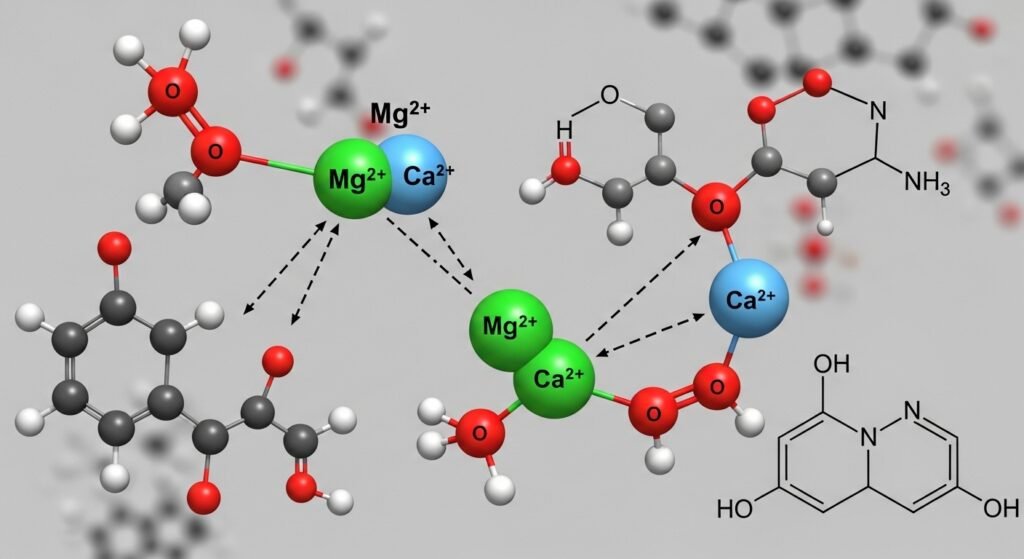
The Protagonists: Magnesium, Calcium, and Bicarbonates
Pure “distilled” or “total reverse osmosis” water is actually a poor choice for brewing. Because it lacks minerals, it is chemically aggressive and extracts everything indiscriminately, resulting in a flat, bitter, and unbalanced cup. For the perfect extraction, we need a specific balance of “Hardness” and “Alkalinity.”
-
Magnesium ($Mg^{2+}$): Magnesium is the hero of flavor extraction. It has a strong affinity for complex, oxygenated flavor compounds. Water rich in magnesium tends to extract more vibrant, fruity notes. It is the ideal mineral for highlighting the Delicate Floral and Citric Acids of an Ethiopian or Kenyan Heirloom .
-
Calcium ($Ca^{2+}$): Calcium also aids in extraction but in a more moderate way. It tends to emphasize heavier, creamier notes like chocolate and caramel, which are typical of many South American coffees.
-
Bicarbonates (Alkalinity): This is the “regulator.” Bicarbonate neutralizes acids. If your water has too many bicarbonates (very hard water), the coffee will taste “dull,” chalky, and lifeless, missing the bright acidity that defines specialty coffee. If it has too few, the coffee can become excessively sharp and metallic.
The Problem with Tap Water and Chlorine
The greatest enemy of home-brewed coffee is often not hardness, but chlorine. Public water systems use chlorine to disinfect water, which is excellent for public health but disastrous for the palate. Chlorine reacts with the phenols in coffee to create chlorophenols—compounds that have a distinct medicinal and plastic-like taste.
Furthermore, tap water varies drastically from region to region. “Soft” water in one city will extract coffee completely differently than “hard” water in another. This inconsistency is the biggest hurdle for anyone attempting to Calibrate Their Espresso Precisely for Consistency . If the water chemistry changes, your entire recipe for grind size and extraction time must change with it.

Precision Tools: TDS and Filtration
To master this invisible ingredient, baristas and lab technicians use TDS (Total Dissolved Solids). This value, measured in parts per million (ppm), indicates the total amount of minerals dissolved in the water. The Specialty Coffee Association (SCA) recommends a target range between 75ppm and 250ppm for the ideal extraction.
To achieve these values at home, several solutions exist:
-
Pitcher Filters: These remove chlorine and some sediment, but rarely alter the mineral composition significantly enough for specialty standards.
-
Reverse Osmosis with Remineralization: This is the gold standard. These systems strip everything from the water and then add back the exact amount of magnesium and calcium needed.
-
Bottled Mineral Water: Some brands have a near-perfect composition for coffee. When Hosting a Professional Cupping Session at Home , experimenting with different bottled waters against the same coffee is a fascinating sensory exercise.
Impact on Equipment: Limescale and Corrosion
Water quality doesn’t just affect flavor; it dictates the lifespan of your machinery. Water with an excess of calcium will lead to the formation of limescale inside the boilers and pipes of your espresso machine. Limescale acts as a thermal insulator, forcing the machine to use more energy to heat up and eventually blocking the water flow entirely.
Conversely, water that is too pure or acidic can be corrosive, attacking the internal metals of the machine. Therefore, when Performing Preventive Maintenance and Cleaning of Your Equipment , using resin filters or descalers is essential to protect your investment.
[Image showing a cross-section of a copper pipe blocked by calcium buildup versus a clean pipe]
Water and Brewing Methods
The influence of water varies depending on the method:
-
Espresso: Due to the high pressure and short time, the water chemistry must be extremely precise to avoid extracting excessive bitterness.
-
Filter (V60/Chemex): The longer contact time allows the water chemistry to explore more layers of the bean. This is where magnesium makes the biggest difference.
-
Cold Brew: As we explored in the Science of Cold Brew and Time as a Catalyst , the 18-hour contact time means the water has a long window to interact with minerals. Unbalanced water in Cold Brew will result in a concentrate that tastes “oxidized” or “metallic.”
Crafting Your “Coffee Water” at Home
A growing trend in the specialty community is creating your own brewing water from distilled water. There are products (mineral salts in powder or liquid drops) that allow you to add the perfect “recipe” of minerals. This ensures that whether you are in London, New York, or São Paulo, your Coffee Extracted in an AeroPress or Siphon will taste exactly the way the roaster intended.
Conclusion: The First Step Toward Perfection
You can buy the best coffee in the world and the most expensive grinder on the market, but if you use poor-quality water, you will never brew anything more than a mediocre cup. Water is the frame that holds the aromatic painting of the coffee. By Applying This Level of Technical Rigor to Your Water , you are opening the door to flavors you never thought possible.

Brown Christopher is 47 years old and has been passionate about coffee since he was 15. For more than three decades, he has explored coffee culture, brewing methods, and the flavors behind every cup. Through this blog, he shares simple tips and knowledge to help beginners better understand and enjoy coffee in their daily lives. ☕