
The world of coffee and spirits has always shared a deep, symbiotic relationship. From the robust Irish Coffee of the 1940s to the ubiquitous Espresso Martini that dominated the 90s, the goal has always been the same: to balance the dark, bitter intensity of coffee with the sweetness and heat of alcohol. However, in the last few years, a new champion has emerged from the vibrant bar scenes of Mexico City and Madrid, making its way into the most sophisticated lounges globally. This is the Carajillo.
While many cocktails mask the flavor of the bean with heavy creams or excessive syrups, the Carajillo does the opposite. It celebrates the coffee. It is a minimalist masterpiece, typically consisting of just two ingredients, yet it offers a complexity that rivals far more complicated drinks. Understanding the rise of this cocktail requires a look at its historical roots, its chemical balance, and the specific Calibrating Your Espresso techniques required to make it shine.

The Legend of the Carajillo: From War to the Bar
Like many great recipes, the origin of the Carajillo is shrouded in folklore. The most popular legend dates back to the Spanish colonial era in Cuba. It is said that Spanish soldiers would mix coffee with rum to give them “corajillo” (a diminutive of coraje, meaning courage) before heading into battle. Over time, the name evolved into “Carajillo.“
In Spain, the traditional version remained quite rugged—a shot of hot coffee with a splash of brandy, rum, or anisette, often served in a small glass as a morning pick-me-up or a digestif. However, the modern version we see today—shaken, served over ice, and predominantly using Licor 43—is a Mexican innovation. This transformation turned a worker’s drink into a luxury experience. It moved from the morning counter to the late-night terrace, proving that coffee’s Science of Aftertaste is just as relevant in a cocktail glass as it is in a ceramic mug.
The Chemistry of Flavor: Why Licor 43 and Coffee?
The secret to the modern Carajillo’s success is the specific pairing with Licor 43, a Spanish liqueur made from 43 secret ingredients, including citrus, botanicals, and heavy notes of vanilla.
Chemically, coffee and vanilla share several aromatic compounds. When you combine the acidity of a Kenyan Slingshot or a chocolatey Brazilian espresso with the botanical sweetness of the liqueur, you create a “flavor bridge.” The sugar in the liqueur tames the bitterness of the coffee, while the coffee’s natural oils give the drink a silky, velvety mouthfeel that coats the palate.
If you have spent time Developing a Professional Palate, you will notice that the Carajillo highlights the “secondary” notes of the bean. A coffee that usually tastes like toasted nuts might suddenly reveal hints of orange zest or cinnamon when shaken with the liqueur.
The Technical Execution: Shaken, Not Stirred
To make a world-class Carajillo, you cannot simply pour the ingredients over ice and stir. The “shake” is mandatory.
When you shake hot espresso with ice and Licor 43, you are performing a rapid emulsification. The proteins and lipids in the coffee’s crema react with the sugars in the liqueur and the oxygen trapped in the shaker. This creates a thick, stable foam (the “espuma”) that sits on top of the drink like a cloud.
The Master Recipe:
-
The Espresso: 1 shot ($30$ to $40$ml) of freshly pulled espresso. It must be hot to ensure proper emulsification.
-
The Liqueur: $50$ml of Licor 43.
-
The Ice: Large, solid cubes. Small ice will melt too quickly, watering down the Water Quality balance of the drink.
-
The Method: Pour the liqueur first, then the hot espresso. Shake vigorously for at least 15 seconds. Double-strain into a rocks glass filled with fresh ice.
The result should be two distinct layers that slowly “cascade” and blend, much like a Nitro Cold Brew.
Choosing the Right Bean for the Cocktail
Not all coffee is suited for a Carajillo. In my years of testing various origins, I’ve found that the roast profile is the deciding factor.
-
Light Roasts: Often get lost. The high acidity can clash with the citrus notes of the Licor 43, making the drink taste metallic.
-
Dark Roasts: Can be too dominant. The ashy notes of a very dark roast can overwhelm the delicate vanilla of the liqueur.
-
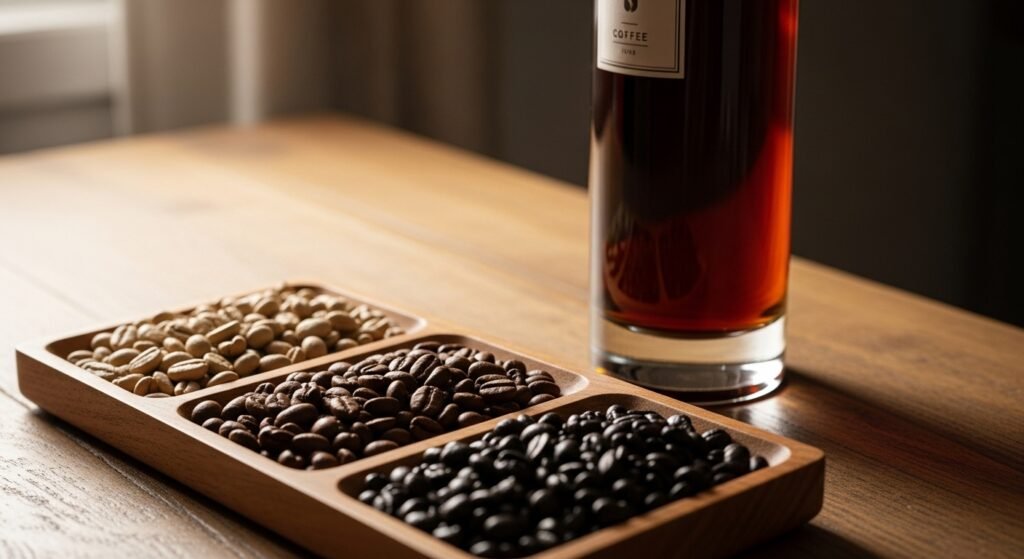
Medium-Dark Roasts: The “Goldilocks” zone. Look for beans from the High Altitudes of Central America. A Guatemalan or Honduran bean with notes of cocoa and spice provides the perfect structural base for the cocktail.
Using a V60 or a Chemex for this drink is generally not recommended, as the body is too thin. You need the concentrated intensity that only an espresso or a very tight AeroPress brew can provide.
The Cultural Impact: A Modern Classic
The Carajillo has become more than just a drink; it is a ritual of the “sobremesa”—the Spanish and Latin American tradition of lingering at the table after a meal. It serves as the perfect bridge between dinner and the night ahead. It provides the “kick” of caffeine to combat the post-meal slump, while the liqueur acts as a digestif.
In cities like Mexico City, the Carajillo is a status symbol. It is served in beautiful glassware, often with a twist of orange peel or a dusting of cinnamon. It represents the “Third Wave” philosophy applied to the bar: a respect for the ingredient, a focus on technique, and a desire for a multisensory experience. This is the same spirit we see in Hosting a Coffee Cupping at Home.
Troubleshooting Your Carajillo
If your Carajillo isn’t turning out like the ones in high-end bars, check these three common issues:
-
The Foam is Weak: This is usually due to the coffee being too cold or not shaken hard enough. The “Espuma” needs thermal energy and physical force to form.
-
It’s Too Sweet: Some prefer a “half-shake” method where you use less liqueur. You can also add a pinch of sea salt to the shaker to brighten the flavors and cut through the sugar.
-
It Tastes Watery: Ensure your espresso is Dialed-In correctly. If your shot is too long (over-extracted), the extra water will ruin the cocktail’s texture.
Conclusion: The Future of Coffee Mixology
The Carajillo is a testament to the versatility of the coffee bean. It proves that coffee doesn’t have to be a serious, black-liquid-in-a-mug affair. It can be playful, luxurious, and celebratory. By applying the same standards of Maintenance and Precision to our cocktails as we do to our morning pour-overs, we elevate the entire industry.
Whether you are a seasoned barista or a home enthusiast, the Carajillo is a must-try. It challenges your understanding of flavor balance and offers a new way to appreciate the Science of Aftertaste. The next time you have friends over for dinner, skip the standard espresso and pull out the shaker. Show them that coffee’s greatest strength is its ability to adapt, evolve, and surprise us—one shaken glass at a time.
As we look toward the future of coffee, expect to see more “hybrid” drinks like this. As consumers become more educated about Water Quality and Terroir, their expectations for coffee cocktails will only continue to rise. The Carajillo is just the beginning.

Brown Christopher is 47 years old and has been passionate about coffee since he was 15. For more than three decades, he has explored coffee culture, brewing methods, and the flavors behind every cup. Through this blog, he shares simple tips and knowledge to help beginners better understand and enjoy coffee in their daily lives. ☕