
In the traditional world of coffee, heat is the primary driver of extraction. High-temperature water acts as a high-energy solvent, rapidly breaking down the cell structure of the bean and dissolving oils, acids, and sugars in a matter of minutes. However, a different philosophy has taken the specialty world by storm: Cold Brew. By removing heat from the equation and replacing it with an extended period of time—typically 12 to 24 hours—we create an entirely different chemical profile.
Cold brew is not just “iced coffee” (which is simply hot coffee cooled down). It is a distinct extraction method that fundamentally alters the molecular makeup of the final beverage. When you Understand How High-Altitude Terroir and Density Influence Solubility , you begin to see why cold water requires such a patient approach to yield a balanced cup. It is the ultimate exercise in slow chemistry.
The Solubility Spectrum: What Heat Misses
To understand Cold Brew, we must understand that coffee is composed of hundreds of different compounds, each with its own “solubility threshold.“
-
Acids and Oils: Many of the bright, citric acids and volatile oils found in African Coffees from Ethiopia and Kenya are highly soluble in hot water but barely dissolve in cold water. This is why Cold Brew is famous for its low acidity—often up to 60% less acidic than hot coffee.
-
Bitter Compounds: Tannins and certain bitter polyphenols require high kinetic energy (heat) to be pulled out of the grounds. In a cold extraction, these compounds remain trapped inside the bean, resulting in a naturally sweeter, smoother profile.
This lack of “chemical aggression” makes Cold Brew the perfect base for people with sensitive stomachs or for those who want to Analyze the Science of Aftertaste Without the Interference of Intense Bitterness .
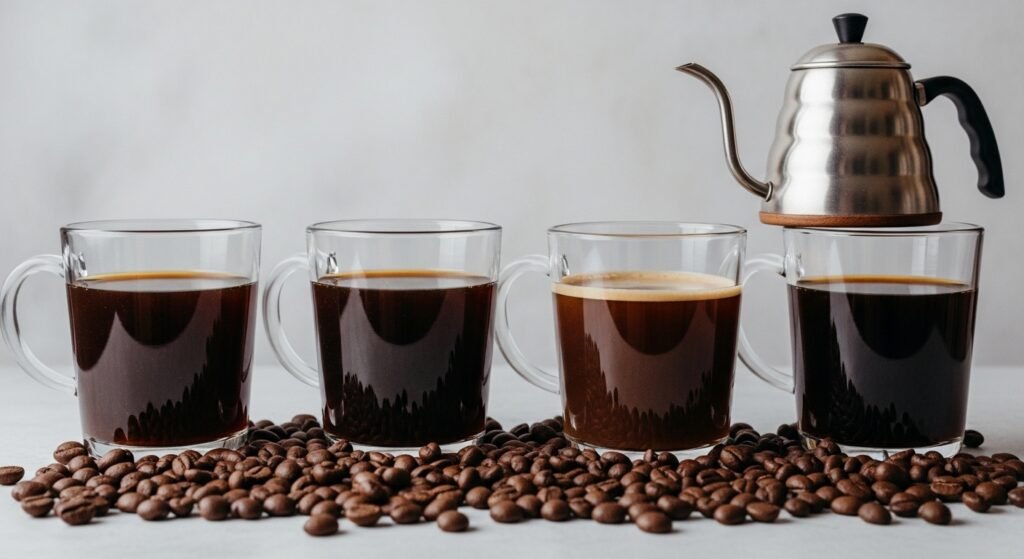
The Variable of Time: The 18-Hour Rule
When you brew hot, a few seconds can be the difference between a sweet shot and a bitter mess. In Cold Brew, the “extraction window” is much wider, but precision is still required.
The standard ratio is often 1:8 or 1:10 (coffee to water), creating a concentrate. Because cold water is a “lazy” solvent, we must use a Coarse Grind—similar to sea salt. If you Maintain Your Burr Grinder and Ensure it is Free of Old Residue , you ensure that the water can circulate freely between the particles during the long immersion.
-
12 Hours: Produces a light, tea-like body with subtle floral notes.
-
18-24 Hours: The “Sweet Spot.” This allows enough time for the heavier sugars and chocolate notes to fully dissolve, creating that signature syrupy mouthfeel.
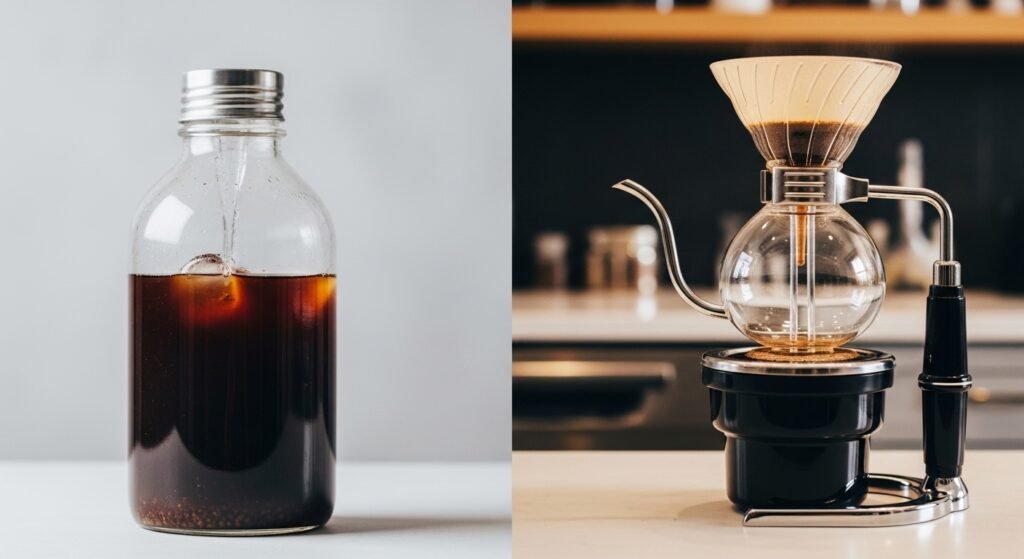
Water Chemistry in Cold Extraction
Even though the water is cold, its mineral content remains vital. In fact, because the water stays in contact with the coffee for so long, the Invisible Influence of Water Quality and Mineral Balance is magnified.
Magnesium and Calcium ions still play their role in “grabbing” flavor molecules. If your water is too soft, the cold brew will taste hollow and flat, despite the long wait. If you are Calibrating Your Extraction Process , always start with filtered water that has a balanced mineral profile to ensure the chocolate and nut notes are properly highlighted.
The Oxidation Advantage
One of the greatest benefits of Cold Brew is its shelf life. Heat accelerates oxidation—the process that makes coffee taste stale and “papery.” Hot coffee begins to degrade the moment it leaves the brewer.
Because Cold Brew is never exposed to high temperatures, its chemical structure is more stable. When stored in a sealed container in the refrigerator, a cold brew concentrate can maintain its flavor integrity for up to two weeks. This stability makes it an excellent ingredient for Sophisticated Coffee Cocktails Like the Modern Carajillo , providing a consistent, high-intensity base without the need for an espresso machine.
Immersion vs. Cold Drip (Kyoto Style)
There are two primary ways to make cold coffee:
-
Immersion: The grounds sit in water for 12-24 hours. This produces a heavy, round, and sweet profile.
-
Cold Drip: Water drips slowly through a bed of coffee over 6-12 hours using a “Siphon-like” glass tower. This method produces a much lighter, more aromatic cup that preserves the Delicate Floral Notes of High-Altitude Beans better than immersion.
By Hosting a Comparative Tasting at Home , you can see how these two cold methods interact with different terroirs. You might find that a Brazilian bean shines in immersion, while a Kenyan bean is superior in a Kyoto-style drip.
Maintenance and Hygiene: The Hidden Danger
Because Cold Brew involves leaving organic material (coffee) in water at room temperature or in the fridge for long periods, hygiene is non-negotiable. You must Thoroughly Clean and Sanitize Your Brewing Vessel after every batch. Coffee oils can become rancid and stick to the walls of the container, creating “off-flavors” that will ruin subsequent brews.
Conclusion: Patience as a Flavor Profile
Cold Brew is a testament to the fact that there are no shortcuts to quality. It teaches us that time is just as powerful a tool as temperature or pressure. When we choose to wait 18 hours for a cup of coffee, we are allowing the bean to tell its story in a whisper rather than a shout.
By Applying This Level of Technical Rigor to Your Cold Brewing , you transform a simple summer drink into a sophisticated sensory experience. You unlock a world of low-acid, high-sweetness possibilities that hot brewing simply cannot reach.
Are you ready to let the clock do the work? Grab your coarsest grind, your best filtered water, and start your next batch today.

Brown Christopher is 47 years old and has been passionate about coffee since he was 15. For more than three decades, he has explored coffee culture, brewing methods, and the flavors behind every cup. Through this blog, he shares simple tips and knowledge to help beginners better understand and enjoy coffee in their daily lives. ☕