
In the traditional world of coffee, heat is the primary catalyst. Hot water ($90^{\circ}C$ to $96^{\circ}C$) acts as a powerful solvent that quickly breaks down the organic compounds, oils, and acids inside the coffee bean. However, Cold Brew flips this fundamental physics on its head. By removing heat entirely and using water at room temperature or colder, we are forced to use time—often 12 to 24 hours—as the primary driver of extraction.
This change in temperature isn’t just a matter of convenience; it creates a completely different chemical profile in the cup. Cold water is incapable of dissolving certain bitter oils and fatty acids that hot water extracts instantly. This is why Evaluating the Science of Aftertaste and the Smoothness of Cold Extraction reveals a beverage with lower perceived acidity and a heavy, chocolatey sweetness. To master Cold Brew, one must respect the Biological Density of High-Altitude Beans and the critical Mineral Balance of the Solvent.
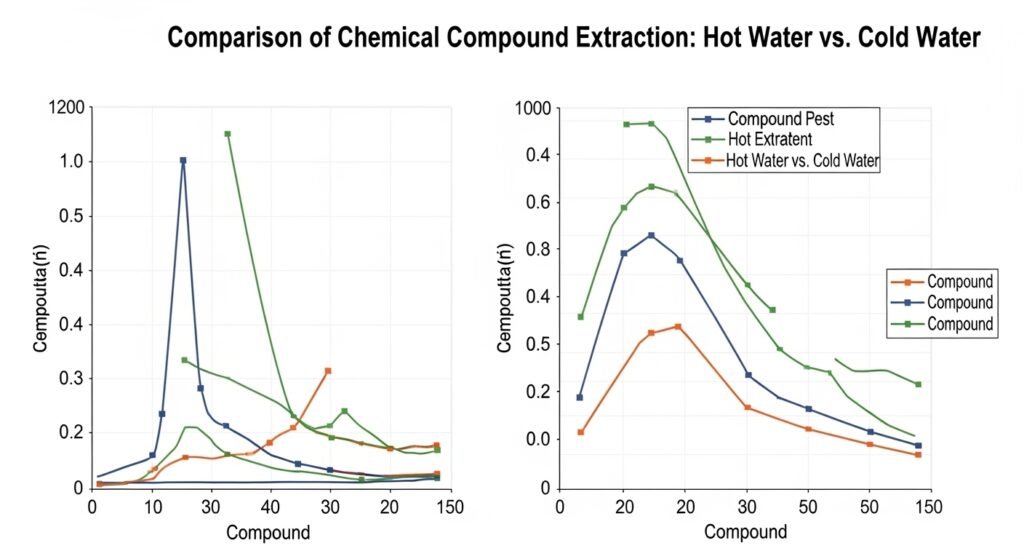
The Solubility Gap: What Cold Water Leaves Behind
Coffee contains over 1,000 aromatic compounds. Many of the most volatile ones—the florals and bright citrics found in High-Altitude Ethiopian and Kenyan Coffees —require heat to be fully “unlocked.” This is why a Cold Brew rarely tastes as “acidic” as a hot V60.
Conversely, the bitter polyphenols and some of the more aggressive tannins in coffee are also less soluble in cold water. When you Calibrate Your Extraction for Cold Brew , you are essentially performing a “selective extraction.” You are pulling out the sugars and the chocolate notes while leaving the harsh bitterness behind in the grounds. This makes Cold Brew the ideal method for those with sensitive stomachs or those who prefer a “velvety” mouthfeel.
Oxidation and Flavor Degradation
One of the greatest enemies of hot coffee is oxidation. As coffee cools down, it reacts with oxygen, which can lead to a “stale” or “cardboard” taste. Because Cold Brew is prepared at low temperatures, the rate of oxidation is significantly slowed. This allows Cold Brew concentrate to remain fresh in the refrigerator for up to two weeks, whereas hot coffee becomes unpalatable in less than an hour.
However, this longevity depends entirely on Equipment Hygiene. Because the coffee sits in water for 24 hours, any bacteria or Rancid Oil Buildup on Your Brewing Vessel will have ample time to contaminate the batch. Strictly Maintaining and Cleaning Your Cold Brew Equipment is the only way to ensure the Natural Sweetness of Your High-Altitude Beans is preserved without “off” flavors.
The Variable of Grind: Surface Area vs. Time
In Cold Brew, we almost always use an extra-coarse grind, similar to sea salt. Since the coffee is submerged for such a long time, a fine grind would offer too much surface area, leading to an over-extracted, “woody” flavor.
Using a High-Quality Burr Grinder Calibrated for Uniformity is essential. If your grinder produces “fines” (microscopic particles), they will extract much faster than the large chunks, resulting in a muddy profile. When Hosting a Comparative Cupping of Cold Brews , the difference between a consistent grind and an inconsistent one is immediately apparent in the clarity of the finish.
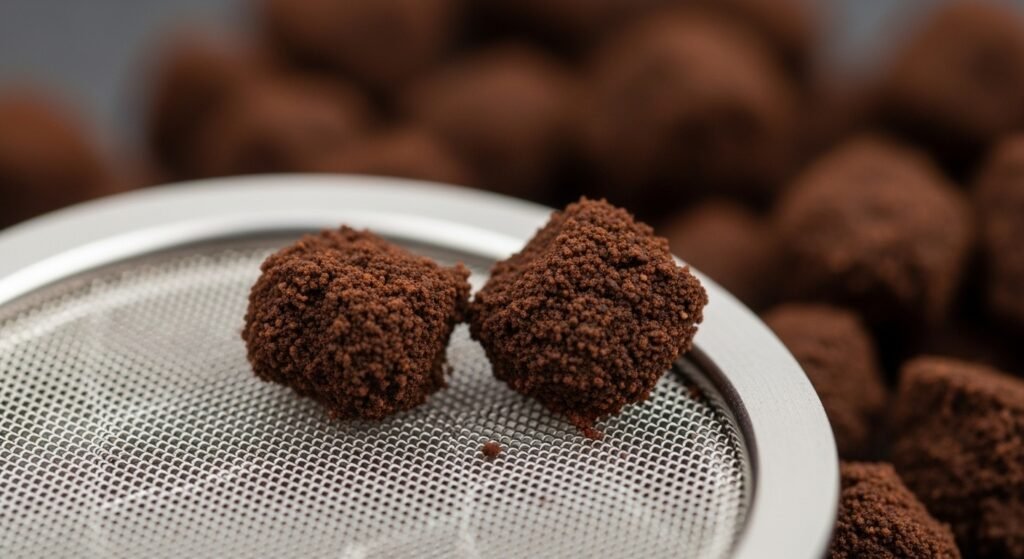
Water Chemistry in Slow Motion
In hot brewing, the minerals in the water react quickly. In Cold Brew, the Magnesium and Calcium Ions in Your Water have hours to interact with the coffee’s cellular structure.
If your water is too soft, the Cold Brew can taste “hollow” or “flat.” If it is too hard, it can taste “soapy.” For the best Cold Brew, we recommend water with a moderate mineral content. This ensures the Dense Sugars of High-Altitude Beans are effectively pulled into the solution without the harshness that heat usually brings.
Filtration: The Final Texture
How you filter your Cold Brew dictates the final sensory experience:
-
Metal Mesh: Allows oils and some sediment to pass through. This results in a heavy, syrupy body—perfect for drinking with milk.
-
Paper Filters: Traps the oils and fines, resulting in a very “clean” and crisp cup. This is the best way to Analyze the Science of Aftertaste in a Single-Origin African Coffee.
-
Cloth Filters: A middle ground that offers body without the grit of metal.
Immersion vs. Cold Drip (Kyoto Style)
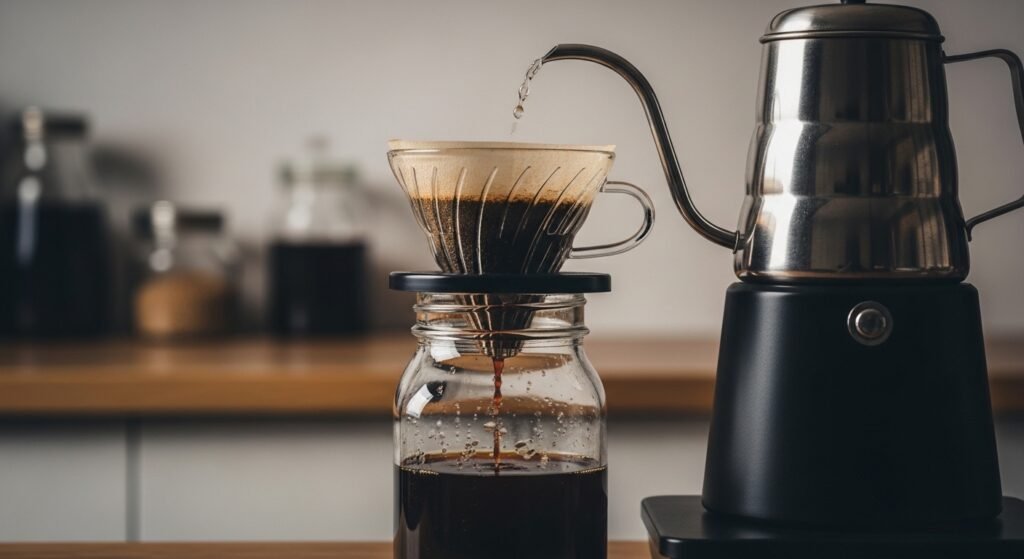
While most home brewers use “Full Immersion” (grounds soaking in a jar), the History and Evolution of Coffee also brings us the Kyoto-style Cold Drip. This uses a “tower” where water drips slowly, one drop at a time, through a column of coffee.
Kyoto-style extraction is even more sensitive to Calibration and Grind Precision. It produces a more aromatic and “bright” Cold Brew than immersion, but it requires much more attention to the Quality of the High-Altitude Beans used.
Conclusion: Patience as a Technical Variable
Cold Brew is the ultimate expression of patience in the manual brewing category. It teaches us that we don’t always need fire to extract beauty; sometimes, we just need time. By Applying Professional Standards to Your Cold Extraction , you turn a simple refrigerated jar into a high-precision chemical laboratory.
Respect the Mineral Balance of Your Water , keep your Grinder Spotless, and choose Beans with a Proven Heritage. When you finally take that first sip after 18 hours of waiting, you will understand that the science of coffee is as much about the things we don’t extract as the ones we do.

Brown Christopher is 47 years old and has been passionate about coffee since he was 15. For more than three decades, he has explored coffee culture, brewing methods, and the flavors behind every cup. Through this blog, he shares simple tips and knowledge to help beginners better understand and enjoy coffee in their daily lives. ☕