
For decades, the standard way to extract flavor from a coffee bean was simple: apply near-boiling water and wait a few minutes. Heat acts as a catalyst, accelerating the chemical reactions that pull oils, acids, and sugars out of the ground coffee. However, a different philosophy has taken over the specialty world—one that removes heat from the equation entirely and replaces it with the slow, steady force of time. This is the world of Cold Brew.
Cold brew is often confused with iced coffee, but the two are fundamentally different. Iced coffee is hot coffee that has been cooled down, whereas cold brew never sees a degree of heat during its 12 to 24-hour journey. This radical shift in temperature changes the molecular profile of the final drink. If you are Interested in How Water Quality and Mineral Balance Affect Your Extraction , you will find that cold brew is the ultimate test of your water’s chemistry, as it has an entire day to interact with the bean.
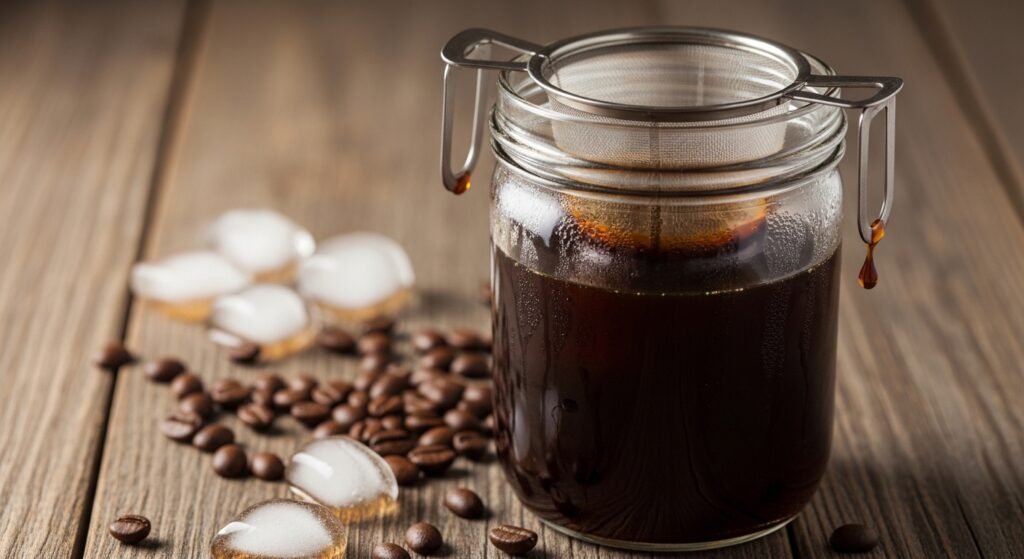
The Solubility Curve: What Heat Leaves Behind
Every compound in a coffee bean has a different “solubility point.” Acids and certain aromatic oils dissolve very quickly when exposed to hot water. This is why a pour-over can be ready in three minutes. However, many of the bitter compounds and heavy tannins also require heat to be released.
By using cold water, we effectively “lock out” these bitter elements. Cold water isn’t strong enough to dissolve the larger, more complex molecules that cause the harshness often found in hot coffee. Instead, it slowly coaxes out the sugars and the chocolatey, nutty notes. This is why Understanding Why Some Cheap Coffees Surprise You and Some Expensive Ones Disappoint is so relevant here; a coffee that might be too bitter when brewed hot can become a syrupy, sweet masterpiece when brewed cold.
The Chemistry of Low Acidity
One of the primary reasons people switch to cold brew is for its low acidity. Chemically, cold brew is approximately 60% less acidic than hot coffee. This isn’t just a matter of taste; it’s a matter of pH balance.
For those with sensitive stomachs, cold brew is a revelation. Because the hot water never triggers the release of certain oils (like cafestol) and chlorogenic acids in their most aggressive form, the drink is much smoother. When you are Evaluating the Lingering Flavors of High-Altitude Beans , you will notice that in cold brew, the acidity presents as a “juiciness” rather than a “bite.”
The 18-Hour Ritual: Time as a Solvent
When heat is removed, time must do the heavy lifting. A standard cold brew recipe involves a much higher coffee-to-water ratio than a standard drip—often 1:4 or 1:8 instead of 1:16. This creates a concentrate that is incredibly dense.
-
The 12-Hour Mark: The water has pulled out the surface sugars and the initial floral notes.
-
The 18-Hour Mark: This is the “sweet spot” for most medium roasts. The body has developed, and the deep chocolate notes are fully present.
-
The 24-Hour Mark: At this point, you risk over-extraction. Even without heat, 24 hours is enough time for some of the woodier, more paper-like flavors to enter the liquid.
Achieving this balance is a form of Calibrating Your Extraction Process to Reach the Perfect Body . It requires patience and a very coarse grind—similar to sea salt—to ensure the water can circulate freely around the particles for a day.
Oxidation and the “Fridge Smell”
Because cold brew takes so long, it is highly susceptible to environmental contamination. Coffee is a sponge for odors. If you brew your cold brew in an open container in a refrigerator next to half an onion, your coffee will taste like that onion.
Always use an airtight vessel. Furthermore, cold brew is not immortal. While the concentrate can last up to two weeks in the fridge, it begins to oxidize the moment the grounds are filtered out. To prevent this, you should Maintain and Clean Your Storage Equipment with the Same Rigor as Your Grinder . A clean, glass container is the only way to ensure the flavor stays “crisp.”
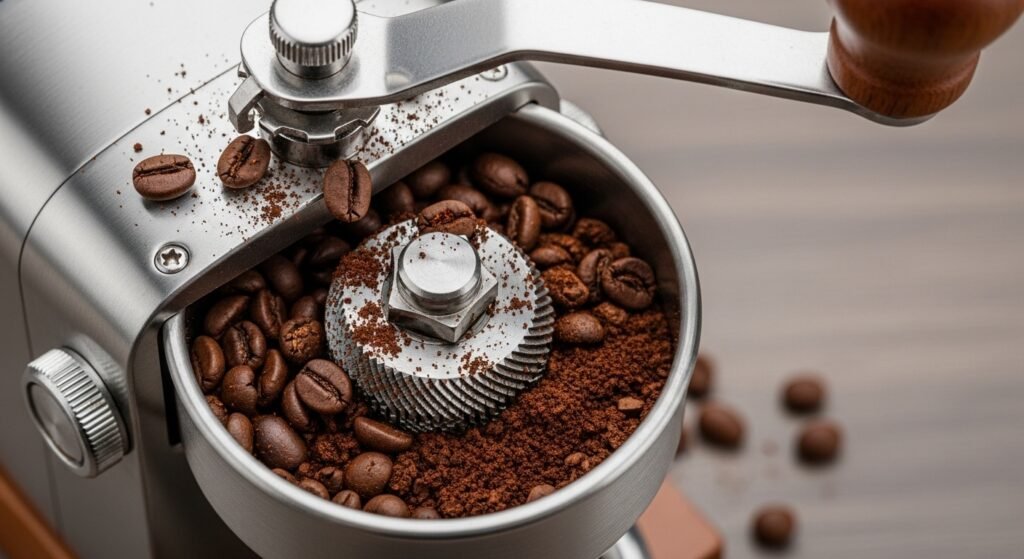
Nitro Cold Brew: The Texture Revolution
In recent years, the “Nitro” craze has taken cold brew to a new level. By infusing the cold concentrate with nitrogen gas under high pressure, we create a drink with a creamy, Guinness-like head.
The nitrogen doesn’t change the flavor, but it radically alters the mouthfeel. The tiny bubbles trick the tongue into perceiving even more sweetness and a velvety texture. This is a great way to Develop Your Professional Palate and Focus on Texture , as it forces you to look past the liquid and evaluate the “gas-in-liquid” emulsion.
Choosing the Right Bean for the Cold
Not all beans thrive in a cold environment.
-
Light Roasts: Can sometimes taste “bready” or like fermented hay if not steeped long enough.
-
Dark Roasts: Can become overwhelmingly smoky or like liquid charcoal.
-
Medium Roasts: These are the kings of cold brew. Beans from Central America or Brazil, known for their chocolate and caramel profiles, are enhanced by the cold extraction process.
When you use High-Altitude African Beans with Floral Notes , the result is often like a sparkling fruit tea—refreshing, light, and complex.

Conclusion: The Patience of the Pour
Cold brew is a reminder that in our fast-paced world, some things are simply better when they are slow. It is a method that demands foresight—you have to decide today that you want coffee tomorrow.
By understanding the science of temperature and solubility, you can transform your morning routine. Cold brew isn’t just “cold coffee”; it is a different expression of the bean’s soul. It is a drink that honors the Incredible Effort of High-Altitude Farming by presenting those flavors in a smooth, accessible, and incredibly versatile way.
Whether you drink it black, over ice, or mixed into a Sophisticated Modern Coffee Cocktail , cold brew offers a window into the hidden sweetness of coffee that heat sometimes hides. So, set your timer, clear a spot in your fridge, and let time do the work.

Brown Christopher is 47 years old and has been passionate about coffee since he was 15. For more than three decades, he has explored coffee culture, brewing methods, and the flavors behind every cup. Through this blog, he shares simple tips and knowledge to help beginners better understand and enjoy coffee in their daily lives. ☕