
Among manual brewing enthusiasts, the Hario V60 is often considered the “Stradivarius” of coffee drippers. Unlike the immersion-based Science of Cold Brew, where time does the heavy lifting, the V60 is a percolation method that demands active technique and a deep understanding of fluid dynamics. Its distinctive 60-degree angle, large exit hole, and internal spiral ribs make it one of the most responsive tools in a barista’s arsenal.
Because the V60 allows for high flow rates, it excels at highlighting the delicate floral and citric notes of High-Altitude African Coffees. However, this same freedom makes it unforgiving. To achieve a clean Science of Aftertaste, you must master the variables of grind size, water temperature, and pouring agitation.
1. The Physics of the 60-Degree Angle
The design of the V60 is not accidental. The 60-degree slope forces the water to flow toward the center of the coffee bed, increasing the contact time between the water and the grounds.
-
The Spiral Ribs: These internal ridges are designed to lift the paper filter away from the walls of the dripper. This allows air to escape, preventing a vacuum that would stall the brew.
-
The Exit Hole: Unlike other drippers with small holes that restrict flow, the V60 has a large opening. This means the barista, not the equipment, controls the brew time through the grind size and the speed of the pour.
2. Water Quality: The Foundation of Clarity
Since a V60 brew is approximately 98.5% water, the chemical composition of your solvent is paramount. If your Water Quality is Poor, the bright acidity of the coffee will be neutralized by high alkalinity.
-
Target Temperature: For light-roasted High-Altitude Beans, you should use water between 93°C and 96°C.
-
The Bloom: Always start with a “bloom”—using a small amount of water to saturate the grounds for 30 seconds. This releases trapped carbon dioxide ($CO_2$), which otherwise acts as a barrier to extraction.
3. Grind Size: Finding the Sweet Spot
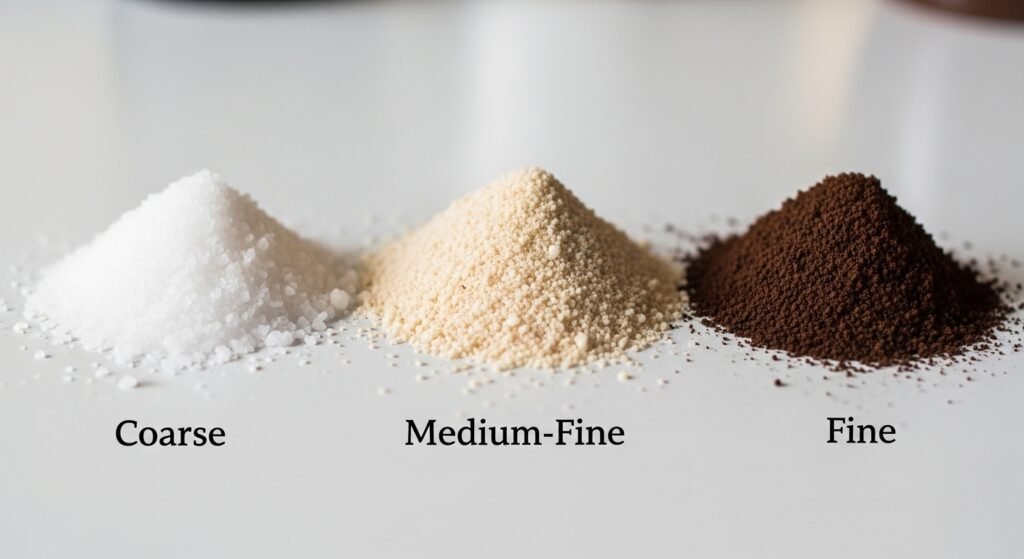
For the V60, the grind should be medium-fine, similar to the texture of table salt.
-
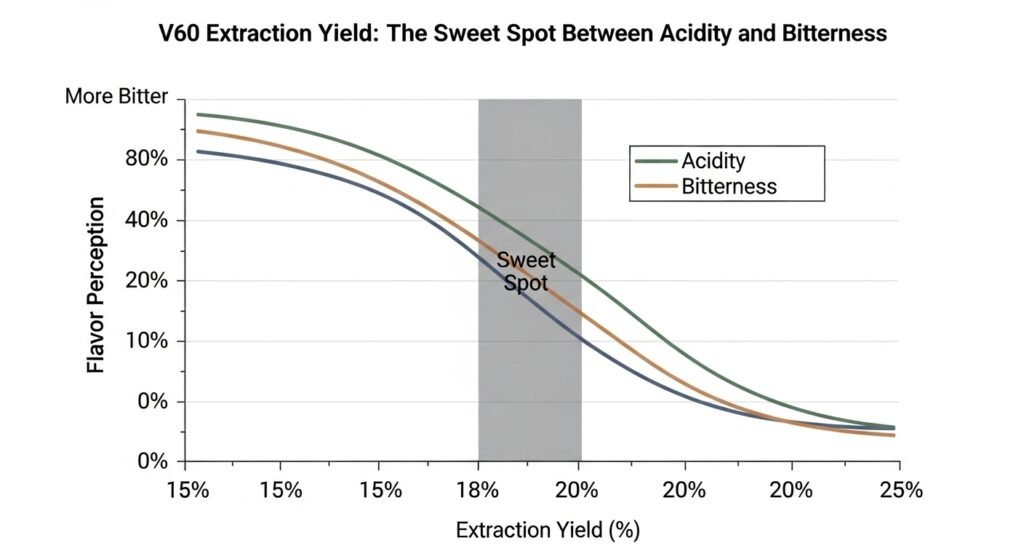
If it’s too coarse: The water will pass through too quickly, resulting in an “under-extracted” cup that tastes sour and thin.
-
If it’s too fine: The filter will clog, causing the water to “stall.” This leads to “over-extraction,” where the Aftertaste becomes dry and bitter.
To maintain this precision, you must ensure your Equipment is Clean and Maintained, as old oil buildup in your grinder can cause “fines” (micro-particles) that clog the V60 filter.
4. Agitation and the Pouring Technique
In V60 brewing, the way you pour water is just as important as the water itself.
-
Circular Pours: Pouring in steady, concentric circles ensures that every coffee particle is evenly saturated.
-
Turbulence: The force of the water falling from the kettle creates agitation. Too much agitation can push “fines” into the pores of the paper filter, slowing the brew.
-
The Flat Bed: A sign of a good pour-over is a flat bed of grounds at the end. If the coffee is “high and dry” on the walls of the filter, you have missed out on extracting flavor from those particles.
5. Paper Filters: Taste the Paper?
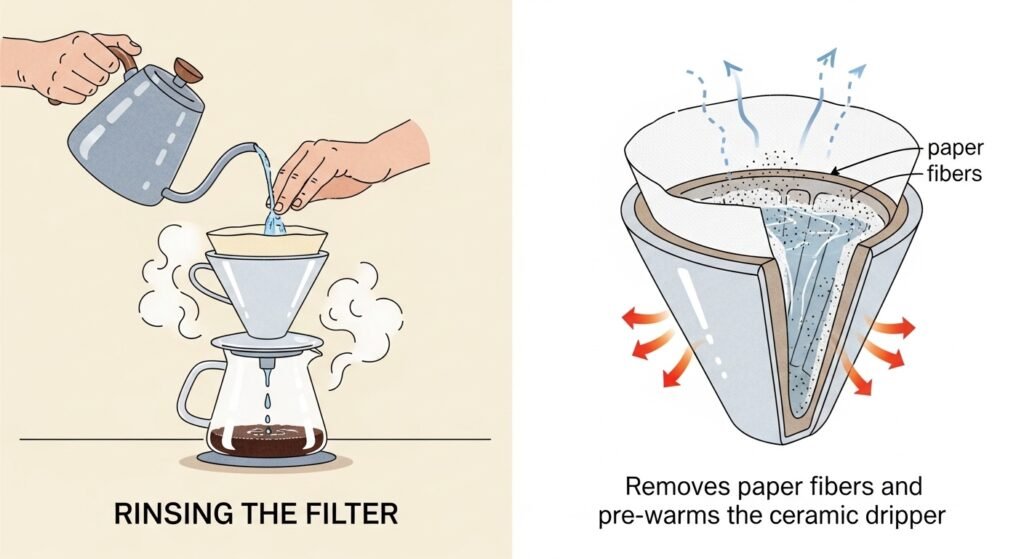
Not all V60 filters are created equal. Some bleached and unbleached papers can impart a “papery” flavor to the brew. To avoid this:
-
Always rinse your filter with hot water before adding the coffee.
-
This also pre-heats your vessel, ensuring that the Delicate Aromatic Compounds don’t suffer from a sudden temperature drop.
6. Dialing In the Recipe
A standard professional starting point for the V60 is a 1:15 or 1:16 ratio.
-
Input: 15g of coffee.
-
Output: 240g to 250g of water.
-
Total Time: Ideally between 2:30 and 3:00 minutes.
If your brew takes 4 minutes, you need to grind coarser. If it takes 2 minutes, you need to grind finer. This technical adjustment is the key to respecting the Regional Terroir of your beans.
7. Sensory Perception: Evaluating the V60
A successful V60 brew should have a “transparent” quality. It should not be thick or heavy like a French Press or espresso. Instead, it should feel like a complex tea.
-
The Finish: Pay close attention to the Science of Aftertaste. A perfect V60 will have a clean, lingering sweetness. If the finish is “ashy” or “dry,” you likely over-extracted by pouring too aggressively or using water that was too hot.
8. Conclusion: The Art of Control
The V60 is the ultimate tool for the curious barista. It offers a level of control that most other methods cannot match, allowing you to “tune” the flavor profile of High-Altitude Beans to your exact preference.
By mastering the grind, the water chemistry, and the pouring technique, you elevate coffee from a morning routine to a scientific experiment. Keep your Grinder Burrs Clean, use Balanced Water, and practice your pour. The reward is a cup of unmatched clarity and a vibrant profile that defines the peak of specialty coffee.
The true secret to a world-class V60 is Understanding How to Manipulate the Speed of Water Through the Coffee Bed by Adjusting Your Grind Size and Pouring Agitation to Match the Unique Density of Your Specific Coffee Beans.

Brown Christopher is 47 years old and has been passionate about coffee since he was 15. For more than three decades, he has explored coffee culture, brewing methods, and the flavors behind every cup. Through this blog, he shares simple tips and knowledge to help beginners better understand and enjoy coffee in their daily lives. ☕